
Aluminum cutting traceability connects incoming material to a specific cutting job and its finished-part groups. Keep the supplier’s material identity, drawing revision, cutting record, inspection status and handoff linked. Equal lengths and matching appearance do not establish that two groups came from the same material batch.
Use a simple record that follows the parts. Preserve the link when stock is split, remnants are returned or cut pieces move to another operation. Resolve an uncertain identity before releasing the affected group.
Keep five links visible
- Separate the source material identity from the cutting job number.
- Keep inspection status attached to each identified group.
- Carry the source link into remnants, packages and the next operation.
On this page
1. Start aluminum cutting traceability at incoming material
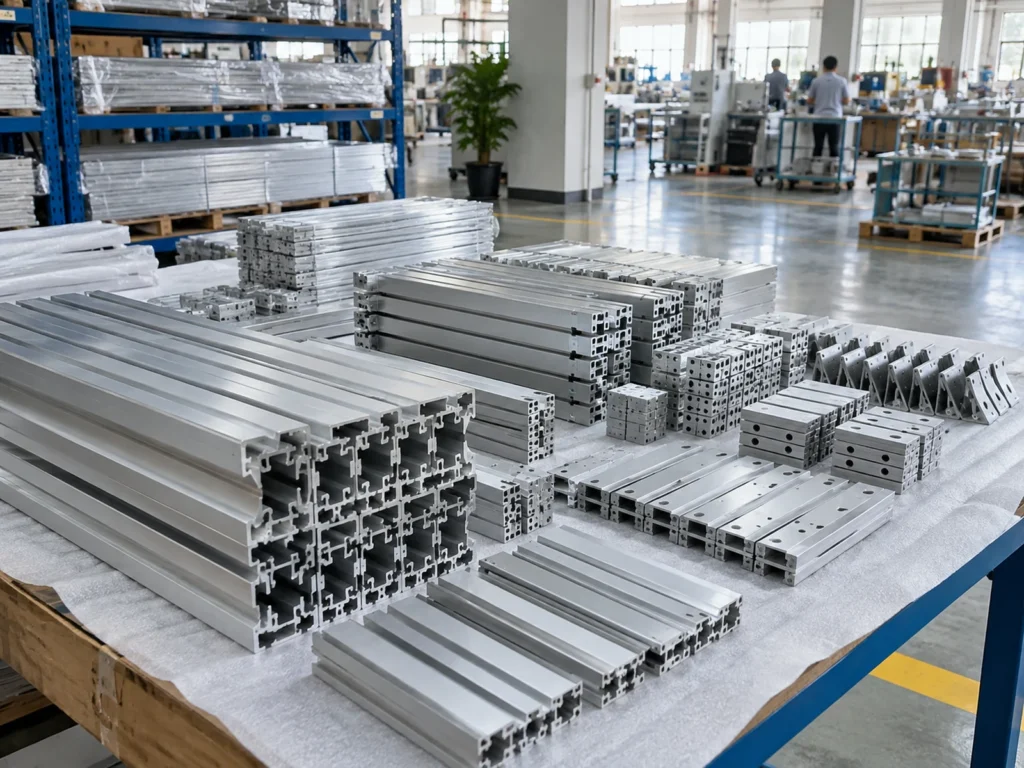
Identify the supplier, delivery reference, profile code and material batch or lot reference used on the supplied documentation. Record the alloy and temper as specified. Keep the relevant documents available without copying unrelated certificate details into every cutting note.
A purchase order, supplier batch reference and internal stock number can identify different things. Record their relationship. Do not silently replace the supplier’s identity with a new shop code that nobody can trace back.
Hydro’s certificate directory directs readers to relevant product and location pages for specific documentation. A certificate found on a supplier’s general website should not be treated as evidence identifying your particular delivered stock. Request the documents required by the order.
Check whether the label and documents describe the stock actually received. If a reference is missing or inconsistent, identify the material as awaiting review under your process. A familiar extrusion shape is not a substitute for that review.
The 6061 and 6063 cutting review explains why alloy and temper belong in a job brief. This article covers the record links; it does not authorize substitution between materials.
2. Link the material to the correct job revision
The cutting job should identify the part number, drawing revision, required finished length and angle, quantity and relevant inspection requirements. Connect that job to the source material selected for it. A machine program name alone may not describe the complete order.
Identify the current approved drawing before starting. If the drawing changes, review which stock and part groups are affected. Keep the previous record readable rather than overwriting it so that an earlier batch appears to have used the new instructions.
Use separate fields for source material and cutting run. One source lot may serve several jobs; one order may use several source lots. Recording only the sales order number can hide that distinction.
For repeated jobs, check the current instructions and material reference again. Reusing a familiar filename should not imply that the drawing, material or inspection plan is unchanged. The profile changeover guide provides a related review of mixed jobs.
3. Preserve identity when the batch splits
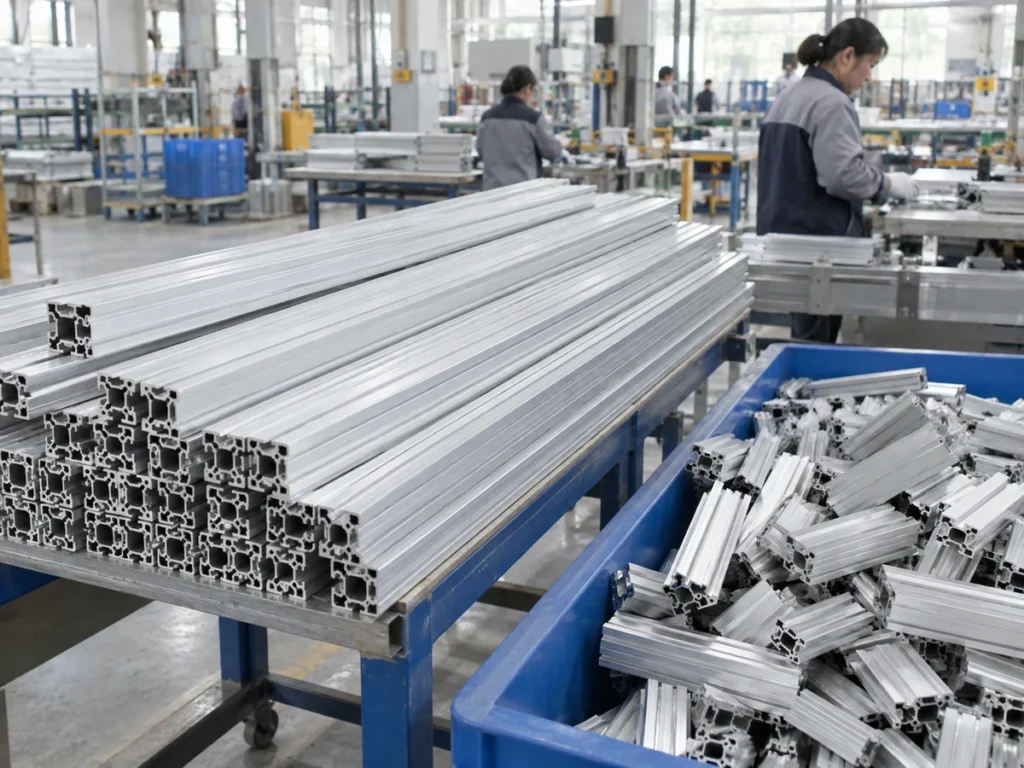
Decide how part groups will be identified before cutting creates several containers. Keep different source lots or job revisions separate unless an approved process retains the identity of every affected group. A clear label is useful only when it stays with the correct parts.
When a group splits, create identifiable child groups that retain the parent reference. Record the quantity transferred and the quantity remaining. The original container’s label should not become the only source of information after parts leave it.
Reusable remnants need the same attention. Link the remnant to its source stock and record the remaining length using your agreed method. Keep material identity separate from the decision about whether the remnant can be used for a future job.
The kerf and stock-length calculation helps account for length. It does not establish a remnant’s alloy, temper, condition or suitability. A useful leftover is still unidentified material if its source link has been lost.
4. Record inspection status separately from material identity
A group can have a clear source reference and still await dimensional inspection. Another group can measure correctly but have uncertain material identity. Keep these observations separate so that one successful check does not conceal an unresolved requirement.
Record the inspection result against the group actually checked. Identify the applicable drawing, method, readings and release decision as required by your process. Do not describe an entire order as accepted when only a representative sample has been reviewed.
Use explicit status words that your team understands, such as awaiting inspection, released or held. Color can support the label, but should not be the only explanation. State the reason and responsible review when a group is held.
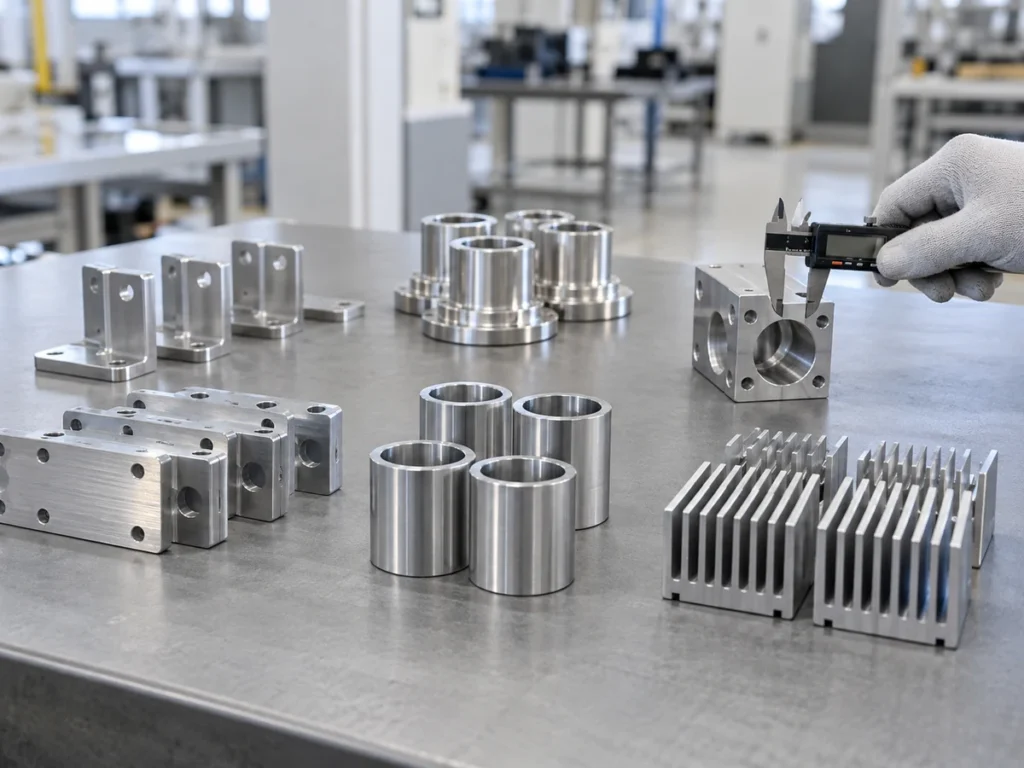
The drawing tolerance examples distinguish dimensional limits from measurements. A caliper reading does not verify alloy or restore a lost lot reference. Follow the appropriate material review rather than treating dimensions as proof of identity.
5. Carry aluminum cutting traceability into the next operation
The receiving operation needs the part identity, source link, quantity and current status. Confirm that the package or transfer note refers to the physical group being moved. A record saved in an office is difficult to use if the parts arrive without a matching identifier.
If one package contains several identified groups, show that structure on the handoff record. Do not write one convenient source lot on the outside if it makes the other groups invisible. Agree how the receiving team will keep them separate.
Record quantities at the handoff rather than assuming the cutting target equals the released quantity. Include any held group remaining behind. The cut-part packaging guide shows a related example of released and held counts.
Use customer-specific documentation requirements when they apply. This practical workflow does not establish compliance with a particular industry standard or contract. Agree the required identification and records with the customer before production.
A two-source example: one order, two records
Illustrative planning example: one order needs 50 pieces of the same part at the same drawing revision. Two identified source lots are used. The cutting counts below are invented to show the record structure, not a JiurunCut production result.
Group A: source lot A
Record: cutting run A produces 30 pieces. Twenty-eight are released under the agreed checks; two remain held. Keep all 30 connected to source lot A, with the held pieces clearly separated.
Group B: source lot B
Record: cutting run B produces 20 pieces. All 20 are released under the agreed checks. Keep those pieces connected to source lot B even though their part number and finished length match group A.
The handoff
Count: 30 + 20 = 50 pieces produced; 28 + 20 = 48 released; two held. The order is still short of the 50 released pieces requested. Keep both source references visible for the 48 transferred pieces.
This example accounts for piece status only. It does not reconcile incoming stock length, kerf, trim or scrap. Add the material-usage record where that information is required; do not infer it from the number of accepted pieces.
When a label is missing, make the uncertainty visible
Identify the affected group and stop its release through your established review process. Preserve the remaining records and physical grouping. Do not assign the nearest label simply because the pieces look similar.
Review the available stock records, cutting logs, transfer notes and source documents. Ask the responsible team whether those records establish an unambiguous connection. A plausible explanation is different from a supported identity.
If the link cannot be established, keep that limitation recorded and follow the agreed disposition. Do not invent a source lot or describe a later dimension check as material verification. The customer requirements determine which evidence and decision are needed.
Bring these five links into a machine review
When discussing the JiurunCut machine range, describe the stock groups, changeovers and part collection route. Ask how your intended identification process fits the proposed workflow. Automatic feeding alone does not establish an automatic traceability system.
Send the profile and finished-part drawings, representative batch sizes and the required record or labeling workflow. Request confirmation of any proposed integration. This guide describes an organizational approach; it does not claim that a particular model supplies those functions as standard.
Common questions
Does a cutting job number replace the supplier lot reference?
No. They can identify different things. Keep the relationship between the cutting job and source material visible so the finished group can be traced back through the records.
Can matching profiles be combined after cutting?
Only through a process that preserves the required identity and status. The same shape and length do not establish the same source lot, material or drawing revision.
Does a material certificate release the cut parts?
It does not replace the finished-part checks required by the job. Keep material documentation, dimensional inspection and the release decision connected but separately identified.
Do I need an automated labeling system?
The suitable method depends on the order, customer requirements and physical workflow. A controlled manual record may be appropriate; an automated system still needs verified links. Confirm the required functions before choosing equipment.