
EV ALUMINUM CUTTING ENGINEERING
EV Aluminum Cutting Solutions for Battery Trays, Crash Beams & Structural Profiles
Send the cross-section and finished-part drawing. JiurunCut reviews datum, support, clamping, angle sequence and production target before recommending the cutting direction and machine configuration.
Start with: Cross-section · Finished length · Required angles · Tolerance · Output
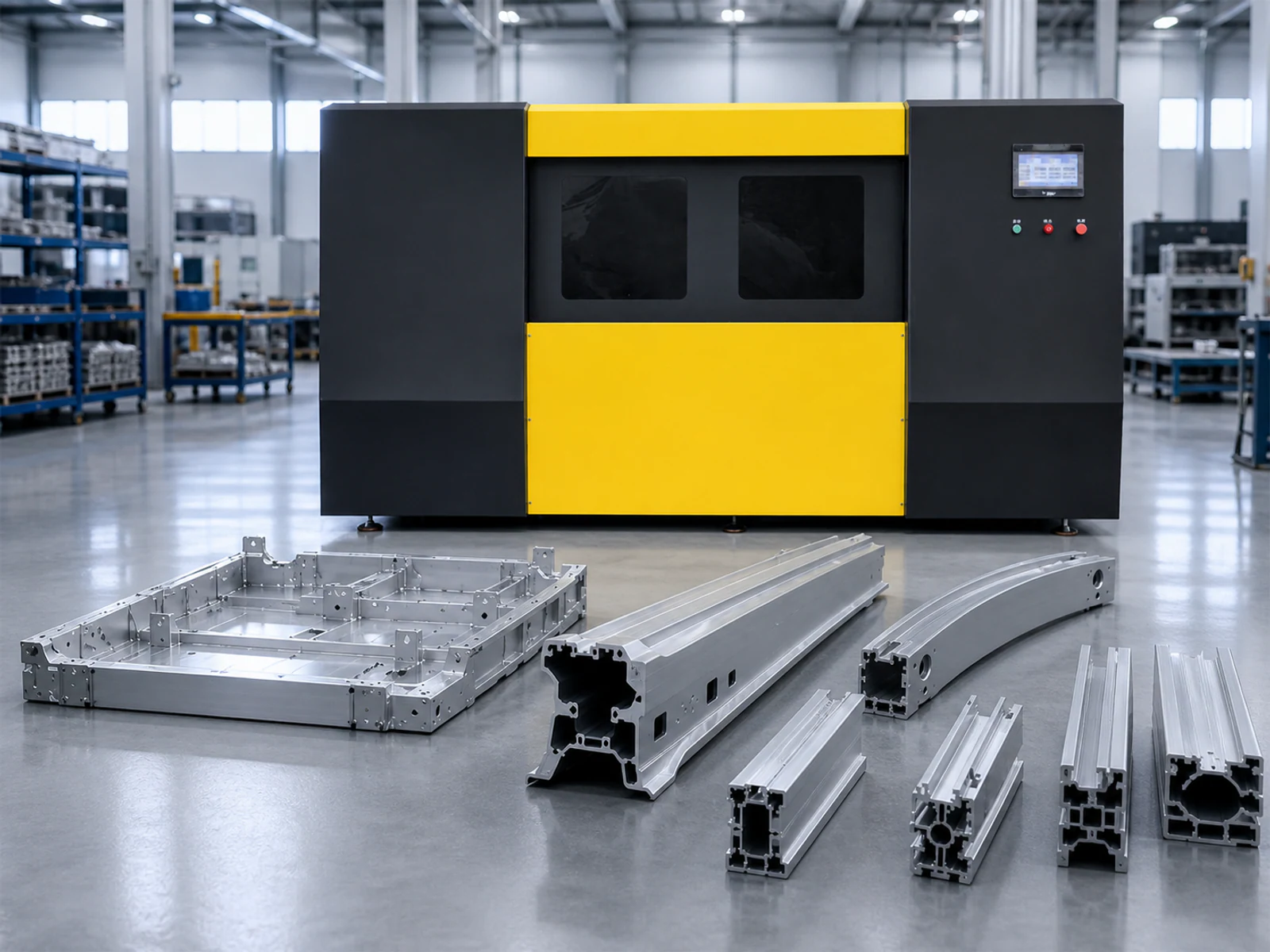
01 — UNDERSTAND THE PART
ENGINEERING INPUTS
Four Inputs Decide the Cutting Strategy
Cross-section · wall thickness · cavities
Finished length · mating surface · inspection origin
Angles · cut sequence · finished geometry
Batch size · repeatability · production target
BUYER FIT
Is This Cutting Solution a Fit for Your EV Aluminum Part?
Start with the finished part — not the machine model.
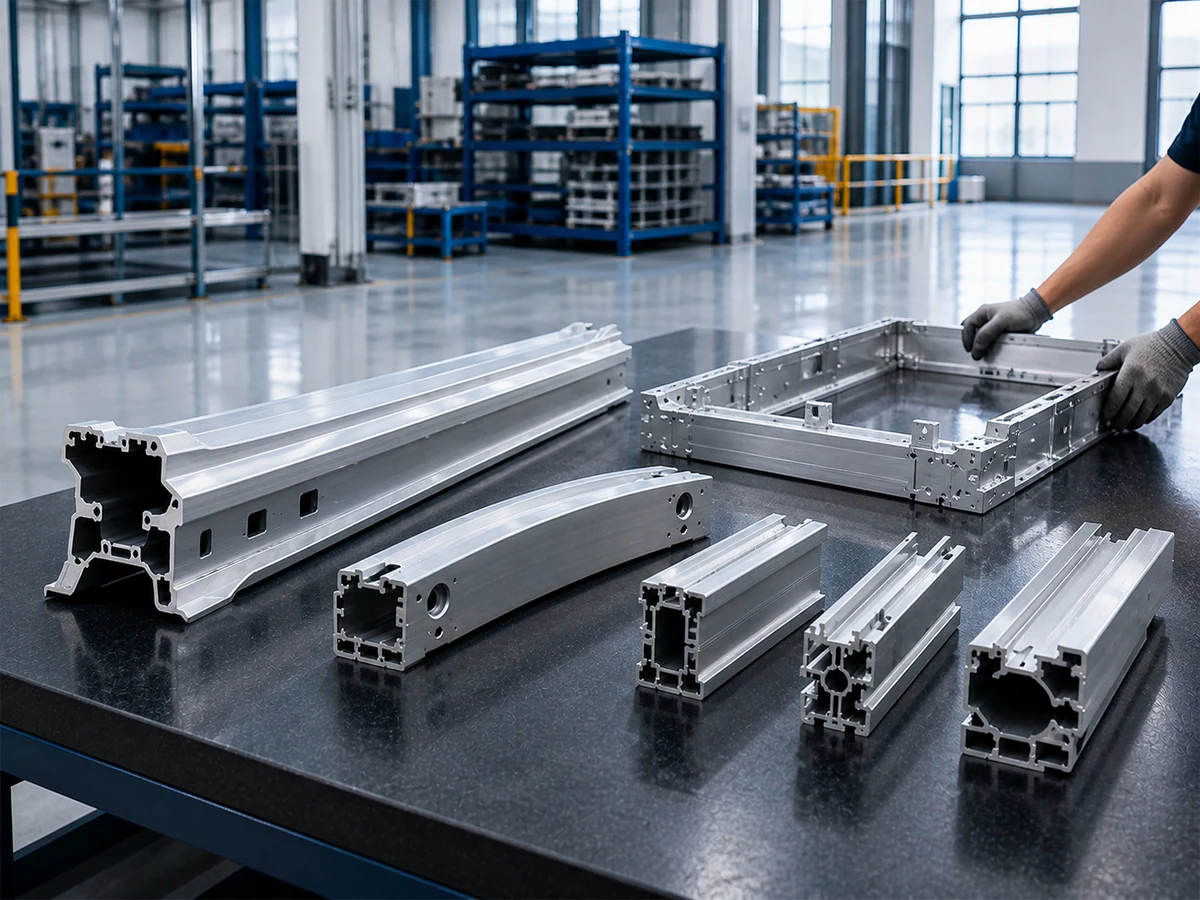
Battery tray side rails, crash beams, threshold beams and multi-cavity structural profiles.
Profile geometry, datum surfaces, finished length, angle sequence and visible surfaces.
Profile-specific support, controlled feeding and clamping, circular-saw cutting and inspection.
Selected after reviewing the real profile geometry, finished-part drawing, cutting sequence and production target.
Cross-section drawing, finished length, required angles, tolerance and production target.
TYPICAL EV STRUCTURAL PARTS
Which EV Aluminum Part Are You Cutting?
Part geometry decides the support, clamping, datum and cut sequence before a machine direction is selected.
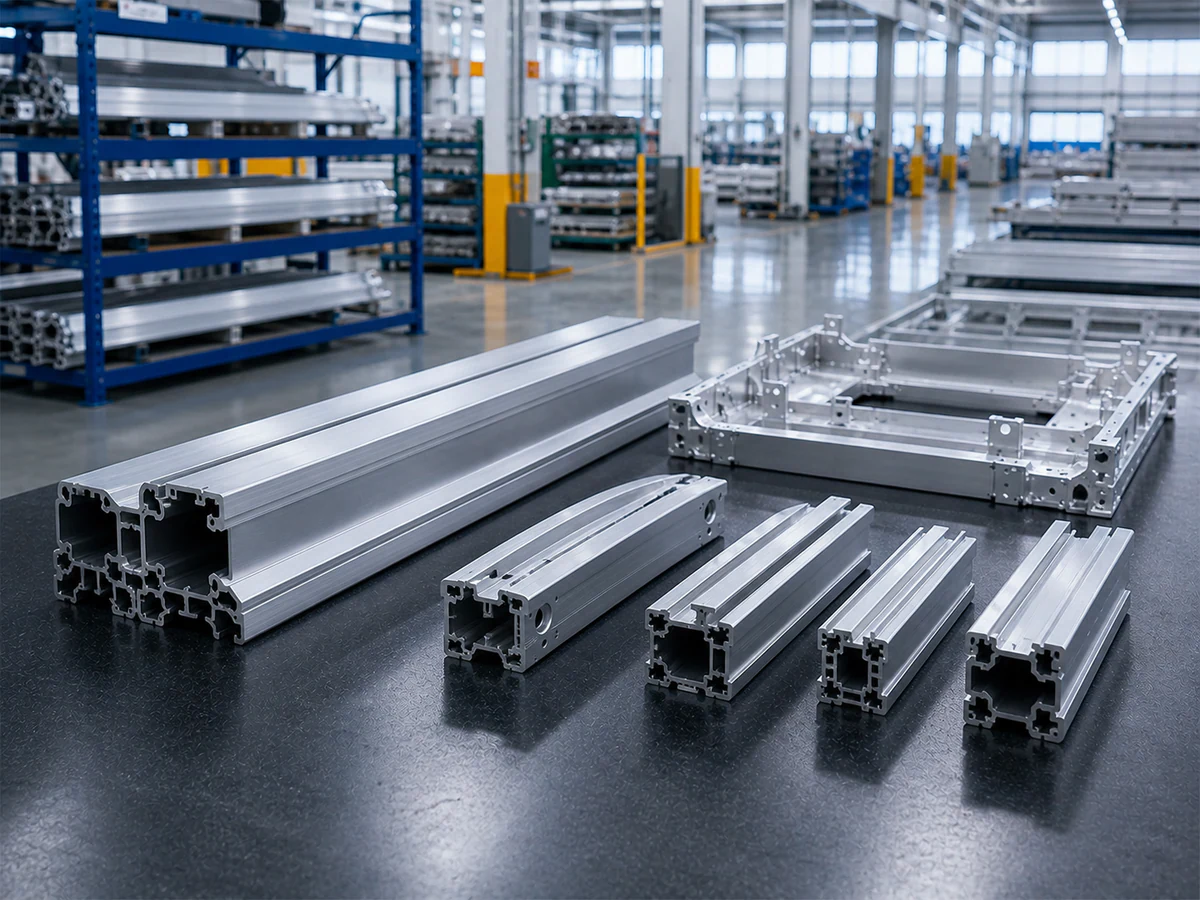
Battery Tray Side Rails
CHALLENGE
Long multi-cavity extrusion, assembly datum and finished-length consistency.
WHAT WE REVIEW
Support datum · clamping · finished length · repeat production
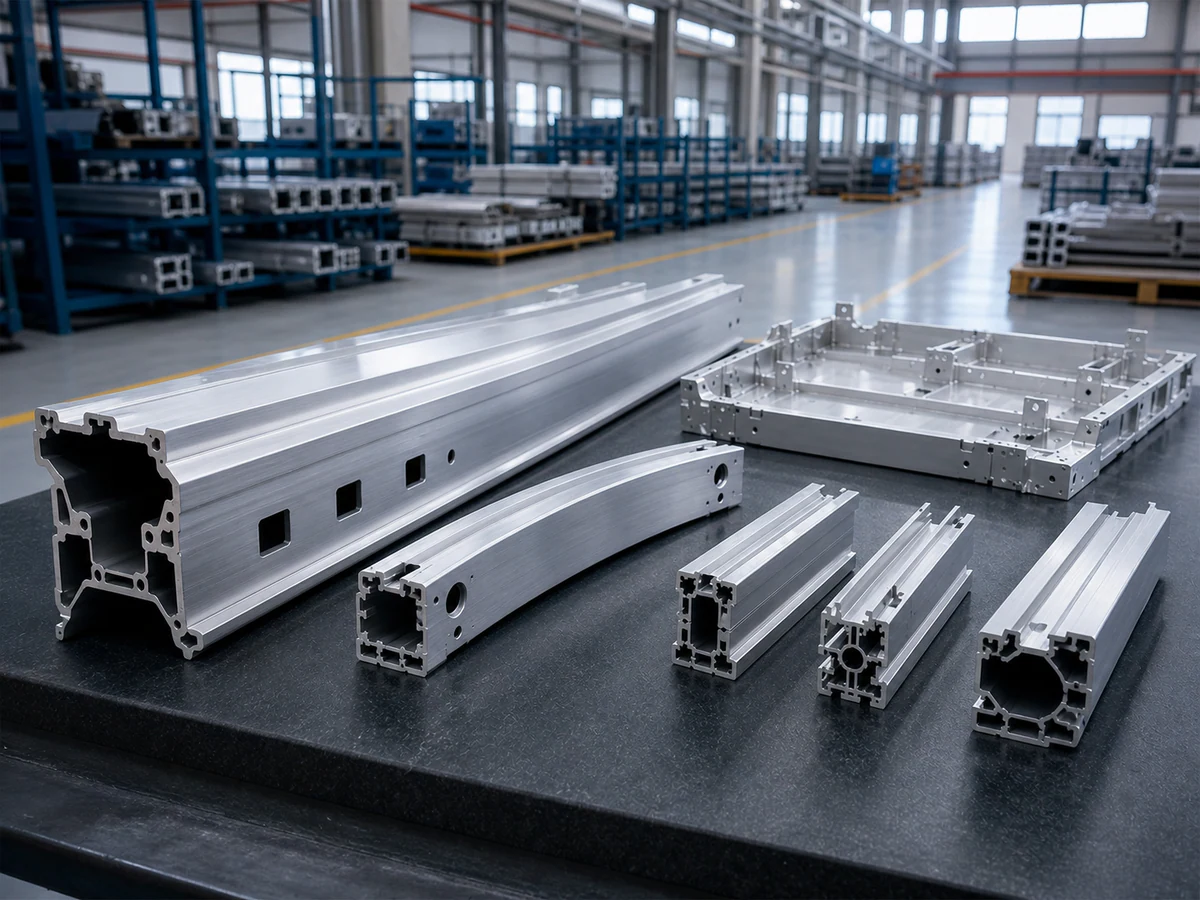
Crash Beam Extrusions
CHALLENGE
Reinforced multi-cavity geometry and cut-face stability.
WHAT WE REVIEW
Fixture contact · wall support · cut surface · batch consistency
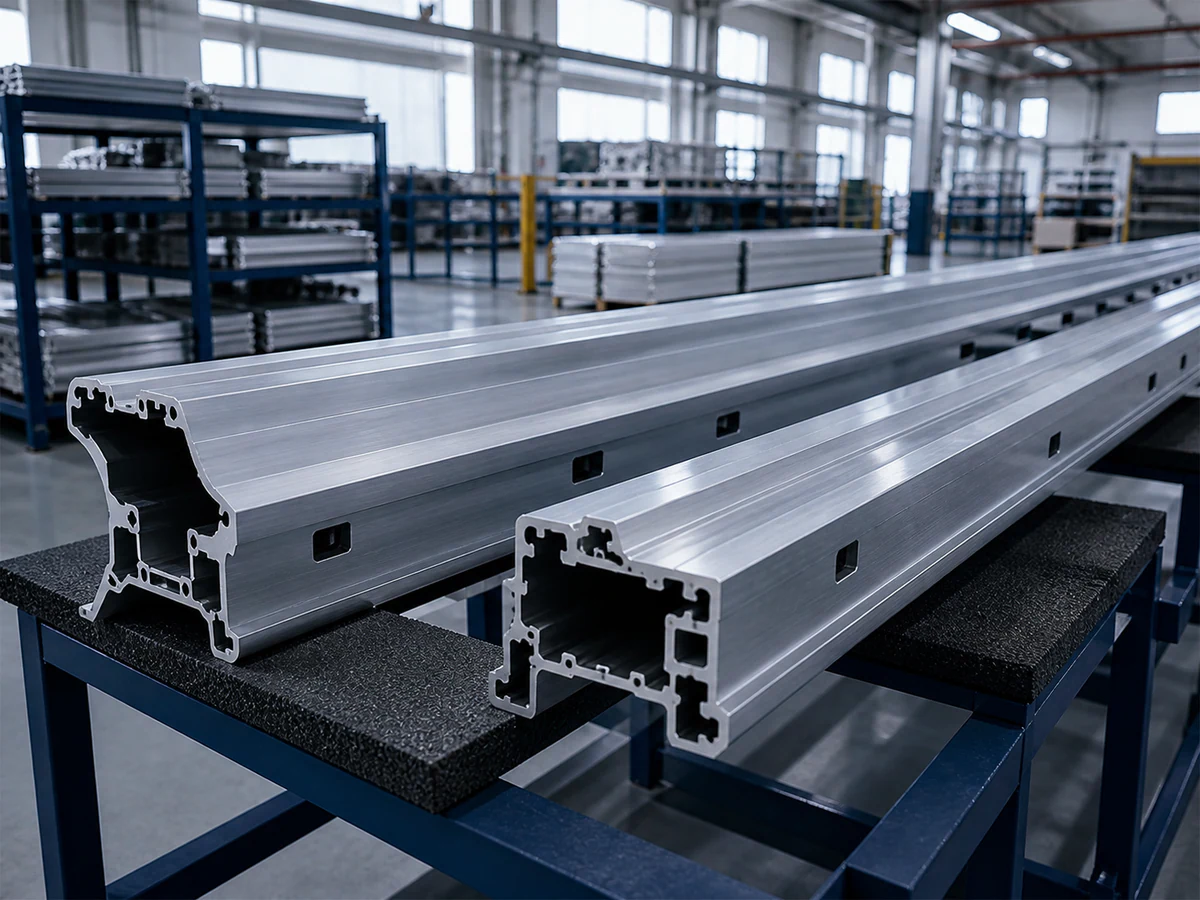
Threshold Beams
CHALLENGE
Long asymmetric profile and downstream assembly datum.
WHAT WE REVIEW
Profile support · datum · finished length · material flow
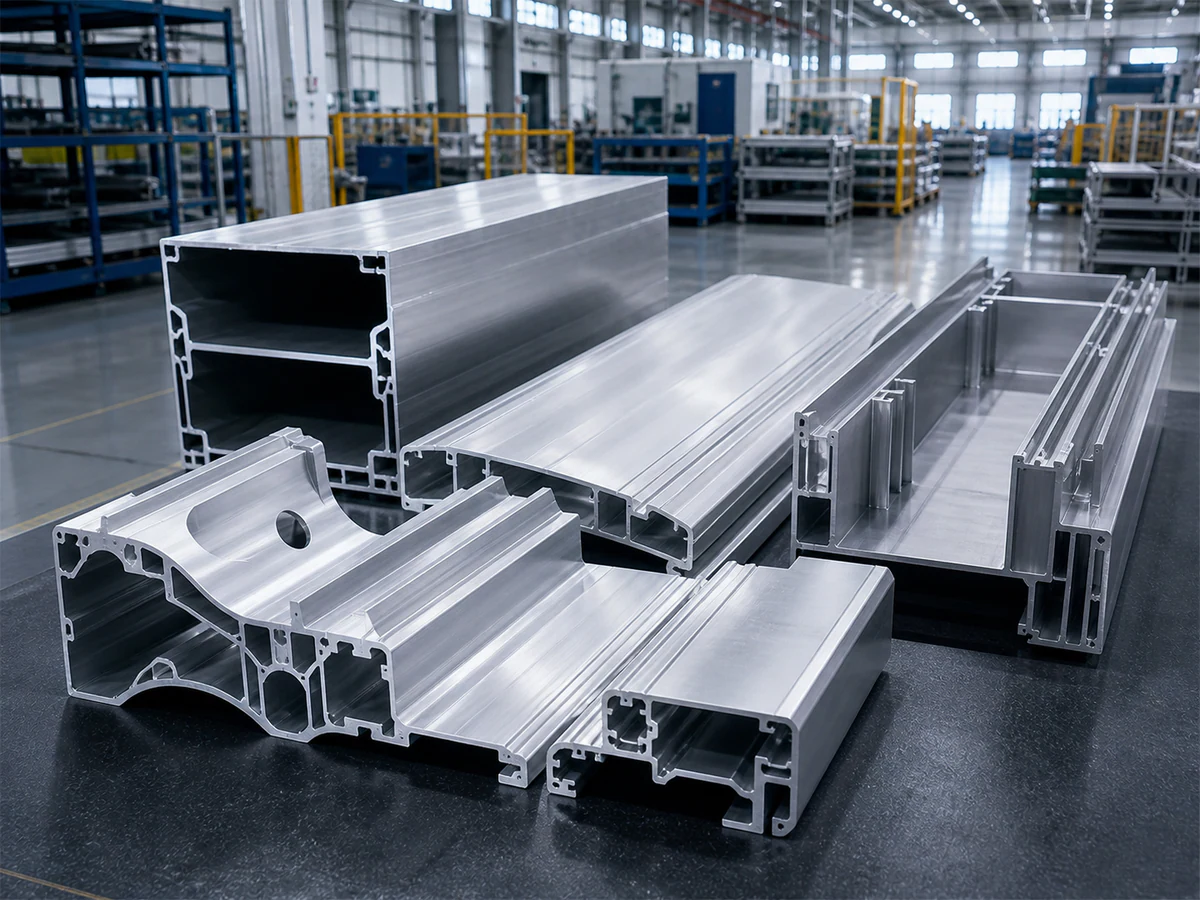
Multi-Cavity Structural Profiles
CHALLENGE
Thin walls, internal ribs and complex support geometry.
WHAT WE REVIEW
Stable support · clamp contact · section behavior · inspection datum
ENGINEERING DECISIONS
The Same Aluminum Profile Can Fail in Four Different Ways
The machine is selected around the real profile, not around a generic catalog specification.
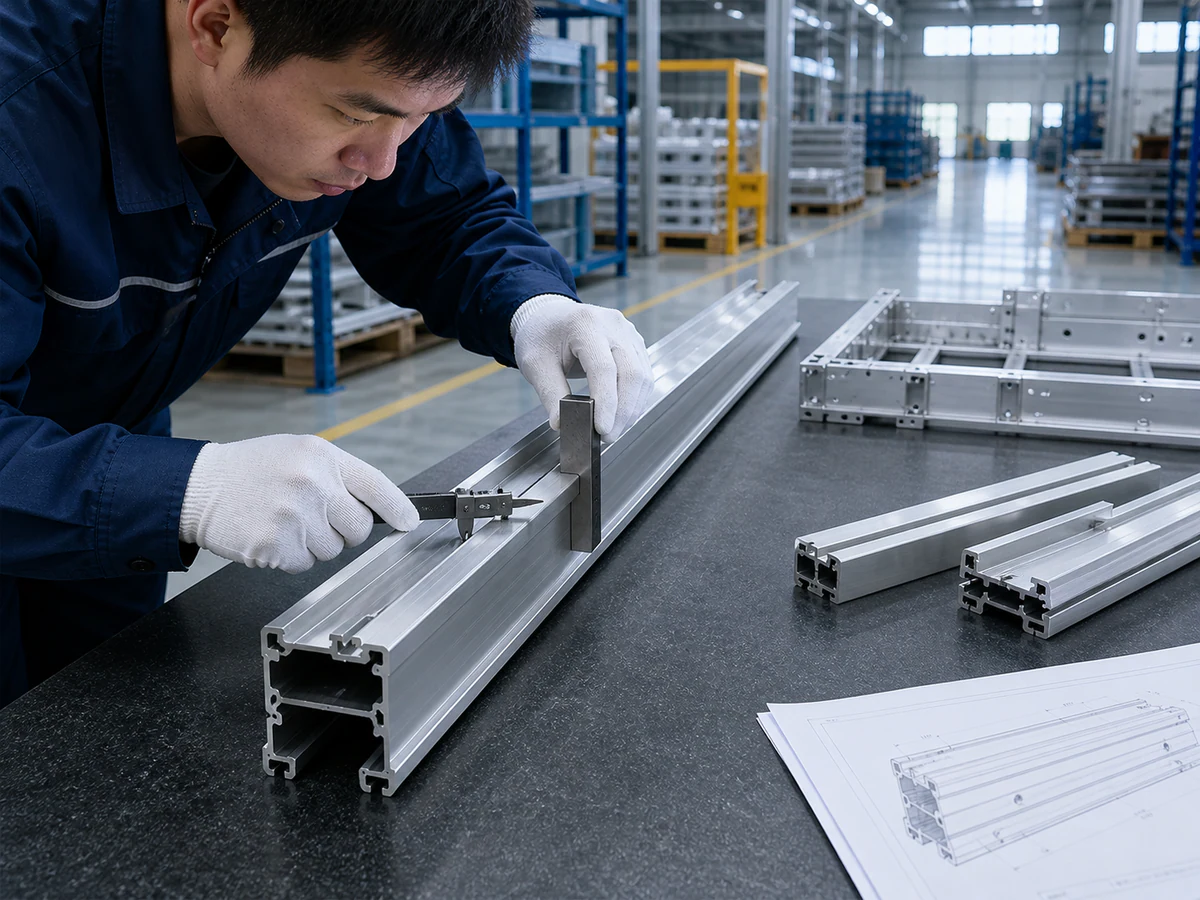
Critical Datum Surfaces
THE RISK
Generic clamping can use the wrong surface as the support datum.
JIURUN ENGINEERING RESPONSE
JiurunCut reviews the downstream assembly datum first, then plans profile support and clamping contact.
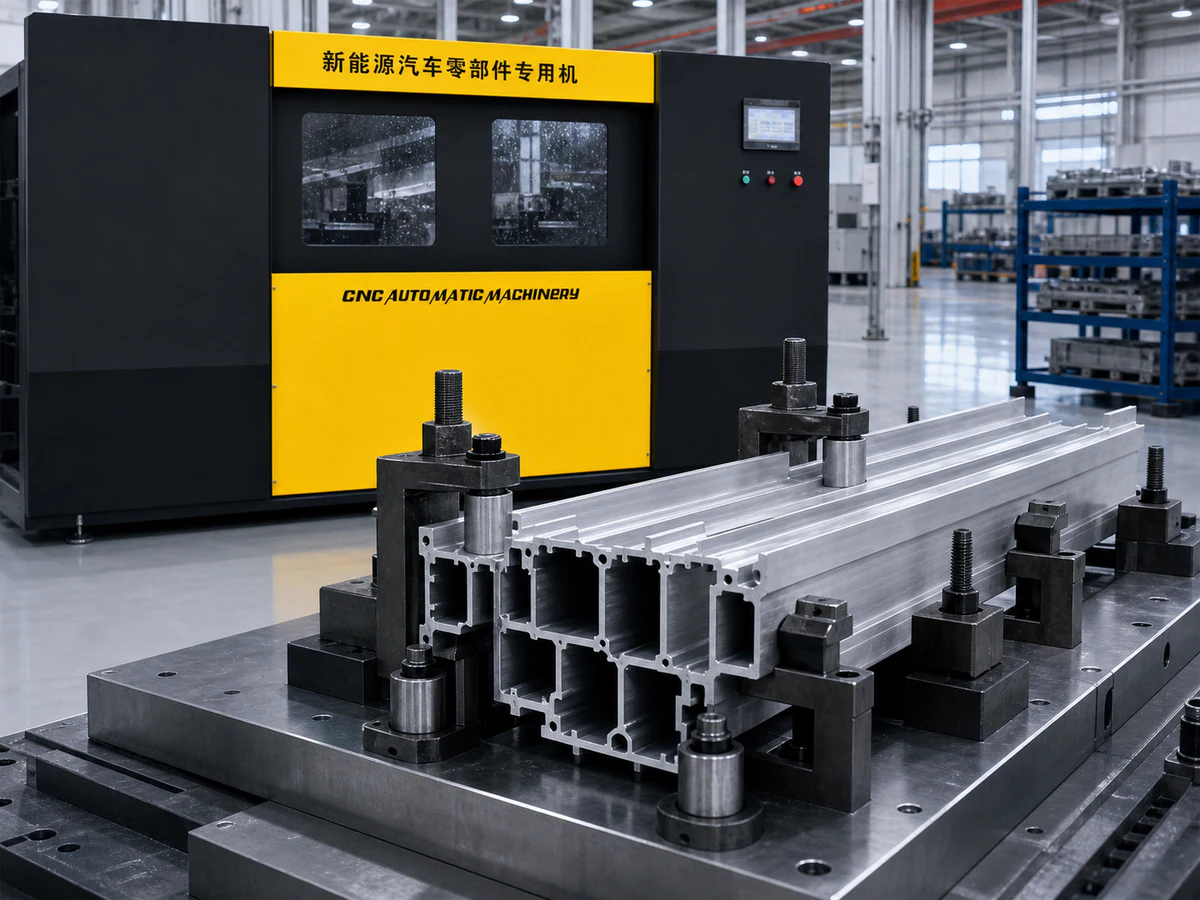
Multi-Cavity Sections
THE RISK
Thin walls and internal ribs can react differently under cutting and clamping load.
JIURUN ENGINEERING RESPONSE
Support and fixture contact are matched to the real cross-section instead of using one generic fixture.
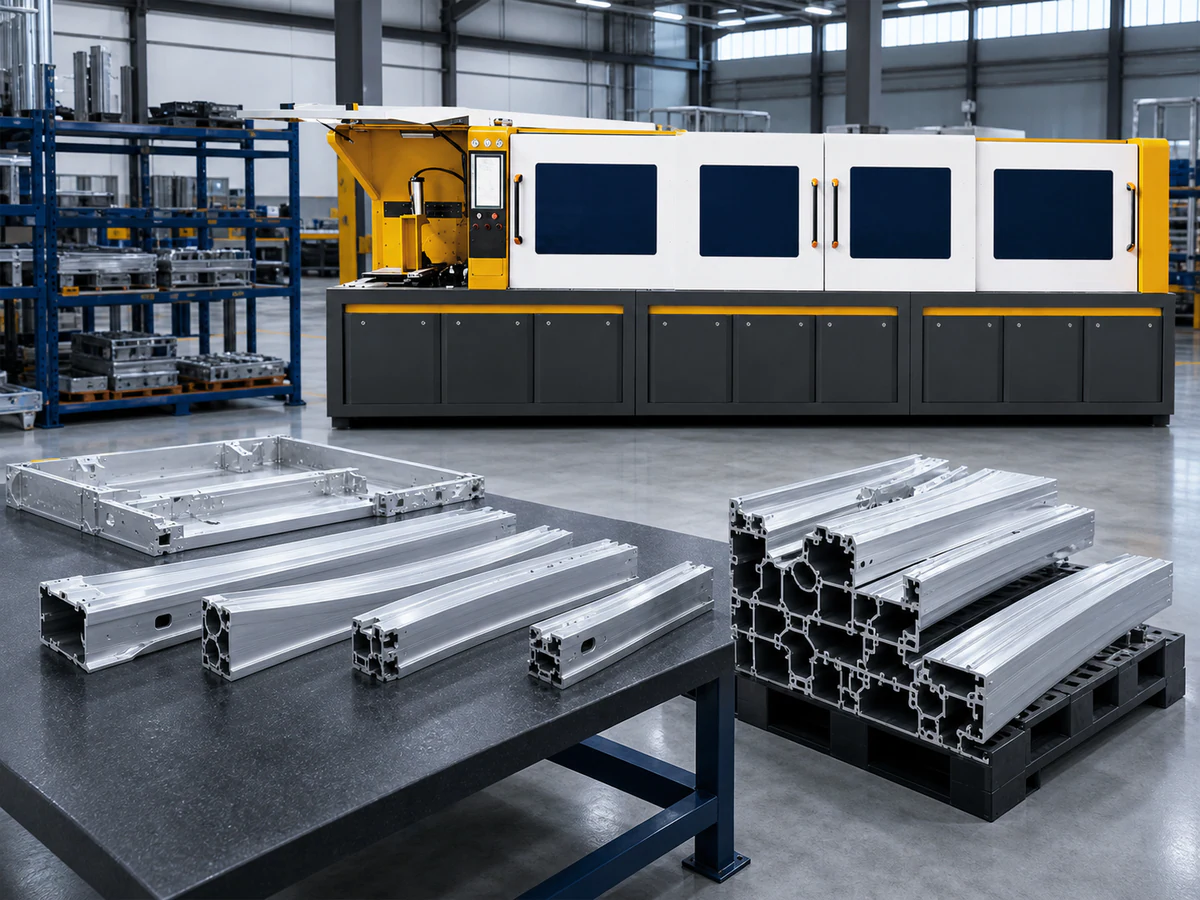
Multiple Cutting Angles
THE RISK
Structural joints may require several finished angles in one production family.
JIURUN ENGINEERING RESPONSE
JiurunCut selects the angle-control direction around the actual cut list, datum and change frequency.
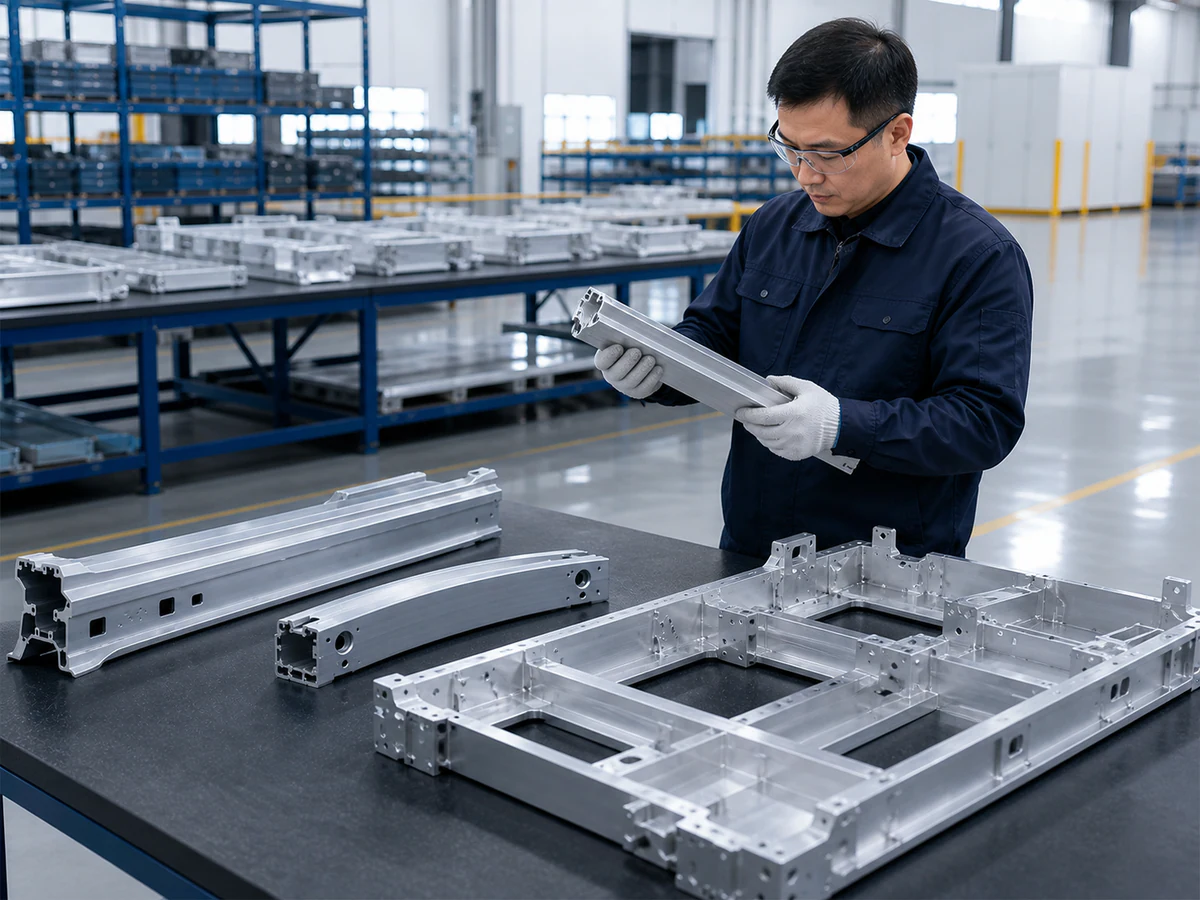
Visible Surfaces
THE RISK
Guides, clamps and collection can mark appearance-critical aluminum surfaces.
JIURUN ENGINEERING RESPONSE
Contact and handling surfaces are planned around the customer’s visible-surface requirement.
02 — BUILD THE CUTTING STRATEGY
ENGINEERING DECISION PATH
From EV Part Drawing to Datum, Angle and Assembly Verification
Each decision follows from the finished part, its datum and the production requirement.
We do not start from a machine model.
We start from the finished part.
Cross-section, wall thickness, cavities and stock condition.
Finished-length reference, mating surface and inspection origin.
Stable support areas around ribs, walls and asymmetric geometry.
Contact positions and force direction without marking critical faces.
Material flow, positioning and support through the cutting cycle.
Straight or multi-angle sequence for the finished geometry.
Cut face, finished length, angle, repeatability and assembly fit.
Configuration selected only after the engineering review.
CUTTING STRATEGY
Different Parts Need Different Cutting Strategies
The same machine logic cannot be applied to every EV aluminum extrusion.
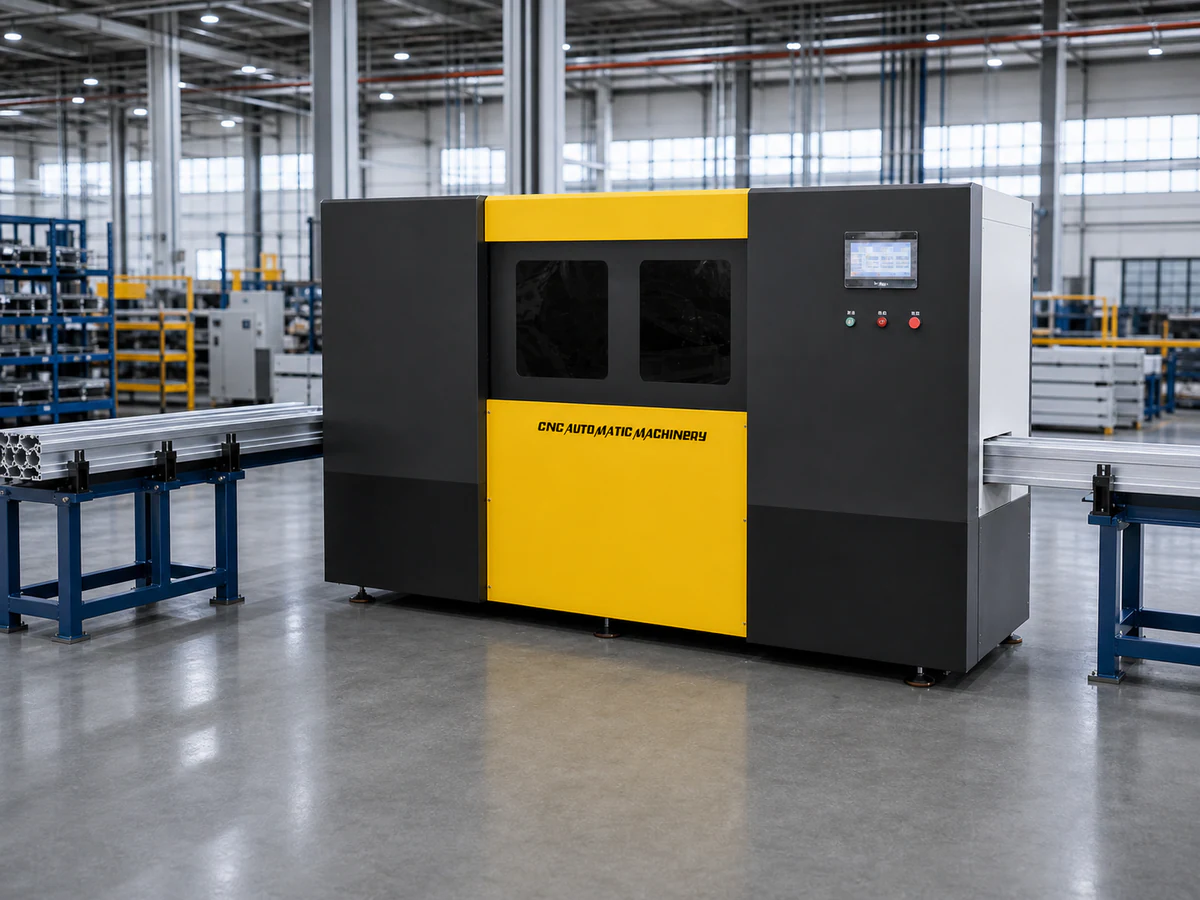
Long Structural Extrusions
WHY THIS DIRECTIONLong-material support, controlled feeding and the finished-length datum must be reviewed as one cutting direction.
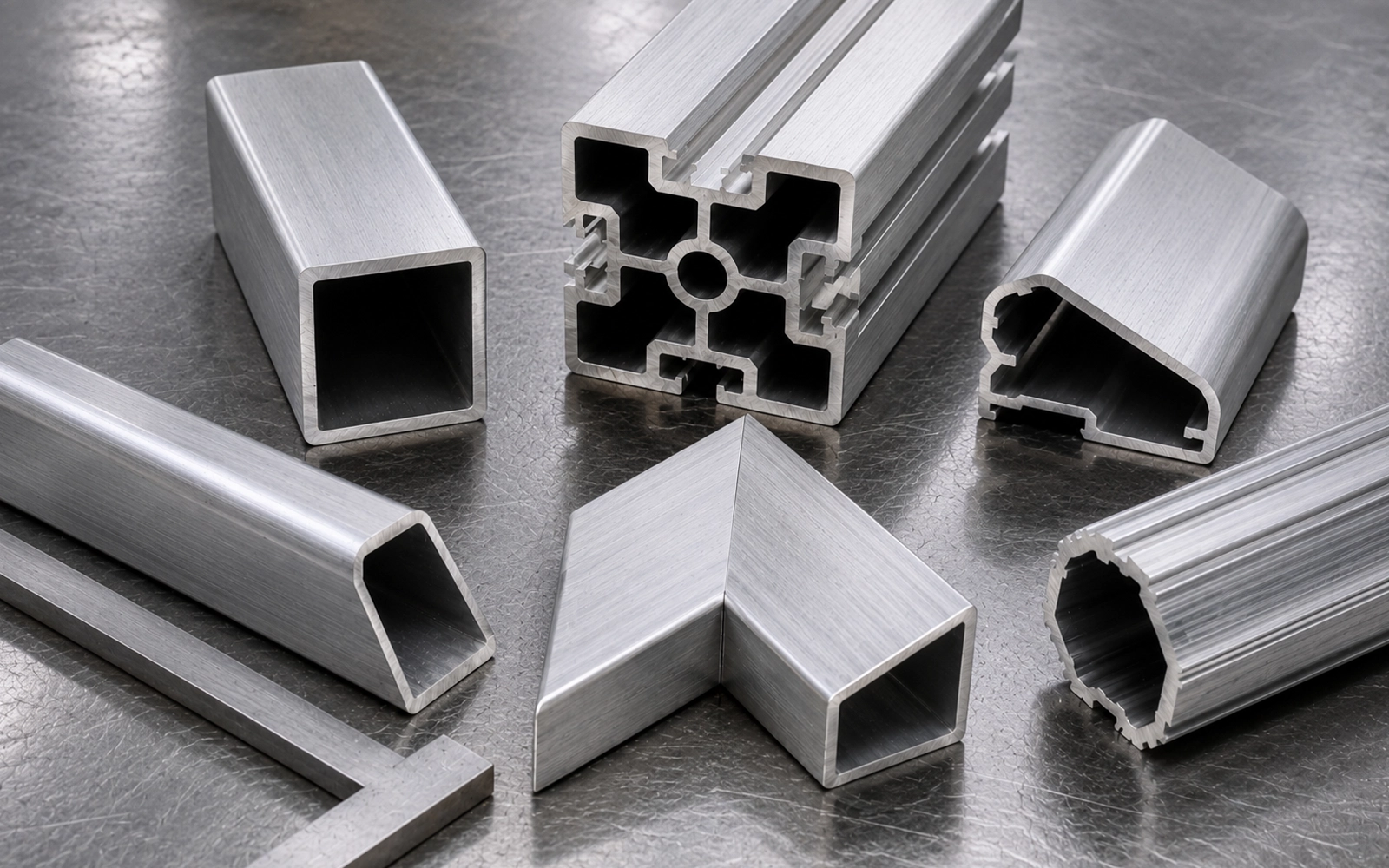
Reinforced Multi-Cavity Parts
WHY THIS DIRECTIONFixture contact, wall and rib support, and cut-face stability must be reviewed as one setup.
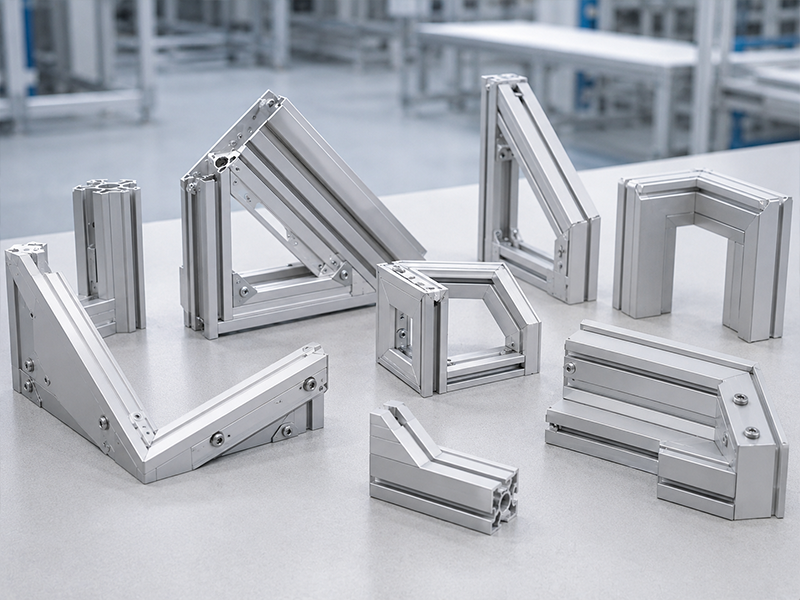
Multi-Angle Structural Parts
WHY THIS DIRECTIONAngle sequence, datum control and downstream assembly fit must be reviewed together.
MACHINE DIRECTION
Machine Directions After EV Profile and Angle Review
The board below shows two starting directions, not a final machine promise.
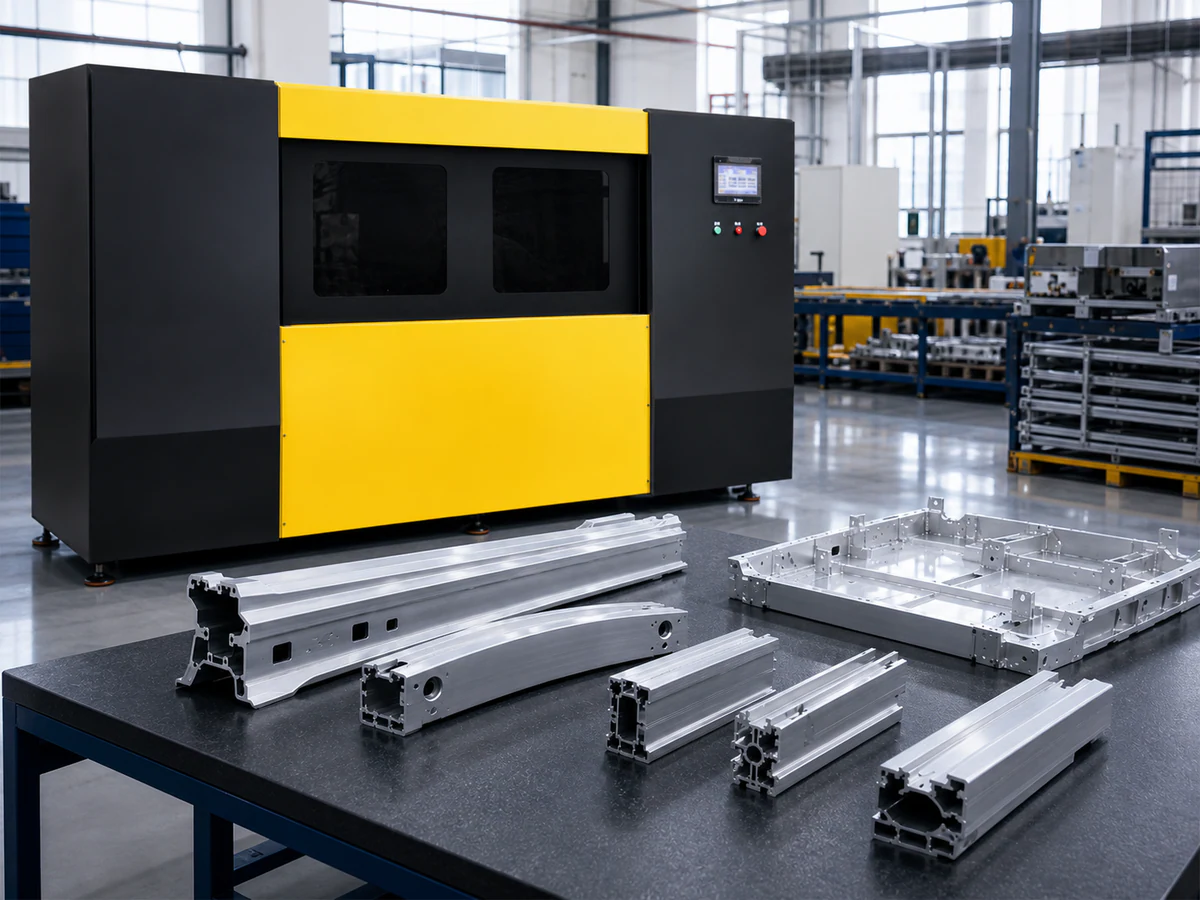
Profile-Specific CNC Cutting
- BEST STARTING POINT
- Profile-specific CNC cutting for EV structural parts.
- SELECTION TRIGGER
- Finished length and repeat production require controlled positioning.
- ENGINEERING REVIEW
- Cross-section, datum, support and fixture contact.
- SUITABLE WHEN
- Profile geometry is the main selection factor.
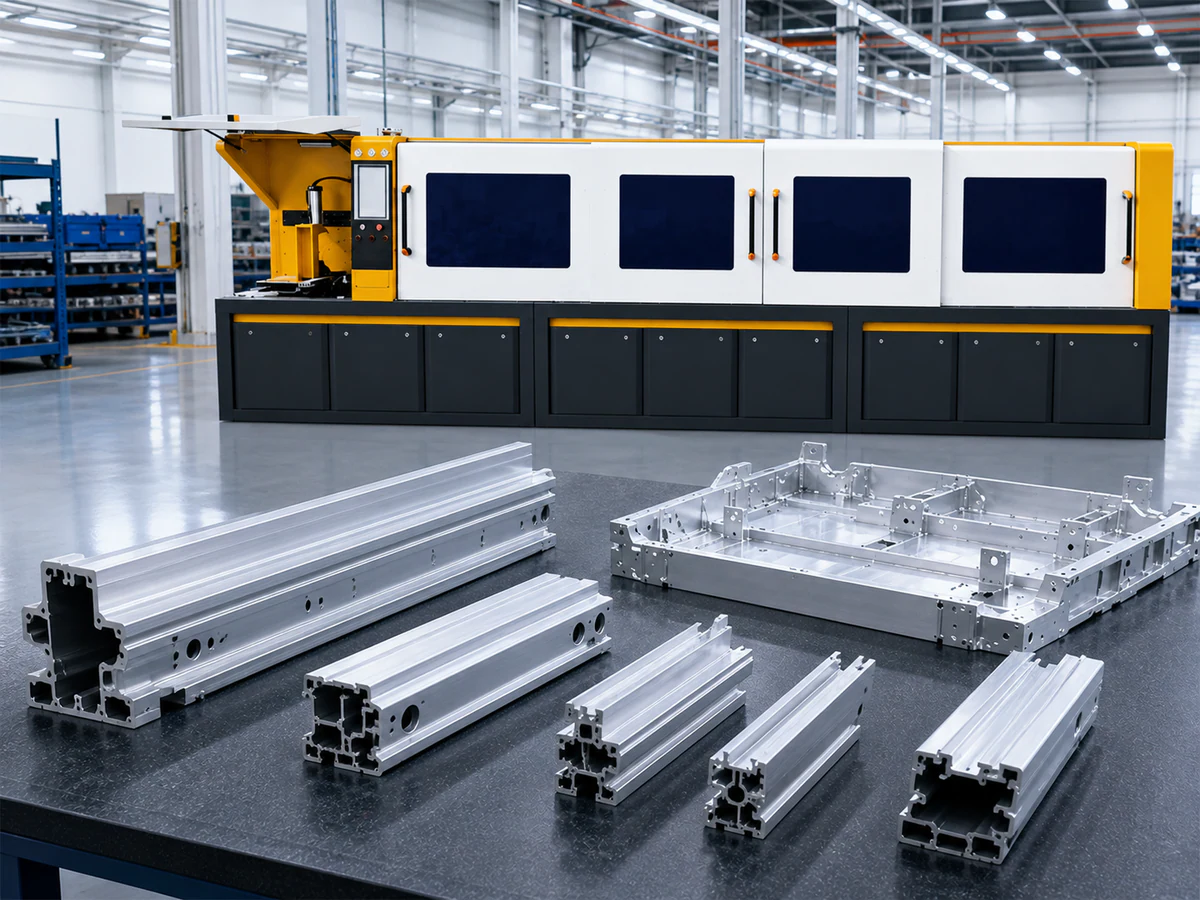
Multi-Angle Structural Cutting
- BEST STARTING POINT
- Multi-angle structural component cutting.
- SELECTION TRIGGER
- Several programmed angles repeat in production.
- ENGINEERING REVIEW
- Angle list, datum, sequence and downstream assembly geometry.
- SUITABLE WHEN
- Angle changes and assembly fit are central to the part family.
03 — VERIFY BEFORE PRODUCTION
ENGINEERING PROCESS
From Drawing to Verified Cutting
A practical review sequence for profile geometry, clamping, cutting and inspection.
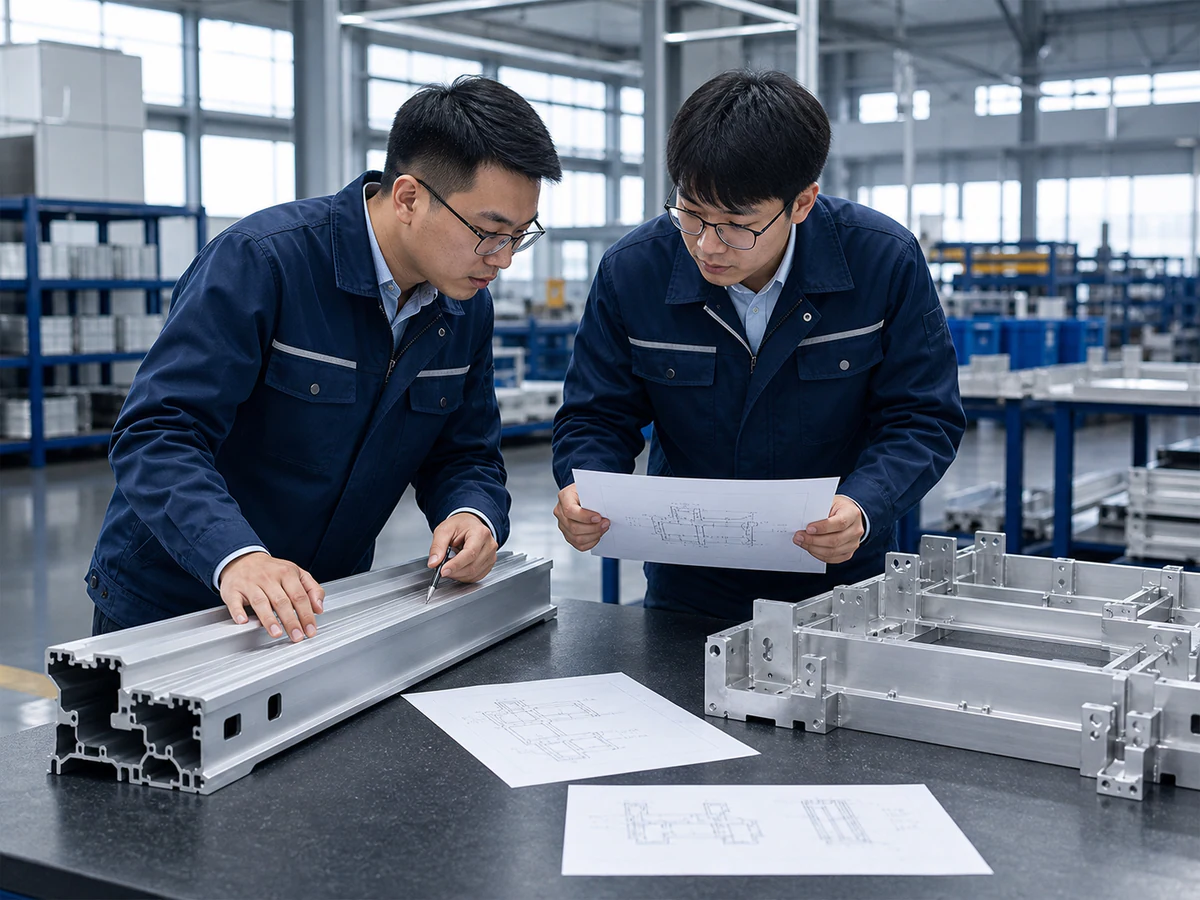
SEND
Profile cross-section, finished-part drawing, stock length, required angles and target output.
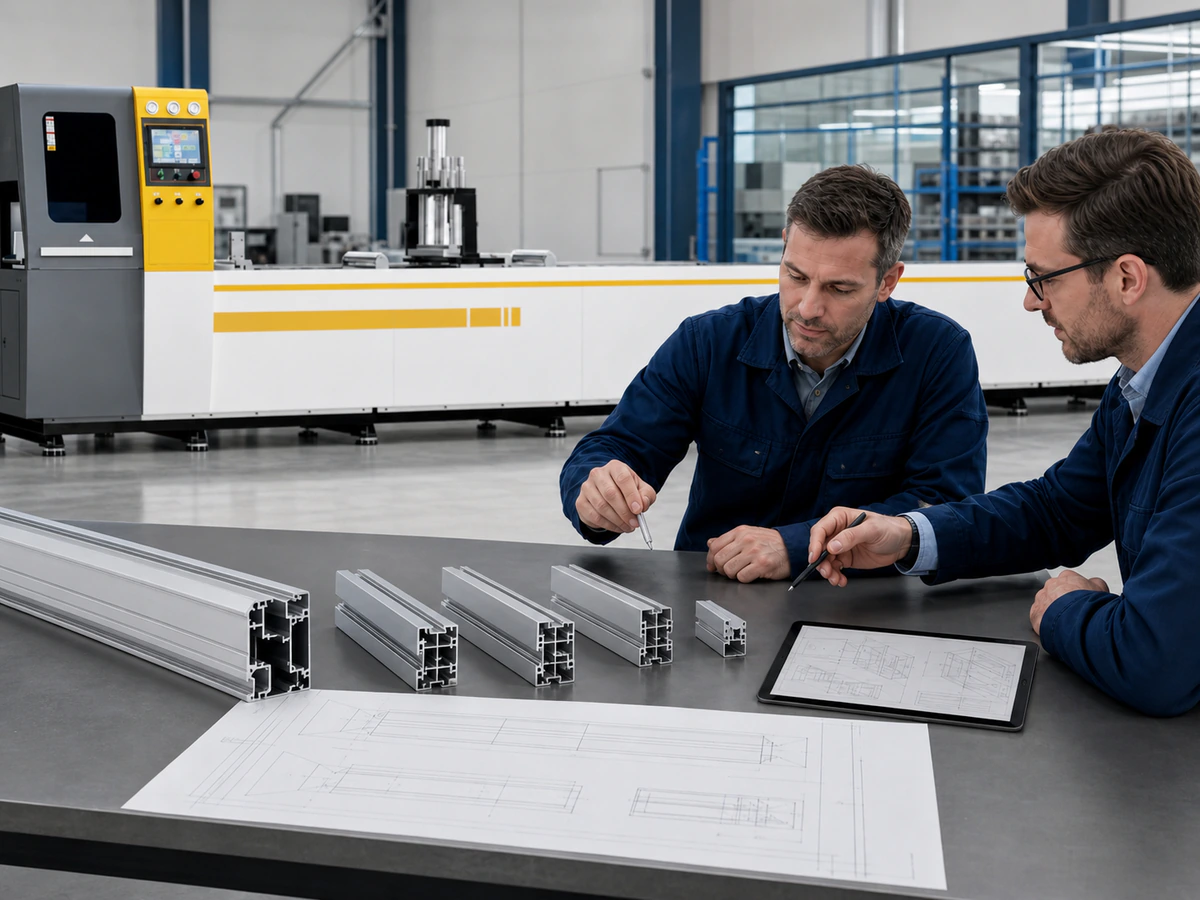
REVIEW
Geometry, datum, cut list, visible surfaces and the agreed inspection method.
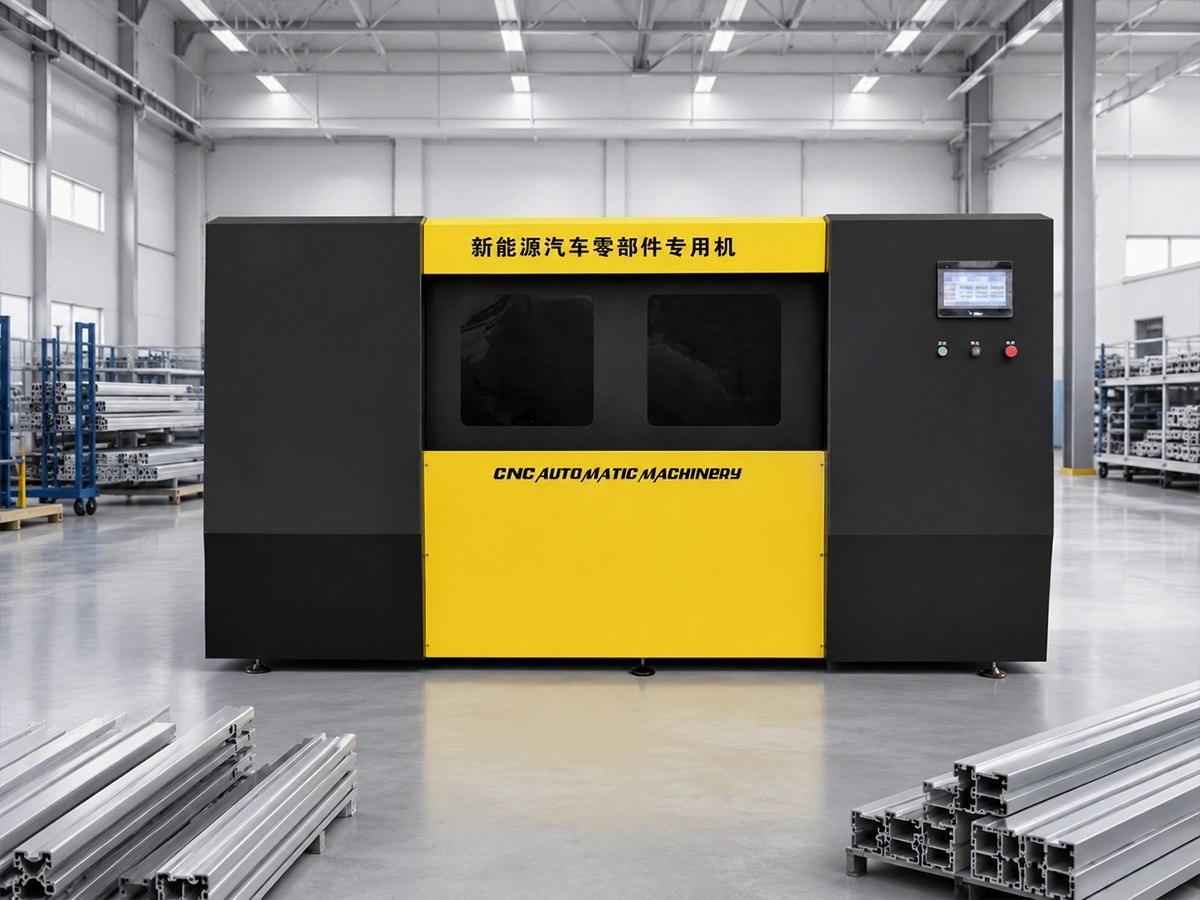
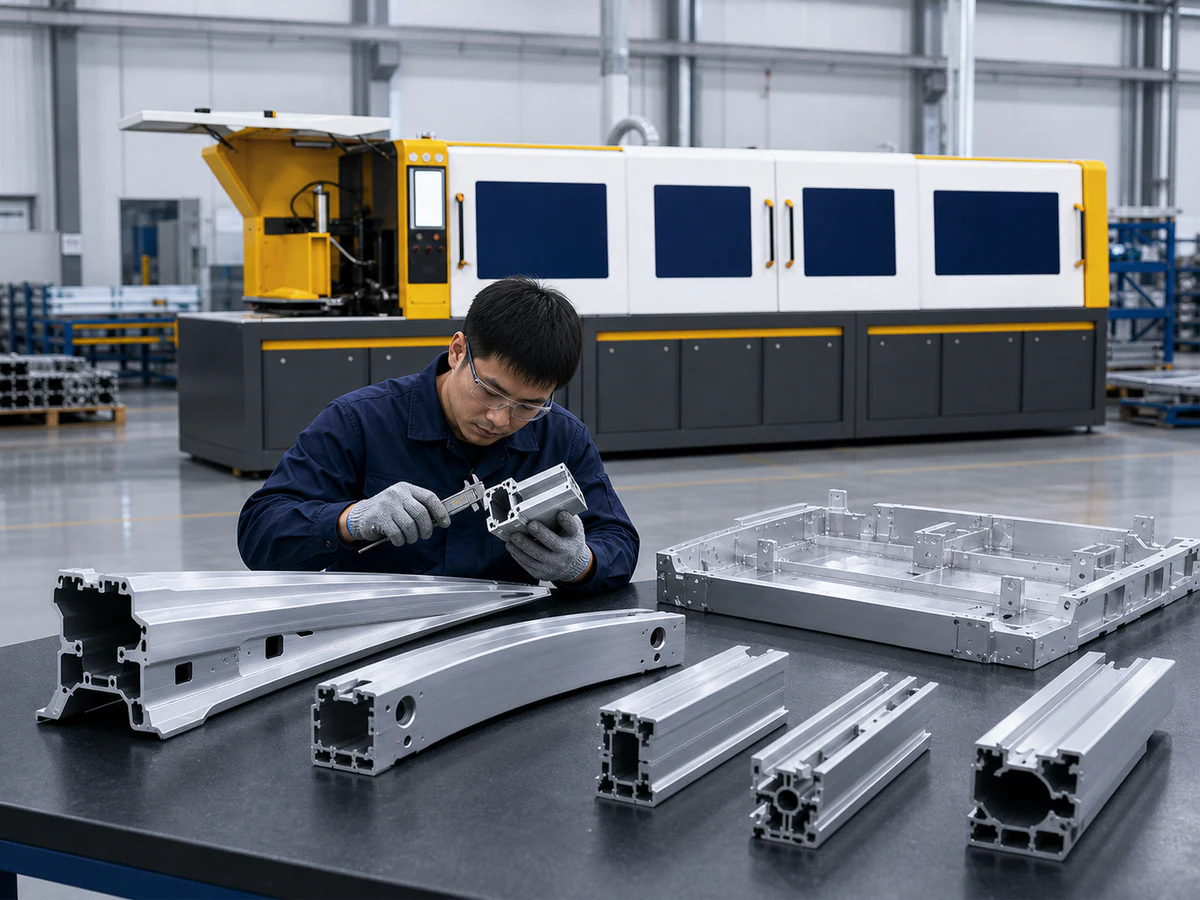
CONFIGURE
Feeding, support, clamping, angle sequence and machine direction.

VERIFY
Representative parts, finished length, cut face, repeatability and assembly fit.
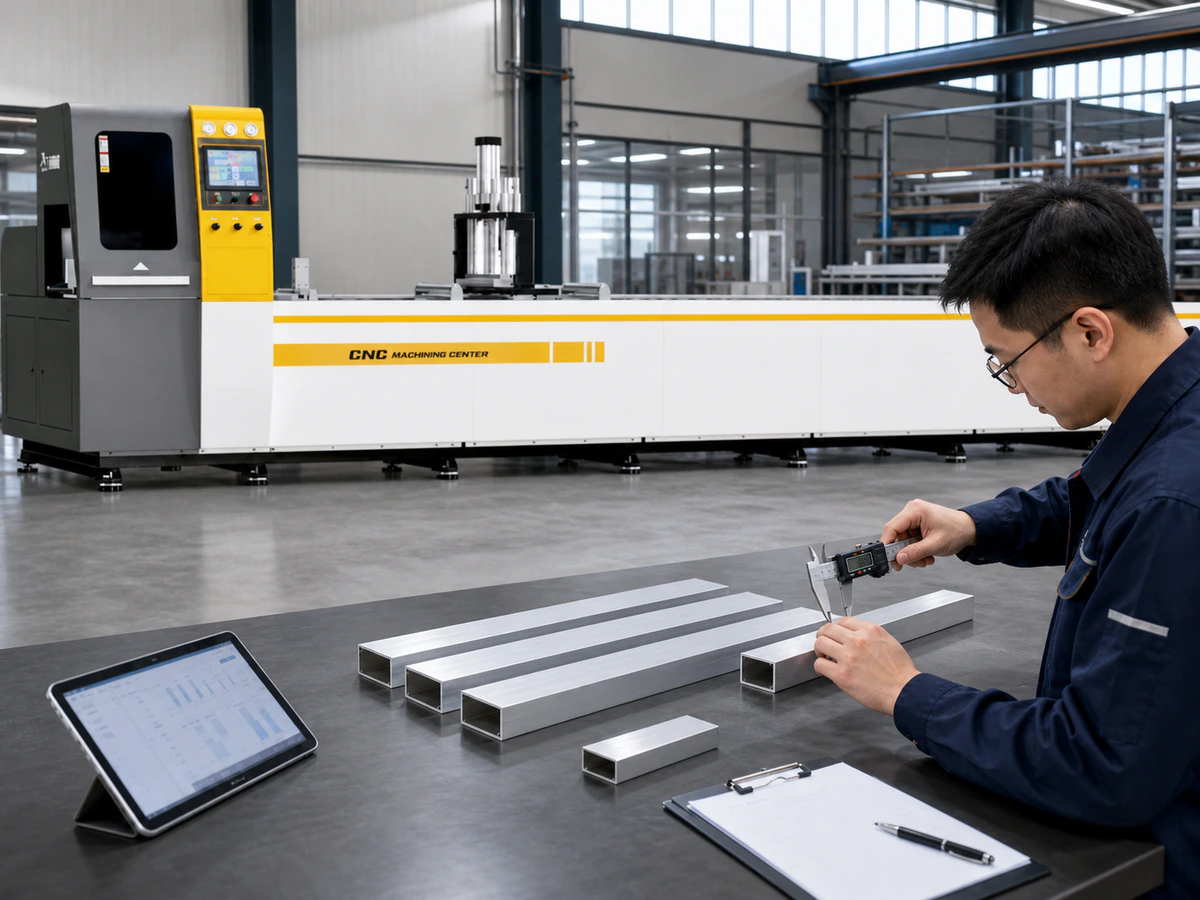
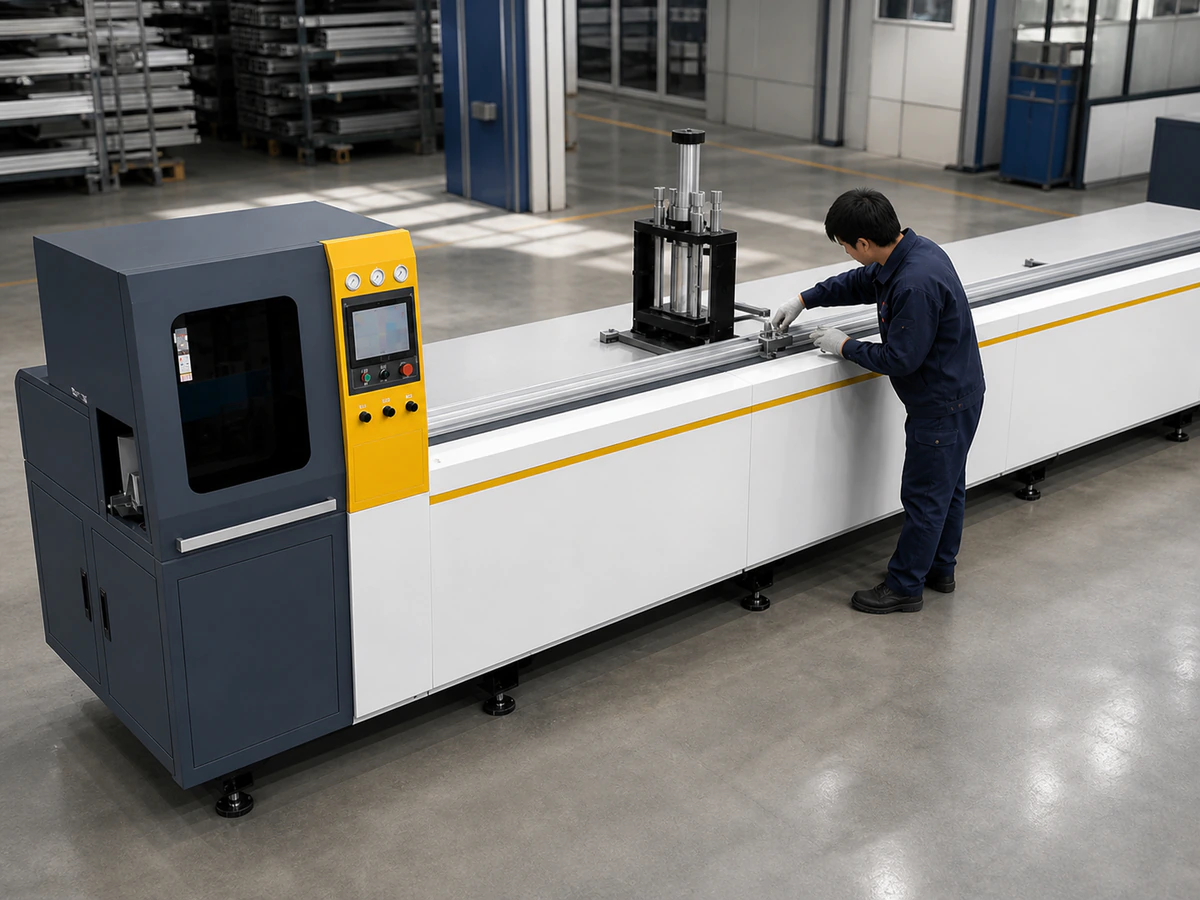
Sample cutting is reviewed against the agreed drawing and inspection method before the production setup is approved.
PROVE BEFORE PRODUCTION
Approve the Finished Part, Not Just the Machine
A machine is accepted only after the representative cut is checked against the agreed drawing, datum and production requirement.
A Representative Test Should Include
Inspect burrs, blade marks, edge condition and visible-face quality.
Verify the completed dimension from the agreed datum.
Verify the required angle order against the finished-part drawing.
Compare several consecutive samples instead of judging one part.
Verify the component against the downstream assembly requirement.
BEFORE SHIPMENT
- 01Machine Assembly
- 02Feeding & Positioning
- 03Profile Clamping
- 04Representative Sample Cutting
- 05Length / Angle / Surface Verification
- 06Final Commissioning
FASTER ENGINEERING REVIEW
Send These 6 Items and We Can Review the Application Faster
Complete inputs help the engineering team review support, clamping, machine direction and sample-cut criteria without guessing.
Drawing, CAD/PDF or a clear end-face photo with dimensions.
Mark the finished geometry, datum and assembly-critical faces.
Include the incoming extrusion length and required cut list.
List every angle and indicate how often the angle changes.
Identify inspection limits and appearance-critical faces.
Share daily or monthly output and the current cutting problem.
BUYER FAQ
EV Aluminum Cutting Machine Buyer Questions
Direct technical answers based on the real profile, cutting list and inspection requirement.
Can JiurunCut evaluate battery tray side-rail profiles?
Yes. JiurunCut reviews the side-rail cross-section, wall thickness, assembly datum, stock and finished length, tolerance and output target. The engineering team then checks how the profile should be supported and clamped, what cutting direction is practical, and which dimensions and cut-surface conditions should be verified during sample cutting.
Can the machine cut crash-beam aluminum extrusions?
Yes, when the real crash-beam section and process requirements are confirmed. Reinforced cavities, asymmetric geometry and visible surfaces affect support and clamping. JiurunCut reviews the cut list, datum, required finished length, tolerance and production volume before recommending a machine direction, fixture contact and inspection plan.
How do you clamp multi-cavity EV aluminum profiles?
Clamping is planned from the actual section rather than a generic fixture. JiurunCut identifies stable support areas, downstream assembly datums, thin walls, internal ribs and appearance-critical faces. Fixture contacts and force direction are then reviewed to hold the profile consistently without relying on a surface that could deform or be marked.
Can one machine handle several cutting angles?
It depends on the angle list, part family and change frequency. JiurunCut reviews every required angle, the datum used for inspection, finished geometry and production sequence. A multi-angle machine direction may be suitable when programmed angle changes repeat in production, but the profile support, fixture and verification method still require drawing-based confirmation.
Which machine is suitable for my EV aluminum part?
The selection starts with the profile drawing, not only the model name. JiurunCut compares the section, finished length, cutting angles, datum, visible surfaces, tolerance and output. JR-505CNC and JR-550CNC-CORNER are two possible directions for this application, but the final feeding, clamping and cutting configuration must be confirmed.
Can JiurunCut test my real profile before purchase?
Yes, representative profile sample cutting can be planned before production approval. The customer and JiurunCut first agree on the cut list, datum, finished length, angles, surface condition and inspection method. The resulting samples can then be checked for cut face, dimensions, repeatability and downstream assembly fit.
What information do you need to recommend a machine?
Send the profile cross-section and finished-part drawing, stock and finished lengths, required angles, tolerance, visible-surface requirement and daily or monthly output. If available, include a real sample and the current cutting problem. These inputs allow JiurunCut to review machine direction, fixture contact, material flow and sample inspection.
How do you protect visible aluminum surfaces?
JiurunCut first asks the customer to mark the appearance-critical faces and assembly datums on the drawing or sample. Guides, supports, clamp contacts and collection are then planned around those surfaces. The proposed setup is checked during representative cutting so surface marks can be assessed together with cut quality, dimensions and handling.
How do you verify finished length and assembly fit?
Finished length is checked from the agreed datum using the agreed inspection method, not an assumed edge. Multiple samples should be compared to review repeatability. Where assembly geometry matters, finished profiles can also be placed in a representative fixture or downstream frame condition to assess angle sequence, mating surfaces and fit.
Can the cutting system be configured for repeated batch production?
Yes, when the profile family, cut list, changeovers and target output are defined. JiurunCut reviews positioning, support, clamping and program requirements around the real section. Representative parts are then inspected for length, angle, surface and repeatability before the configuration is accepted for repeated batch production.
Send the cross-section and finished-part drawing for engineering review.
ALUMINUM CUTTING MACHINE QUOTE Tell us what you need to cut. We’ll confirm the details with you, recommend a machine and prepare a quote. Prefer to chat? Only your name or company and WhatsApp / phone are required. Everything else is optional.Which Machine Fits?
What Will It Cost?
No model or drawing needed to get started.Send Your Inquiry