
Aluminum cut part packaging needs to protect the required surfaces, retain part identity and deliver the correct accepted quantity. Agree the handoff before approving a cutting setup. A good cut can still become an unusable delivery if parts rub together, lose their labels or arrive as an incomplete batch.
Three things to remember
- Pack accepted parts separately from pieces awaiting inspection.
- Choose contact materials and supports for the actual section and finish.
- Check the receiving end of the route, not only the packed appearance.
On this page
What does aluminum cut part packaging need to deliver?
Invented example: a customer orders 60 accepted rails to one drawing revision. The cutting operation produces 64 pieces. Inspection releases 60, while four remain on hold. The handoff plan uses three packages of 20 accepted rails. These quantities illustrate the record; they are not a machine output claim.
| Stage | Recorded quantity |
|---|---|
| Produced | 64 pieces |
| Released for this order | 60 pieces |
| Still on hold | 4 pieces |
| Packages delivered | 3 × 20 accepted rails |
The four held pieces remain identified outside the released shipment. Packing them into a fourth package does not make them accepted. If a released rail is damaged during packing, hold that rail and correct the shipment count before dispatch. Do not keep the original label and hope the shortage disappears.
This example separates production quantity, inspection status and delivery quantity. The same distinction matters for sample parts, complete frame kits and mixed-length orders. A package count is useful only when its contents and status are known.
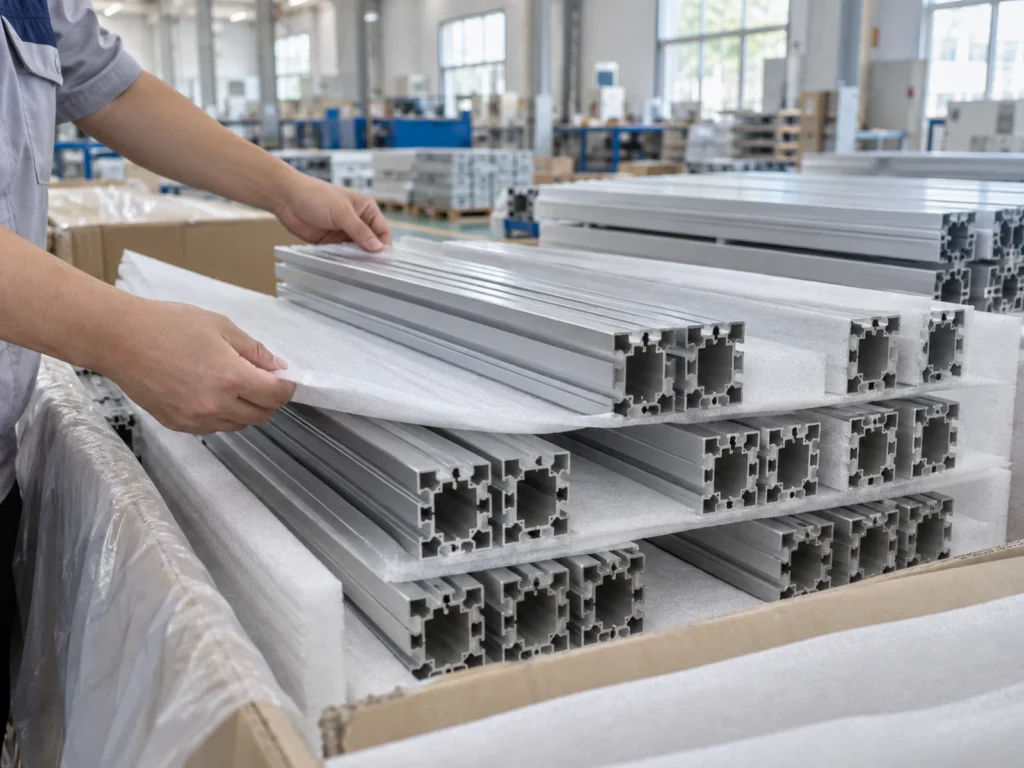
Map the route from the saw to the recipient
Write the actual sequence in plain terms: collection point, inspection bench, staging rack, package and next operation. Add transport and storage stages when the parts leave the work area. At each handoff, note who owns the accepted quantity and how part identity is retained.
A short internal transfer and an external shipment can require different reviews. Describe the handling method, expected storage conditions and how the recipient removes the parts. The packaging supplier needs this context before proposing a material or arrangement.
Include the receiving team’s needs. They may need to inspect an exposed cut end, remove a temporary film or select parts in assembly order. Ask how the package opens and how the first and last members are removed. Convenient packing should support that next step.
For surfaces that need attention before and during sawing, see the visible-surface cutting guide. This handoff review starts where parts leave the cutting process and follows them to the recipient.
Review the places where parts touch
Look at contact between neighboring parts, between layers and against the container or support. Use the actual section drawing to identify thin features, projecting edges and important faces. A flat separator does not automatically protect every groove or protrusion.
Inspect contact materials before using them on accepted parts. Debris at a contact point can defeat the intended separation. Define how the work area and reusable materials are checked, and who replaces a damaged or unsuitable separator.
Long members also need a reviewed support arrangement. Ask the responsible packaging or handling supplier how the loaded package keeps those members located through the specified route. A separator should not be treated as a structural support or a lifting specification.
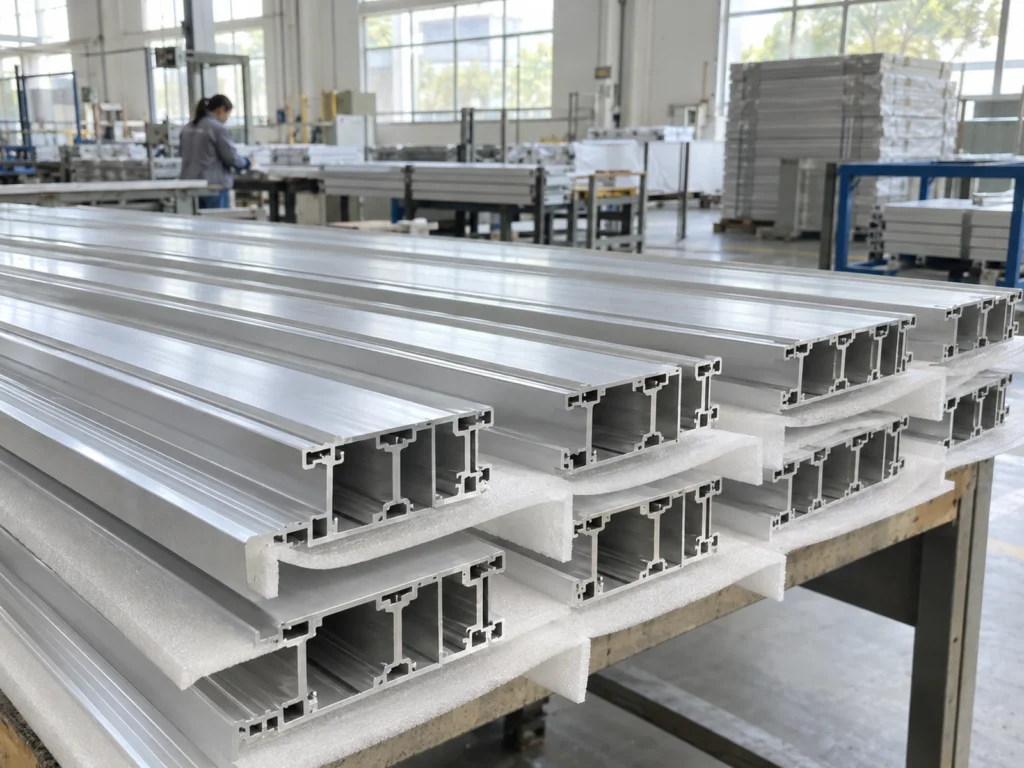
For aluminum cut part packaging trials, compare the condition before packing and after unpacking. Photograph the same identified faces at both points when appearance is part of acceptance. Link the observations to a part ID and package ID so an issue can be traced.
Use temporary film only with a defined removal plan
Temporary protection can be part of the handoff, but it needs to suit the finish and route. Film supplier Frank Lowe identifies surface compatibility, clean removal, handling durability and UV exposure as selection considerations. Confirm these with the supplier for your intended use.
Specify the actual surface finish and where the film may touch. Ask when protection is applied and removed, and which storage conditions are permitted. Test removal on representative material after the intended exposure period. Check the resulting finish and any residue against the agreed criteria.
A film’s suitability on one coated profile does not approve it for every finish. Record the product and application method that passed your trial. If the finish, storage route or protection material changes, review whether another check is needed.
Use the protection supplier’s instructions for the selected product. This article does not set an adhesive grade, outdoor exposure duration or removal temperature. Those details belong to the approved material and your agreed handling conditions.
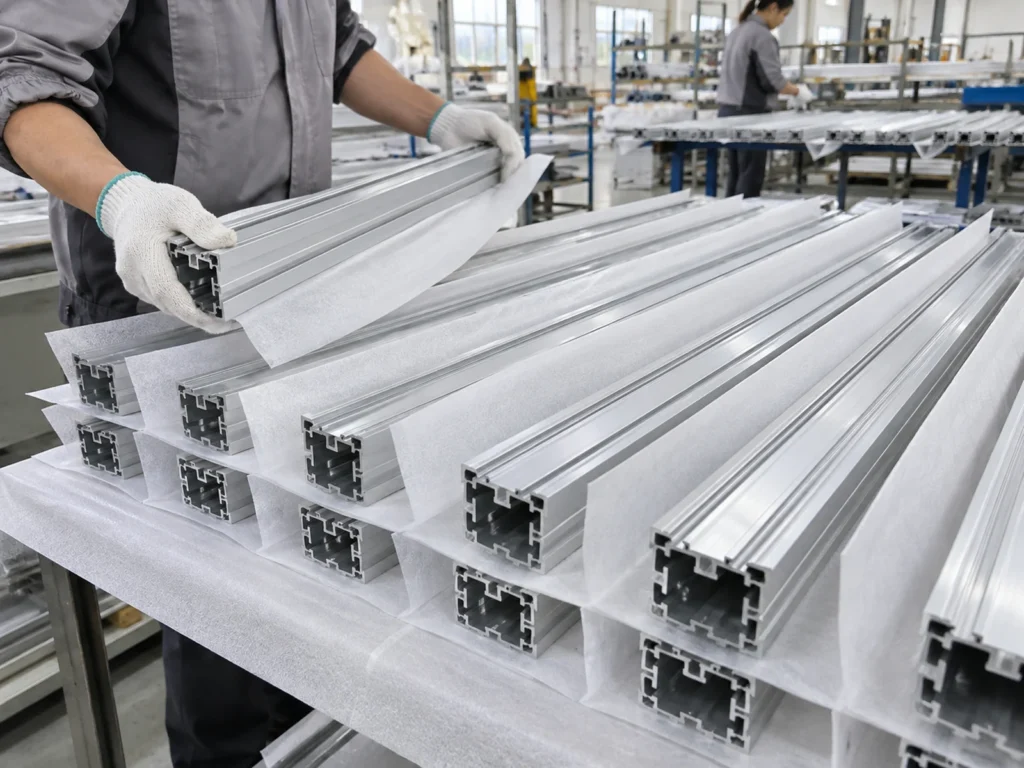
Let the label explain the contents
Use a package ID that links to the part ID, drawing revision and accepted quantity. For the 60-part example, the record should show packages 1, 2 and 3, each with 20 accepted rails. Keep the four held pieces on a separate status record.
Mixed parts need a clear contents list. If one package contains two lengths or mirrored members, list each identity and quantity. Explain any orientation mark that the next operation depends on. Do not rely on the recipient recognizing a subtle difference by eye.
Keep labels readable and available at the handoff. Choose the label position and attachment method with the required finish in mind. Marking a customer-visible surface should follow an approved method, rather than becoming an improvised packing step.
Check the delivery after it is opened
A receiving check closes the trial. Confirm identity, quantity and the agreed condition after unpacking. Record whether the package and temporary protection were removed as intended. If something is unclear, retain the package ID and affected part IDs with the observation.
Separate findings from explanations. A photo may show an edge mark without establishing where it occurred. Compare the before-and-after records and review the relevant handoffs. Avoid assigning a cause before that evidence is available.
Include packing, handling and replacement work when comparing the whole production route. The cost per accepted part guide explains why made quantity alone is an incomplete basis for cost. Use parts actually accepted at the agreed delivery point.
Common questions
Can I count an uninspected part as a spare?
Keep its status explicit. An extra piece on hold cannot silently replace an accepted part or complete the promised accepted quantity.
Will one separator suit every profile?
No universal choice is established here. Review the section, finish, contact points and route, then check representative parts after unpacking.
Does protective film replace a shipping package?
It addresses selected surface contact risks. The full package still needs its own support, containment and route review.
What should the cutting quotation include?
Explain the collection and handoff scope. Identify which equipment or manual steps are included and who supplies any separate packaging arrangement.
Discuss your cut-part handoff
Send your section drawing, finished lengths, batch pattern and the next operation. Mark important surfaces and explain how parts are collected. JiurunCut can discuss the cutting and collection scope, with a representative trial tied to your actual handoff.