
Aluminum saw feeding stroke is the distance a material feeder advances in one defined movement. It is a different specification from the stock length, finished-part length and remaining tail. Confirm how the supplier defines each value before comparing machines.
A brochure’s feed number does not answer every length question. Review the shortest and longest required parts, the supplied bar lengths and the proposed feeding sequence together. Ask for the supported range on your actual profile and machine configuration.
Keep four lengths separate
- Stock length describes the incoming material.
- Feeding stroke describes a feeder movement, subject to the supplier’s definition.
- Finished length and usable tail require their own confirmed limits.
On this page
Aluminum saw feeding stroke: define the four length terms
1. Incoming stock length
This is the length of the bar, tube or extrusion presented to the process. Specify the lengths you actually purchase, including the range if deliveries vary. A supported stock length also depends on the proposed loading and support arrangement.
Show the section and its orientation as well as its length. A long narrow profile and a long wide section can present different handling conditions. The incoming straightness guide explains why the physical stock needs its own review.
2. Material feeding stroke
This describes a feeder movement under a stated definition. Ask whether the quoted value is a maximum travel, an adjustable range per movement or a different control limit. Keep the definition beside the number in the comparison sheet.
Also confirm whether the value applies to your cutting angle and proposed feeding mode. Avoid comparing a single-stroke number from one quotation with a finished-part range from another. They answer different questions.
3. Finished-part length
This is the drawing-defined dimension on the cut part, measured between the specified references. It needs its own supported minimum and maximum for the configuration and section. For angled ends, identify the long point, short point or other required reference.
The miter length guide provides simple reference examples. A feed setting and a finished dimension can require different treatment of the cutting position and blade kerf. Have the supplier explain that relationship for the control system.
4. Remaining tail
This is the stock left toward the end of the cutting plan. Separate the predicted remnant from the minimum remaining stock that the proposed machine can handle under its approved conditions. The first is a material calculation; the second is a capability question.
A spreadsheet showing that another part fits in the remaining length does not establish that the machine can feed, hold, cut and collect it. Review that condition explicitly. Do not borrow a tail value from a different machine or profile.
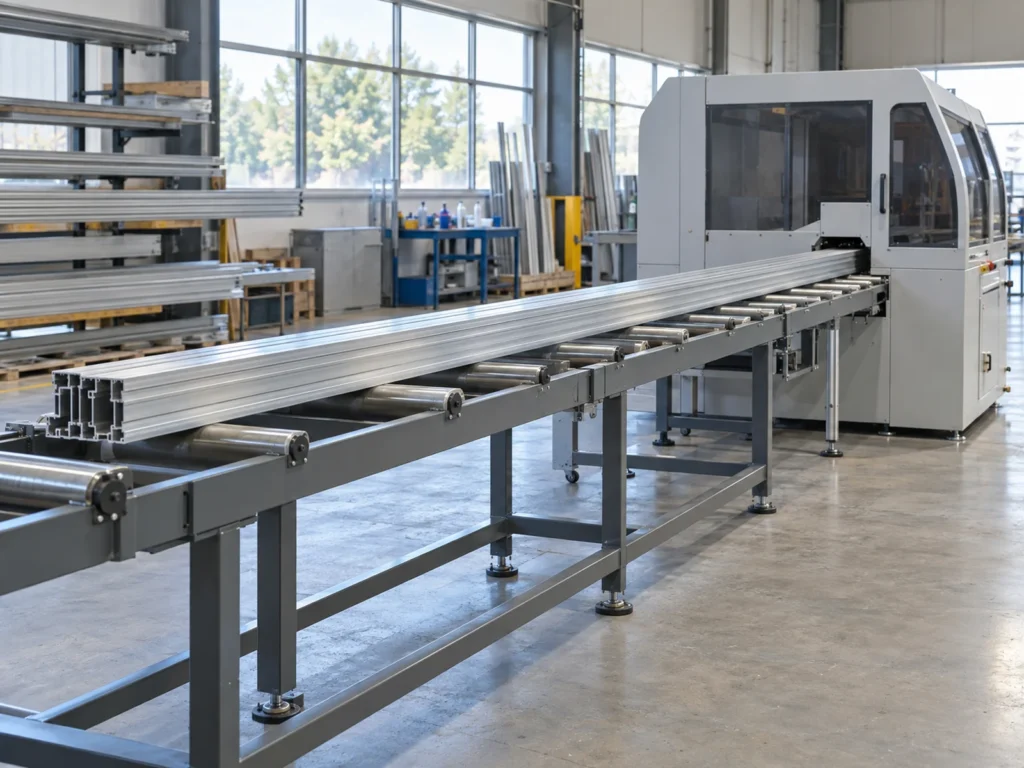
Material feed and saw-blade feed describe different movements
Confirm what moves whenever the quotation uses the word feed. Material feeding advances the stock toward its next cutting position. Saw-blade feeding describes the blade’s cutting movement. A distance, speed or axis description needs to identify its subject.
For a documented terminology example, elumatec’s SAS 142 page lists material-infeed control for transport and part length separately from saw-feed control for blade movement. Those are specifications for that manufacturer’s product, not claims about a JiurunCut configuration.
In your inquiry, label each question clearly: material advance, blade movement, stock support and finished-part range. This makes the reply easier to compare and prevents a blade-feed feature from being mistaken for a long-part feeding capability.
What repeated feeding can and cannot tell you
Some machines provide repeated material-feed movements. That feature must be confirmed for the proposed equipment. Do not assume it is present because a machine is described as automatic or CNC.
For example, elumatec’s SA 142 documentation gives a feed distance of 5–600 mm per cycle and describes selection of one, two or three feed strokes. This is an attributed product example, not a JiurunCut specification.
Repeated movement is a reason to request a clearer length definition. It does not justify declaring a finished-part limit by multiplying one published stroke number. Confirm the finished-length range, kerf treatment, references and supported sequence with the supplier.
Ask whether repeated feeding changes the quoted cycle description. A movement count is not automatically a finished-piece count or a production rate. Use the cycle-time guide to keep output discussions tied to a defined job and accepted parts.
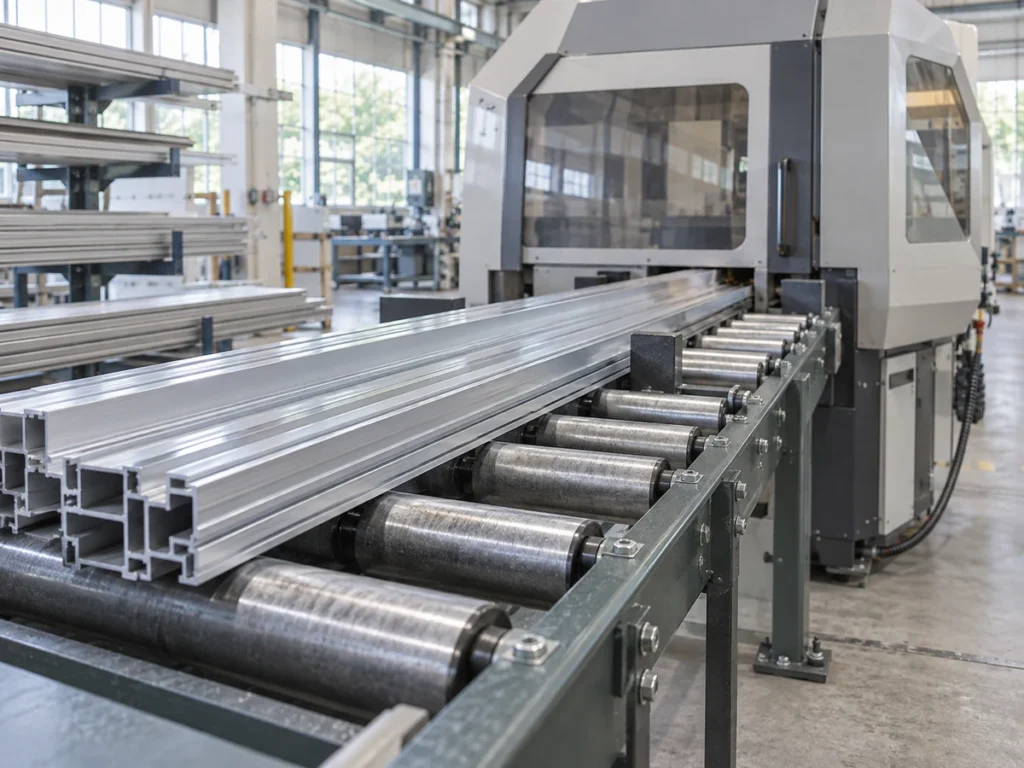
A 900 mm part: review the job before judging the stroke
Illustrative purchasing brief: a buyer supplies 6,000 mm bars and requires 900 mm finished parts. A proposed quotation mentions a 600 mm material-feed stroke. These invented figures explain the questions to ask; they describe no tested machine.
The 6,000 mm value describes incoming stock. The 900 mm value describes the required finished part. The 600 mm value describes a stated feeder movement. None should replace the others in the comparison.
A 900 mm part is longer than the stated 600 mm movement. Ask whether the proposed configuration supports that finished part through an approved feeding sequence. Request a clear answer for the actual drawing and section rather than assuming either success or failure.
If the supplier confirms a supported sequence, retain its conditions in the quotation and trial brief. Those conditions may include the length reference, cutting angle, profile orientation and material support. The trial should use the proposed configuration.
Then review stock utilization separately. Do not calculate accepted output by dividing the bar length by the nominal part length alone. End preparation, kerf and remaining stock belong in the stock-length calculation; capability and release checks remain separate.
Short parts and the last section need separate questions
The minimum material-feed value does not, by itself, define the shortest finished part. Ask how the shortest required sample is positioned, held and collected in the proposed configuration. Confirm the applicable finished-part limit directly.
Keep short-part handling separate from the remaining-tail question. A short piece made from a longer supported bar and the final piece near a bar’s end can involve different conditions. Include both in the trial plan when both occur in your job.
For mixed-length batches, provide the actual part list. A single successful long part does not demonstrate every short item or end-of-stock condition. The short-part guide explains the information needed for that review.
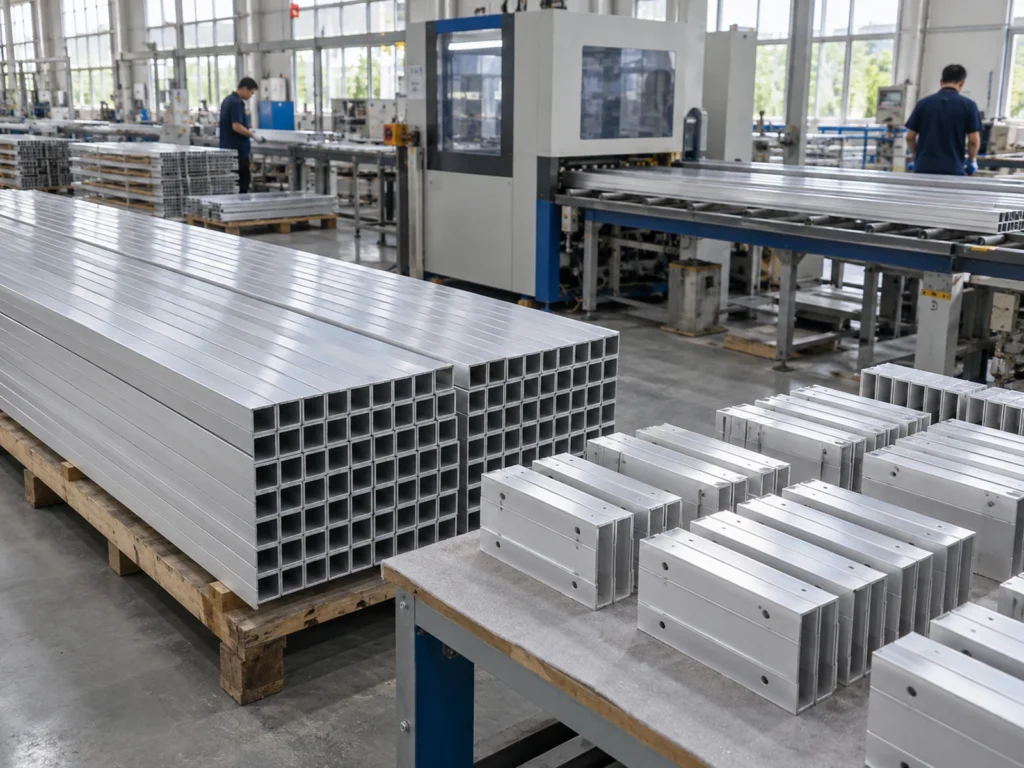
Build a supplier brief with clearly named lengths
Describe the incoming material
Include the section drawing, alloy and temper information, stock-length range, orientation and relevant surface condition. Show the longest bar and any handling constraint that affects the proposed support arrangement.
Describe the required parts
Provide the shortest and longest finished lengths, cutting angles, quantities and drawing revisions. Identify the measurement references and required tolerances. Distinguish saw blanks from parts that need later machining.
Ask for the confirmed configuration
Request the defined feeding stroke, supported finished-length range and repeated-feeding availability. Ask for the remaining-stock condition and the proposed support and collection arrangement. Keep optional equipment visible in the reply.
Agree the evidence
Choose representative samples covering the relevant length extremes and end-of-stock condition. Agree how finished parts will be measured and released. A controller screen or a demonstration of feeder travel alone does not establish accepted finished-part capability.
Review the JiurunCut machine range with these questions, then send your profile drawings and length list. Request a configuration-specific review. This guide supplies comparison terms, not a model-specific stroke, accuracy or production promise.
Common questions
Is feeding stroke the maximum stock length?
No. Feeding stroke describes a defined material advance. Incoming stock length concerns the bar presented to the process and its supported handling arrangement. Confirm both values separately.
Can a part be longer than one feed stroke?
Some configurations support repeated feeding. Ask the supplier whether your finished length is supported and under which conditions. Do not infer that capability from an automatic or CNC label.
Does minimum feed distance equal minimum part length?
It is not enough to establish that limit. The actual finished-part capability depends on the confirmed configuration and the applicable positioning, holding and collection conditions.
What should a machine comparison sheet include?
List stock length, defined material-feed stroke, confirmed finished-length range and remaining-stock requirements separately. Include the cutting angle, section and configuration so the numbers refer to the same job.