
A short aluminum part cutting review should confirm how the finished piece is located, separated, collected and checked. The smallest feed movement listed in a brochure does not describe the complete delivered-part requirement.
Send the actual cross-section and part drawing. Then ask the supplier to review the full cycle using the offered fixture, handling arrangement and collection method. This guide organizes six questions for that discussion.
Six short-part questions
1. What does the short aluminum part cutting job deliver?
Define the part length, end geometry and acceptance requirements from the drawing. Include the section reference, wall arrangement, material, temper and finish.
State whether the saw delivers a final-length component or a blank for another operation. A later process may need a separately defined allowance. That requirement should come from the controlled drawing and production route.
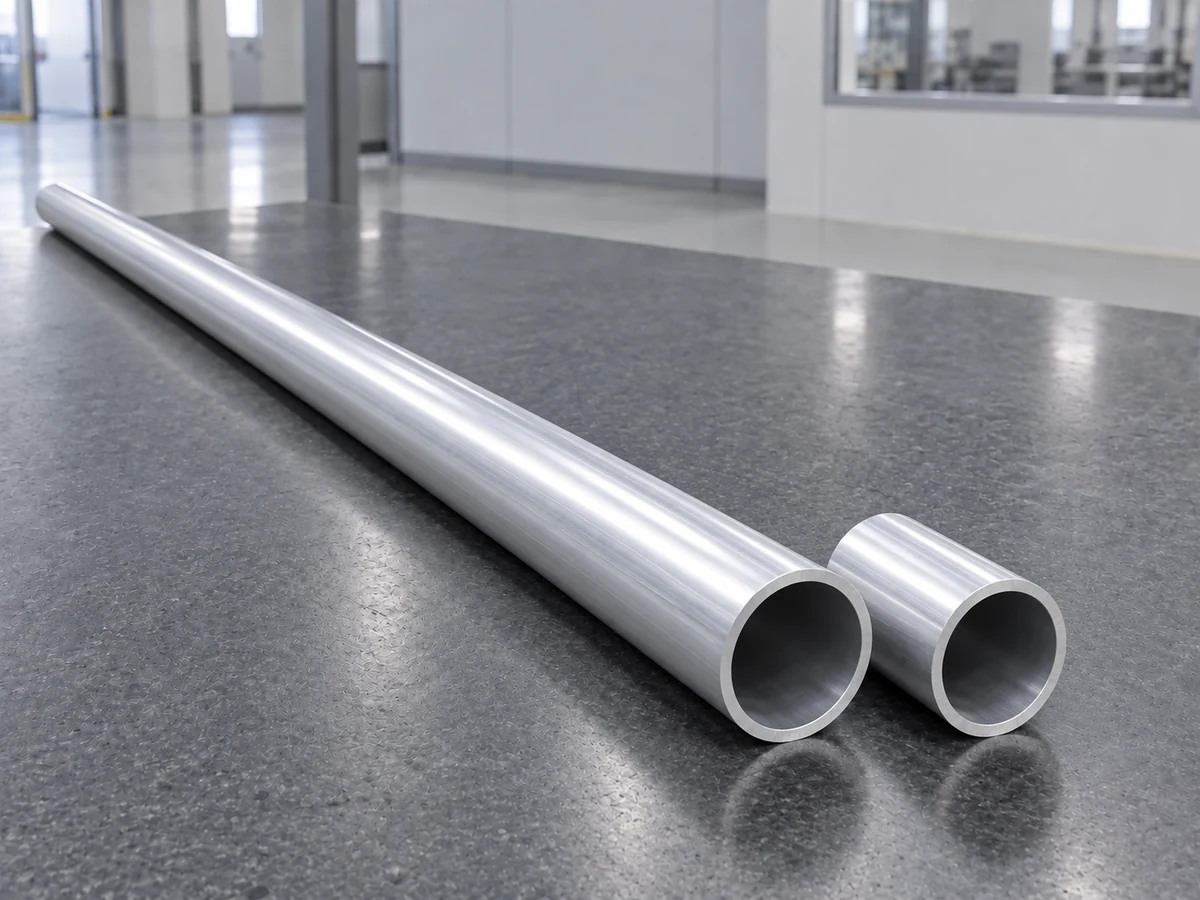
Clarify the meaning of the brochure number
Ask what a published minimum describes: a programmed feed distance, a finished piece under a stated setup, or another limit. Have the supplier identify the applicable profile and configuration.
For example, Elumatec’s automatic-saw data uses a feed-distance-per-cycle field. Such a named field should be read in its documented scope, then discussed alongside the complete part-handling arrangement.
Keep the supplier’s answer with the proposal. If the required part falls outside the standard reviewed arrangement, ask whether an alternative configuration is available and what that configuration includes.
2. How is the actual section located and held?
Review the stock orientation, support, locating faces and clamp contacts with the supplier. Use the real section drawing rather than selecting a setup from outside width and height alone.
A tube, solid bar and multi-cavity extrusion can present different contact surfaces. Show thin features and surfaces that must remain visible in the final component.
Ask the supplier to explain the reviewed arrangement through the relevant stages of the cycle. The question is how the proposed equipment handles this part under its approved setup, not simply whether the stock fits beneath a clamp.
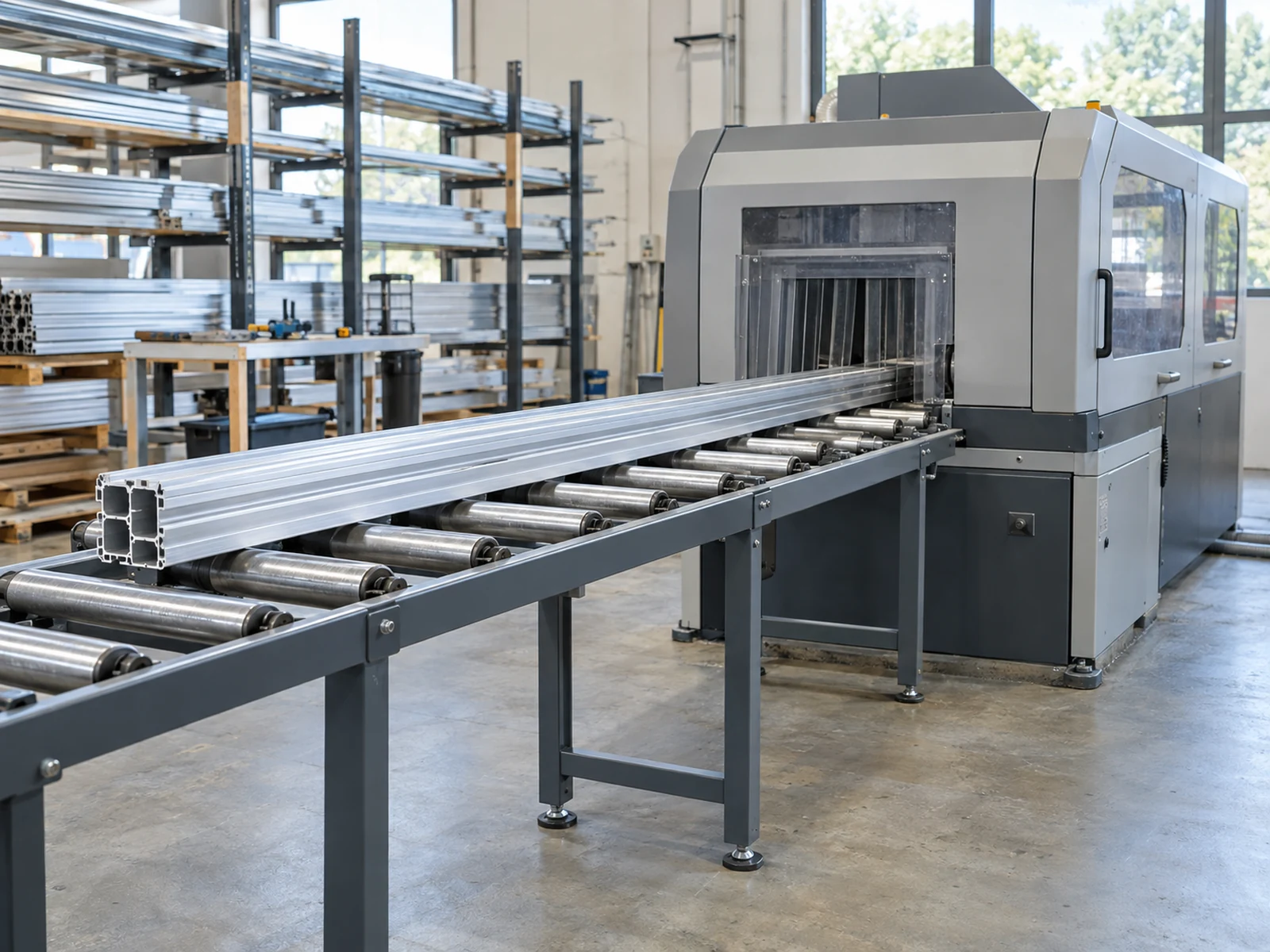
Keep the configuration specific
Identify any special fixture, guide, support or collection item in the written offer. Confirm which profile families it covers and what changes are needed between them.
If another size or section is added to the order mix, review that change explicitly. A trial of one short piece should remain tied to the tested drawing and setup.
3. How does each separated piece reach the collection point?
Ask how the finished piece leaves the cutting zone under the machine’s approved cycle. Review the destination and the normal method of removing collected parts from the cell.
For a short aluminum part cutting job, include the receiving container, tray or other offered collection equipment in the trial. Confirm that the resulting arrangement suits the actual piece and finish requirement.
Discuss whether the job requires preserved orientation, separated pieces or a particular packing condition. These needs should appear in the delivered scope rather than being discovered after the machine arrives.
Review the normal batch handoff
Confirm who moves the collected parts to inspection or the next operation. Include the normal transfer and container changes when reviewing batch time and staffing.
The supplier’s instructions determine the approved collection and access procedure. Do not improvise manual retrieval from the cutting area to make a demonstration appear workable.
4. What is checked after normal handling?
Define the length reference and the end and edge requirements. Check the part at the handoff stage agreed in the quality plan, including any surface condition that matters to the next process.
A review immediately after separation may not describe the condition after normal collection and transfer. Include those stages when evaluating the actual finished-part requirement.
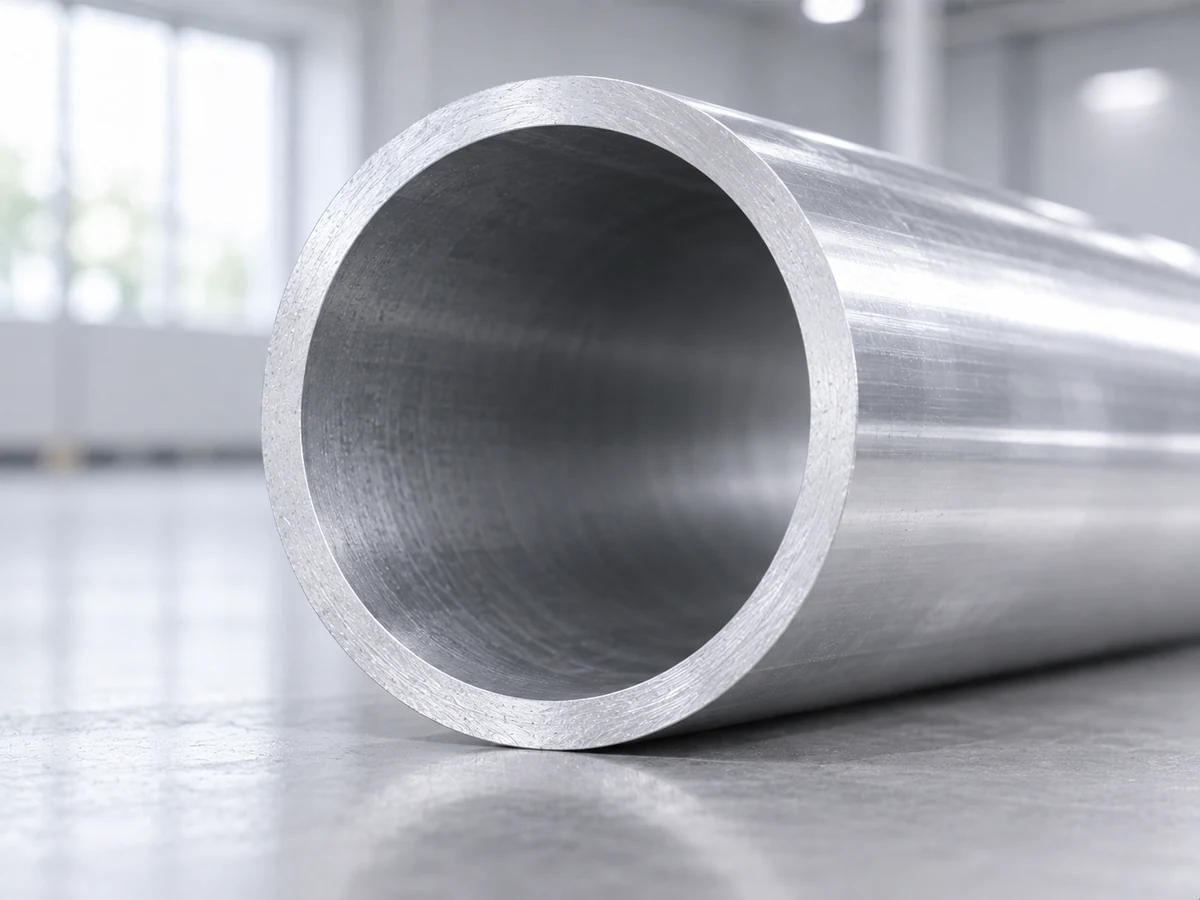
Use a measuring method suited to the part
Have the quality team define the measuring reference, method and acceptance decision. Keep the drawing revision visible in the record so a check is not interpreted against the wrong component stage.
If there is a later fit or machining requirement, include it in the review scope. Keep dimensional acceptance separate from an informal visual judgment that the part “looks right.”
The finished-length datum guide explains why the chosen measuring reference matters. It does not supply a universal short-part tolerance.
5. How are similar-looking short parts kept separate?
Different short pieces can share the same section while differing in length, finish or later features. Use a job identity that follows each group from cutting through collection and the next operation.
Define how accepted, unchecked and rejected parts are distinguished under the site’s quality procedure. Keep remaining stock associated with its original material identity as well.
Make the receiving label useful
A useful batch record connects the part reference, drawing revision, order quantity and inspection status. Include the stock identity needed by your production and quality system.
For mixed orders, agree how a program change and a collection change are coordinated. Include that handoff in the trial instead of evaluating only a long run of identical pieces.
6. What does the complete batch deliver?
Request a result for the whole agreed job, including setup, loading, cutting, collection and any inspection included in the time boundary. Record produced and accepted counts separately.
For short aluminum part cutting, a rapid repeating machine cycle may be only one part of the batch. Normal collection, part identification and transfer still belong in the output review.
Use the cycle-time and batch-output guide to define a consistent timing boundary. Record the configuration and job so another result can be compared on the same basis.
Keep six answers on one review sheet
| Question | Written answer to keep |
|---|---|
| Delivered part? | Drawing, stage and acceptance scope |
| Held how? | Reviewed fixture and section orientation |
| Collected how? | Approved method and included equipment |
| Checked when? | Handoff stage and measuring method |
| Identified how? | Job and inspection-status record |
| Batch output? | Time boundary and accepted count |
Prepare your short-part inquiry
Send the profile and part drawings, material and finish information, typical quantities and the next operation. Describe the required collection condition and any difficulty with your current route.
JiurunCut can review a short aluminum part cutting proposal and a representative trial scope using those details. Discuss My Short-Part Job →
Reference and scope
Brochure-field reference: Elumatec, SA 73/36 automatic saw. This guide sets review questions and does not claim a minimum finished length for a JiurunCut machine. Images are illustrative.