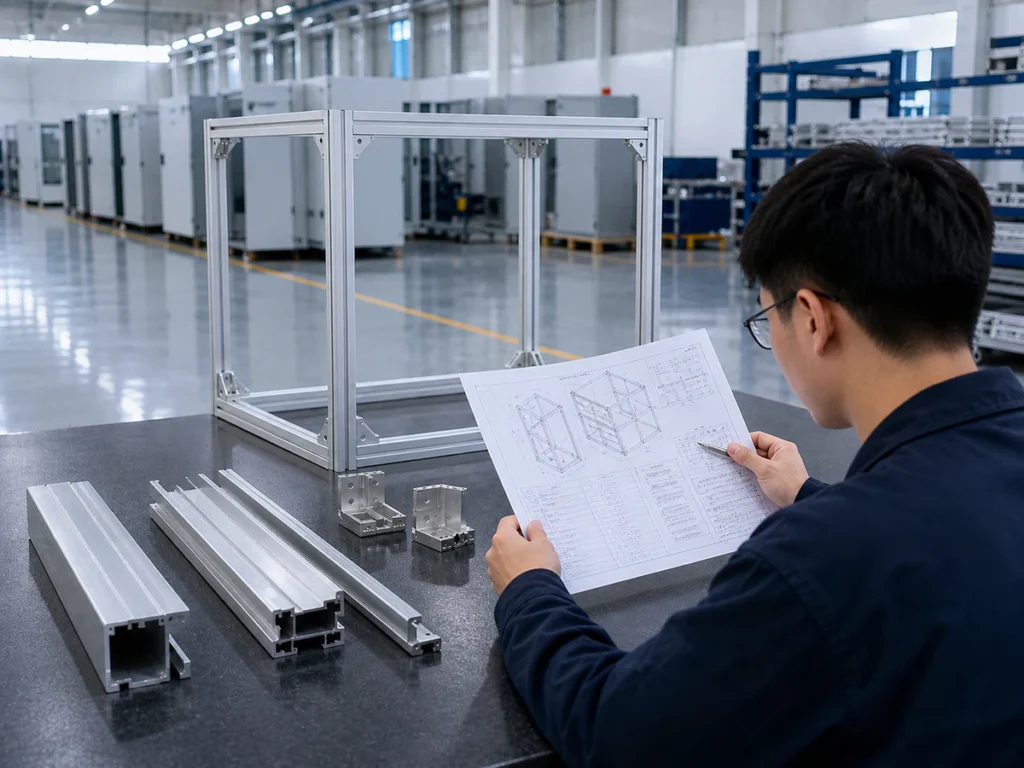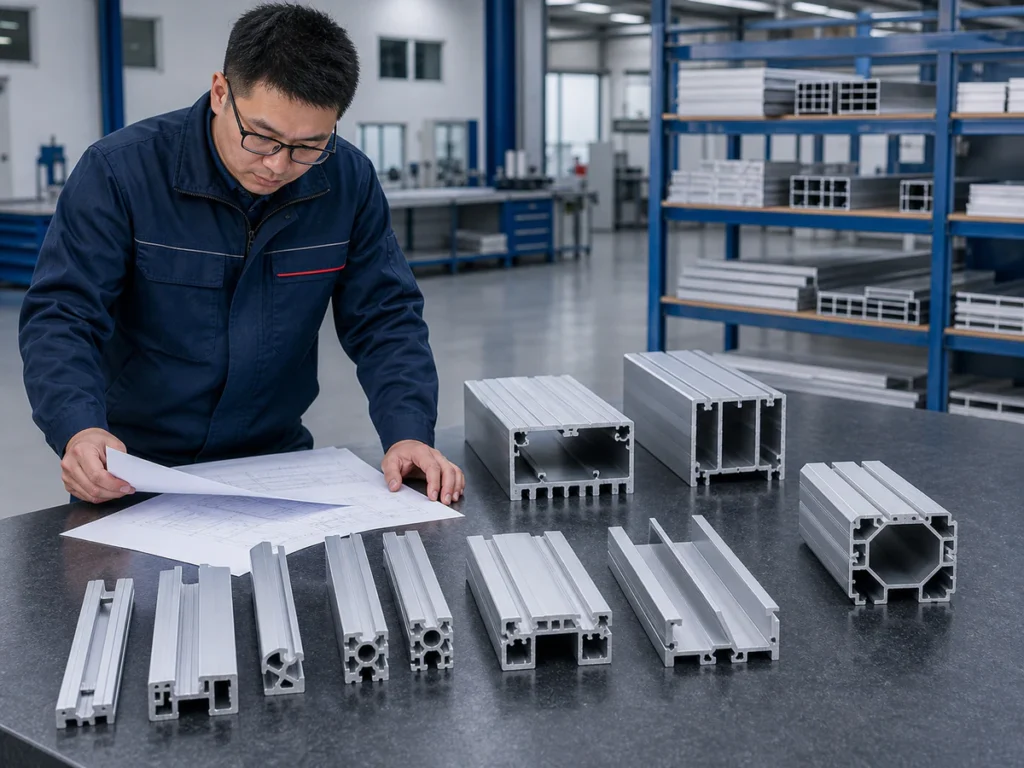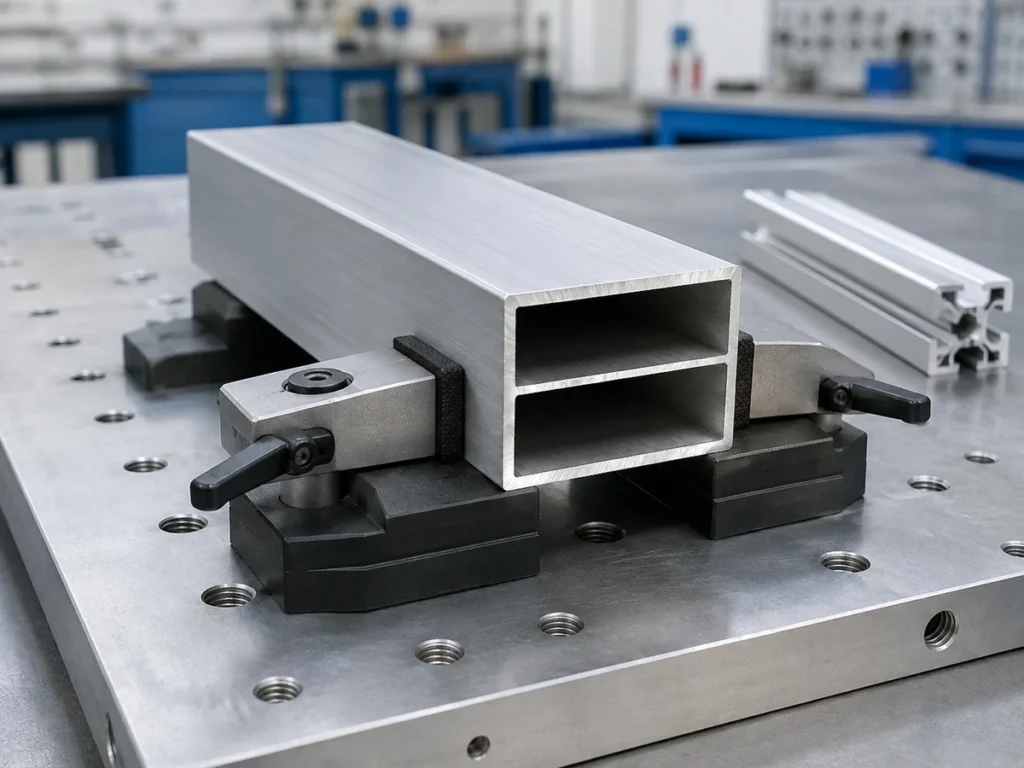
Zero-tail cutting does not mean zero material waste. A low-tail configuration may change how the last part of the stock is handled, but the blade still removes material and jobs may need trimming or leave unused lengths. Compare accepted parts, cut-width loss, trim, remaining stock and rejects under the same production assumptions before claiming a saving.
Three things to remember
- Separate tail, blade-cut loss, trim and reusable remaining pieces in the material record.
- Compare the same stock, part demand and acceptance conditions.
- Count accepted parts and usable remaining stock, not a single favorable demonstration.
On this page
Which material categories should you count?
Kerf is the material removed across the width of a saw cut. Trim is material intentionally removed to prepare or finish an end; keep its accounting separate so kerf is not counted twice.
Also distinguish accepted finished parts, reusable remaining pieces and unusable scrap. A lower final tail does not automatically change every category.
This guide explains a comparison method. It gives no promised Jiurun tail length, utilization percentage or saving.
What does the supplier mean by tail?
Ask which remaining material the proposal calls the tail, how it is held or transferred, and the section and length conditions attached to the claim.
A photograph of a short offcut does not establish the result for every profile. The handling arrangement, cutting list and acceptable finished pieces still matter.
Read a tailless description in the supplied brochure with its particular configuration and application conditions. It is not a guarantee that production has no losses.
How can you build a clear material balance?
For one uniform profile family, use:
Incoming stock = accepted finished length + kerf + trim + remaining stock.
Then divide the remaining stock into reusable remnants and scrap. Record rejected pieces as well when calculating final accepted yield.
A remnant is a piece of remaining stock. Call it reusable only when your operation can identify, store and use it; do not label it scrap merely because the current job does not need it.
Adding lengths across different cross-sectional areas or materials is not a fair plant-wide comparison. Assess profile families separately or use a consistently defined mass basis.
What does a simple material-balance example show?
The following arithmetic is illustrative, not a production test or Jiurun performance result. Start with one 6,000 mm bar, five accepted parts totaling 5,000 mm, 18 mm of recorded kerf and 12 mm of trim excluding that kerf.
6,000 − 5,000 − 18 − 12 = 970 mm remaining.
| Illustrative category | Length |
|---|---|
| Incoming stock | 6,000 mm |
| Accepted parts | 5,000 mm |
| Kerf | 18 mm |
| Trim, excluding kerf | 12 mm |
| Remaining stock | 970 mm |
The check is 6,000 = 5,000 + 18 + 12 + 970 mm. Finished-length utilization in this simplified example is 5,000 ÷ 6,000, or about 83.33%.
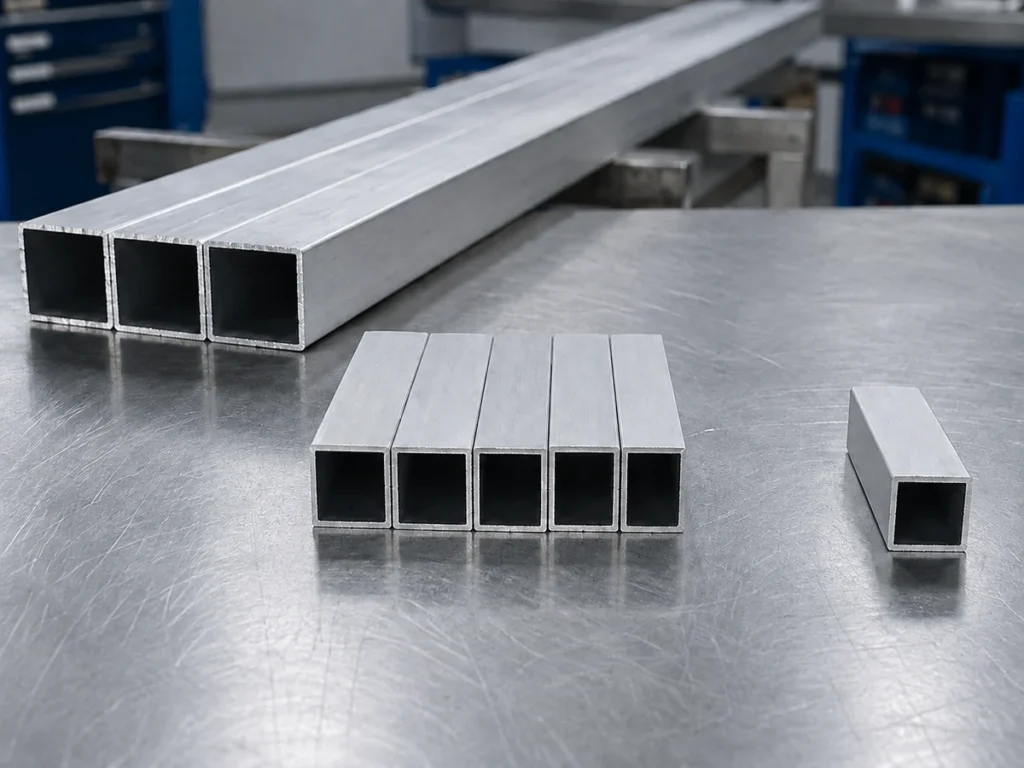
Whether the 970 mm can be reused depends on future jobs, permitted machine handling and the site's remnant policy. These assumptions do not specify the cut count or settings for your machine.
What can the machine change, and what depends on the cut list?
A configuration may reduce a handling limitation near the end of a bar. It does not change which finished lengths and quantities the customer requires.
For a fair comparison, keep stock lengths, demand, material family, trim rules and acceptance conditions the same. State whether a sequence is simply feasible or has been optimized by a defined method.
Nesting is planning how required parts are arranged across available stock. A supplier's manual review does not establish that the machine has automatic nesting software; confirm that capability separately.
When is a remnant genuinely useful for the next job?
Keep its profile identity, remaining length, required material or lot information, storage location and any surface or handling restriction. The record must let production decide whether the piece fits a future requirement.
Anonymous offcuts are not equivalent to controlled reusable stock. Labeling and storage also take work, so include that effort when comparing methods.
For mixed frame kits, consider whether reuse increases stock changes or interrupts the intended workflow. Nominal length utilization is only one production objective.
How should you compare a claimed saving?
Use accepted parts over a representative production mix. Include normal setup losses and rejects instead of comparing the best demonstration with the worst historical batch.
Keep physical yield separate from purchase-price calculations. If estimating money, use your actual material cost and state whether scrap value, storage and handling are included.
Do not turn an assumed aluminum price into a current quotation. Ask instead which measured loss the configuration can change, and which remains dependent on the cut list or acceptance requirements.
What information makes a material-use review useful?
Gather stock lengths, finished lengths, quantities, angles, trim rules and current remaining-stock restrictions for each profile family. Include a present cutting sequence and how remnants are classified.
The cut-list guide explains how to organize these inputs. For frame projects, the energy-storage cutting solution supplies application context.
What else should you know?
Does a shorter final tail guarantee a better overall result?
No. Kerf, trim, rejects, the demand mix and reusable remnants remain part of the comparison.
Can utilization be calculated from one part length?
Only for a clearly defined example. A production proposal should use the actual lengths and quantities across the intended profile family.
Does Jiurun's brochure prove my project can run without waste?
No. It describes machine configurations. Your material-use outcome needs the actual list, setup and agreed production conditions.
Sources & Scope
- Jiurun machinery brochure supplied by the owner. 九润画册 PDF physical pages 6–19. Machine categories and configuration identity only; not test results or an operating manual.