
Wire EDM vs milling is a useful comparison when an aluminum drawing contains detailed cutouts, local grooves or machined faces. Start by identifying the individual features. Then ask each specialist to explain access, the delivered surface condition and the operations included in the offer.
A component can use more than one process. Buying a cut blank, cutting a detailed contour and machining a mounting face are separate decisions. Compare the finished drawing scope instead of assuming that one machine category must produce the whole part.
Wire EDM vs milling: the basic difference
Sodick’s wire-cut EDM explanation describes a fed, tensioned wire used as an electrode. Electrical discharges between the wire and a conductive workpiece remove material. Milling uses rotating cutting tools; Sandvik Coromant’s milling guides discuss tool engagement, cutting forces and chip evacuation.
The mechanism is the starting point, not a ranking of every possible result. Do not assume that a process name proves a particular tolerance, surface finish, production time or part approval. Ask for evidence covering the actual material, geometry and proposed equipment.
| Process | First feature-review question |
|---|---|
| Wire EDM | How will the wire reach and follow the proposed contour? |
| Milling | How will the selected cutter reach and produce the feature? |
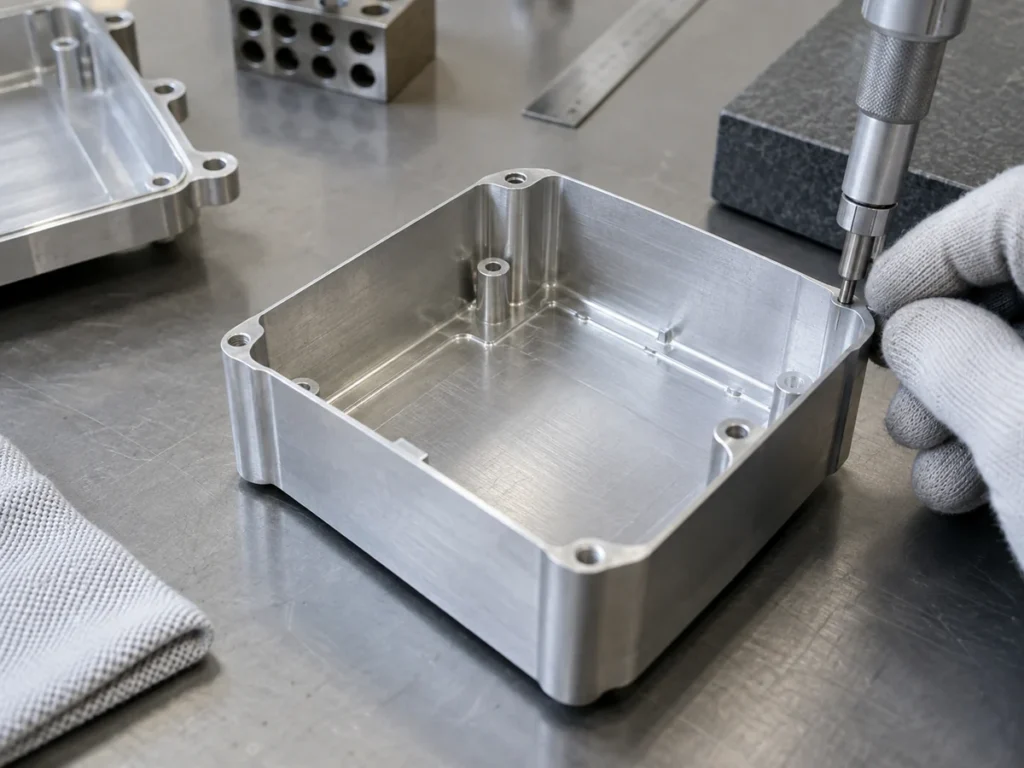
1. Mark the feature, not just the component name
A quotation line that says “machine aluminum housing” can hide several different tasks. Highlight the outside contour, internal openings, pockets, mounting faces and other controlled features individually. Give each a drawing reference so the supplier can respond to the same scope.
Distinguish a continuous groove already present in an extrusion from a local feature created later. The extrusion drawing describes the incoming shape; the part drawing may require a separate operation at one location. Put that distinction in the process discussion.
For each highlighted feature, state the relevant size, depth or thickness relationship and acceptance requirement. If the drawing is unclear about whether a feature passes through the part or stops within it, resolve that point before asking for a process recommendation.
Use plain labels such as “through opening,” “local pocket” and “finished mounting face.” These labels help the specialist review the geometry. They are not automatic assignments to EDM or milling.
Two feature questions worth asking
- For a proposed wire-cut feature: how will the wire enter, follow the path and leave, and what preparation is included?
- For a proposed milled feature: which tool approach and setup will provide access, and which areas require a different operation?
Require the supplier to identify unresolved features. An answer that addresses the outside profile but ignores a pocket floor is incomplete for a drawing that controls both.
2. Discuss access and the small details explicitly
Ask the machining specialist to review internal corners, narrow openings and transitions between features. Keep the required corner form visible on the drawing. Do not let a software model with a sharp-looking edge become the only description of an accepted corner.
Sandvik’s slot-milling guide distinguishes open and closed slots and discusses selecting tools with reference to groove width, depth and length. This illustrates why “milling” is not one fixed tool arrangement. The actual feature needs a tool and setup review.
For wire EDM, ask how the proposed arrangement accommodates the wire path and workpiece holding. If a starting feature or preparation step is needed, the specialist should identify it in the offer. Keep responsibility for that step explicit rather than leaving it between suppliers.
Ask whether the proposed sequence produces the whole feature or leaves a later finishing operation. Have any drawing change approved by the responsible engineer. A supplier’s preferred process should not silently replace a controlled corner requirement.
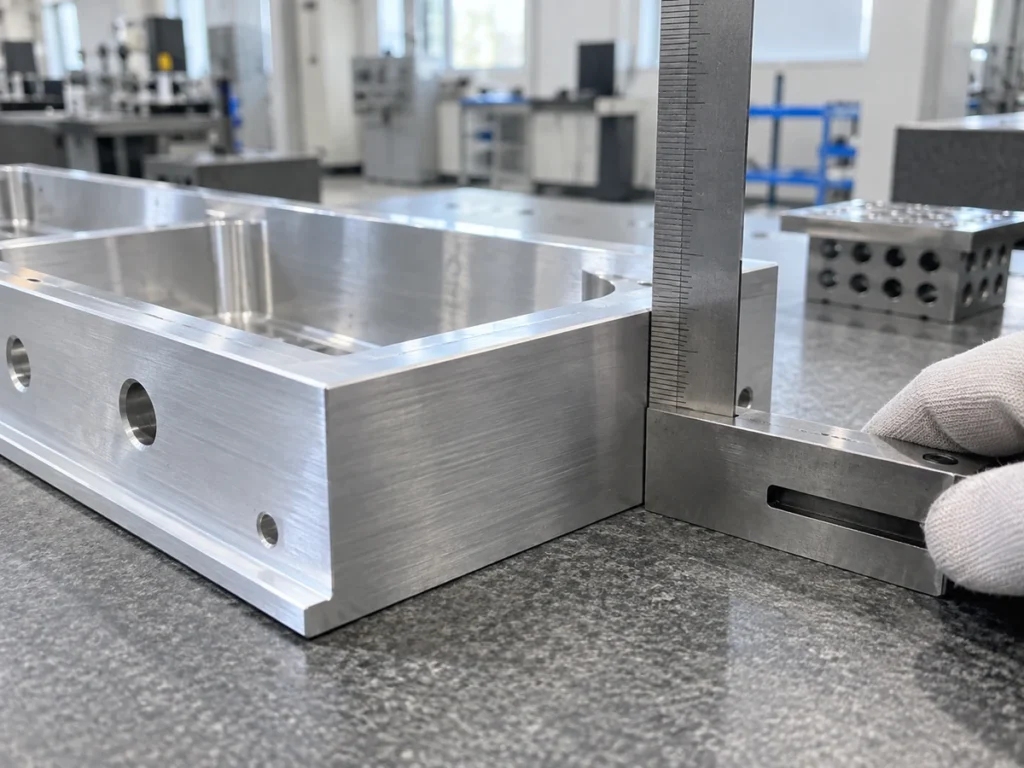
3. Define what “finished surface” includes
Identify the surfaces that interact with a seal, fastener, mating piece or coating. State the drawing requirements for those surfaces and ask how the proposed route will meet them. Keep surface acceptance separate from the nominal outline.
Request a clear description of the delivered condition. Does the offer end after the proposed cut, include a finishing stage, or include another operation performed elsewhere? If additional surface preparation is proposed, record its purpose and the acceptance that follows it.
A sample can support the discussion when it represents the material and relevant feature. Link it to the drawing revision and proposed process. Agree what will be evaluated before treating the sample as acceptance evidence.
Do not use a photograph of a shiny edge as a roughness result. Likewise, a smooth-looking outline does not confirm the suitability of the surface for the next operation. Ask for the agreed inspection record where the requirement calls for one.
Our cut-surface roughness guide covers the difference between appearance and a defined surface requirement. For a component with a later coating stage, also review the coating acceptance discussion with the responsible specialist.
4. Compare complete routes using the same output
Consider a fictional aluminum plate part with an outside contour, an internal opening and a mounting face. One offer proposes wire cutting for selected contours and milling for the face. Another proposes milling the identified features. Neither route is approved simply by appearing on a quotation.
Ask both suppliers to map their included operations to the same drawing. Identify stock preparation, feature machining, handling between stages, any finishing and final inspection. Record who owns each stage and what remains outside the quoted scope.
Keep time and price assumptions comparable. A quote for a contour alone cannot be evaluated as if it also includes the mounting-face work. If one route uses a separate subcontractor, make that handoff and its delivery condition visible.
For a representative trial, agree the starting material, delivered part condition and inspection scope. Review the outcome against those requirements. A faster isolated operation does not by itself prove a faster release of the complete component.
Questions buyers often ask
Does every aluminum component need wire EDM?
No. Define the features and ask the process specialists to review the actual requirements. Do not add an operation merely because another project used it.
Is wire EDM the same as a circular saw?
No. Wire EDM removes conductive material through electrical discharges. A circular-saw cutting stage has its own equipment and scope. Keep the requested operation clearly named.
Does CNC mean EDM and milling are equivalent?
CNC control does not make the material-removal methods identical. Compare the feature access, included operations and acceptance evidence for the proposed configuration.
Can an aluminum saw supply the starting blank?
A cutting stage may be part of the route when its blank requirements are defined and agreed. Specify the stock form, blank dimensions and any approved allowance for later machining.
Prepare the blank request for JiurunCut
Send the stock section, material identification, cut lengths, quantities and controlled blank drawing. Include the downstream part drawing when it helps explain orientation, handling or an approved allowance.
Use our saw versus machining-center guide for the broader operation map, then share the cutting scope with JiurunCut. Keep EDM and milling selection with the relevant process specialists; this article does not claim that JiurunCut supplies EDM equipment.
Technical reading: Sodick Singapore — Wire-cut EDM; Sandvik Coromant — Groove or slot milling; Sandvik Coromant — Milling application guide.