
An outsourced aluminum cut-part drawing revision does not make every bar and finished piece at the supplier disappear. Before the next release, the buyer must decide which revision governs each open order, what happens to already cut pieces and work in process, and who may authorize a transition. A new PDF sent by email without a cutover record can leave the supplier cutting to one revision while receiving inspects to another.
This guide is for a purchasing and quality team managing an external cut-part supplier. It sets out a decision record for the change; it is not a report of a Jiurun customer order, a legal allocation of obsolete-stock cost, or evidence that a particular machine will meet a new drawing. Use the actual purchase agreement, approved drawing and engineering decision for your order.
Outsourced aluminum cut-part drawing revision: set the effective lot
Start with the part number and both drawing revisions, not simply the date on the latest file. Identify the approved change, the affected characteristics and the person allowed to release it. A changed cut length may alter usable bar allocation; a new end treatment, orientation mark or visible-face requirement may alter the cutting and inspection route even when the nominal length is unchanged. If the change affects a mating kit, confirm whether the receiver needs all members on the same revision or can accept a controlled mix.
Set a specific cutover boundary: purchase-order line, lot, serial or batch range, shipment, or another traceable unit agreed by both parties. “Use the new drawing from now on” is too vague when finished old-revision pieces, cut work in process and uncut allocated bars coexist. Record when the supplier received the release and acknowledged it; do not backdate the new requirement onto work legitimately completed under the old release. If the buyer discovers a nonconformity against the old approved revision, handle that as a separate quality hold rather than calling it an engineering change. The rejected outsourced cut-part disposition guide covers that route.

Ask for one inventory snapshot in four distinct buckets
Before authorizing more cutting, ask the supplier for a time-stamped snapshot by part, revision, source stock and open order. The commercial and technical options differ by physical stage. Keep quantities and units clear: bars, cut pieces, finished kits and packed shipments cannot be added as if they were interchangeable pieces.
| Bucket at cutover | Question for the supplier | Decision evidence |
|---|---|---|
| Old-revision finished pieces | How many passed the old released inspection and where are they? | Lot identity, accepted record, packing status and any downstream fit restriction. |
| Work in process | Which bars are loaded, partially cut or awaiting a secondary operation? | Actual stage, pieces already made, feasible stop point and safe segregation. |
| Allocated but uncut stock | Who owns it, which profile and length are reserved, and can it serve the new revision? | Stock identity, remaining usable length, reservation or title terms. |
| Shipped or in-transit pieces | Which receiver will see them and under which packing/label revision? | Shipment and receiving references, arrival date and containment contact. |
Separate buyer-owned stock, supplier-owned stock and unallocated general inventory. Also separate the cutting fixture from the material: the fixture ownership and exit guide addresses a different asset. Photos can help locate physical bundles, but a photo without a count, label and revision record is not an inventory reconciliation. The supplier should identify any old-revision item that may already be at a subcontracted finishing or assembly stage.

Choose the old-revision disposition, rather than assuming scrap
Old-revision pieces may still be fully conforming to the order under which they were made. That does not automatically mean the current receiver can use them. Ask engineering, quality and purchasing to decide, in writing, whether they may be consumed in a named application, held for service spares, reworked to the new requirement, returned, sold under a different approved order, or scrapped. A concession is an authorized exception for a specified nonconformity or use; it is not a blanket substitute for deciding which drawing governs a planned revision transition.
For any proposed rework, require a route that can actually achieve the new requirement without creating another issue. A longer cut member may sometimes be trimmed, subject to end geometry and inspection; a shorter piece cannot be made longer by another cut. A changed hole, notch, finish or assembly interface may move the work outside the cutting supplier’s scope. If the old parts remain acceptable for a limited assembly or aftersales purpose, record the exact quantity, use and approver so they cannot re-enter normal new-revision stock by mistake.
Do not settle scrap ownership or cost from a generic rule in this article. Review the purchase order, customer-owned material terms, change notice and supplier quote. Ask for the physical custody and accounting treatment of offcuts as well as finished pieces; the outsourced offcut guide deals with return and quote-credit terms. An agreed disposition should state whether stock is returned, retained, reallocated or destroyed and what evidence closes the line.
Requote the open order as a change, not a hidden unit-price edit
Ask the supplier to separate the original approved quantity and price from the revised scope. For each open line, show old-revision pieces already accepted, pieces at risk, new-revision quantity still needed, and the proposed delivery dates. Then itemize setup or programming changes, revised fixture or blade/handling needs if any, material yield, reinspection, relabeling, return freight and obsolete-stock treatment. The supplier may have no added setup cost, or the change may be substantial; the actual drawing and route decide.
Keep three dates distinct: the buyer’s drawing approval, the supplier’s acknowledged cutover, and the first accepted new-revision delivery. A quote that only promises a restart date does not tell the receiver when usable parts arrive. Ask whether a controlled old-revision release can bridge the change, whether a split shipment creates assembly risk, and which party must approve extra freight or temporary stock. Avoid assuming the supplier bears all change cost or that the buyer can cancel committed stock without reference to the agreement.
Release the first new-revision lot against the right evidence
Once the change is approved, the supplier needs the controlled new drawing, cut list, orientation/visible-face notes, packaging identity and inspection basis. Ask for a first new-revision sample or lot according to the agreed acceptance plan, especially where length datum, mating end, notch, mark or finish changed. Compare the result with the new requirement, record who accepted it, and prevent old labels or work instructions from being used for subsequent batches. Do not treat a saw’s feed setting as the finished-part measurement.
Ask for an acknowledgment that includes the revision received, effective lot, remaining old stock and named release owner. The ISO/TC 176 guidance on documented information lists traceability, reviewed production changes, authorized release and external-provider records among useful evidence categories. It is guidance for structuring the handoff here; citing it does not establish that Jiurun or a particular supplier holds ISO certification. The NIST MEP supply-chain overview also frames sourcing by total cost and supplier relationship rather than unit price alone. Neither source assigns liability under an individual purchase contract.
If the revision changes what the saw must do, revisit the equipment evidence as a separate purchasing decision. The saw quote and trial after a drawing revision guide asks which previous machine evidence can still be relied upon. It does not replace this supplier-held stock and open-order reconciliation.
Equipment footage is general process context
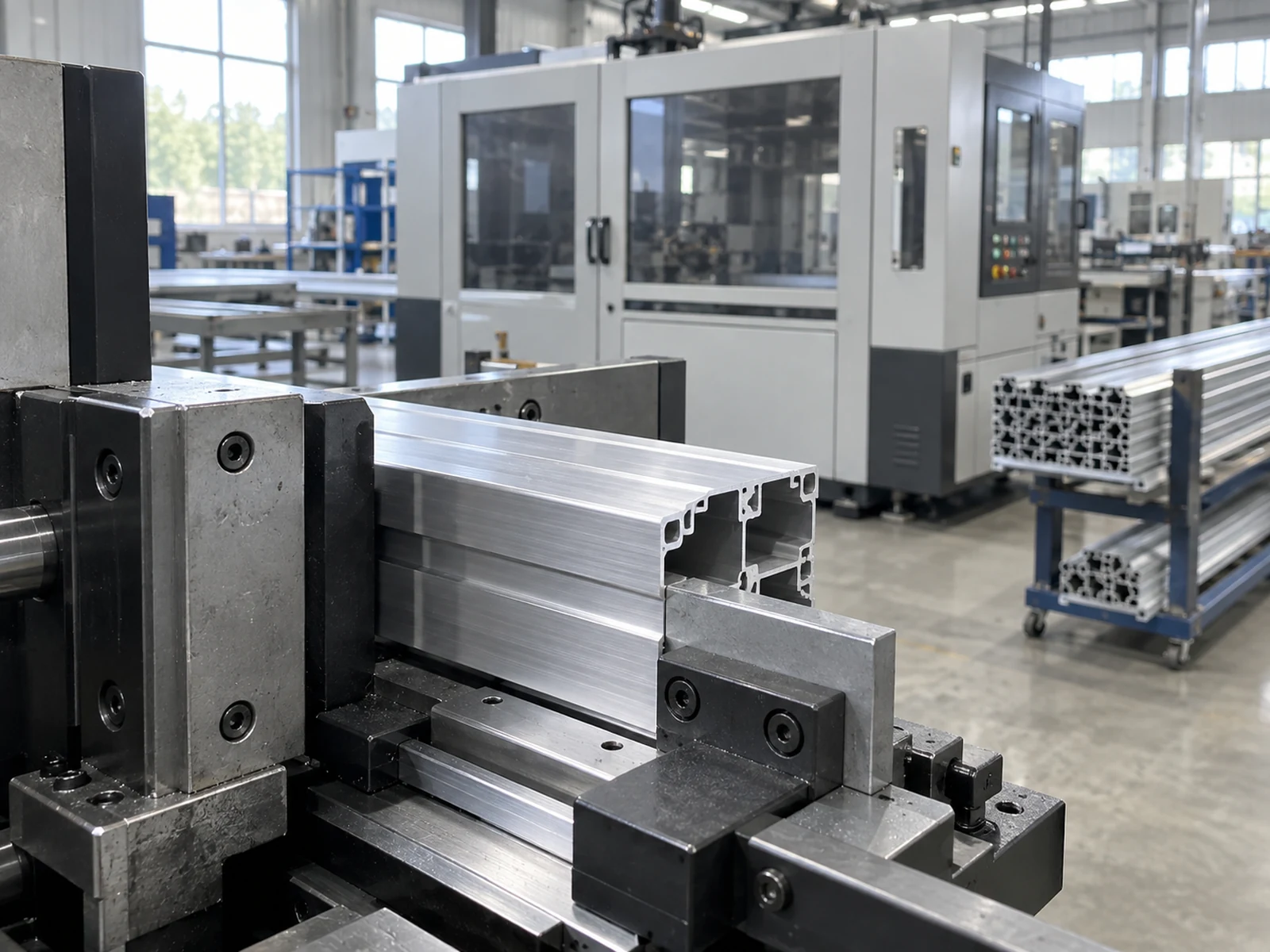
The Jiurun Machinery channel clip below shows general aluminum cutting equipment and profile handling. It does not show this hypothetical buyer, supplier, drawing revision, material, stock count, changeover, trial, inspected part, model configuration or performance result. Use it only to visualize a possible cutting stage; make release decisions from the controlled order record.
A concise change instruction to send the supplier
Send one controlled request: “For part X, PO line Y changes from drawing revision A to B. Stop release at the agreed lot boundary. Confirm by [date] quantities of accepted old-revision pieces, work in process, allocated uncut bars and shipped stock; identify each location and owner. Propose disposition, cost and delivery options without using old-revision stock for new-revision orders until we approve them. Confirm the first B-revision sample/inspection plan and the person who will acknowledge the release.” Replace each placeholder with real order data and keep unresolved commercial items visible rather than silently changing the unit price.
If your team may bring preparation in-house, review Jiurun’s aluminum profile cutting machine range and send the actual profile and revised drawing for a quotation discussion. A machine inquiry does not prove this supplier’s old stock can be reused or that a revised part will pass inspection.