
Rejected outsourced aluminum cut parts create two immediate decisions for a buyer: what happens to the affected pieces, and what evidence is needed before the supplier’s next shipment can be trusted. A measurement outside the released drawing may justify a hold, but it does not automatically authorize cutting the parts again, using them under a waiver, or charging one party for every downstream delay. Put the accepted requirement, lot identity, decision owner and delivery consequence on the same record before choosing a remedy.
This guide is for a purchasing and quality team comparing an outsourced cut-part supply arrangement. It is a decision framework, not a report of a Jiurun customer claim or a promise that any particular saw will achieve an unverified result.

Start with the released requirement, not the word “defect”
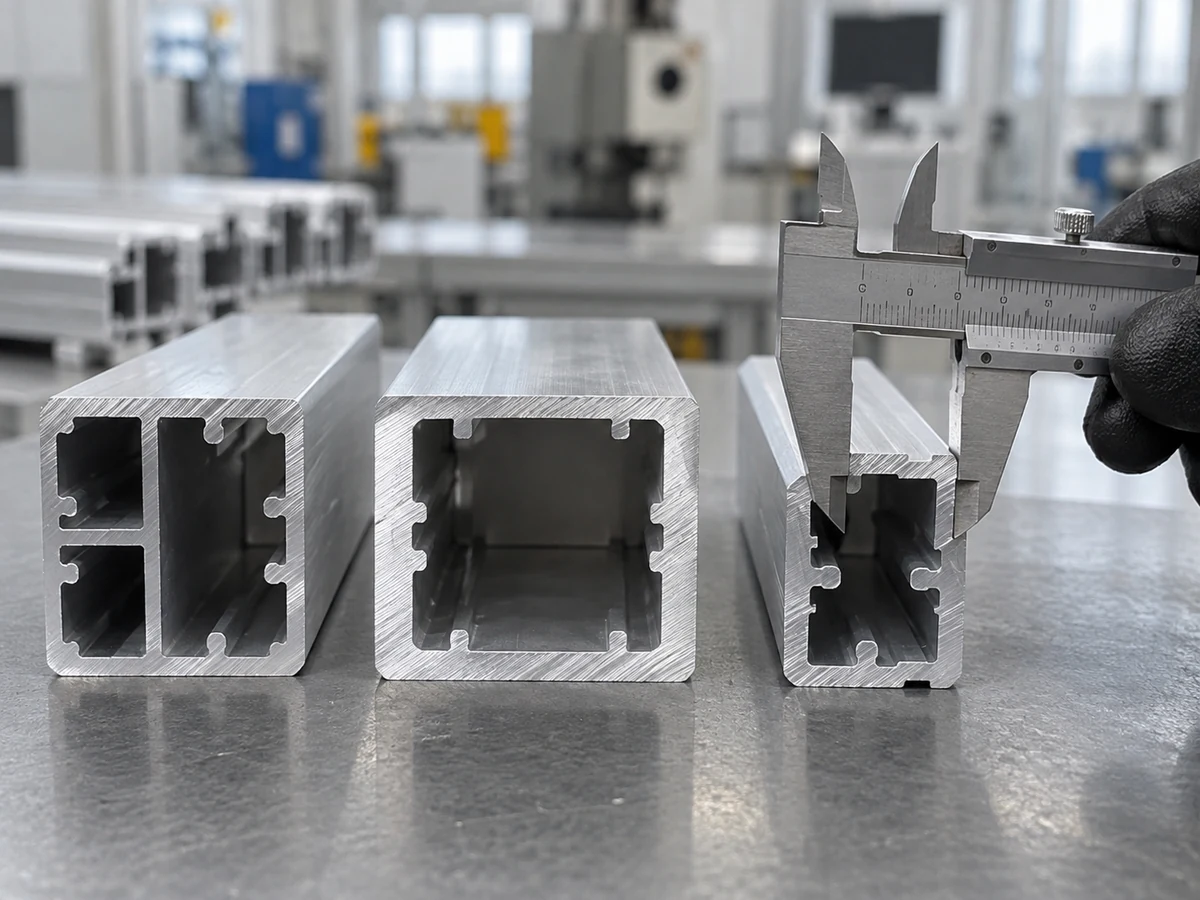
Identify the purchase order, part number, drawing revision, profile or bar source, ordered quantity and lot or cut batch. Then name the exact characteristic at issue: cut length, end geometry, burr, visible face, orientation, surface condition, piece count or kit identity. Record how it was checked and which requirement the result is being compared with. Do not treat the nominal stock length, a machine feed setting, or a photograph of a caliper as proof of finished-part conformity.
ISO 9000 defines nonconformity as failure to meet a requirement and distinguishes it from a defect related to intended or specified use. The practical buyer question is therefore: which released requirement was missed, and does the evidence actually identify the affected pieces? If the drawing changed after the supplier cut the order, establish which revision governed the released work before assigning a fault. See the ISO 9000 terminology for the distinction, and use the parties’ actual agreed documents for the decision.
Place only the identified lot on hold, label it clearly and stop it from being mixed with accepted stock. If the same source bar, setup or drawing revision fed other shipments, ask the supplier to trace those shipments and propose a containment boundary. A blanket hold of unrelated orders may damage supply without adding useful evidence; releasing untraced pieces may do the opposite.
Build a useful notice before asking for a remedy
A useful notice names the affected lot and quantity, the drawing or purchase specification, the observed issue, the inspection method and the location of the held stock. Include representative photos only when they clearly show the characteristic; retain the underlying measurement record and the instrument identification separately. Ask the supplier to confirm receipt, identify any matching work in process or in transit, and give a time for its containment response. Avoid sending unrelated customer drawings or confidential project information beyond what the supplier needs to investigate.
Keep three quantities separate: pieces received, pieces actually checked, and pieces confirmed nonconforming. One failed sample does not by itself tell you the failure rate of every piece. Your agreed sampling plan, critical characteristics and lot traceability determine whether more inspection is warranted. Record who can release the hold; a salesperson’s assurance should not silently replace the buyer’s quality authorization.
Four disposition paths for rejected outsourced aluminum cut parts
The hold is a control step. The eventual disposition should be explicit, approved and tied to the exact pieces. The table is a planning aid; the applicable drawing, quality agreement and purchase terms decide what the parties may actually do.
| Path | Use only after | Evidence before release |
|---|---|---|
| Rework to the original requirement | A feasible, approved operation can make the affected pieces conform without creating an unreviewed new issue. | Written rework scope, lot segregation, revised inspection plan and accepted reinspection results. |
| Replace or return | The supplier and buyer agree which pieces move, what replacement quantity is due and when accepted pieces are needed. | Return authorization, traceable replacement lot, revised delivery commitment and receiving check. |
| Accept by concession | An authorized buyer decision permits a specified nonconformity for a limited quantity, use and period. | Written concession identifying the exact characteristic, affected lot, approver and any downstream restriction. |
| Scrap or other agreed disposition | The parts cannot be used for the intended order and their ownership/handling is settled. | Disposition approval, quantity record, material custody and any applicable credit or replacement instruction. |
ISO 9000 distinguishes rework, which makes a nonconforming output meet its original requirement, from repair, which makes it acceptable for intended use but may still need a concession. This matters for cut parts: trimming a long piece may be possible, while a short piece cannot be lengthened by another cut. A visible-face issue may need a different review from a dimensional one. Never assume a supplier can repair, rework or substitute a member merely because a machine is available.
Put time and cost beside the technical choice
For each feasible path, request a clear revised date for accepted parts at the buyer’s receiving point. Separate the time to inspect the held lot, perform authorized rework, make replacement pieces, arrange transport and complete receiving verification. A promise to restart cutting is not a delivery commitment. For urgent orders, compare a partial accepted release with a full replacement only if the approved assembly or production plan can use a partial quantity.
Also identify the cost rows: additional inspection, rework labor, new stock, offcut or scrap treatment, return freight, expedited delivery and any downstream assembly disruption. The agreement must allocate them; this guide does not assign legal liability or guarantee a credit. If the supplier used buyer-owned bar or a buyer-owned fixture, reconcile their remaining quantity and condition before closing the claim. The outsourced offcut ownership guide and fixture ownership guide address those separate assets.
Separate immediate correction from supplier corrective action
A replacement lot corrects this order’s shortage. It does not necessarily prevent the next lot from failing. Ask the supplier to explain the actual cause, the containment taken across affected work, the process change, the responsible owner and the evidence that the change worked. If the issue is minor and isolated, agree a proportionate response; if it recurs or affects a critical fit, request a formal supplier corrective action response under the agreed quality process.
The ASQ supplier corrective-action overview describes entry, containment, root-cause action, implementation and effectiveness/closure as distinct phases. In a cut-part case, the team might compare the failed characteristic against the cutting setup record, stock identity, inspection instruction and packing record. Do not declare a root cause from a single photo or blame a saw setting without evidence.
Set the rule before the next outsourced order
Include a short nonconforming-lot workflow in the RFQ or quality agreement: the released drawing and inspection basis; how the buyer reports a suspected issue; supplier acknowledgment and containment contacts; lot and source-bar traceability; who may authorize rework, repair, concession, return or scrap; how a replacement date is quoted; and what records close the case. Set realistic response times in the contract rather than copying a generic SLA into every supply relationship.
For a dual-source plan, use the same accepted-part requirement and report format at both suppliers. Otherwise a second source may look qualified on price while its cut-end inspection or lot identity is not comparable. The second-supplier qualification guide covers that handoff; the cutting rework guide is useful for the technical release of reworked parts.
Equipment footage: general process context only
The following Jiurun Machinery channel video shows general aluminum cutting equipment and profile handling. It is not evidence of the hypothetical rejected lot, its supplier, material, machine configuration, customer, inspection result, trial, cut quality or performance. Use the clip only to visualize a possible process stage while making the disposition decision from the order records.
The decision to send back to the supplier
Send one concise disposition request: “For PO, part and drawing revision X, lot Y is on hold because characteristic Z did not meet the released requirement under the recorded check. Please confirm affected stock and shipments, propose the feasible rework/replacement/concession path, identify the approval needed, and give the date for accepted replacements and your corrective-action response.” Replace every placeholder with your actual order facts. Keep unresolved cost allocation separate from the immediate quality release.
If your team is deciding whether to keep cut-part preparation in-house instead, review the aluminum profile cutting machine range and contact Jiurun with the actual profile, drawing revision, required output and trial acceptance plan. A machine inquiry is a separate sourcing choice, not evidence that a disputed supplier lot has passed inspection.