
An aluminum stock length change can make an accepted outsourced cut-part quote unreliable even when the profile drawing, alloy, supplier and finished cut lengths stay the same. A shorter or longer incoming bar changes the cut pattern, usable ends, residual pieces, handling route and sometimes the delivery quantity available from each batch. Before the buyer accepts a substitution, ask the cutting supplier to rebuild the order from the actual incoming stock length and show what will be shipped, held or left over.
This guide is for a changed input bar length on a continuing outsourced cutting order. It does not authorize a new extrusion mill, a new cutting site or a changed drawing. Those changes need their own approvals. It also does not assume that a nominal mill length equals usable saw length; the supplier has to inspect the received stock and state the cuttable length under its agreed process.
Recover the quote baseline before accepting the new bars
Pull the accepted purchase order, released drawing and revision, cut list, stock-source agreement, unit-price basis, delivery schedule and the original quote assumptions. Identify the incoming bar length or allowed length range that the supplier used, the expected quantity of each finished length, any required first and last cuts, the planned kerf allowance, an agreed remainder policy and the packaging format. If the quote did not state these assumptions, request a written baseline now rather than treating the old price as proof that every new bar format is equivalent.
Ask whether the replacement stock is the same section, alloy and temper, finish, extrusion source and identified lot type. A different bar length alone is the subject here; if the extrusion source also changed, use the separate extrusion mill change approval. If the drawing or finished-part length changed, apply the drawing-revision cutover. Keep the change record precise so a bar-length substitution cannot hide a second unapproved change.
Extruders offer different stock and fabrication envelopes. For example, Hydro’s Slovakia plant states a standard profile-length range and lists sawing among its fabrication operations. Those published figures describe that plant, not Jiurun’s machinery or the buyer’s supplier. The buyer still needs the actual measured stock and supplier route for this order.
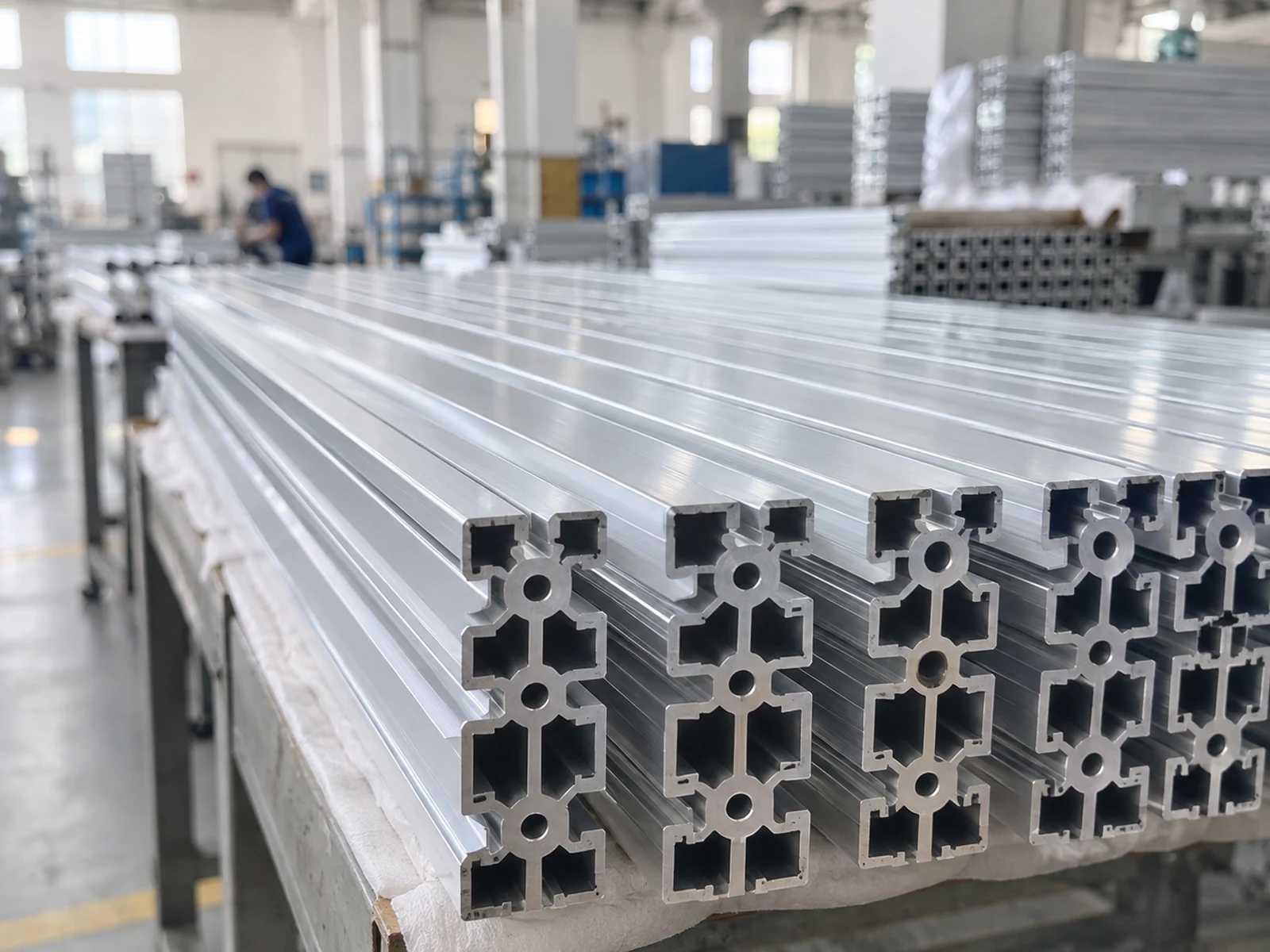
Recheck cut yield after an aluminum stock length change
For each new stock lot, record the measured or documented bar length and the supplier’s defined usable window. Identify any end trim, damaged section, bend, surface defect, grip allowance or fixture clearance that makes a section unavailable for finished parts. Then allocate the order’s required cut lengths, including the agreed kerf and process allowances, to each usable bar. A cut pattern must respect the actual part mix; a calculation that fills bars with only the easiest length can overstate yield when the purchase order needs several lengths delivered together.
A simple reconciliation asks for four quantities for each stock group: incoming bars and usable length; planned good pieces by part number and drawing revision; expected offcuts and other residual stock; and a separately explained allowance for rejects or setup. The numbers should balance at the level the supplier can trace. Do not mix a theoretical nesting result with observed good-piece output. Label the first as a plan, then reconcile it to actual accepted pieces after cutting.
Where the new bars are shorter, a previously feasible long part may no longer fit once the required trim and clamping allowance are included. Where they are longer, the supplier may need a different rack, feed support, handling team or transport package. Neither direction automatically improves material utilization: the mix of cut lengths and the treatment of tails matter. Ask for a revised cut list and a bar-by-bar or batch-level pattern before authorizing a price or quantity change.
Agree who owns and pays for residual usable stock. The separate offcut ownership and quote-credit guide covers return, credit and disposal decisions. For this change, identify which newly created remainders are still usable for future released orders and which are scrap under the contract. Do not credit an unproven future use against today’s quote without the buyer’s approval.

Check the cutting and handling route before changing the purchase order
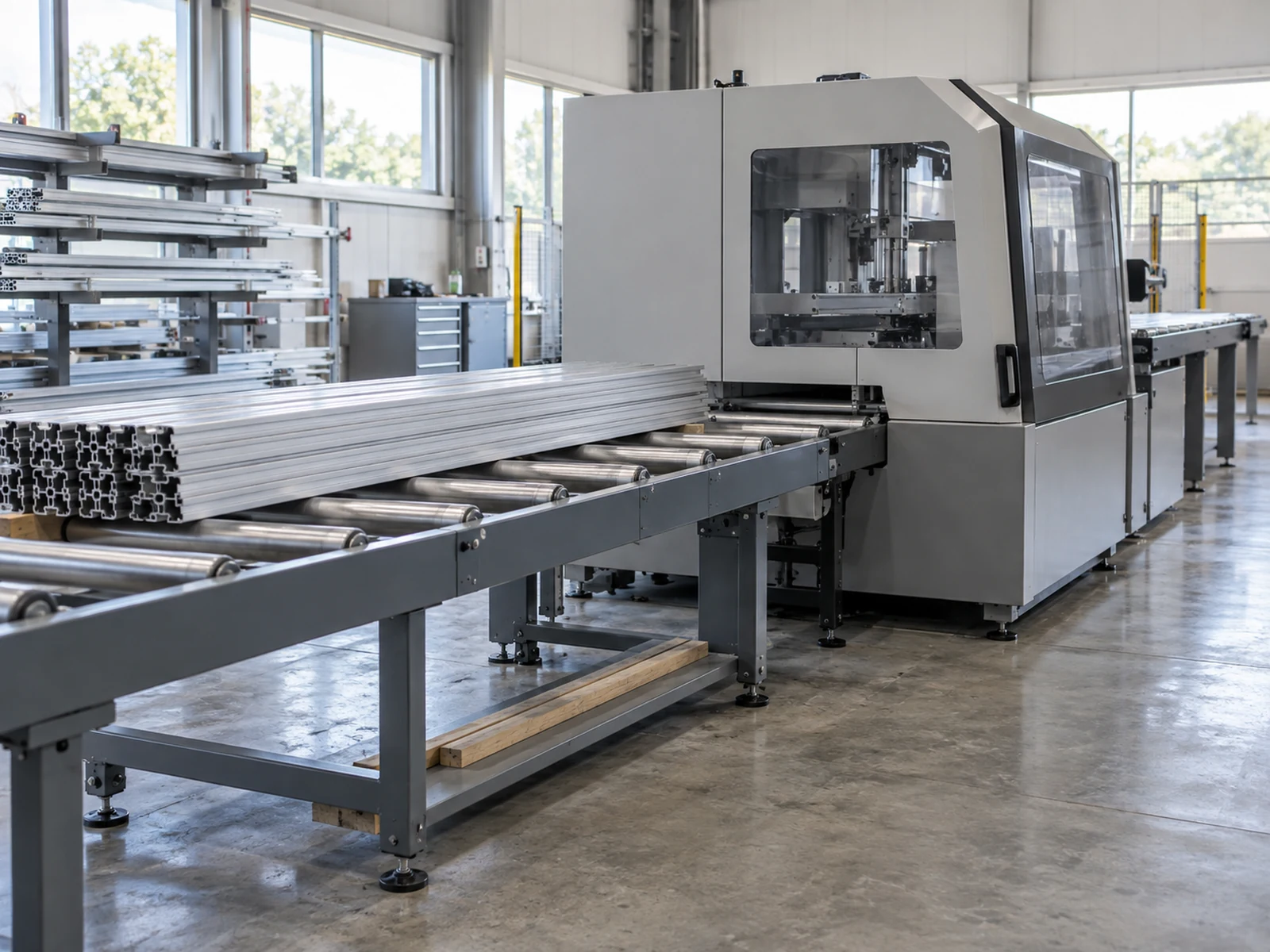
Have the supplier confirm that the new bar can be received, stored, lifted, supported, fed, clamped and cut on the intended route without changing the approved part condition. Request the incoming length envelope, profile orientation and support points, not just the saw’s advertised maximum. A long bar can sag or be damaged before the cut; a short bar can expose more starts, grip limitations or tails. The question is whether the proposed route can produce the specified finished parts from the actual input, not whether a generic machine photograph looks capable.
Hydro’s fabrication overview distinguishes cut-to-length work from storage and other downstream operations. That supports treating handling and fabrication as separate quote elements. It does not prove this supplier’s feed capacity or cycle time. Request the supplier’s own setup, support, handling and inspection plan for the changed stock.
If the supplier proposes another saw, site, fixture or handling subcontractor because of the length change, approve that route separately. The cutting-site change guide explains the additional identity and process checks. For a first lot made from the revised stock length, retain a clear comparison to the released drawing and the agreed acceptance method. Do not treat a successful small demonstration as a universal throughput guarantee.
Release the revised quote, delivery and trace record together
Ask the supplier for one change sheet that compares the accepted quote and the proposed route. It should state the incoming stock identity and length, revised cut pattern, expected accepted pieces by part, residual stock disposition, any changed setup or handling cost, revised unit-price or material-charge basis, delivery dates and the buyer’s decision owner. Keep the old order open only to the extent that it still describes real work. A revised unit price without a revised accepted quantity and delivery promise is incomplete.
| Decision gate | Evidence to request | Hold when |
|---|---|---|
| Same material and drawing | Released drawing, alloy and temper, section, mill and stock lot identification | The new length masks another material or specification change |
| Usable cut plan | Measured length range, trim/grip/kerf rules and mixed-length cut pattern | The plan cannot meet required long pieces or order mix |
| Physical route | Receiving, storage, lifting, feed support, fixture and inspection plan | The actual bars exceed the approved route or handling boundary |
| Commercial result | Accepted-piece quantity, price basis, residual-stock ownership and revised delivery | The revised quote transfers unapproved cost, scrap or delay to the buyer |
| Release and trace | Named written authorization and first affected lot/package labels | Old and new bar lengths could be mixed without an identifiable boundary |
A buyer may authorize one identified first lot under the revised stock length, authorize a limited quantity subject to a named follow-up inspection, reject the substitution, or request an alternate stock supply. Record exactly which option was chosen and which order lines it covers. For mixed old and new input bars, keep lot-level trace through cutting and packaging so receiving can identify the accepted output. The receiving lot-match guide is useful when the revised production reaches the buyer.
If the new stock length causes a short delivery, do not silently replace accepted parts with a promise of future output. Confirm the affected quantity and recovery date using the short-shipment response. The shipment record should distinguish planned pieces, cut pieces, accepted pieces, held pieces and dispatched pieces. This keeps material-yield calculations from being mistaken for finished delivery.
General equipment video and a practical buyer request
The following video comes from Jiurun Machinery’s YouTube channel and shows general aluminum cutting equipment. It is not footage of this buyer’s changed stock length, supplier, stock lot, exact machine configuration, cut pattern, accepted yield, trial or production performance.
Send the cutting supplier the released drawing and order mix, then ask: “What changed in incoming bar length; how much is usable; how will our mixed cut list fit; what stock remains; which route and handling steps change; and what accepted quantity, cost and date can you commit to?” If the revised bar format makes an in-house cutting option worth comparing, send Jiurun the profile drawing, alloy and temper, incoming length envelope, cut-list mix, acceptance method and planned volume through the contact page. Machine suitability and any quoted result must be checked against the actual stock and agreed job.