
A supplier offers to demonstrate an aluminum saw with a short offcut of your extrusion. The saw makes a clean cut, but your production plan feeds complete bars through a support and positioning system. Has the trial proved the machine you intend to buy? Only partly. The offcut can answer a narrow cutting question. It cannot, by itself, prove loading, support, repeat feeding, end-of-bar behavior or the output you will accept from normal stock. The buyer needs to define the aluminum saw trial stock length before treating a sample as purchase evidence.
This guide separates what a short sample can show from what requires a representative production bar. It also gives an RFQ and witness-test plan that lets a supplier quote an appropriate machine and lets the buyer record exactly which questions remain open.
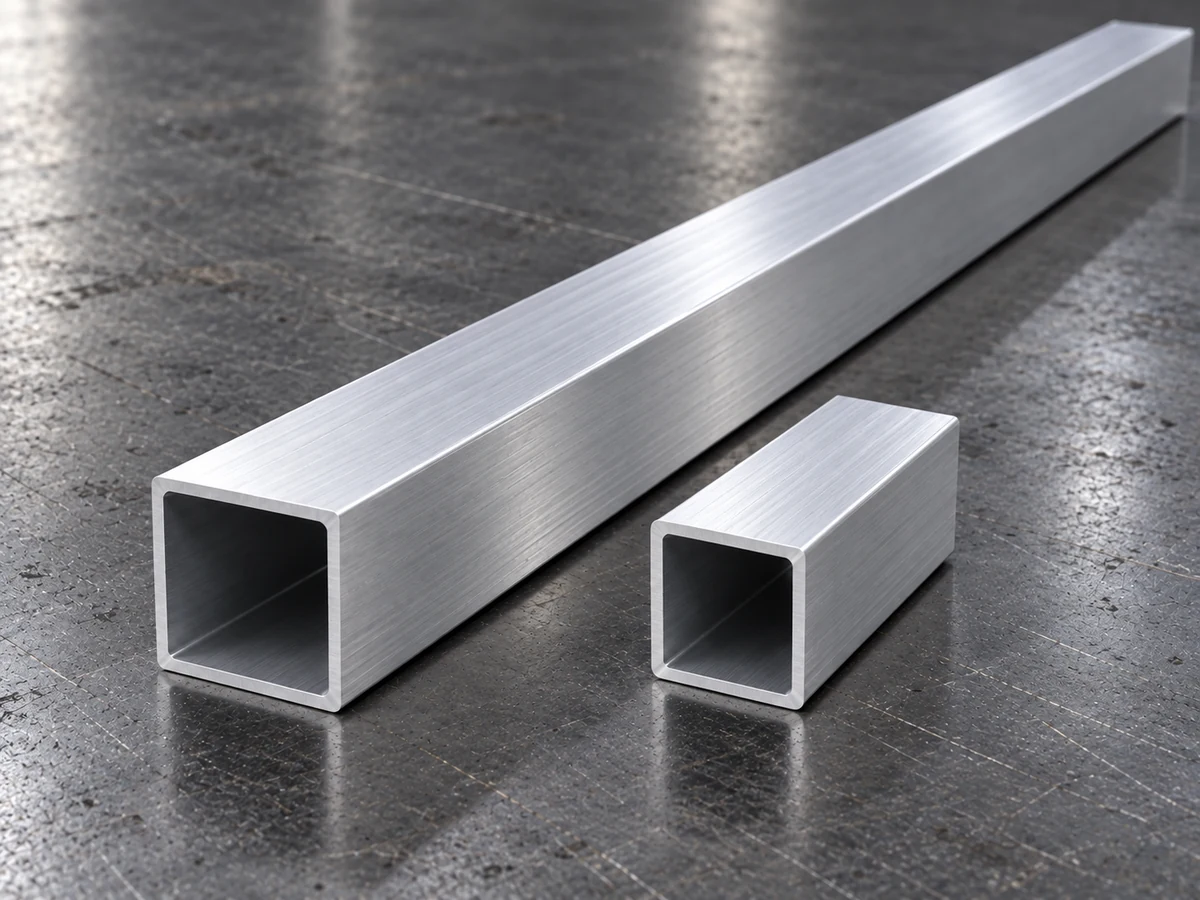
Begin with the actual bar, not the convenient sample
Write down the material form, cross-section drawing and revision, alloy and temper if specified, surface condition, incoming bar-length range, expected cut-part lengths, and the planned batch. Record whether the supplier will receive straight bars, accepted bowed bars, bundled stock, protected stock or pre-cut lengths. These are inputs to the proposed process, not assumptions that a short demonstration piece can settle.
Bar length matters because the material has to enter, be supported, be gripped, move through a measuring or positioning sequence, and leave as a part and a remnant. A compact offcut may fit the cutting zone while bypassing most of that route. Conversely, a long production bar can reveal a support or transfer problem even when a short piece cut face looks satisfactory. The buyer should separate the material infeed and part-length terms from blade movement in the quotation.
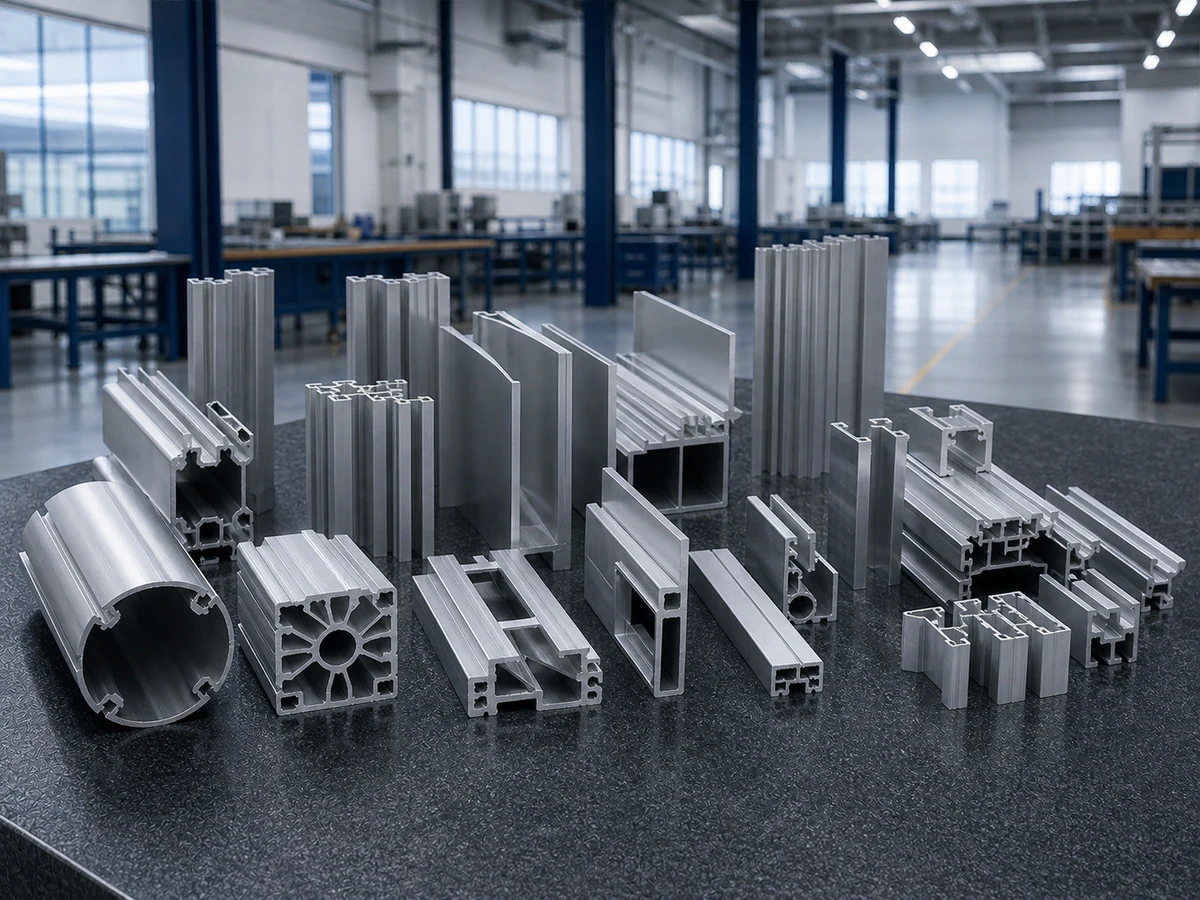
Aluminum saw trial stock length: what a short offcut can prove
A short offcut may be useful for an initial, explicitly limited check of whether a particular profile section fits the guarded cutting envelope; how a proposed blade and clamping arrangement contact that section; and whether a sample cut face meets an agreed drawing-based inspection. The sample must still be long enough to be held and cut in the machine’s intended safe mode. Do not insert an undersized piece merely to produce a demonstration cut.
The result is valid for the tested profile, condition, tool, setup and sample length. It is not a blanket approval of the complete production process. If the operator hand-positions the offcut while the intended purchase relies on automatic bar loading, the demonstration proves even less about the purchased configuration. Record the difference openly in the trial sheet.
Some automatic systems have a defined loadable bar-length range. For example, Emmegi’s V-CUT description distinguishes the loading magazine’s stated minimum and maximum bar lengths from the cutting module. Those figures describe that Emmegi system, not any Jiurun model. They illustrate why a buyer must obtain the actual limits of the offered configuration before assuming a short offcut can run through its normal loading route.
What requires a representative production bar?
Use one or more bars from the incoming length range and condition you will really accept. Witness the complete path: staging, loading, infeed support, locating, clamping, successive cuts, outfeed, offcut handling and the final usable portion of the bar. If several stock lengths or profile families matter, state which combinations are in scope. A single demonstration cannot silently qualify every variant.
Watch for a long bar sagging or bowing away from its support, rubbing on a guide, rotating against a datum, or needing unquoted manual assistance. If accepted incoming stock can be bowed, include that actual condition and compare it with the bowed-extrusion feeding trial. Ask the supplier to identify which support, guide, loader, sensor and handling devices are included in the offer. Do not treat a floor roller or a second operator supplied just for the demo as proof that the quoted cell already includes that arrangement.
Witness several consecutive cuts at the planned part length, not just a single first piece. Check whether the stock reference remains stable after each feed, whether the machine can produce the last acceptable part under the agreed remnant rule, and how it separates released pieces from setup or trial cuts. A clean first cut cannot establish repeatability across the entire bar. Similarly, a quoted feed stroke is not the same thing as the length of stock the loading system can accept.
Use a two-stage witness plan
Stage 1: section feasibility. Send a manageable sample that represents the difficult cross-section and surface condition. Ask the supplier to document its actual length, orientation, clamping contacts, blade and setup, guarding state, cut-face observations and any manual handling. The output is a preliminary finding: feasible, conditionally feasible with a named change, or unresolved. It is not a production acceptance certificate.
Stage 2: production-route trial. Supply a representative incoming bar or arrange a witnessed trial with an equivalent bar that the buyer has approved in writing. Run the offered configuration with its quoted loader, supports, measurement method and outfeed. Record the full-bar starting length, profile and lot, intended cut list, setup pieces, accepted parts, rejects and remnant. If an equivalent bar differs in alloy, temper, section, surface protection or straightness, list the difference and decide whether another test is required. Do not erase the gap by calling it a pass.
For an aluminum saw trial stock length decision, the two stages can be combined when suitable production stock is available. They should remain separate in the evidence so a section-only success is not reported as a full-route success.
Specify the evidence and acceptance decision before shipping samples
Agree the applicable drawing and revision, named profile orientation, length datum, cut-face criteria and measurement method. Identify who supplies calibrated measuring equipment and who witnesses the trial. Keep measurements for the first acceptable part, parts after repeated feeds and the last acceptable part, plus any adverse condition that was observed. Where a cut is rejected, preserve the part or an unambiguous photo tied to the trial record. A bare statement that the machine “cut successfully” does not tell a buyer whether the proposed process met the purchase requirement.
Ask for a process sketch or marked layout that shows the stock entering the machine and the point at which each support or measuring device acts. Photograph the actual configuration and list accessories that are included, optional or temporary. This matters when the equipment maker, integrator and buyer supply different parts of the line. For measurement disagreements, the agreed datum and method are more useful than comparing unlabelled numbers after the trial.
The decision should be one of three clear states: approved for the specified stock and configuration; conditionally approved subject to a named, witnessed retest; or not yet demonstrated. A supplier may still offer a suitable solution when full stock cannot be sent immediately. The honest decision is to keep full-route acceptance open, price the required trial and identify who will provide the production bar.
Handle sample logistics without changing the test
Before shipping, identify the bar’s approved length range and the carrier’s practical constraints. If a full bar cannot travel to the supplier, options include a test at the buyer’s site, a locally sourced equivalent bar approved by the buyer, or an initial short-sample feasibility check followed by factory or site acceptance with production stock. Evaluate the cost and schedule of each route. Do not cut the bar shorter merely to make shipment easier and then describe the result as a full-length trial.
Label every sample with drawing revision, section orientation, material condition, intended test stage and a unique identifier. Protect the surfaces relevant to the final product. Record which supplied material may be consumed, returned or retained for comparison. The trial sample shipment checklist covers chain of identity; the added question here is whether the shipped length still represents the intended saw input.
Keep the demonstration safe and configuration-specific
The supplier should demonstrate the stock in the intended guarded operating mode. A short piece that requires hands near the blade, removal of a guard or improvised restraints is not an acceptable workaround for a missing trial fixture. Long stock also changes the occupied space around an infeed. The OSHA machine-guarding overview describes general safeguarding principles; the actual risk assessment and compliant arrangement depend on the machine, site and jurisdiction. Record any trial-only support or barrier and whether it will be delivered with the purchased system.
Questions to put in the saw RFQ
- What incoming bar-length range, profile condition and mass can the exact offered loading and support arrangement handle? Which values are documented for this configuration?
- What is the shortest piece that can be safely clamped and cut in each intended operating mode? Is a special fixture or mode required?
- Which part lengths, feed sequence and end-of-bar rules will be witnessed with actual production stock?
- Which support, guide, measuring, outfeed and remnant-handling components are included in the price, and which are supplied by the buyer?
- Which drawing features and cut-part measurements define acceptance, and how will results be tied to each bar and setup?
- If the initial test uses a short offcut, when, where and at whose cost will the full-route trial close the remaining evidence gap?
A quotation that answers these questions lets you compare machines against the same manufacturing task. A short offcut is a useful first test when its scope is named. It is not a substitute for a representative bar when the purchase depends on loading, feeding and producing acceptable parts across the stock length. Contact Jiurun with your profile drawing, incoming length range, cut list and planned trial stock to discuss a configuration-specific witness plan.