
Bowed aluminum extrusion at the saw is a buying issue before it is a cutting issue. A profile can meet the stock agreement yet sit differently on an infeed bed, touch a side guide intermittently or be pulled into a clamp as the saw cycles. A vendor demo on one exceptionally straight bar cannot settle whether the proposed machine will handle the buyer’s normal accepted stock. Define the incoming range, support method and measured finished-part result before treating a quotation as complete.
This guide is for buyers specifying a saw for long aluminum profiles that may arrive with allowable curvature. It does not set a universal straightness tolerance or claim a particular Jiurun model can straighten material. The buyer should distinguish the stock supplier’s acceptance rule from the saw supplier’s feeding and cut-part responsibilities.
Start with the stock specification, not a visual guess
Ask the extrusion supplier for the agreed profile drawing, alloy and temper, stock length, straightness requirement and method of measurement. Define how the bar is supported during that measurement and where the deviation is taken. The Australian Aluminium Council Extrusion Manual treats straightness as a measured stock characteristic and describes support on a flat surface for the check. Its tables are context for the question, not automatic acceptance limits for your order: the purchase specification and applicable standard edition must be agreed by the parties.
Separate three groups before the saw trial: material the buyer would normally accept, material that is marginal under the agreed stock rule, and material the buyer would reject. Do not make the saw supplier promise to process rejected stock unless that is an explicitly priced and safely assessed part of the scope. Equally, do not test only a hand-selected straight bar and then infer performance across the accepted range. Record stock identity, length, orientation and observed condition for each trial bar.
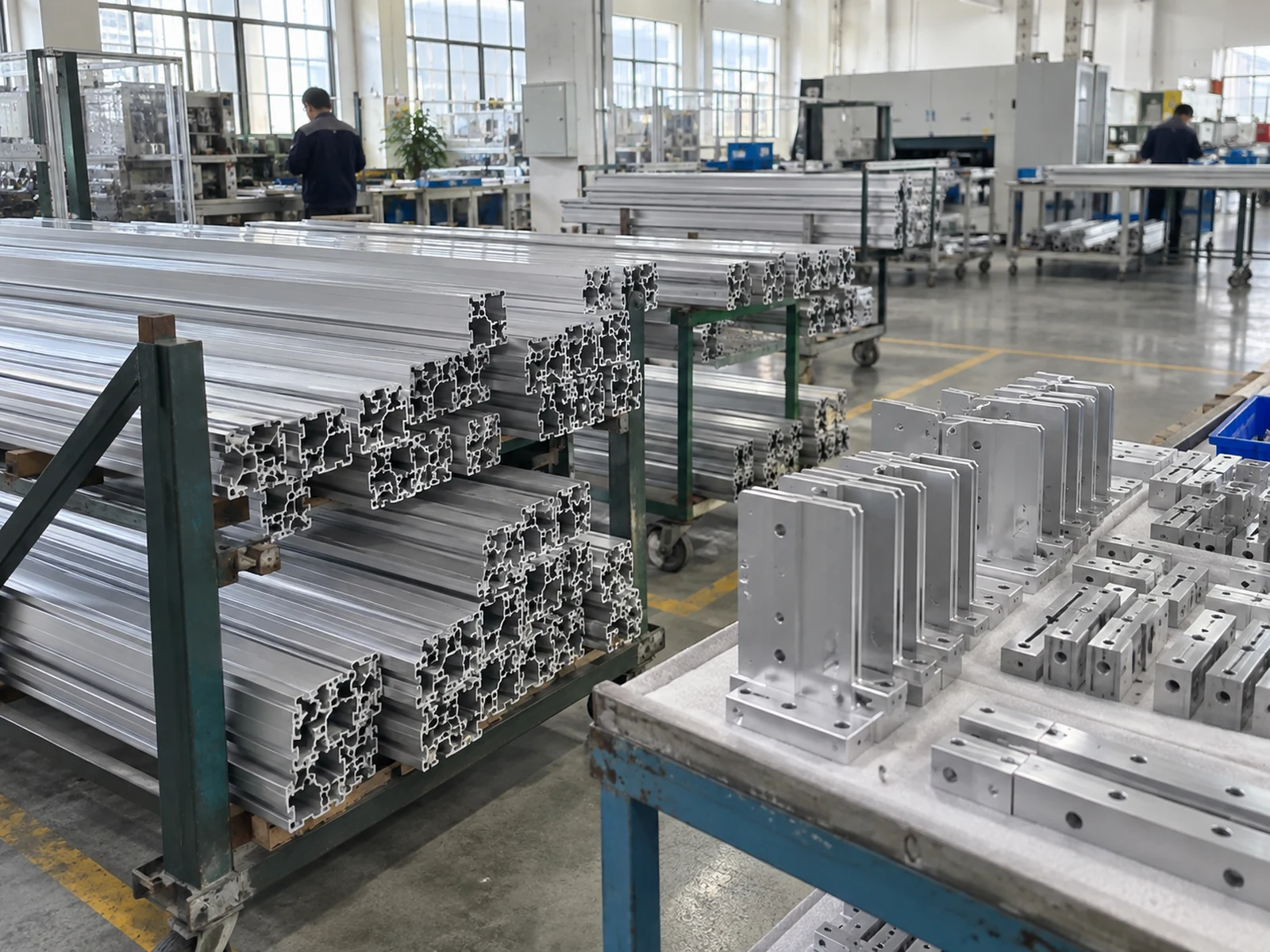
Bowed aluminum extrusion: map the entire feed path
Lay out the bar from its staging rack to the first support, every roller or guide, the driven feed device, clamp and blade. Mark unsupported spans and points where a curved profile could bridge a roller, rotate, scrape a guide or enter the clamp at a different angle from the trailing stock. This is a geometry and handling review, not a claim that a particular machine has those faults. Ask which surfaces establish the feed datum and whether a guide is adjustable for the actual section envelope.
The key buyer question is what happens when support and clamping change the bar’s shape. A flexible extrusion may appear straight while constrained and spring back after release. A side guide may contact only some points along a bowed length. Ask the supplier to show the bar’s path at a safe stopped state and then demonstrate the proposed feed cycle using representative material. Agree who will inspect the setup and when the operator should stop rather than force an uncertain feed. Guarding, access and any intervention must follow the actual machine and site risk assessment.
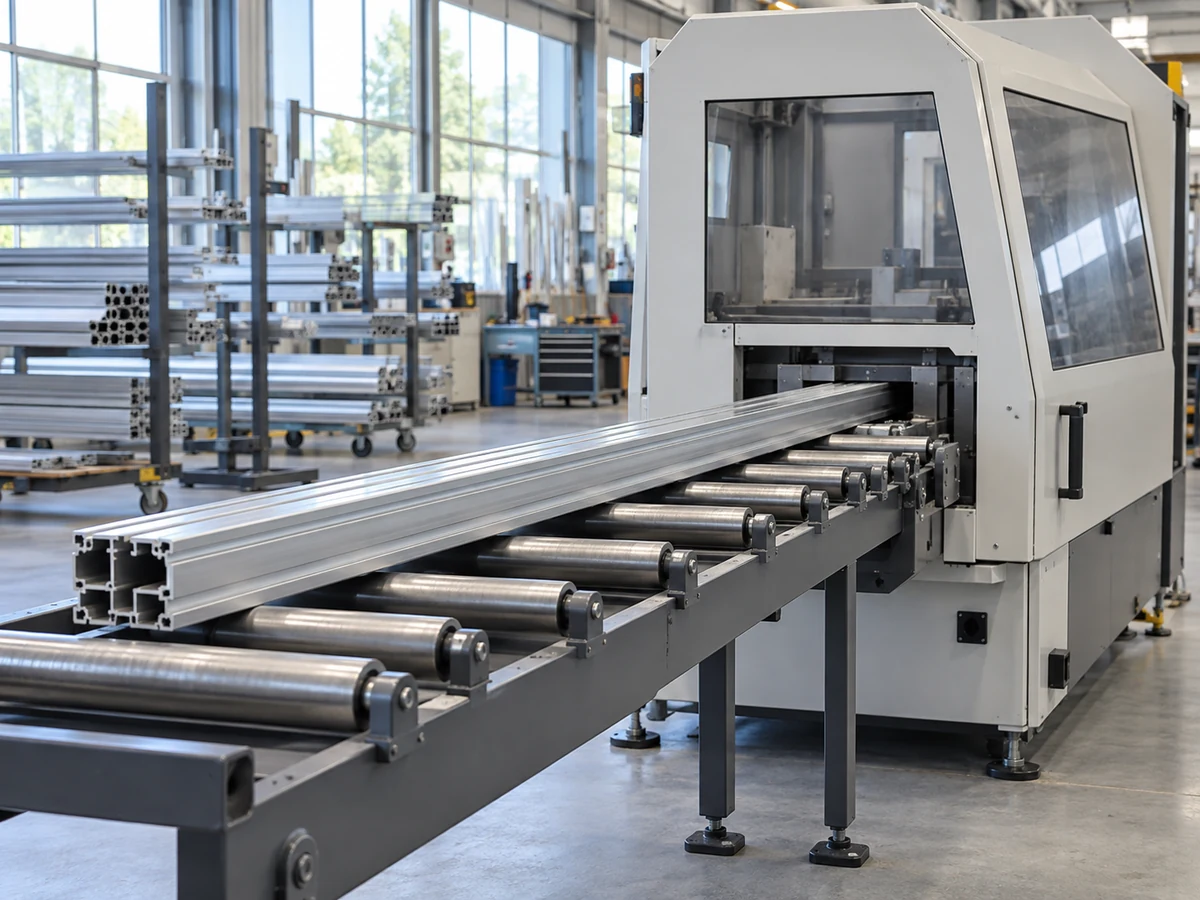
Build a trial that separates feed behavior from cut quality
Agree a witnessed trial using the buyer’s released profile and the worst normally accepted straightness condition available within the agreed specification. Include a clearly identified straighter reference bar if possible. Use the same drawing, blade and measurement method for each comparison, while recording any approved setup changes. Do not deliberately jam a live machine or introduce rejected stock simply to create a dramatic test. If an edge case cannot be safely represented, mark it as an unresolved acceptance item rather than claiming it was proved.
Record loading orientation, support positions, guide setting, clamp contact, feed stops, manual intervention and every trial piece. Note whether a bar has to be rotated or repositioned to pass, and whether doing so changes the quoted staffing or cycle. If the supplier proposes extra rollers, a dedicated support, a different clamp pad or a stock-straightening operation, obtain the exact included configuration and operating step in writing. An attractive machine-only price is incomplete when those dependencies are left outside the quotation.
Keep the trial pieces out of production release until their inspection and disposition are recorded. The setup-cut segregation guide explains the physical boundary between adjustment pieces and accepted output; apply that boundary here so a stock comparison does not mix reference, marginal and released pieces.
Measure the part after the cut and after release
Do not use a servo feed setting or a clamped-on-machine reading as a substitute for a finished-part measurement. Identify the correct drawing revision and the datum from which the released part length is measured. For a miter or complex section, include the functional cut-end and mating checks that the drawing requires. Measure after the part is free of the saw and supported in the agreed condition. If a part changes position when unclamped, the released geometry is the buying concern.
For bowed aluminum extrusion, a useful trial sheet links every measured part to its incoming bar and feed setup. Record the inspection method, result, operator or inspector, and disposition. If the straight reference stock passes but a normally accepted bowed bar does not, the next decision is not automatically to reject the saw. Determine whether the stock specification, support arrangement, datum, fixture or proposed process is the limiting factor. Change one condition at a time and repeat the agreed check; otherwise the parties cannot tell which change solved the problem.

Turn the outcome into a comparable RFQ
Request a layout showing stock staging, infeed supports, guide datum, clamp, saw and outfeed. State the accepted stock length and straightness range, part family, finished-part drawing and inspection plan. Ask each supplier to identify what is included: support hardware, adjustment range, loading method, training, trial material and any separate stock preparation. Require the same representative bar set and acceptance record for competing offers. State who provides and approves the incoming stock and who is authorized to release cut parts.
Evaluate the total route rather than a headline cutting speed. If the proposed saw needs an extra person to manage each bowed bar, a separate straightening step, repeated manual resets or additional rejected pieces, compare that operating cost with the alternative configuration. If the stock variation can be reduced at the extrusion source, price that supply change separately. Do not confuse allowable incoming straightness with finished-part length accuracy, and do not convert a feed-positioning specification into a promise about free-state cut parts.
Related equipment footage
The following channel video shows general Jiurun automatic saw and feeding footage. It can help a buyer visualize equipment movement, but it does not show this article’s stock condition, bowed-bar behavior, model configuration, customer, witnessed trial or performance.
Send the evidence with your inquiry
Send the accepted extrusion drawing, stock length and straightness rule, photographs or measurements of representative incoming bars, finished-part drawing, expected mix and available floor layout. Ask for a witnessed feed-and-cut trial with a written result and the exact proposed support configuration. Contact JiurunCut with those inputs to discuss a saw quotation against your actual material route.