
Aluminum saw operator sightline matters when the person at the controls must see stock, clamping, guard status and part exit at the right moments. A saw can have a suitable cutting envelope yet still be awkward to operate if those decisions cannot be made from the proposed station. The purchasing question is not whether the machine has a window. It is whether the proposed station lets the operator make each routine decision from an agreed, safeguarded position. Ask suppliers to show the view for your actual material route before you approve the layout.
Define the decisions that need a view
Start with the work sequence rather than a single photograph. A loading decision needs a view of stock orientation and the reference surfaces. A start decision needs confirmation that the intended program, material and clamp setup have been selected. During a cycle, the operator needs the status information provided by the proposed machine and a way to notice abnormal feed or part flow without reaching into a hazard. At discharge, the operator needs to identify a blocked outfeed, mixed parts or a full collection area before releasing another batch. Those are different views, and a control panel that is convenient for one of them may be poorly placed for another.
For each decision, write down the observation, the location from which it should be made, and what happens if the observation is unavailable. Do not assume that every cutting action must be watched continuously. Some enclosed machines intentionally prevent a direct view of the blade. In that case, ask how guarded windows, indicators, alarms, interlocks and a stopped inspection procedure support the decisions the operator must actually make. Visibility must never be bought by defeating a guard.
Map aluminum saw operator sightline across the material route
Mark the intended operator standing position on a floor plan and trace the incoming bar, clamp zone, guarded cutting area and outgoing parts. Include roller tables, automatic loaders, scrap chutes, bins and any downstream machine. A bare saw photograph hides much of this route. The important sightline may be from the main controls to a feed reference, to a long stock end, or to the first point where a cut part can accumulate. Ask for the proposed layout at operating height, not only a top-down drawing.
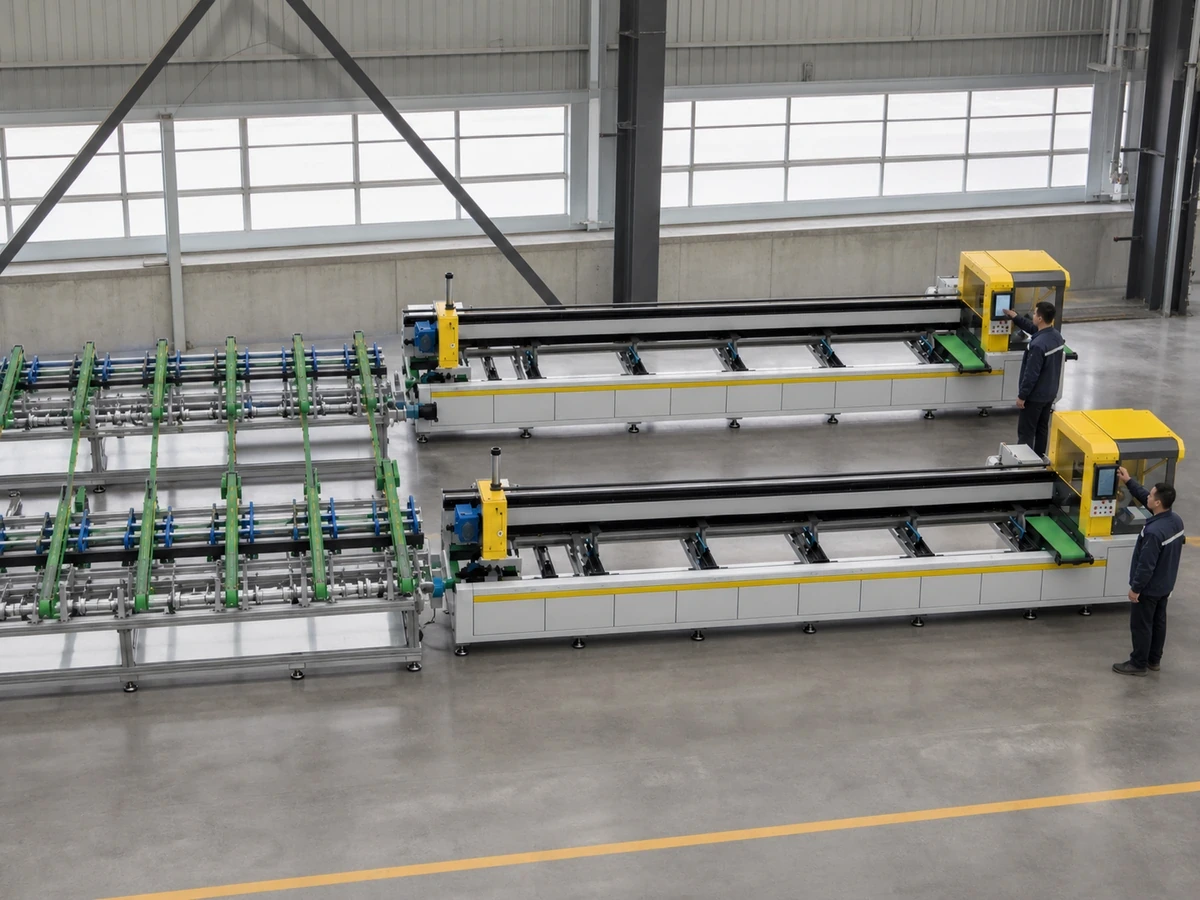
For long stock, assess where a person can see the leading end, side alignment and support as material enters. For short parts, assess where the first finished piece becomes visible and where an outfeed blockage would be noticed. If the line runs unattended for part of a cycle, specify the status signals and stop response; a distant visual check alone is not an adequate control plan. Our incoming-stock-envelope guide helps define the shapes and stock conditions that should be included in this review.
Inspect the guard and viewing arrangement together
A transparent panel may support observation, but its position, size, lighting, reflections, contamination and cleaning access matter. Ask which events are visible through a closed guard, which are reported by the controls, and which require a stopped, isolated inspection. The UK Health and Safety Executive’s PUWER guidance discusses the need for a view of the work where necessary without undermining safeguarding. OSHA’s machine safeguarding guide likewise discusses visibility as a guard-design consideration. These are general guidance sources in their respective jurisdictions; neither verifies a Jiurun machine, a site installation or compliance with your local rules.

Do not treat a window as a substitute for the machine’s required safeguards. Request the supplier’s guarding concept, access points, interlock description, stop and isolation procedure, and the applicable documentation for the actual quoted configuration. Have your own competent safety team review the proposal against the rules at the installation site. If chips or mist could obscure a window, ask how it will be cleaned safely and how the process remains observable when it is dirty. A camera or screen may help with a remote area, but it introduces its own questions about image delay, failure indication, lighting and maintenance; it should be specified and evaluated, not assumed.
Put controls where the operator can use them safely
The HMI, start and stop controls, emergency-stop devices and local setup controls should be evaluated from the proposed working positions. Ask the supplier to identify which controls belong to normal production, which are for setup and which are used during recovery. A control that is readable only while leaning across stock support or standing in the path of moving material creates an avoidable operating conflict. The answer may involve a revised panel location, another viewing position, clearer status information or a different workflow. It is a design review, not a promise that one panel suits every line.

Include language and lighting in the review. Can the named operator read the active program, alarm and relevant setpoints from the normal position? Are labels and status signals understandable to the receiving team? Confirm how an operator distinguishes a normal stop from a fault and how the machine prevents an unintended restart after access or recovery. Our jam-clearance RFQ guide covers the separate access and restart questions that arise when the operator must leave the normal station.
Specify a meaningful supplier demonstration
Ask for a walk-through using your longest and shortest stock, one awkward profile, the planned cut lengths, the actual outfeed method and the people who will operate the line. The supplier can use a layout drawing, station photographs or an agreed demonstration before a machine is built. For a final acceptance test, repeat the observation at the installed line. Record what the operator can see and read from each designated position while guards are in their normal operating state. If a view is unavailable, record the alternative signal or procedure and who approves it. A generic showroom clip cannot answer all of these site-specific questions.
Film each relevant point from normal eye height if both parties agree, then label the material, configuration and test conditions. Check the loading view, closed-guard status, in-cycle alerts and discharge/collection view separately. The operator should not open a guard or step into a risk area to improve a photograph. A discrepancy is an engineering action item: record the obstruction, its operational consequence, proposed remedy, owner and retest. Avoid converting a visibility discussion into an unsupported claim about cutting precision, throughput or safety certification.
Related equipment footage
The following Jiurun Machinery channel video shows general aluminum-cutting equipment footage. It is provided as a process example only. It does not demonstrate the sightline, guard arrangement, model configuration, customer installation, trial cut or performance of the machine discussed in this guide. Request a separate view of your proposed station and material route.
RFQ questions to send before layout approval
- Where are the normal loading, running, discharge and recovery positions on the proposed floor plan?
- What must the operator see or read before starting, during the cycle and before another batch is released?
- Which areas are visible through closed guards, and which rely on machine status or a stopped inspection procedure?
- What obstructs the view when the longest stock, full outfeed bins, chip handling and downstream equipment are installed?
- How are viewing panels cleaned safely, and what is the response when they become obscured?
- Where are the HMI, start/stop, emergency-stop and setup controls relative to moving stock and guarded access?
- What representative material and operating states will be shown at factory and site acceptance, and how will unresolved sightline issues be closed?
Attach a marked layout, representative profile drawings, stock lengths, cut-list examples and the expected collection route to the RFQ. Ask the supplier to annotate normal operating positions and any proposed camera or status display. Then compare offers against the same observable decisions, not just the presence of a window or an HMI. Our enclosed versus open station guide provides a broader layout comparison.
Make the purchasing decision traceable
An aluminum saw operator sightline specification is a short decision map: task, operator position, required view or status, safeguard state, evidence and acceptance owner. It turns an impression from a brochure into a reviewable part of the machine purchase. Send JiurunCut the proposed floor plan, profile drawings, stock and finished lengths, desired output and collection method. Ask for the operator positions and visibility assumptions to be marked on the recommended configuration before quotation approval.