
Aluminum saw feedability is a purchasing question about the stock arriving at the machine, not simply a catalog dimension. A saw may have enough nominal section capacity yet struggle to move, guide, clamp, or support a particular delivered extrusion consistently. Buyers can reduce that ambiguity by defining an incoming-stock envelope before comparing machine quotations. The envelope describes which profiles and lengths the site expects to feed, what variation the stock supplier may deliver, and where the machine supplier’s responsibility begins and ends.
This guide gives an RFQ and acceptance framework. It does not assign a universal allowable bow, twist, surface condition, feed speed, or cut-part tolerance to any Jiurun model. Put the actual limits in your drawing, material purchase specification, and agreed trial plan.
Start with the stock you will accept, not the saw you hope to buy
Make a table for each section family. Record the alloy and temper specified by the drawing, solid or hollow geometry, nominal dimensions and drawing tolerances, wall features that affect support, finish or protective film, supplied length range, and how bundles arrive. Then record the incoming conditions that will be accepted for production: longitudinal bow or straightness, twist along the bar, local damage, end condition, and variation between lots. Ask the extrusion supplier and your quality team to agree how each condition is measured and who decides whether a lot passes. A nominal profile outline alone does not describe a real bundle at the saw.
Straightness and twist are different. Straightness concerns bow or curvature along the length; twist is rotation of the section along that length. A bar can be acceptable for one handling route and troublesome for another because support spacing, guide clearance, orientation, and clamp contact differ. The Aluminum Association’s extrusion tolerance education describes these as distinct characteristics. For a deeper buying check, see our guides to extrusion straightness before cutting and extrusion twist. Neither article replaces a drawing-level acceptance limit for your material.
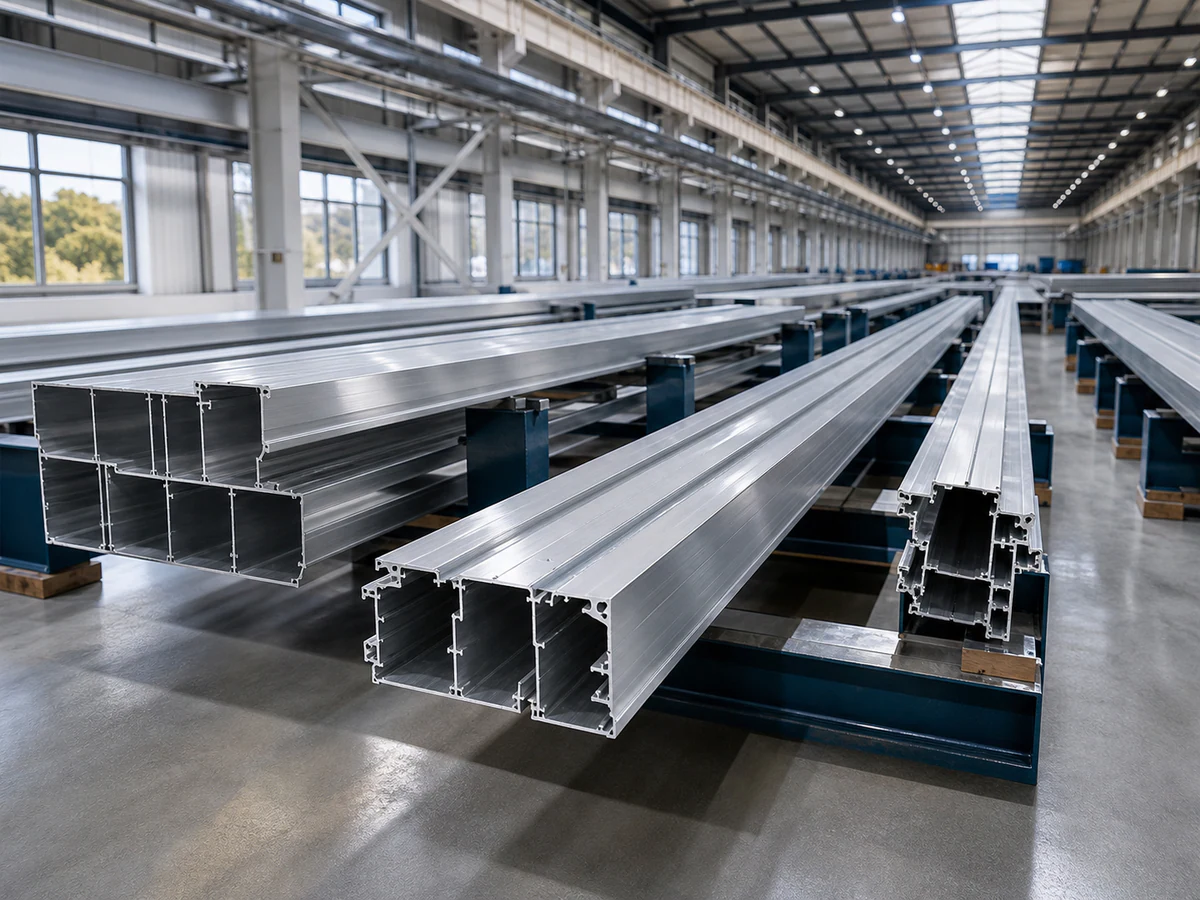
Check aluminum saw feedability along the whole feed path
Sketch the route from bundle or stock rack to the loading position, support rollers, side guides, feed gripper or clamp, blade station, and outfeed. For each handoff, ask what supports the extrusion, which face is the datum, where a hollow or thin wall can be contacted, and what happens when a shorter remnant approaches the final feed. Compare the real site layout with the supplier’s proposed loading height, infeed footprint, outfeed space, and handling method. A cut-length specification says little about whether a bowed six-metre bar will enter a guide without manual intervention.
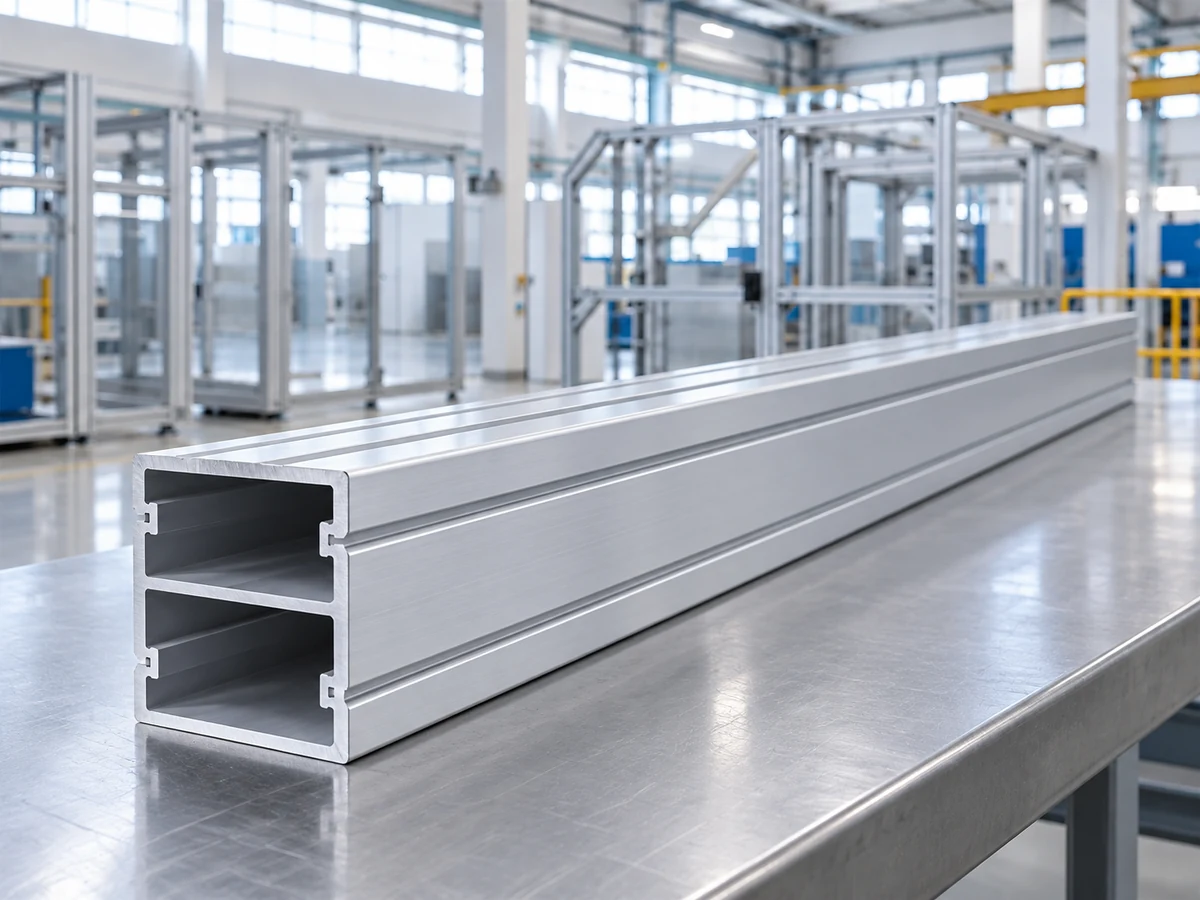
Group profiles by the surfaces that can safely locate and clamp them, rather than by alloy name alone. A solid bar, an open channel, and a multi-chamber hollow extrusion can have very different contact areas. The Aluminum Extruders Council distinguishes solid, hollow, and semi-hollow sections in its design guidance; the actual fixturing decision still depends on the customer’s drawing and samples. Include the production orientation of asymmetric sections and whether the visible face needs protection from marks.
Keep four acceptance questions separate
Material conformity: Does the delivered extrusion meet the drawing and purchase specification before it reaches the saw? This is the material supplier and buyer’s agreed inspection question. Feedability: Can an accepted bar be loaded, supported, guided, advanced, and held within the agreed operating procedure? Cut-part acceptance: Does the resulting part meet the separately stated length, squareness, burr, and surface requirements when measured by the agreed method? Throughput: What output can the full cell achieve with the specified mix, handling, changeovers, and downstream steps?
Do not substitute one answer for another. A feed positioning figure is not automatically the finished part’s length accuracy. The usable feeding stroke and length terms also differ from a complete feedability envelope. Likewise, the feed rate is only one part of cycle time. The Aluminum Extruders Council notes that saw cutting choices depend on cut form, lengths, and tolerance needs, and that later operations such as deburring may be required. Put each deliverable in the correct line of the RFQ.
Choose a handling route and state what it excludes
There are several legitimate purchasing routes. A site can screen incoming stock and segregate exceptions before loading; it can add support, guide, or section-specific fixture provisions; or it can evaluate a more automated loading and feeding concept. None is universally better. Compare them on the accepted stock range, manual handling, changeover effort, floor space, operator visibility, maintenance access, and the cost of rejects or stoppages. If a quotation assumes straight, undamaged stock within a defined range, write that assumption beside the proposed equipment and the material inspection process.
Ask for a contact-point drawing or marked sample. Where does each clamp touch? Can the fixture hold the section without crushing a wall or marking a cosmetic face? How does it locate a section with dimensional variation? Who supplies section-specific pads or tooling, and how will those be changed? A stopped equipment photograph can prompt these questions, but cannot prove a performance result.

Write a representative trial before asking for a pass or fail
An aluminum saw feedability trial matrix crosses section families with the conditions inside the accepted incoming-stock envelope. Include the shortest and longest supplied bars, smallest and largest relevant section variants, normal and difficult orientations, and the agreed end or remnant conditions. For each sample, record the supplier lot, actual measured stock condition, setup, support arrangement, feed sequence, cut list, and resulting part measurements. Define how many samples are needed and who measures them before the trial. Do not quietly treat a visually perfect sample as evidence for all production stock.
Agree in advance what counts as a machine-related feed interruption and what counts as out-of-spec incoming material. Record whether intervention was needed at loading, a guide, a clamp, or outfeed. If a trial requires a different pad, guide setting, or operating procedure, capture that change in the proposed configuration and price. A satisfactory cut from one bar does not establish throughput, accuracy, or reliability across every section and batch.
Assign ownership for exceptions and changeovers
When incoming stock falls outside the agreed aluminum saw feedability envelope, segregate it under the site’s normal quality and safety procedure and document the reason. Decide who may approve a material concession, who may alter a fixture or guide setting, and who may resume the run. For accepted stock that still fails to feed, record the point of interference and have the buyer and machine supplier review the documented setup together. Do not bypass guards or improvise a hazardous correction to make a trial pass.
For a multi-profile purchase, ask what the operator must change between families and how the approved settings will be identified. A repeatable setup sheet, contact-point map, and sample record are more useful than a promise that the machine is suitable for “all aluminum profiles.”
Questions to put in the RFQ
- Which section drawings, alloy/temper specifications, supplied length ranges, and actual samples have been reviewed?
- What measurable incoming bow, twist, end, finish, and damage conditions does the proposed feed path accept?
- Which face is the datum for each family, and where do guides, supports, and clamps touch?
- Which stock and remnant lengths require manual handling or a different procedure?
- What infeed and outfeed space, loading height, and site utilities are assumed?
- Which pads, guides, supports, changeover parts, and protective contact materials are included in the quote?
- How will accepted stock, out-of-envelope stock, feed interruption, and cut-part nonconformance be distinguished in a trial?
- What representative sample matrix, measurement method, and acceptance record will both parties sign?
- Which deburring, cleaning, inspection, and packing steps remain outside the saw’s scope?
Equipment footage: a general saw and fixture example
The Jiurun Machinery video below shows general enclosed aluminum cutting equipment and a machine-side support and fixture area. It is included as an equipment example for discussing handling and contact points. It does not show the incoming stock, material condition, model configuration, customer, trial, or performance described in this guide. Confirm the proposed machine and accepted-stock envelope separately in the quotation and trial documents.
Turn the envelope into a quote you can compare
Send the same accepted-stock table, section drawings, representative samples, cut list, site layout, and part acceptance criteria to each supplier. Ask each to mark included handling provisions, exclusions, trial conditions, and the owner of incoming-material inspection. That makes proposals comparable and exposes the cost of unspoken assumptions before the equipment reaches the factory.
To discuss a suitable Jiurun cutting setup, contact the team with your section drawings, photos of representative incoming bars, supplied length range, proposed cut lengths, site layout, and the material and part limits you need to verify. A specific recommendation should follow review of those inputs and an agreed sample plan.
Sources and scope
- The Aluminum Association: Understanding Aluminum Extrusion Tolerances — distinguishes extrusion tolerance characteristics including straightness and twist.
- Aluminum Extruders Council: Extrusion Design Tips — section geometry and design considerations.
- Aluminum Extruders Council: Cutting and Forming — saw selection and downstream processing context.
These industry sources explain concepts; they do not verify a Jiurun model, customer stock, or cutting result. Confirm project-specific limits with the drawing owner, material supplier, and equipment supplier.