
An aluminum saw guard opening can become the limiting part of a tall-profile job even when a quoted cutting envelope appears large enough. The buyer needs to confirm that the real extrusion, its required orientation, the clamp arrangement, and the complete guarded cutting cycle can coexist. A profile that enters a machine with a cover removed or a clamp left out has not passed that test.
This guide is for a purchaser comparing industrial circular-saw equipment for aluminum profiles. It sets out the drawing package, witnessed trial, and acceptance record to request before signing off a configuration. It does not assign a universal safe opening dimension or certify any model from a photograph.
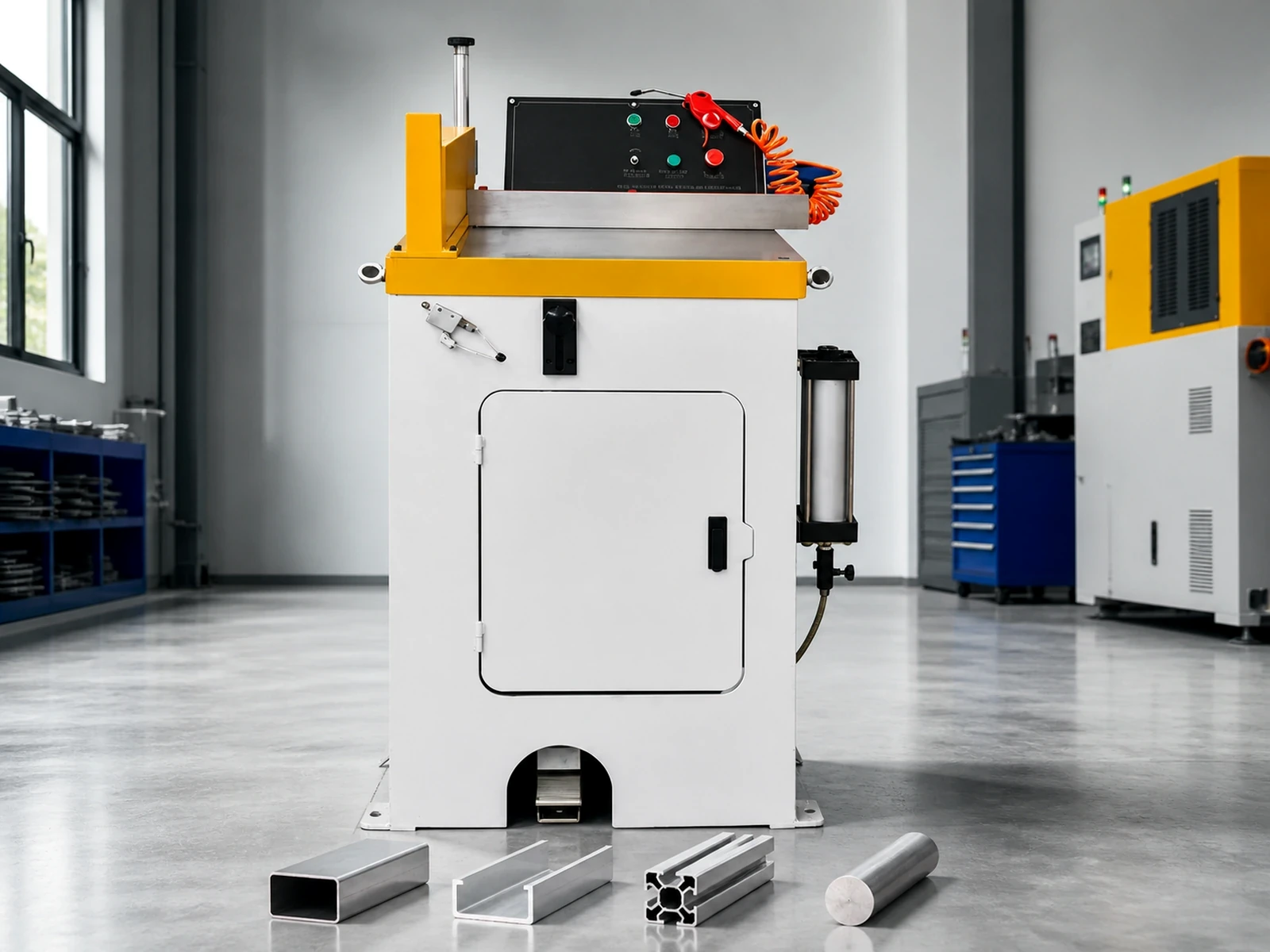
Aluminum saw guard opening: why nominal capacity is only a first filter
A capacity figure may describe a particular blade, angle, and stock position. Your part may need a different orientation to protect a visible face or preserve a downstream datum. A fixture or support may raise the profile above the table. The upper clamp must contact an approved surface without crushing a thin wall. The guard must remain in its intended position throughout approach, cutting, return, and part removal. Ask the supplier which configuration and assumptions were used for the quoted envelope; do not transfer a figure from another model or option.
The relevant question is not simply “Can the extrusion pass through?” It is “Can an operator load, clamp, cut, retrieve, and clear the actual part using the agreed controls and guarding?” Our separate feedability guide covers stock travel and support; this review focuses on the opening and safeguarded cutting station.
Send a profile package that exposes the difficult cases
Provide a dimensioned cross-section, wall thickness, alloy or material specification, stock length, finished length range, cut angle, visible-surface restrictions, and the drawing datum used for acceptance. Mark protruding ribs, hollow chambers, flanges, attached hardware, and any natural bow or twist allowance specified by your incoming-material standard. If the job contains several profiles, identify the tallest, widest, and least stable sections separately; one sample rarely represents all three.
State whether the profile may be rotated for cutting. Rotation can change the clamp contact, cut-face orientation, surface-mark risk, and operator’s pickup route. Include the support equipment expected on both sides of the saw, since a profile that fits inside the station may still tip or snag at the transition. Ask the supplier to return a marked setup drawing showing stock orientation, contact surfaces, support height, guard location, and the proposed cut path.
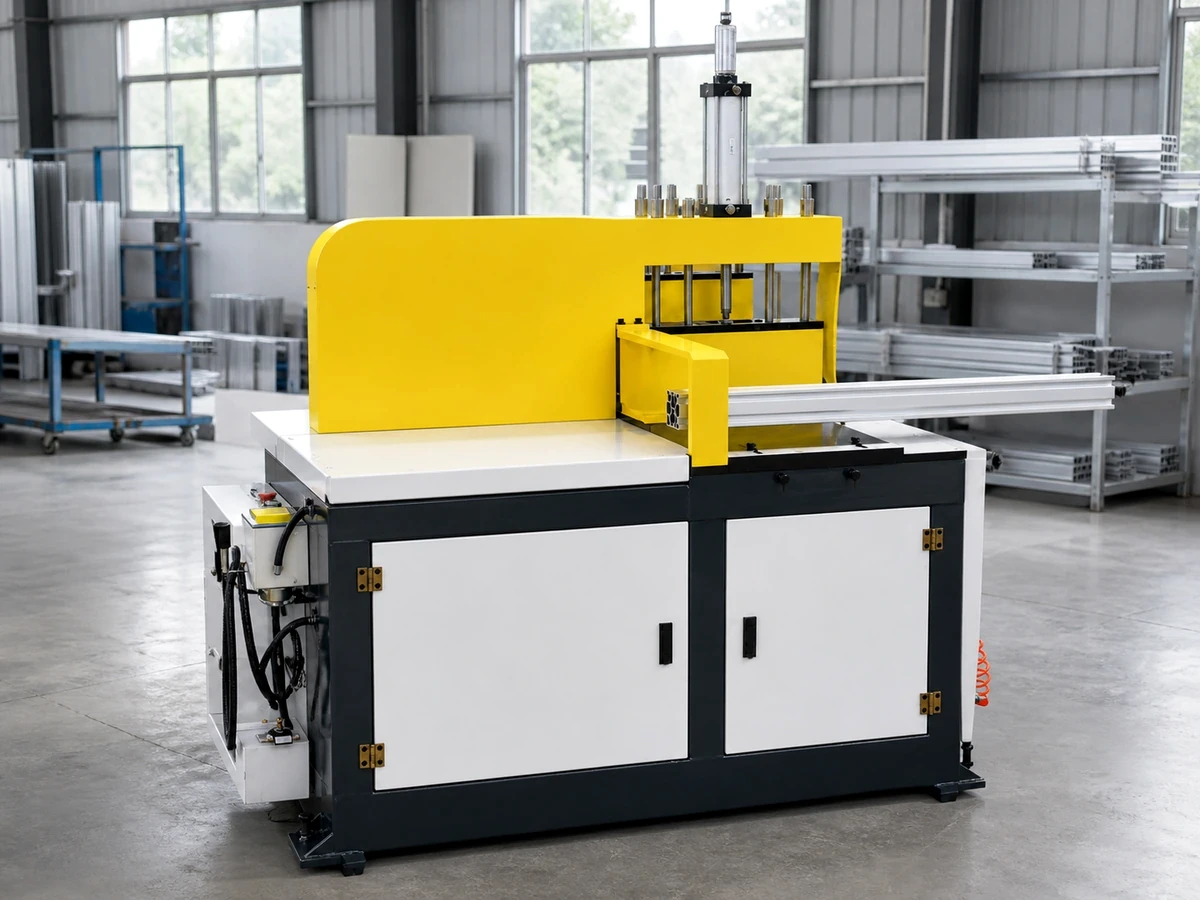
Require two different checks: static fit and a guarded cycle
First, have the supplier’s qualified personnel check the real profile against the agreed setup with the machine safely isolated as their procedure requires. Record the intended orientation, loading route, contact points, and whether stock or fixture interferes with the guard or other structure. This is a geometry screen, not permission to operate with a removed, lifted, or defeated guard.
Then witness an authorized cutting cycle with the guard and other protective devices in their intended operating state. Observe loading, clamp engagement, blade movement, return, part pickup, and offcut handling. Use the longest and shortest representative parts where removal changes, and repeat after any proposed fixture or blade configuration change. Keep the accepted cut parts and inspection readings tied to the setup version. A static pass alone cannot show safe access or finished-part quality; a good cut made with a temporary workaround cannot approve the production setup.
The safety boundary matters. The UK Health and Safety Executive’s guidance for manually fed pivoting-head metal-cutting circular saws explains guarding and feed/take-off aperture principles for that specific machine class; some general principles may help frame a supplier discussion, but the sheet is not a JR-455Q certification or a substitute for the applicable local requirements and machine instructions. OSHA’s general machine-guarding guidance likewise treats point-of-operation access and flying chips as hazards. Ask the machine supplier and your site safety lead to assess the actual configuration. Reject any proposal whose only way to admit the profile is to remove or bypass protection.
Separate guard fit from clamp fit and part acceptance
For an aluminum saw guard opening review, three observations should have separate sign-offs. Guard fit: the complete protection arrangement remains in its agreed state through the cycle, with no stock collision or unsafe reach path. Clamp fit: approved contact faces hold the extrusion without unwanted movement or visible-surface damage. Part acceptance: the cut end, length, angle, burr condition, and any assembly interface meet the actual drawing and inspection method. If one fails, name the failure and request a revised setup; do not label the whole trial “passed” because the blade made a cut.
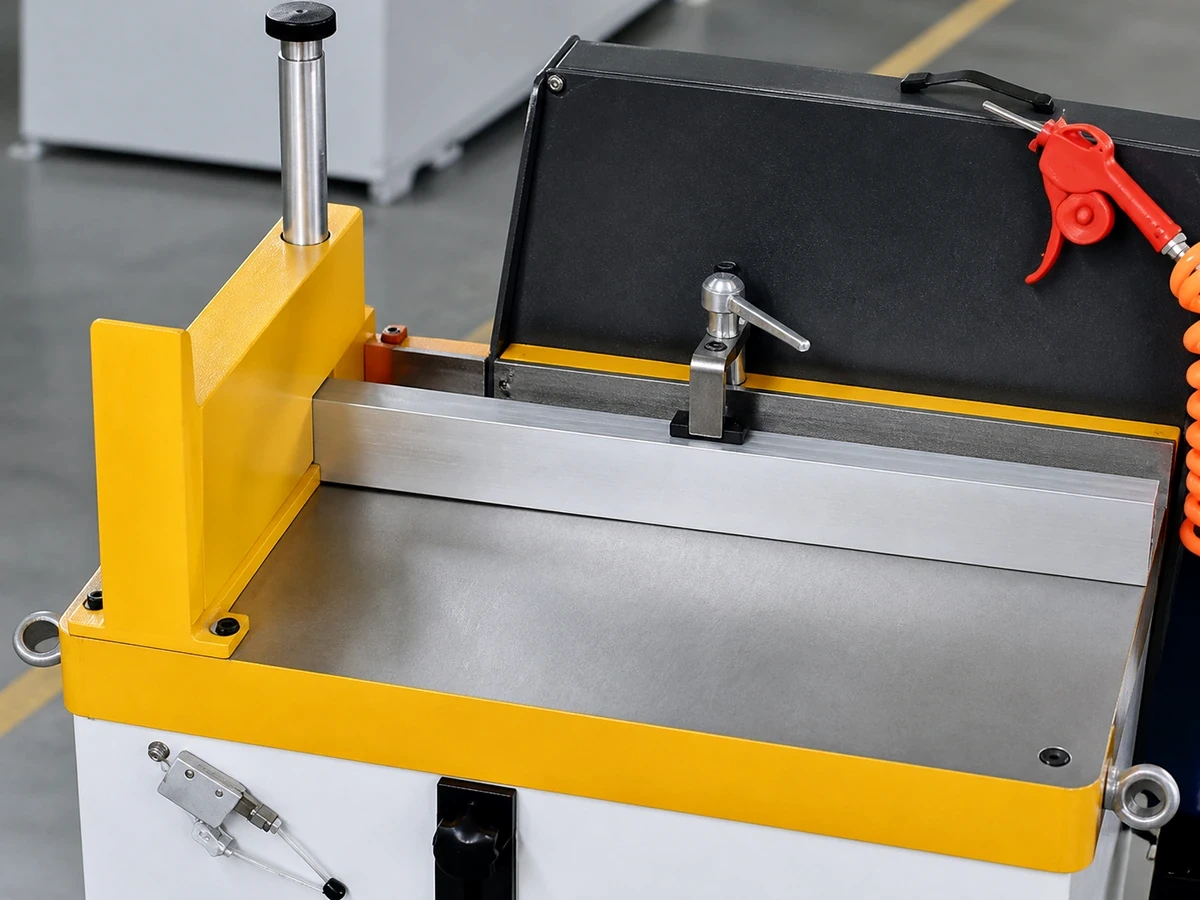
For a deeper contact test, use the JR-455Q upper-lower clamp trial guide. If you are comparing an enclosed station with an open one, the access and material-flow comparison addresses that broader purchase choice. Neither replaces a witnessed check of your tallest profile at the offered machine.
What to put in the RFQ and acceptance record
- Profile identity: drawing revision, stock orientation, marked contact and visible faces, and the actual sample used.
- Machine scope: exact offered model, blade and fixture configuration, guarding arrangement, infeed and outfeed supports, and any included option.
- Trial sequence: static fit, guarded cycle, short-part pickup, longer-stock support, and changeover back to a second representative profile.
- Evidence: setup photos, a short witness video if permitted, measured accepted parts, rejection observations, and the responsible signatories.
- Change rule: if a guard, clamp, fixture, support, or orientation changes after the trial, identify what must be rechecked before release.
Use a simple decision: approve only the named configuration that passes the agreed guarded cycle and part checks; revise and retest a configuration that needs a design change; reject a configuration that depends on bypassing protection or cannot meet the drawing. Record unresolved items before shipment or production. That prevents a quotation photo, a capacity table, or a one-off demonstration from silently becoming the acceptance standard.
Equipment footage: what it shows and what it does not
This video is general JR-455Q equipment footage from the Jiurun Machinery channel. It shows a saw station and guard area. It does not show or verify the tall profile, configuration, customer, witnessed trial, clearance, compliance, or cutting performance discussed in this article. The photographs above are also illustrative views, not a record of this proposed purchase.
Buyer questions before placing the order
Does a published maximum section size prove my tallest profile fits?
No. Ask for the exact configuration assumptions, then confirm your actual orientation, support, clamp, guard position, and cut angle through the supplier’s approved trial process.
Can a larger opening solve a collision?
A change to guarding is a machine-design and safety matter, not an informal shop-floor adjustment. Have the supplier propose and document a suitable protected configuration, then reassess it with your safety lead and repeat the affected trial checks.
What should I send to start a meaningful review?
Send the cross-section drawing and revision, real sample if available, required orientation, cut angles, length range, finished-part acceptance criteria, and details of the infeed and pickup route. Contact JiurunCut with those details and request a written fit-and-guard trial plan tied to the offered machine configuration.