
Aluminum saw feed rate describes motion during a stated part of the process. A quotation may also list stock positioning speed, blade rotation and rapid travel. Those entries answer different questions. Before comparing two machines, ask which axis moves, when the value applies and which units the supplier uses.
This guide helps buyers clarify five points in a cutting proposal. It includes a simple feed-per-tooth calculation to explain the terms. The example values are fictional arithmetic inputs, not recommended settings for aluminum, a particular blade or a JiurunCut model.
Three entries to keep separate
- Cutting feed: relative tool and workpiece movement during the cut.
- Stock positioning: movement that presents the next length for cutting.
- Blade rotation: revolutions per minute, stated separately from linear feed.
On this page
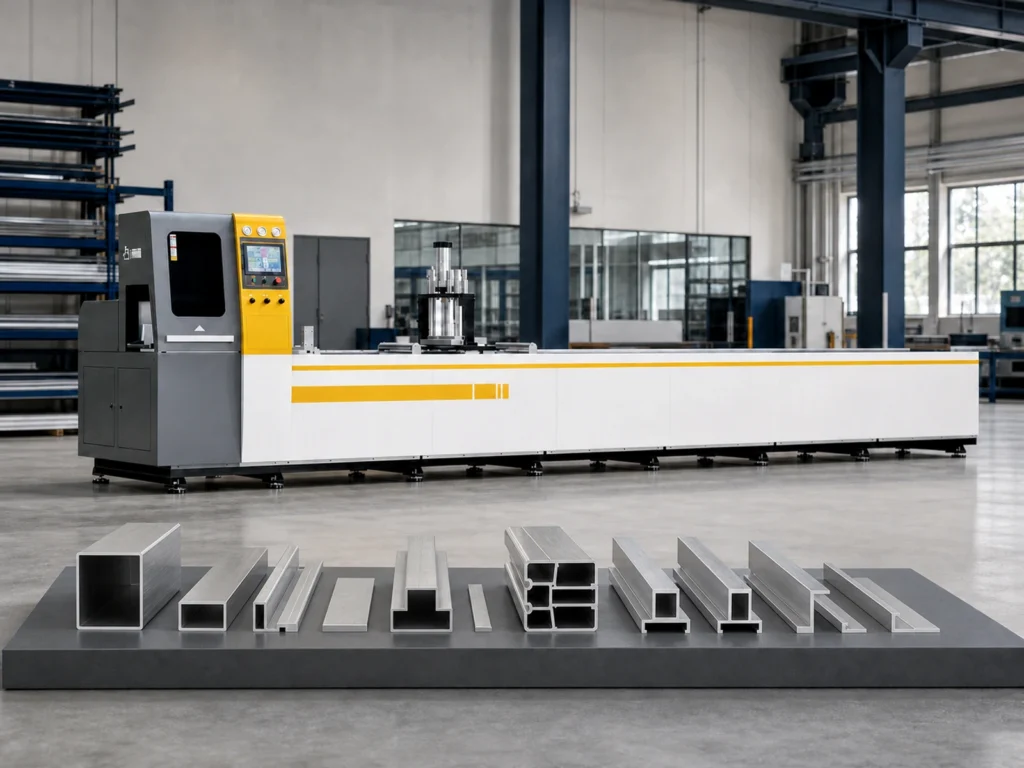
Check 1: name the movement
A bare entry such as “feed speed” leaves room for misunderstanding. Ask the supplier to identify the moving axis and the process stage. On one proposal the term may refer to stock advancing to a programmed length; on another it may describe the cutting head moving through the material.
Write the explanation beside the value. For example, “stock positioning before clamping” is a clearer description than “automatic feed.” The latter describes an operating arrangement without telling the buyer how the cutting movement is controlled.
Also distinguish the cutting portion of travel from approach and return. A rapid-travel maximum is not evidence that the saw cuts at that speed. Ask whether the number is a rated axis limit, a proposed value for your part or a reading recorded in a trial.
Keep this distinction when discussing productivity. Positioning, clamping, approach, cutting, return and collection can all contribute to a cycle. Our cycle-time guide explains how to define the timing boundary before estimating batch output.
Check 2: confirm the units
Linear feed may be expressed in millimeters per minute or meters per minute. Record the unit in the field name so it stays attached when someone copies a value into a comparison sheet. A number without a unit should remain an open question.
For the same linear movement, 1 m/min equals 1,000 mm/min. This conversion does not turn linear feed into blade RPM. Rotation counts revolutions, while feed records a distance traveled over time. Read the blade-speed guide for the separate relationship between blade diameter and peripheral speed.
Check whether the proposal reports a constant commanded feed, a range or an average over a defined interval. An average that includes approach or pauses cannot be compared directly with a value measured only while the tool passes through the section.
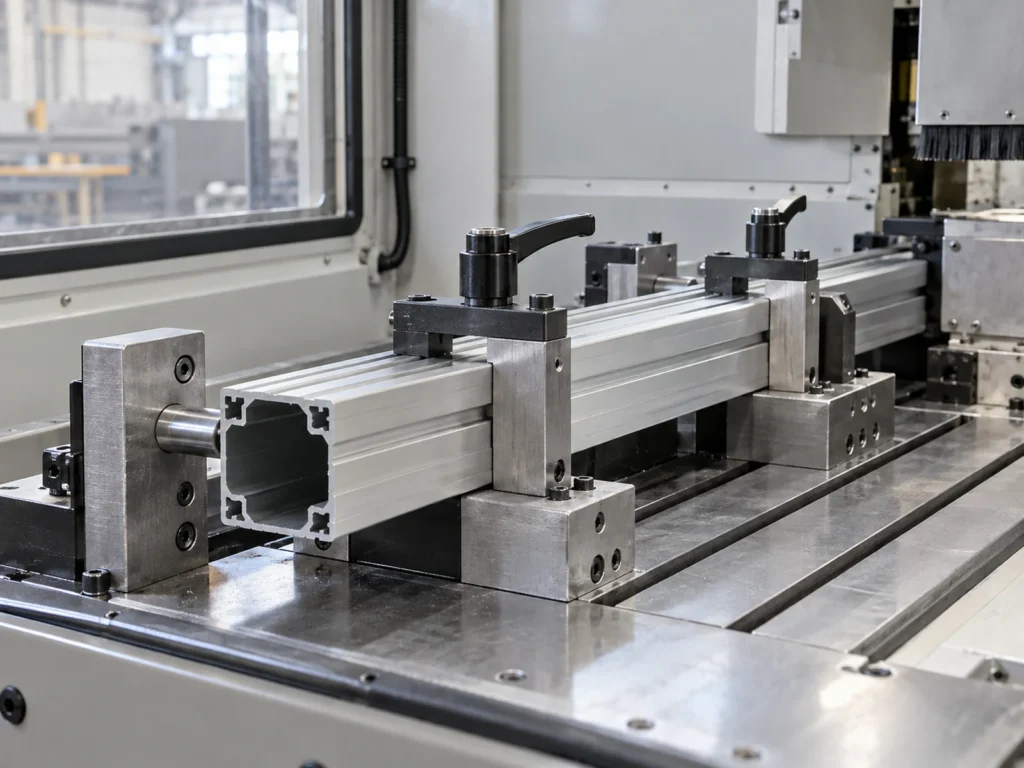
Check 3: read aluminum saw feed rate with tooth count
Feed per tooth expresses the nominal advance associated with one tooth passing in a rotary cutting calculation. The general relationship connects linear feed, rotational speed and the stated number of teeth. It helps you check whether a proposed calculation is internally consistent.
Linear feed in mm/min = feed per tooth in mm/tooth × tooth count × RPM.
Rearranging gives: feed per tooth in mm/tooth = linear feed in mm/min ÷ (tooth count × RPM). If linear feed is entered in m/min, multiply it by 1,000 before using that version of the equation.
The Leitz user encyclopedia, section 11.3, gives the feed-rate and tooth-advance relationships with specified units. We use the general arithmetic here; its material guidance and example settings are not an approval for your aluminum job.
A calculated feed per tooth is not a measurement of every chip. Section geometry, tool condition and the actual cutting arrangement still need review. For the related terminology, see our blade tooth-count guide.
A worked comparison: one changed input
Assume a fictional comparison uses a linear cutting feed of 600 mm/min and a rotational speed of 1,000 RPM. Proposal A lists 60 teeth, while proposal B lists 120 teeth. The arithmetic is:
| Fictional entry | Calculated nominal advance |
|---|---|
| A: 600 mm/min, 60 teeth, 1,000 RPM | 600 ÷ (60 × 1,000) = 0.010 mm/tooth |
| B: 600 mm/min, 120 teeth, 1,000 RPM | 600 ÷ (120 × 1,000) = 0.005 mm/tooth |
Both entries have the same linear feed. Their calculated nominal advances differ because the tooth counts differ. Neither result tells you which blade is suitable, what surface finish it will produce or whether the machine can safely use those inputs.
If someone enters 0.6 m/min instead of 600 mm/min, the results should stay the same after conversion. If the calculation changes by a factor of 1,000, check the units before drawing a process conclusion.
Check 4: describe the control available
Ask how the cutting feed is set, displayed and reproduced on the proposed configuration. A percentage on a control panel is not automatically a calibrated linear speed. Request the meaning of the scale and the relevant documentation.
Clarify whether approach, cutting and return have separate settings. If a proposal mentions variable or adaptive control, ask the supplier to explain what it changes and which conditions apply. Record the confirmed configuration rather than assuming every machine with a similar enclosure has the same controls.
For repeat orders, decide which entries belong in the approved setup record. Include the blade identification, material and section, orientation, documented settings, reference instructions and the person responsible for approving changes.
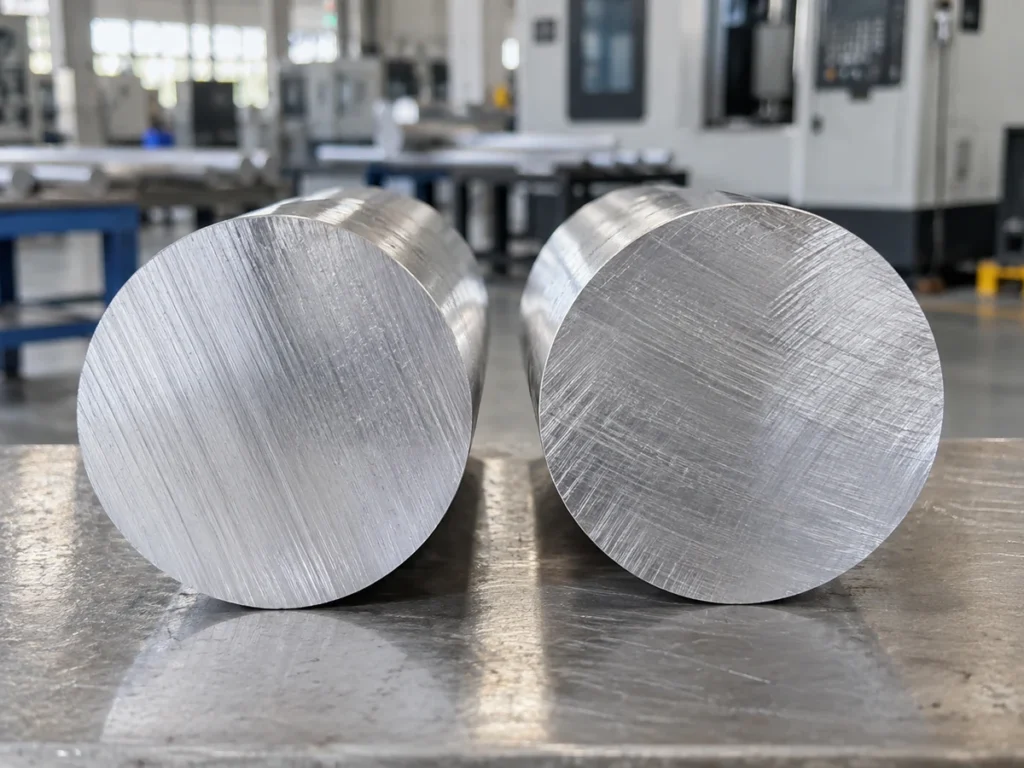
Check 5: connect the record to the result
Compare proposals using an agreed part and review method. State the drawing revision, stock identity, section orientation and required checks before a trial. Then keep the recorded process condition beside the sample identification and the actual inspection results.
Do not infer the correct feed from a photograph of a bright end face or the sound of a video. Ask for the relevant measurements and observations. A useful review separates dimensional results, edge condition, surface requirements and handling damage.
If one input changes during evaluation, record the change and which samples it affects. This helps the team understand the evidence without claiming that a single variable explains every difference. Agree the review and acceptance responsibilities before releasing a production setup.
A useful quotation brief
- Identify the material, section drawing, revision and cutting orientation.
- Name the movement for every stated speed, with units and process stage.
- Separate rated limits, proposed conditions and recorded trial values.
- Ask how cutting feed is controlled and reproduced on the quoted configuration.
- Define sample identification, inspection requirements and approval responsibility.
Send these details with your cut lengths and batch quantities through Contact JiurunCut. Ask for a review of the proposed machine and tooling for that application. Keep unresolved feed settings and configuration questions visible until the relevant supplier documents them.
Buyer questions
Does a faster stock feeder mean a faster cut?
It describes a different part of the process. Ask for the complete cycle boundary and the cutting-feed arrangement for the actual section before comparing output.
Is feed per tooth the same as blade speed?
No. Feed per tooth is an advance associated with a tooth passage in the calculation. Blade rotational speed is stated in RPM, and peripheral speed also depends on diameter.
Can I use the worked values as aluminum settings?
No. They only illustrate units and arithmetic. The actual blade, material, machine configuration and documented operating limits require an application-specific review.
Does the highest listed feed guarantee the best result?
A maximum value does not establish a suitable cutting condition or an accepted part. Compare the relevant configuration and the recorded results against the agreed requirements.