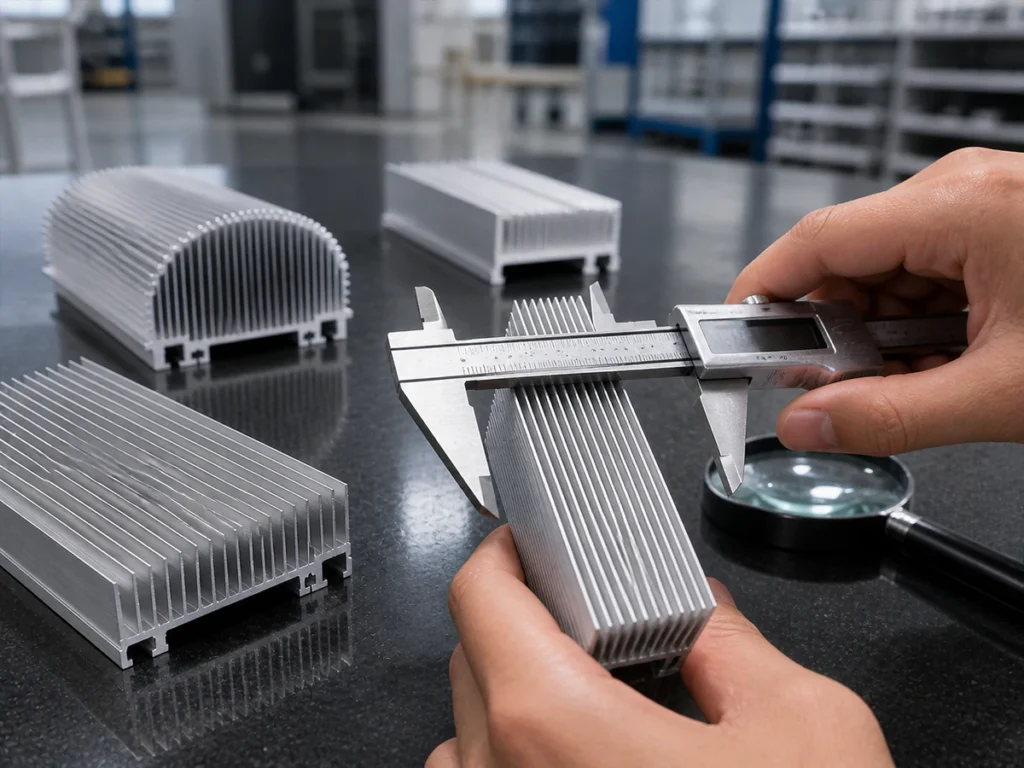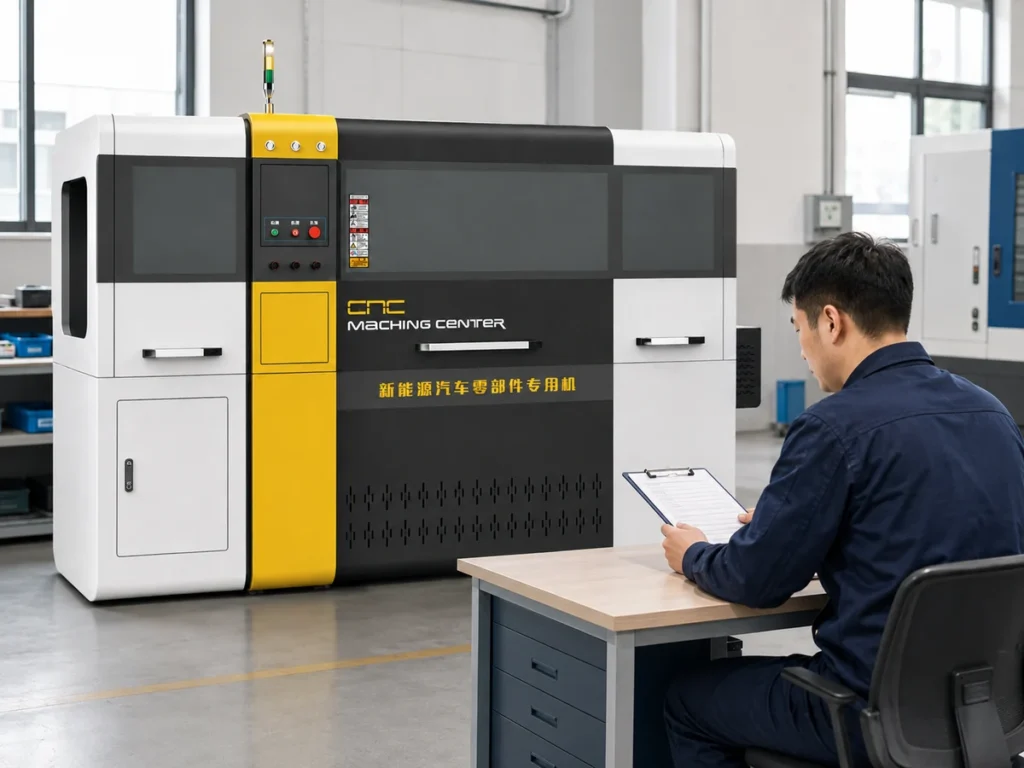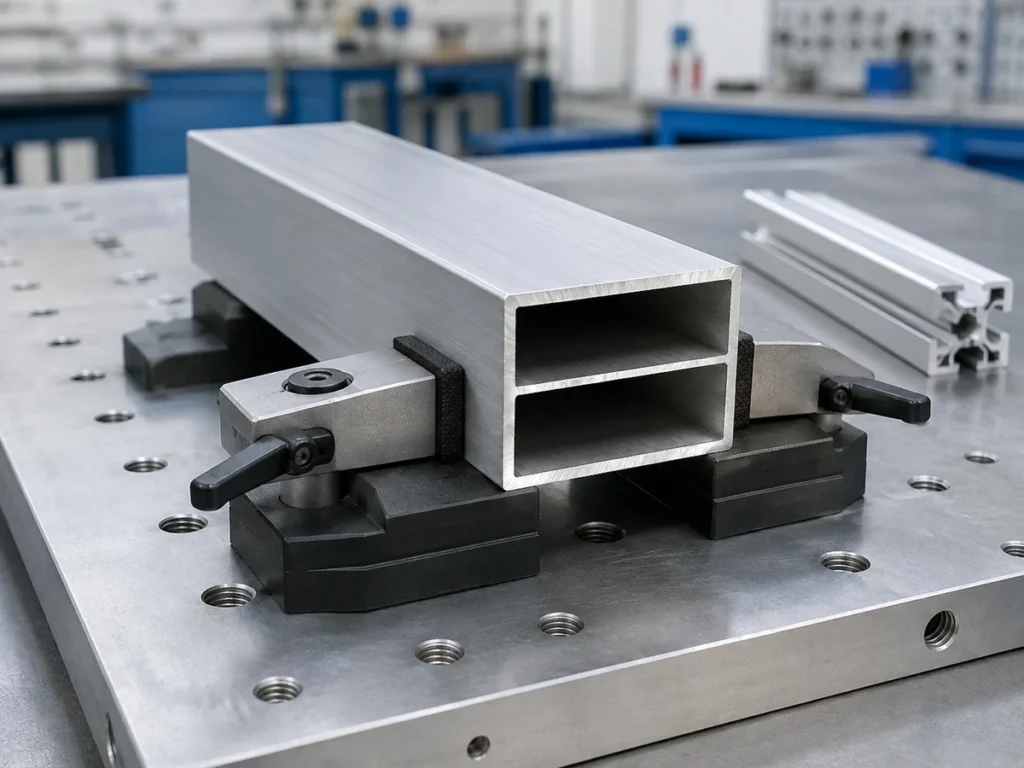
Inspect, service or replace an aluminum saw blade according to the approved machine and tooling instructions and its condition in the actual job. There is no universal cut count or calendar interval for every application. Report unexpected quality changes, and stop and escalate suspected damage, abnormal vibration or safety concerns instead of running another trial to see whether they disappear.
Three things to remember
- Record what changed before deciding the blade is the cause.
- Only authorized personnel should service tooling under the approved energy-control procedure.
- Keep blade identity, service history and return-to-service checks together.
On this page
Should blade replacement follow a universal cut count?
No single count can cover every blade, profile, material and production setup. Use the service and condition criteria in the relevant machine and tooling documentation.
Unexpected quality changes need a documented review. Suspected damage, abnormal vibration or another safety concern needs the site's stop-and-escalate procedure, not an extra trial run.
What can an operator report without diagnosing the blade?
Record changes in cut-face appearance, edge condition, noise, vibration or dimensions. These observations help maintenance decide what to inspect, but they do not prove the blade alone caused the problem.
Note when the change began, which profile was running and whether material, programs, supports or fixtures changed. A fixture is the support and holding arrangement around the part.
Include the tool reference and known service history. The goal is a clear handover to authorized personnel, not untrained inspection inside the cutting area.
Is pressing Stop enough before inspecting inside the machine?
No. Unexpected startup and stored electrical, pneumatic, hydraulic or other energy can make service work hazardous.
Follow the site's applicable hazardous-energy isolation and verification procedure and the specific machine instructions. Pressing Stop, opening a door or seeing a stationary blade is not a substitute for that procedure.
Blade handling, internal inspection, cleaning and replacement must be carried out by authorized personnel under approved conditions. OSHA explains the general stored-energy risk, but its U.S. framework does not replace local requirements or the machine instructions.
What should a blade-identity record contain?
Keep the supplier reference, approved specification, installation or service date, intended machine and application, observed condition and decision taken together.
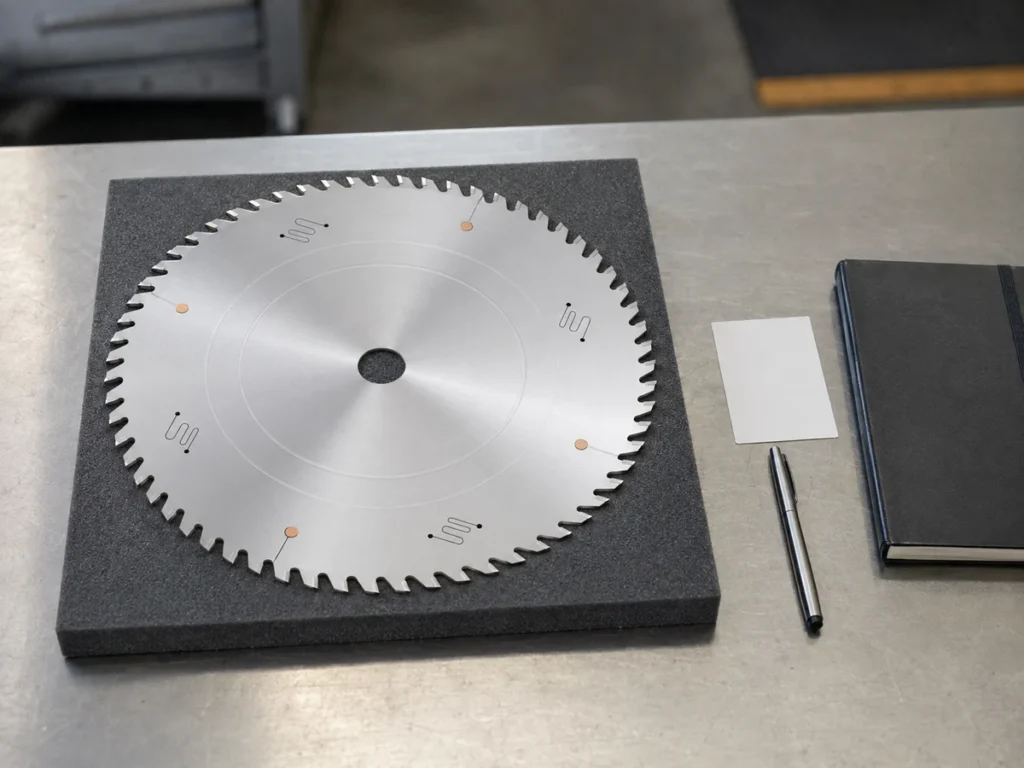
Compatibility is not established by the center-hole size alone. For example, LEUCO lists several blade designs for aluminum-profile applications, rather than one universal profile blade.
Obtain diameter, tooth count, tooth geometry, rotation speed, sharpening details and tightening torque from the approved documentation. This article does not prescribe those values.
What evidence belongs in the maintenance handover?
A useful handover links the observation to the machine, tool and job. It lets authorized personnel distinguish a new condition from a recurring one.
| Record item | Why it belongs in the handover |
|---|---|
| Machine and configuration | Identifies the system in which the tool was used |
| Blade identification | Links the tool to an approved specification |
| Profile and material | Defines the application associated with the observation |
| Quality or operating change | Describes what prompted the review |
| Service and change history | Helps separate new and recurring conditions |
| Authorized decision | Records inspection, service, replacement or further checks |
Identify the component and affected edge in sample photographs. Describe what was observed instead of labeling it a “bad blade” before review.
Could the setup be responsible for an apparent tooling problem?
If the problem began after a profile or fixture change, keep that change in the investigation. Check whether the intended tool and setup still match the application.
A newly installed blade does not automatically rule out other causes. Retain inspection and setup records so a repeated issue can be compared consistently.
The burr investigation guide provides a broader process review when edge quality changes.
What needs to happen before returning to production?
Follow the manufacturer's return-to-service procedure and the site's approval process after authorized service. Installing the tool is not the whole release decision.
A representative cutting check may form part of that approved sequence. Record the material, setup and finished-part results, keeping the history available for the next service decision.
Replacing the blade does not authorize production while another safety or machine-condition concern remains unresolved.
How can you make a support request easier to investigate?
Provide machine identity, tool reference, profile and material information, photographs of the finished-part issue, and a timeline of changes. State what operators observed and which checks authorized maintenance personnel completed.
Share the documents needed to explain the issue, without unrelated personal data or confidential drawings. For a broader record structure, use the maintenance planning checklist.
For a new application rather than an existing service problem, the machine selection guide is the more relevant starting point.
What else should you know?
Should I replace a blade after a fixed number of days?
Use the approved maintenance and condition criteria. Calendar time alone does not describe every duty cycle or application.
Can I inspect inside the machine after pressing Stop?
Only under the site's and manufacturer's authorized service procedure. Stop is not a general substitute for hazardous-energy isolation.
Does this article approve a replacement blade?
No. Compatibility and service decisions must come from the applicable machine and tooling documentation.
Sources & Scope
- OSHA: Control of Hazardous Energy overview. https://www.osha.gov/control-hazardous-energy/. General maintenance hazard explanation; local requirements and the specific machine procedure still apply.
- LEUCO: NF chop saw blades for aluminum profiles. https://www.leuco.com/EN/US/Circular_Saw_Blades/NF-Circular_Saw_Blades/NF-Chop_Saw_Blades_HW-_profiles_TR-F-K-easyFix. An example of application-specific blade design and secure workholding; not a Jiurun approved blade specification.