
An operator slows the cutting feed for a difficult aluminum profile, accepts the first piece, and leaves the control for the next shift. The stored job still names the approved setting. Does the next Start use that setting, or is the temporary adjustment still active? An aluminum saw feed override is worth specifying only when the buyer can answer that question for the exact machine offered. The purchase decision is how a temporary change takes effect, how it is shown, and when it returns to the approved job value.
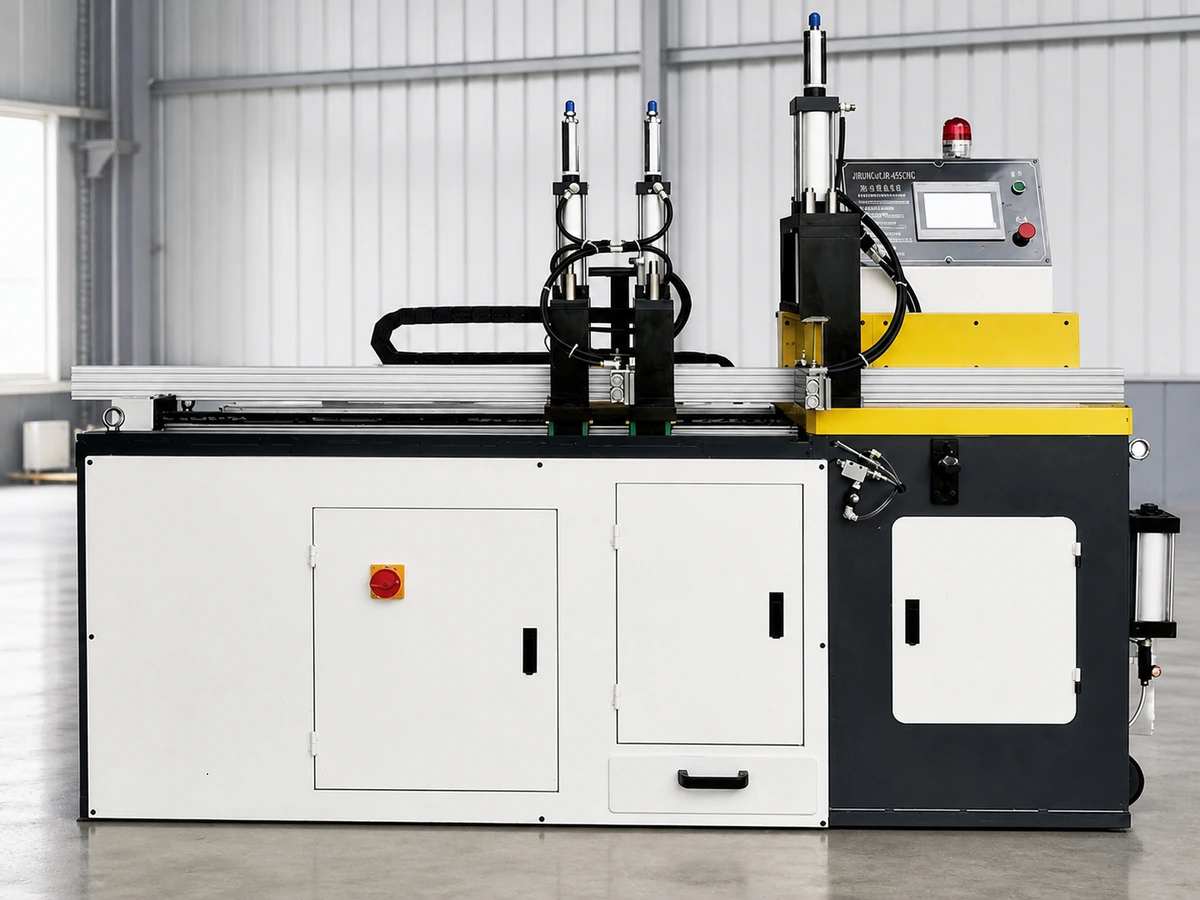
This is a control and acceptance question, not a recommendation to change cutting parameters. The photos below show related Jiurun equipment and an illustrative inspection scene. They do not establish an override feature, a controller setting, or a passed trial on the quoted saw.
Aluminum saw feed override: name the affected motion
“Feed” can mean stock positioning, blade advance through the section, or a rapid non-cutting movement. Ask the supplier to identify the controlled axis and the part of the cycle affected by each offered control. A knob or screen percentage is not enough: the displayed value may be a request, a limit, or an effective command. Ask which value is actually used during a cut and whether the machine shows that value to the operator.
Keep this separate from blade rotational speed and from the condition that releases stock motion after startup. The existing feed-rate guide explains the different rate terms. Here the question is what happens to an approved rate after a human temporarily changes it. The at-speed signal guide addresses a different decision: permission to start feeding at all.
Follow the temporary setting across five events
Ask for a written state description on the proposed controller, then witness it with approved sample stock. The useful record follows the setting through normal production rather than treating a reset button as a complete answer.
- Job load: What approved cutting-feed value is loaded, and where is its identity visible?
- Temporary adjustment: Who may change it, what motion changes, and is the effective value shown while cutting?
- Pause or stop: Does the adjustment remain in force when the cycle resumes? Request the configured behavior; do not infer it from a stopped screen.
- Next job or shift: Does selecting another program restore its own approved value, carry the previous override, or require an explicit operator action?
- Power cycle: What value appears after an authorized restart, and what first-piece check is required before released production?
These are alternatives for the buyer to verify, not claims about a Jiurun model. Siemens describes a feedrate override as an operator change relative to a programmed rate in one of its CNC control manuals; Haas documents reset behavior for its own controls. Those examples demonstrate why the persistence rule must come from the actual quoted controller and configuration, rather than from the word “override” on a comparison sheet.
Use two parts to expose the hidden state
Plan a witnessed trial using a released profile drawing, approved blade and representative stock. First, run and measure a part at the authorized baseline. Then, if the supplier confirms that an operator override is fitted and permits the demonstration, make a controlled temporary adjustment under its approved procedure. Record the program identity, requested and effective values, operator role, time, stock identity, blade and the resulting part. Return to the agreed production state, load the next job or hand over to the next shift, and ask an independent operator to state the effective value before the first new cut.
The acceptance evidence is not just that both pieces look sound. Compare the measured length, end condition and cycle record with the agreed part requirements, and identify exactly which piece was produced under which state. If the override is not offered, ask for the alternative method of making and approving a cutting-feed change. Do not request an undocumented control bypass or an unsafe trial.

Put the reset rule into the quotation
Quote the control behavior as a deliverable, not merely a panel option. Specify the affected motion, who can adjust it, whether the effective value is visible, what happens at pause and job change, what event restores the approved value, and which records are available if a batch is questioned. Include the procedure and first-piece release responsibility in the handover package. A temporary adjustment should not silently become an unreviewed production condition.
If the buyer also needs an electronic audit trail, define that separately. The setup change-log guide discusses reconstructing consequential edits; a good log does not by itself define the reset rule. The program change-control guide addresses approval and release of saved jobs. This article concerns a temporary value during and between runs.
Watch the feed sequence, then ask for the missing evidence
The following Jiurun machinery video shows an automatic aluminum cutting line with stock feeding and cutting. Its visible motion makes the buyer’s question concrete: which feed movement would a temporary override affect, and how would the next operator know the effective value? The footage does not show an override being changed or reset, identify the controller logic, or prove any quoted configuration or trial result.
Send one state question with the RFQ
Send Jiurun the profile drawing, alloy and temper, intended blade if already approved, cut list, quality limits, batch pattern and changeover sequence. Ask the supplier to show, on the exact proposed machine, the active cutting-feed value after an authorized temporary adjustment and after the next job is loaded. Request the reset rule and a two-part witness plan in writing. Request a configuration-specific review before treating an override as a production feature.
Source and scope: Siemens SINUMERIK 808D function manual describes feedrate override for that controller. Haas control-pendant documentation describes override and configurable reset behavior on its machines. They are general control examples, not Jiurun specifications or acceptance evidence.