
The motor-start command has been given. Through the enclosure window, the blade appears to be turning. The feeder is still holding an extrusion at the start position. Should it move now? That decision cannot be made from motion alone. For an aluminum saw at-speed signal, a buyer needs to know which condition releases the first feed, where that condition comes from, and what happens if it never arrives.
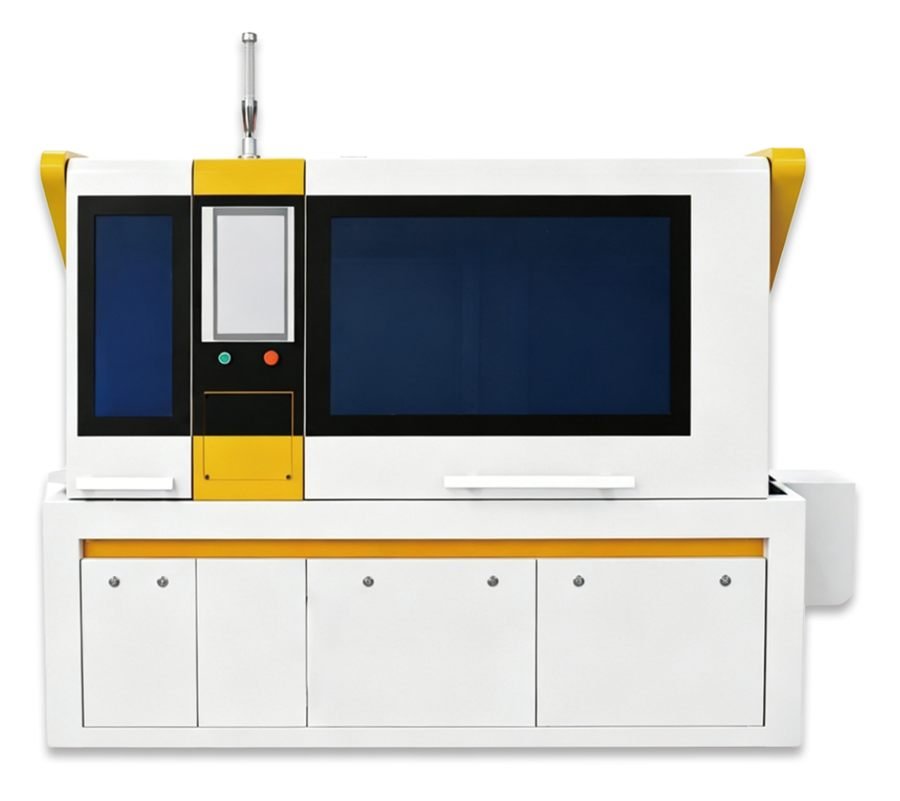
This is a control-sequence question for an automatic aluminum circular saw, not a claim that a particular Jiurun model includes a speed sensor or a drive status output. The featured workshop photograph shows a saw and its operator controls; it cannot establish the logic inside a proposed machine. Ask for the electrical and control description of the exact quoted configuration.
A rotating blade is not an at-speed confirmation
Separate four statements that can look similar on a screen: the controller has requested motor start; the drive is enabled or ready; a drive reports that its speed reference has been reached; and the blade spindle is actually running within the agreed operating band. Each statement answers a different question. A timer after a start command is also a different kind of evidence from a monitored speed condition. It may be suitable for a documented design, but it does not itself measure the spindle.
Drive documentation illustrates the distinction without proving any Jiurun configuration. Siemens lists “ready,” “zero speed detection” and “speed reached” as separate signals in its SINAMICS V90 operating instructions. Rockwell Automation explains that a drive may return estimated actual velocity when no feedback device is fitted in its motion control reference. Neither document identifies the control architecture, speed threshold or blade behavior of a saw being offered to you.
Follow the first feed, one event at a time
Request a short sequence diagram for the proposed machine. Start at an idle, stopped blade with stock held in its normal loading position. Identify the motor-start request, the source of any speed indication, the feed-enable condition, clamp confirmation, and the point where the blade first contacts material. Name which event is a command and which is a returned status. If the machine has more than one blade or cutting head, identify the condition for each relevant cut.
Then ask what prevents a feed when the blade does not reach the agreed state within the permitted time. The supplier should explain the displayed fault, the state of the held stock, and the authorized recovery sequence. A process feed permissive is not a substitute for guarding, emergency stop or other safety functions. Do not request a bypass to demonstrate it; ask the qualified supplier to show the designed response using its approved test method.
A short Jiurun machinery video below shows automatic feeding and cutting. Use its visible sequence to ask where your own machine should wait for blade readiness before the stock advances. The footage does not expose the controller signal, prove the blade reached a measured speed, or qualify the configuration in your quotation.
Make the aluminum saw at-speed signal traceable to the offered hardware
The phrase “blade at speed” is incomplete on a purchase specification. Ask whether the control uses a fixed delay, a drive status bit, a measured motor-speed value, or a separate spindle feedback device. If a motor value is used, have the supplier identify the transmission between motor and blade and explain how the displayed value relates to the actual spindle. If a drive status bit is used, request its configured meaning, tolerance and fault behavior. Do not assume that every drive bit called “ready” means speed reached.
The right evidence depends on the machine architecture and the cut. A fixed-delay design can be evaluated against the real start sequence and the first accepted part; a monitored-speed design needs its source, threshold and response verified. More instrumentation is not automatically a better purchase if the quoted interface, maintenance method and acceptance record are unclear. Compare complete configurations, including commissioning and future service access, rather than comparing a single checkbox on two offers.
Witness three starts and keep the first part
For factory acceptance, agree a representative extrusion, blade, program and cut condition before the trial. Observe a normal cold start, a routine stop followed by a restart, and the supplier’s approved response to an unavailable at-speed condition. Record time-stamped motor command, relevant returned status, feed motion, clamp state and cut initiation. A supplier may have a safe simulated or diagnostic method for the last case; the buyer should not improvise a fault or defeat guarding.
Keep the first cut after each normal start and at least one later cut. Measure the same agreed length, squareness, burr and visible-face criteria on both. This does not turn cut quality into a speed measurement. It checks whether the specified start and feed sequence produces acceptable output at the part boundary. Note any manual intervention, alarm and recovery step separately. If the saw has different blade or feed programs, include the combinations that matter to your production mix.
Put the feed release into the quotation
To compare an aluminum saw at-speed signal across offers, ask the supplier to name the proposed saw and blade-drive configuration, the signal or timing condition that permits first feed, the source and meaning of any actual-speed value, the fault and restart behavior, and who can inspect those records during commissioning. Include the agreed workpiece, blade, first-part acceptance limits and witnessed test cases in the order. If a quotation offers only a motor rating or nominal blade RPM, it has not answered when material is allowed to move.
Send JiurunCut your profile drawing, alloy and temper, blade specification if already approved, cut list, required quality limits and the intended automatic sequence. Ask for a configuration-specific explanation of the start-to-feed decision and a recorded trial plan. That is the information needed to compare an at-speed claim with the parts your line must deliver.