
Aluminum saw program change control becomes a buying issue as soon as a cutting cell holds more than one approved job setup. A saved length, angle or sequence can be useful, but the buyer needs to know who may change it, which physical setup goes with it, and what evidence releases the first acceptable pieces. A controller that stores a value does not by itself prove that the right stock, blade, fixture, drawing revision and inspection plan were used.
This guide is for purchasers of industrial aluminum-profile, bar and tube sawing equipment. It describes questions to put in an RFQ and tests to agree before acceptance. It does not state that every Jiurun model has program storage, user permissions, a change log or network integration. Ask for a configuration-specific answer. Qualified plant personnel must set operating, safety and quality procedures for the actual machine.
Define aluminum saw program change control for the purchase
Start with one representative production change: an approved drawing or cut list is revised, a different extrusion section is introduced, or a batch switches to another length or angle. Write down the released part number and revision, stock section and alloy designation, required blank dimensions and downstream acceptance rule. Then identify every item that must change at the saw: controller entry or stored program, fixture and datum, material support, blade choice, operator instruction and inspection reference. Some jobs need only a documented manual setting; others may benefit from stored programs. The purchase decision depends on the whole route, not the name of the controller.
Keep the boundary clear. The cut-list revision guide deals with releasing the correct job definition. This article deals with approving a change to the saw’s working setup and proving the new setup is ready. The supplier should show what the offered equipment can display, save, restrict and export. The buyer must define the plant’s approval roles and the final acceptance record.
Ask what a “program” means on the quoted machine
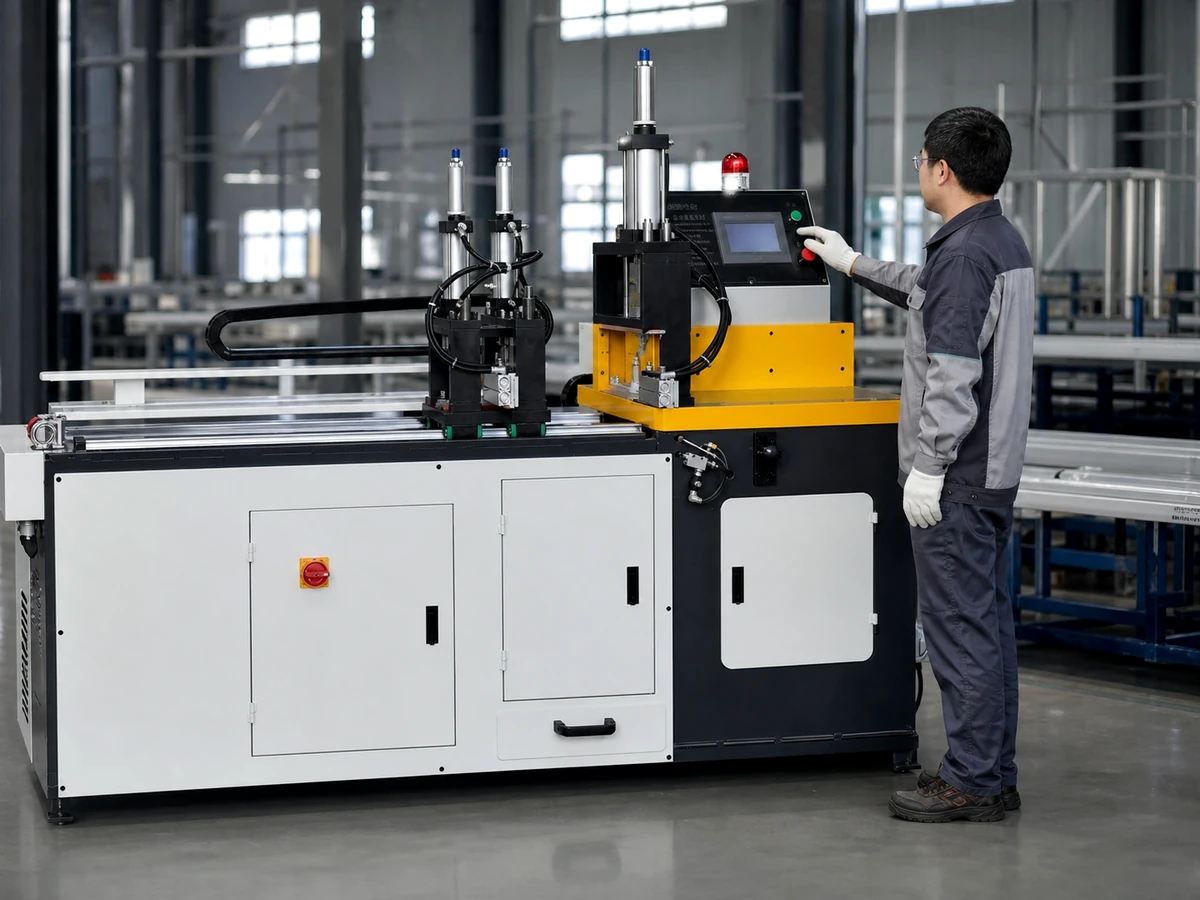
Suppliers may use the same word for different functions. A quotation should say whether the proposed configuration stores a cut length, a list of lengths and quantities, an angle sequence, feed parameters or a larger job recipe. Ask for a sample screen or manual page from the actual offered controller version, and list which fields are saved, which are entered at each job, and which are hardware settings outside the controller. If the offer uses a product-family brochure, mark unconfirmed functions as open until the supplier identifies the exact machine and option set.
For each field, ask who can create, edit, select, copy, delete and restore it. Can an operator accidentally overwrite an approved record? Does a copied program retain its origin or become a new version? Are changes time-stamped or attributed to a named user, and is that function included or an option? What happens to the visible program after a power interruption or controller replacement? These are questions for the supplier, not claims about the current product. A buyer can specify a paper sign-off if electronic permissions or audit logs are absent, but must price the extra work and test that the method is practical at the machine.
Use a small controlled field list rather than a vague requirement for “full traceability”: part number, revision, material/section, setup identifier, approved parameter set, effective date, approving role, first-piece reference and superseded version. Keep machine events distinct from quality acceptance. The production-data delivery guide covers report handover more broadly; a program-change record has a narrower purpose.
Separate approval from entry and release
A useful change route has three decisions. First, an authorized person approves the new job definition and its setup reference. Second, a trained person enters or selects the machine settings and checks the physical equipment against that reference. Third, the designated quality or production authority accepts the first-piece evidence and releases the batch. The same person may hold more than one role in a small plant, but the record should show which decision was made and on what basis. “Program loaded” is not the same as “new part accepted.”
Ask the supplier to demonstrate any offered access levels without assuming they exist. If a role-based control is proposed, request the role matrix, default-account handling, reset method, and what remains visible when the operator cannot edit a parameter. If access is purely procedural, specify where the approved setup sheet is kept and how obsolete versions are removed. Either arrangement can work when responsibility and evidence are explicit. Neither turns a display into a safety function without a separate, qualified assessment.
The buyer should also set an exception path. If a drawing change arrives during an active batch, who stops the old job, identifies in-process and completed pieces, and decides what can be used? If the required fixture or blade is unavailable, who records the hold? A late verbal instruction should not silently replace the approved version. The shift-handover guide addresses transfer between teams; a program change can occur within one shift and still needs its own authorization.
Pair electronic settings with the physical setup
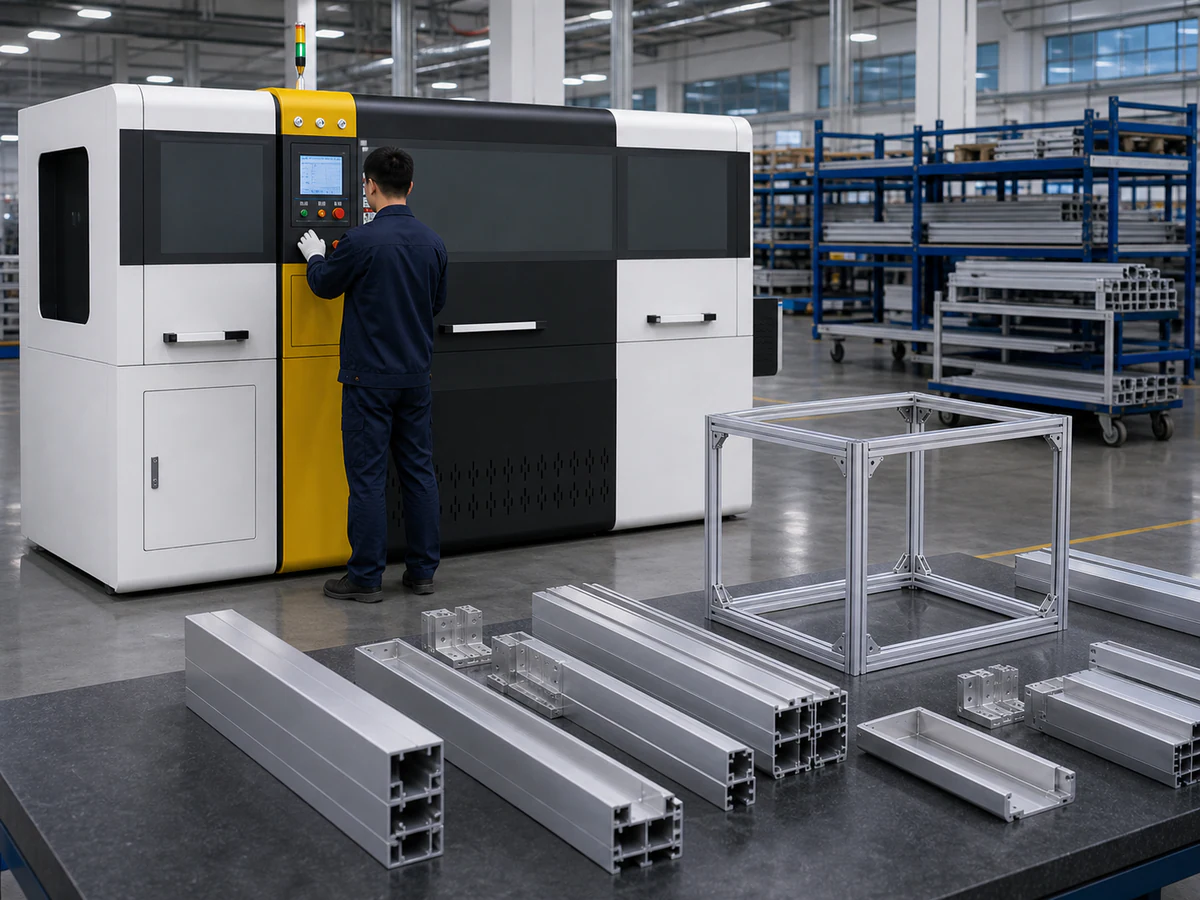
A program identifier is only one part of a reproducible cut. The acceptance plan should link it to a specific stock section and orientation, length datum, support arrangement, clamp or fixture, blade specification, and inspection reference. Ask whether the supplier’s documents show the physical setup for the delivered configuration and whether option changes alter the screen or hardware. Request diagrams or photographs with identifiers when a written setup sheet alone would be ambiguous.
Consider a hypothetical change from one hollow extrusion to another with the same nominal cut length. The stored length could be correct while the clamp contact, support or orientation is wrong. The buyer should require a cross-check of the actual section and setup before the first piece is released. This example explains the control logic; it is not a trial cut or a claim about a specific machine. The plant’s trained staff must follow the delivered manual and its own safe-work procedures for any physical check.
In the RFQ, distinguish included tooling from plant-supplied fixtures. State who maintains the setup reference after commissioning, how a new profile is qualified, and whether a supplier visit or software change is needed for a new job. This prevents a stored-program feature from being quoted as a complete changeover system when the physical work and ownership remain undefined.
Require evidence before the first new batch is released
Agree an acceptance record that connects the new program or setup version to a measured first piece and the released drawing. Define the characteristics to check for the buyer’s part: for example, cut length, angle, surface condition or fit to a downstream assembly, as applicable. Name the measuring method and acceptance criteria in the actual purchase documents; this article supplies no universal tolerances. The person authorizing production should be able to see the result, any adjustment, the final version and the disposition of earlier pieces.
Separate three counts during a change: pieces made under the old version, pieces made while the new version is being evaluated, and pieces accepted under the new version. A counter or export may show machine cycles, not accepted inventory. If the buyer expects a barcode, job traveler or MES link, specify the fields, interface owner and the point where quality status is assigned. Without that definition, a useful machine event can be misread as proof of a released batch.

Compare three workable control arrangements
| Arrangement | What the supplier must show | What the buyer still owns |
|---|---|---|
| Manual setup sheet | Machine-setting method, delivered manuals and setup references. | Versioned sheet, authorization, physical cross-check and first-piece sign-off. |
| Stored controller programs | Actual saved fields, edit/select behavior, retention and any access or history options. | Approval roles, linkage to the drawing and tooling, exception handling and release record. |
| Connected job system | Defined data fields, interface, account roles, export or backup method and recovery behavior. | Master-data ownership, cybersecurity review, acceptance of physical parts and support over time. |
Compare bids on the same representative job, not on a feature count. A manual system may be sufficient where jobs change rarely and the control is disciplined. Stored programs may reduce re-entry while creating a need to govern versions and access. A connected system can pass richer data, but adds interface maintenance and recovery responsibilities. Ask each supplier to price included functions, optional functions, training, documentation and support separately so that these routes can be compared fairly.
Plan rollback and recovery without confusing them
When a change produces an unacceptable first piece, the plant needs an agreed stop and disposition decision. Record which version was active, what changed, which pieces were affected and who may authorize a return to a previously approved setup. Re-selecting an old program is not enough if tooling, stock or references have changed. A rollback test should use a controlled scenario and confirm both the electronic and physical setup under qualified supervision.
Backups solve a different problem: preservation or restoration of controller data after corruption or replacement. Ask how approved programs are exported, protected and restored on the quoted equipment, and how a restored version is checked before production. The CNC saw backup guide goes into those recovery questions. A backup file does not prove that a program was approved, and an approval record does not by itself restore a controller.
The US National Institute of Standards and Technology’s Guide to Operational Technology (OT) Security, SP 800-82 Rev. 3 discusses securing programmable operational technology while considering performance, reliability and safety. Its broad OT guidance supports treating controller access and change management as procurement questions, but it does not certify a Jiurun saw, prescribe this article’s workflow or prove a quoted function. The buyer’s own OT and safety teams should decide which controls apply at its site.
Witness the change route during acceptance
Write a demonstration script before the order. Start from one approved representative job, introduce a second released job definition, then ask the supplier to show exactly how the offered configuration selects or changes settings. Cross-check the documented stock and physical setup, capture the first-piece acceptance evidence and record who releases the new batch. Ask to see how an obsolete or incorrect selection is identified and how the plant would return to the last approved state. Do not ask operators to defeat guards or create a hazardous fault for a demonstration.
Record the screen or manual version observed, option list, test data, discrepancies, owner and closure date. Repeat the relevant checks at the installed site if the workflow depends on plant accounts, network links, fixtures, measurement or downstream systems. A factory demonstration can prove only what was observed on that configuration; it cannot prove later site integration or production capability under every material. The factory-versus-site acceptance guide helps split these gates.
Copy these questions into the RFQ
- Which fields are stored as a program on the exact offered controller and option set?
- Who can create, edit, select, copy, delete and restore an approved setup?
- How are program identity and revision linked to the released drawing, stock, blade, fixture and inspection plan?
- What change history, access control, export and backup functions are included versus optional?
- What happens when a wrong version is found after pieces have been cut?
- Who accepts the first piece and releases the new batch, and where is that decision recorded?
- Which change, rollback and recovery steps can be witnessed at the factory and at the installed site?
Send Jiurun the current and proposed cut lists, representative extrusion drawings, stock form, batch sizes, site data requirements and approval roles with the RFQ. Request a configuration-specific description and an agreed acceptance script. This gives the supplier a real production change to answer and gives the buyer a defensible release boundary, without assuming a feature from a general photograph or video.
General Jiurun equipment video
The following video is from the Jiurun Machinery YouTube channel. It shows general enclosed aluminum cutting equipment and a control panel. It is an equipment example only. It does not show the program-change approval, saved fields, customer material, configuration, first-piece inspection, trial cut or performance described above.
Source and evidence boundary
NIST SP 800-82 Rev. 3, Guide to Operational Technology (OT) Security is a general source for considering programmable OT in the context of reliability and safety. The decision tables and RFQ questions here are buyer planning tools. The images and video are illustrative media, not evidence of a particular contract, customer, controller capability or acceptance result.