
The housing feels warmer after the first production batch, but nobody recorded where the last reading was taken. An aluminum saw spindle temperature concern begins with that gap: a number from a reflective cover, a reading taken after a different duty cycle, and a genuine bearing-housing trend are three different kinds of evidence. Before a team orders a spindle or raises a trip setting, it needs a repeatable observation.
This guide is for a saw that can be operated under its own instructions and whose temperature can be observed from a guarded, accessible location. It does not supply a universal safe temperature or a method for reaching into an operating saw. The machine builder’s limits, installed spindle and bearing documentation, and your site’s energy-control procedure govern the actual decision.
Put the reading on a map of the machine
Write down the exact measuring point before interpreting a number. A built-in probe may sense the bearing or motor region; a handheld infrared thermometer measures a visible surface. A cabinet door, motor shell, blade guard and bearing housing can all have different temperatures and heat-transfer paths. Calling each one “spindle temperature” hides the distinction a service technician needs.
For a repeat check, identify the machine and spindle, the sensor or instrument, the point on a photo or diagram, and the time since startup. Keep the guard in place during observation. If the intended point is inaccessible with guarding intact, ask the builder or qualified maintenance staff for an approved method; do not open the guard to obtain a prettier measurement.
Fluke’s infrared measurement guidance warns that a shiny metal surface has low emissivity and that the measurement spot expands with distance. A bright cover can therefore appear misleadingly cool or hot relative to its surroundings. Use the instrument maker’s instructions for emissivity and spot size, and compare readings only when the surface, distance and method stay consistent. If an approved matte reference patch is used, it must be placed by authorized staff on a safe, stationary location under the site’s procedure—not improvised on moving or hazardous parts.
Record an aluminum saw spindle temperature curve, not a single peak
A newly greased bearing may rise in temperature during startup before settling. SKF’s rolling-bearing guidance notes this initial peak, and its super-precision bearing guidance describes monitoring temperature until it stabilizes during an approved run-in. Those documents concern bearing arrangements generally; they do not set a Jiurun saw’s allowable temperature or authorize a particular run-in sequence on your machine.
For an existing production saw, take a short time series under a known operating condition. An aluminum saw spindle temperature log is useful only when the point, timing and load are reproducible. Record the initial ambient temperature, the first reading after startup, the next readings at a regular interval, and whether the value levels off, continues to climb, or trips an installed alarm. The interval and stop limit should come from the machine’s instructions and site procedure. A single warm reading without a prior baseline is a reason to gather controlled evidence, not a bearing diagnosis.
| Log field | Why it matters |
|---|---|
| Machine, spindle and measuring point | Keeps the comparison on the same component and surface. |
| Instrument or built-in sensor | Separates an HMI probe value from an infrared surface estimate. |
| Ambient and elapsed run time | Shows the starting condition and whether heat is still rising. |
| Spindle speed, material and cut cycle | Shows whether the two observations had comparable load. |
| Alarm, vibration, noise or odor | Preserves associated signs without naming a cause prematurely. |
| Recent grease, blade or service work | Points the technician toward changed conditions and the correct records. |
The table is a record format, not a set of target values. If the machine’s own alarm or stop condition occurs, follow its procedure. Do not keep cutting solely to complete a trend chart.
What should be held constant before comparing shifts?
A reading from a cold, idle saw on Monday should not be compared casually with one taken after a long, high-load Friday batch. Use the same measurement point and method, then note spindle speed, blade and profile family, cut frequency, lubrication state, ambient conditions and minutes into the run. If production changed, say so in the record. The difference may be useful, but it is not an apples-to-apples temperature trend.
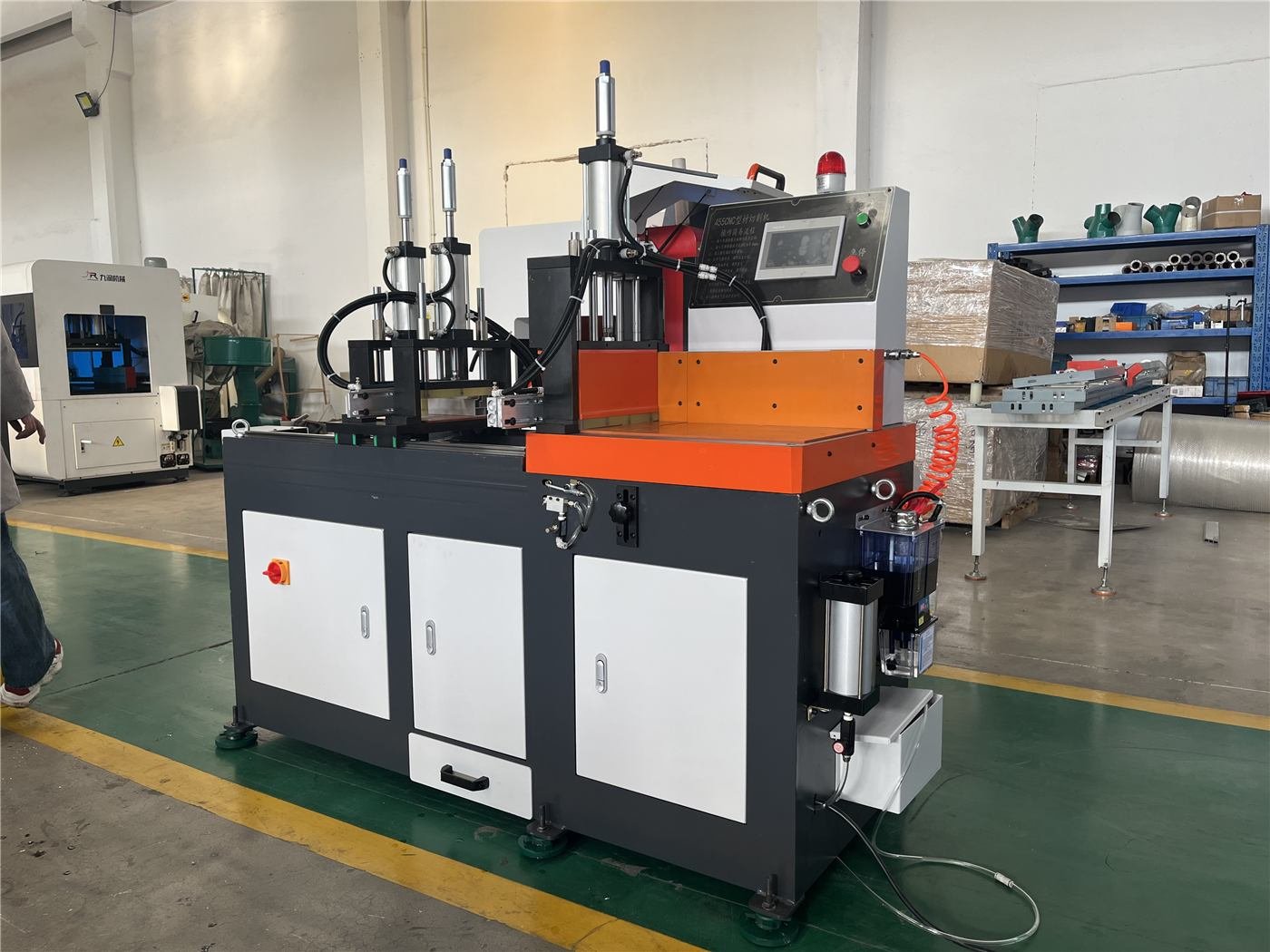
On machines with an HMI, capture the time-stamped alarm and operating state rather than transcribing only a peak value. The related video below shows a Jiurun JR-455CNC equipment and cutting sequence, so a buyer can see the kind of guarded saw and operator interface being discussed. It is not a temperature test, a bearing inspection, or proof of a configuration, material, customer job or performance result in this article.
SKF’s condition-monitoring guide explains why a machine’s own baseline and trend are more useful than judging one value against a broad general rule. Temperature can be logged in the same disciplined way, while the machine maker’s actual alarms and limits retain priority. If vibration and noise also changed, report the observations together; heat alone does not identify an exact failed component.
Stop, isolate and investigate when the evidence changes
An active temperature alarm, a continuing rise beyond the machine’s specified limit, a new harsh noise, unusual vibration, burning odor or visible damage calls for the machine’s stop and service procedure. Do not adjust an alarm, add grease, change a bearing or resume production based on an article. The original bearing choice, preload, lubrication and cooling arrangement matter; SKF’s bearing-damage reference lists multiple possible causes, including operating conditions, contamination, lubrication and mounting. A hot reading does not separate those causes by itself.
Service work that exposes a person to unexpected startup or stored energy requires the site’s authorized isolation procedure. OSHA’s machine-guarding guidance describes stopping, isolating, locking or tagging, relieving residual energy, verifying isolation, and restoring guards before return to service. Follow the applicable local rules and machine manual; leave electrical and spindle work to qualified personnel.
Define the first-off return to production
After a technician resolves the cause and authorizes restart, the handover should include the original symptom, measured points and instrument, machine alarm history, work performed, and the approved restart conditions. Then document a controlled first-off cut under the site’s normal acceptance method. Record the required length, squareness or cut-face result only where the job drawing specifies them. A temperature log does not replace cut-part approval, and a good cut part does not prove that a heat trend is safe.
Where the concern has moved from observation to confirmed bearing work, the separate spindle bearing service handover covers the RFQ and restart questions. If the dominant symptom is a drive trip rather than a temperature trend, keep the electrical evidence together with the motor overload fault record. For a disputed infrared reading on aluminum itself, the aluminum infrared temperature guide addresses the material-side measurement problem.
Send the supplier a trace, not “the spindle is hot”
A useful request gives the saw model and serial number, operating hours, spindle or drive identity, the installed alarm text, the same-point temperature series, ambient conditions, speed and cut cycle, recent maintenance changes, and any accompanying vibration or sound record. State whether the issue appeared after new grease, a blade change, a duty-cycle change or a long idle period. Supply photos of the accessible measuring location and relevant nameplates without exposing confidential customer details unnecessarily.
Ask the machine or spindle supplier to identify its approved sensor location, alarm threshold, run-in or restart method, and the checks a qualified technician should make next. That request creates a testable decision: continue under the machine’s documented limits, investigate a measurement problem, or stop for service. It avoids turning a vague hot-to-the-touch report into an unsupported bearing replacement order.