
Aluminum saw spindle bearing service can become an expensive false start if a buyer orders a bearing from a noise description alone. A louder saw head, a warmer housing or a poor cut may justify an investigation, but none of those observations identifies the failed component by itself. The useful purchase question is: what evidence will identify the installed spindle assembly, define the service scope and show that the machine is ready to cut accepted parts again?
This guide is for maintenance and purchasing teams preparing a supplier or service request. It does not provide a bearing removal procedure or a universal temperature, vibration, preload or torque limit. Use the machine maker’s instructions and an authorized technician for diagnosis, energy isolation, installation and release.
Start with a symptom record, not a bearing order
Record when the symptom appeared: after a blade change, at start-up, during an idle run, only under a particular cut or after an impact. Note the machine model and serial number, saw head, blade identification, speed setting, material and cut program. If existing monitoring is available, preserve the trend and the measurement point instead of copying one isolated value into an RFQ.
SKF’s bearing damage and failure analysis guide calls for operating data, monitoring history, lubrication details, drawings and photos when investigating damage. Its troubleshooting tables also show that noise and heat can have several possible causes. A service request should therefore describe the observations and ask for a diagnosis, rather than declare a bearing failure before the assembly has been assessed.
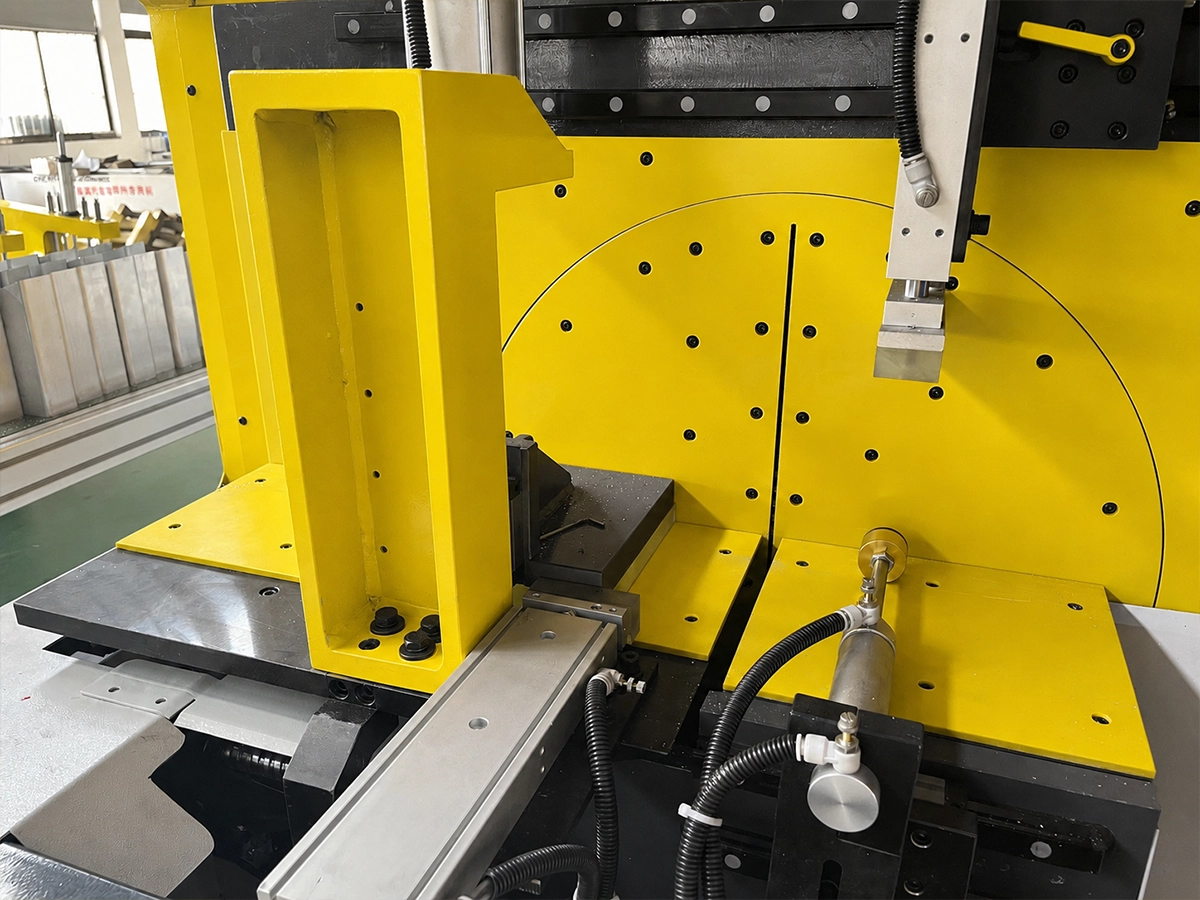
Six checks for an aluminum saw spindle bearing service RFQ
1. Identify the installed assembly
Send a clear machine nameplate photo, serial number, head identifier and any available spindle assembly or bearing drawing revision. Ask the supplier which exact assembly their quotation fits. Two saws with a similar exterior may use different spindle, seal, drive and bearing arrangements. A bearing designation copied from another machine is not enough to approve a replacement.
2. Preserve the baseline and suspected cause
Describe noise, vibration, heat, runout or cut-quality changes in the operating state where each occurred. Keep the last acceptable part and a rejected part when safe and practical. Ask the technician to distinguish bearing condition from other plausible sources such as blade condition, mounting surfaces, drive components, looseness or workholding. The purpose is to choose the right work order, not to make a remote diagnosis from a photograph. See our separate blade flange cleaning and remount checklist for one of those mounting checks.
3. Define what the quote actually supplies
Request separate scope lines for a bearing set, a serviced spindle assembly, a complete replacement spindle or an on-site diagnostic visit when those are available for the identified machine. State who removes and reinstalls the assembly, who supplies seals or other required parts, who checks the shaft and housing seats, and who signs the release. A low bearing-unit price cannot be compared with a complete installed and tested spindle service.
4. Ask for the maker-approved mounting specification
Have the service provider confirm the applicable machine and bearing instructions, fit and setting method, lubrication specification and required tools. Do not substitute a torque or preload from another spindle. Schaeffler’s super precision bearing guide illustrates how assembly checklists depend on the specific shaft, housing, spacer, bearing and setting data. Its example values belong to that example, not to a Jiurun saw or to the reader’s machine.
5. Price the complete stoppage
Ask for the estimated diagnostic time, parts lead time, repair location, lifting or access needs, travel, return shipping, planned downtime and contingency if a shaft or housing seat is damaged. Identify whether the quoted part is available from stock or subject to a serial-specific confirmation. Put any excluded seals, balancing, drive work or repeat visit in writing. A purchase order should state the accepted scope and change-control route if inspection changes the diagnosis.
6. Set a documented restart gate
Before the saw returns to production, agree who will record installed parts and settings, complete guards and energy-control release, and perform the machine-maker’s idle and trial checks. Compare noise, vibration, temperature and blade behavior with an approved baseline or specified acceptance limits; do not invent limits from a generic article. Then run representative profiles and retain first-off cut and dimension results against the actual drawing. A passing no-load run alone does not release cut parts for a customer order.

Compare quotes at the same receiving stage
| Question | Bearing-only supply | Complete spindle or service quote |
|---|---|---|
| Compatibility | Exact designation and fit still need confirmation | Assembly and machine serial still need confirmation |
| Labor | May be excluded | May be included only if stated |
| Other parts | Seals, spacers or damaged seats may be separate | Inclusions and exclusions must be listed |
| Release evidence | Buyer may arrange mounting and trial | State who performs and signs the trial |
For aluminum saw spindle bearing service, the better comparison is the cost of reaching the same accepted, production-ready state on the same machine, with the same responsibilities and downtime assumption. If one supplier quotes only a bearing and another quotes a rebuilt spindle, ask both to fill the missing rows before choosing on price.
Keep service and production safety separate
Opening a saw head for bearing assessment can expose a person to hazardous energy. The OSHA control-of-hazardous-energy standard addresses servicing where unexpected startup or stored energy could cause injury. The site must use its applicable energy-control procedure and trained personnel; a stop button or a published checklist is not a substitute. The service provider should describe the handoff from isolation through guard restoration and authorized re-energization.
Use a first-off record that purchasing can review
An aluminum saw spindle bearing service release record can include machine and spindle IDs; service date and technician; diagnostic finding; parts and drawing revisions; maker-specified setting and lubrication confirmation; idle-check result; trial material and blade; cut program; measured first-off features; acceptance authority; and any remaining observation. This makes the result traceable without pretending that an exterior photograph proves bearing condition or future service life.
Related equipment video: the following video from Jiurun’s own channel shows an aluminum saw operating. It is a process illustration only; it does not show a spindle bearing replacement or certify the service outcome described above.
Questions to send with the inquiry
- Which exact machine and spindle assembly does the offer cover?
- What evidence supports the proposed cause and what alternative causes will be checked?
- Is the price for parts, workshop service, on-site service or a tested replacement assembly?
- Which maker instructions and acceptance limits govern installation and restart?
- Who owns the first-off cut approval and the record handed to production?
If you are assessing a Jiurun aluminum saw, send the machine model, serial number, photos of the identified assembly and your symptom record. Ask for the applicable documentation and available support scope before committing to a bearing or a full spindle replacement. The correct answer depends on the installed configuration and an authorized inspection.