
Aluminum furniture frame kit receiving begins with a simple question: does a carton marked “one frame kit” tell an assembler whether every approved rail, leg, connector and top interface is present? In industrial aluminum furniture, especially worktables and carts built from extrusions, a missing short member can stop the whole order even when the total piece count looks correct. Receiving should therefore release complete, revision-matched sets rather than accept a pile of individually plausible cut parts.
This guide is for buyers receiving an aluminum furniture frame kit from a cut-part or frame supplier. It covers the boundary between purchased members, joined subassemblies and the finished furniture product. The buyer’s approved drawing and bill of materials remain the authority for dimensions, finish, joints and load-related design; a saw supplier’s cut trial does not approve the assembled unit.
Aluminum furniture frame kit receiving: define one complete set
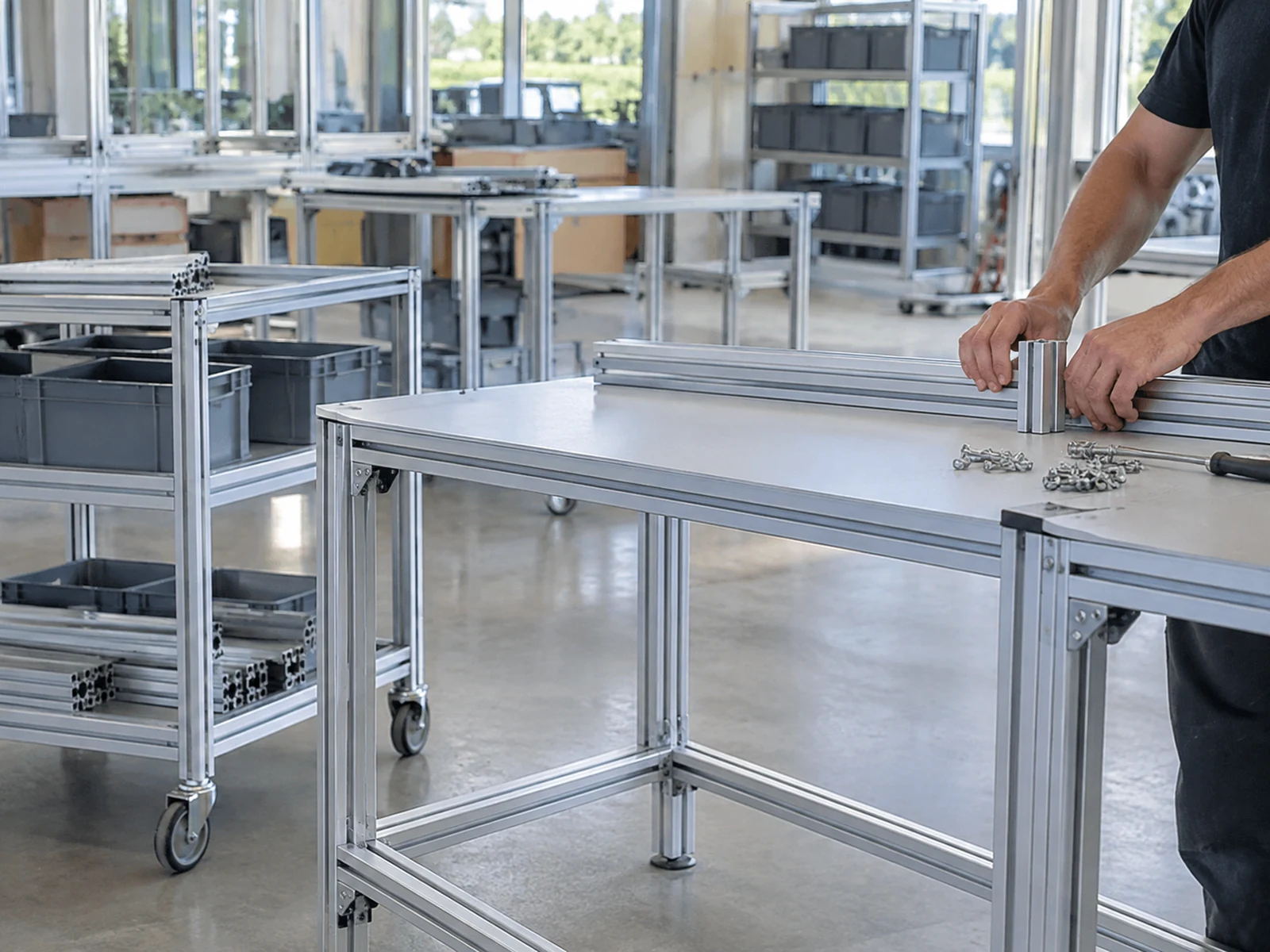
Start with the furniture family and the receiving stage. Is the purchase a bagged set of cut extrusions, a partly joined base, or a ready-to-fit frame? Is the top, caster, leveling foot, bracket, fastener or trim bought elsewhere? Put a yes, no, or separately supplied owner against each item. A “frame kit” that omits the approved corner hardware may still be a valid cut-member order, but it should not be booked as an assembly-ready kit.
For each variant, identify the drawing revision, kit identifier, expected number of kits and the allowed mix of member finishes. Specify whether left and right parts are interchangeable; do not assume two lengths with the same nominal dimension have the same drilled face or visible side. A one-kit sample should include the smallest or most awkward member as well as the visually prominent parts, rather than only the longest easy rail.
Make the bill of materials receivable
A cut list can control saw work while still being weak as a receiving list. Give each physical item a unique position number tied to the approved drawing, quantity per kit, profile section, finish, cut length reference, end condition and any downstream hole or slot operation. Add a pack identifier and label location. If two variants share a rail, say whether it may be pooled or must remain segregated because its finish, end preparation or revision differs.
Separate a supplier’s measurable deliverables from the furniture maker’s later work. The cut-part supplier may inspect length and end condition against a drawing; another party may install connectors, adjust the frame, fit a top and qualify the final product. State who owns each acceptance step. Treat a verbal “fits all models” assurance as an open question until the specific variant and interface are shown on the released documents.
Check identity before counting pieces
At receipt, match the shipping unit, purchase order, kit ID, drawing revision and line-item labels. Then reconcile complete kits against the order before totaling loose members. If a shipment contains ten rails for five kits but lacks the five matching pairs of legs, the kit count is zero for any set requiring those legs. Record shortages by kit and position number so a replacement shipment can repair the exact gap without duplicating the other components.
Where the buyer already uses GS1 identification, the GS1 Serial Shipping Container Code can identify a logistic unit such as a pallet or parcel. That shipping-unit identity is useful for traceability, but it does not prove that the contents match an approved furniture kit. Keep the kit-level position list and receiving result linked to the shipping-unit record.

Inspect the interfaces that stop assembly
Count and identify members first, then sample the properties that make a set assemble. Confirm which end is the datum, which face is visible, and which side carries the connector preparation. Check the actual member section against the mating connector and top support. Where the drawing calls for drilled, milled or tapped features, verify those separately from saw-cut length. A straight-looking cut cannot establish hole position or joint fit.
Keep finished-part criteria explicit. The saw feeder’s position claim is not a guarantee of the finished member’s length or assembled frame geometry. Agree on the inspection method, points, sample selection and acceptance limits from the approved drawing. If the shipment includes a joined module, inspect its interfaces at the agreed handover condition; do not silently use loose-member criteria for an assembly or vice versa.
Protect visible faces and finish families
Furniture frames often expose rails and corners after installation. Mark visible faces on the drawing and agree on a reference sample or buyer-approved finish standard before receipt. Photograph a disputed area with the part ID and lighting condition recorded; do not let one small scuff trigger an invented universal tolerance. Keep anodized, coated and unfinished parts identified separately if the order permits multiple finishes. Packaging should prevent members and hard parts from rubbing against critical faces during transport.
If the buyer wants a field repair or spare member, compare it against the furniture’s original profile, connector, finish and revision. The furniture frame spare-parts decision guide addresses whether a complete unit, approved kit or cut member is the right replacement. For a new production set, the immediate question is different: can every approved kit be assembled from the received shipment without substitution?
Separate the saw trial from kit release
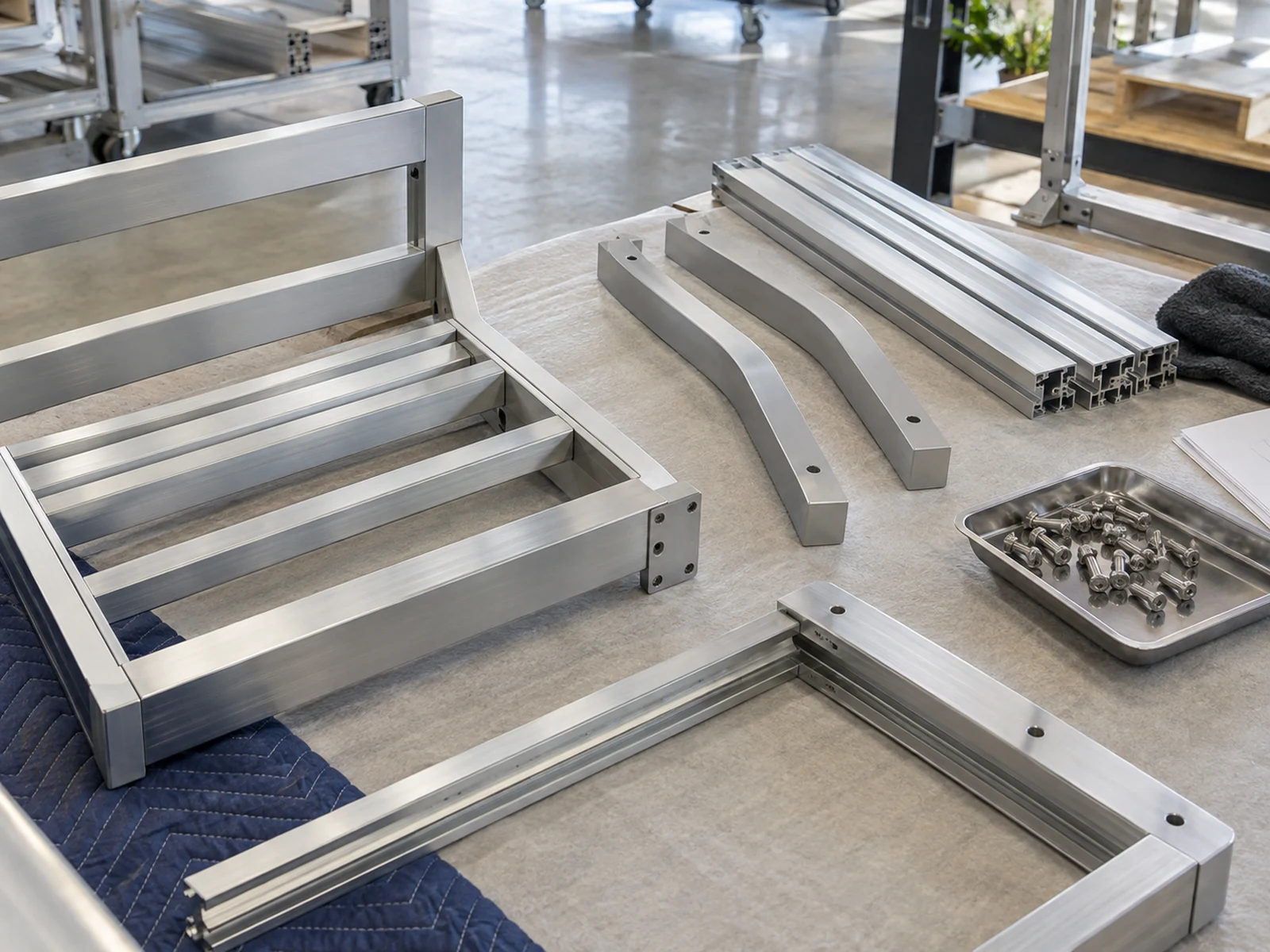
A representative cutting trial can test the real stock section, chosen cut length, end condition, visible-face handling and changeover between member families. Ask the supplier to identify the tested machine configuration, actual sample, drawing revision, measurement points and result. The aluminum furniture frame saw-trial guide covers that cut-and-fit evidence. It does not replace the receiving audit of every kit, nor does it prove final furniture strength, stability or installation.
The video below shows general Jiurun machinery feeding and cutting aluminum profiles. It does not show this furniture kit, its material or finish, a buyer’s order, an approved machine configuration, a trial of the specified members, or finished-product performance. Use the actual drawing, sample and receipt record for those decisions.
Send one RFQ that can be checked at receipt
- Name the furniture family, quantity of complete sets, kit identifier and released drawing revision.
- Attach the position-level bill of materials, including member section, finish, length datum, end condition, handedness and optional machining.
- State whether connectors, fasteners, top interfaces, feet, casters or joined subassemblies are included.
- Define visible-face reference, protective packing, part labels and shipping-unit traceability.
- Set the inspection method, sample plan, acceptance authority and process for shortages or mixed revisions.
- Ask for a sample kit, cut-part evidence and a clear list of exclusions before volume release.
Price the same receiving stage across suppliers. A loose-member offer, a bagged assembly-ready kit and a joined frame have different inclusions and risks; comparing their unit prices without scope normalization is misleading. If the buyer operates several frame variants, request a family matrix showing common members and variant-only parts. For the broader make-or-buy decision, see the saw purchase guide for furniture manufacturing.
To discuss a cutting trial for approved industrial aluminum frame members, send JiurunCut the profile section, released kit list, representative parts and required inspection points. Ask for a quotation that names the cutting scope and its limits; keep final frame design and acceptance with the responsible furniture maker.