
An aluminum furniture frame saw trial should prove that cut rails and legs can reach the approved assembly stage without damaged visible faces or unusable ends. One clean-looking offcut is a weak purchase test when the actual product includes several member roles, finished surfaces, concealed fasteners and corners seen by the customer. This guide helps a furniture-frame buyer turn a machine demonstration into a controlled acceptance decision. It concerns cutting and handling of approved aluminum members; furniture design, strength, stability, finishing and final-product compliance require separate evidence.
Define the furniture frame you intend to deliver
Start with a released product and member schedule, not a generic extrusion photograph. Identify each rail, leg, brace and visible trim member by drawing revision, supplier section, stock form, finish state and receiving operation. State whether the purchase decision concerns a cut-only blank, an identified member kit, a connector-ready kit or an assembled frame. A quote for saw-cut blanks should not be compared directly with a quote for finished furniture components.
Ask the assembly owner which faces remain visible after upholstery, panels, feet, caps and fasteners are installed. Mark these on the section drawing. The visible face may change when a rail is rotated or used as a left- versus right-hand member. Include the intended connector, end cap or corner hardware with each trial row. 80/20 lists finishing accessories such as end caps and slot covers; that illustrates why a cut end may be judged differently once a specific frame system is assembled. An item round-profile product describes table structures and an end-face bracket. These are manufacturer examples, not specifications for every furniture frame or proof of a Jiurun machine configuration. Use the buyer’s approved drawing and hardware.
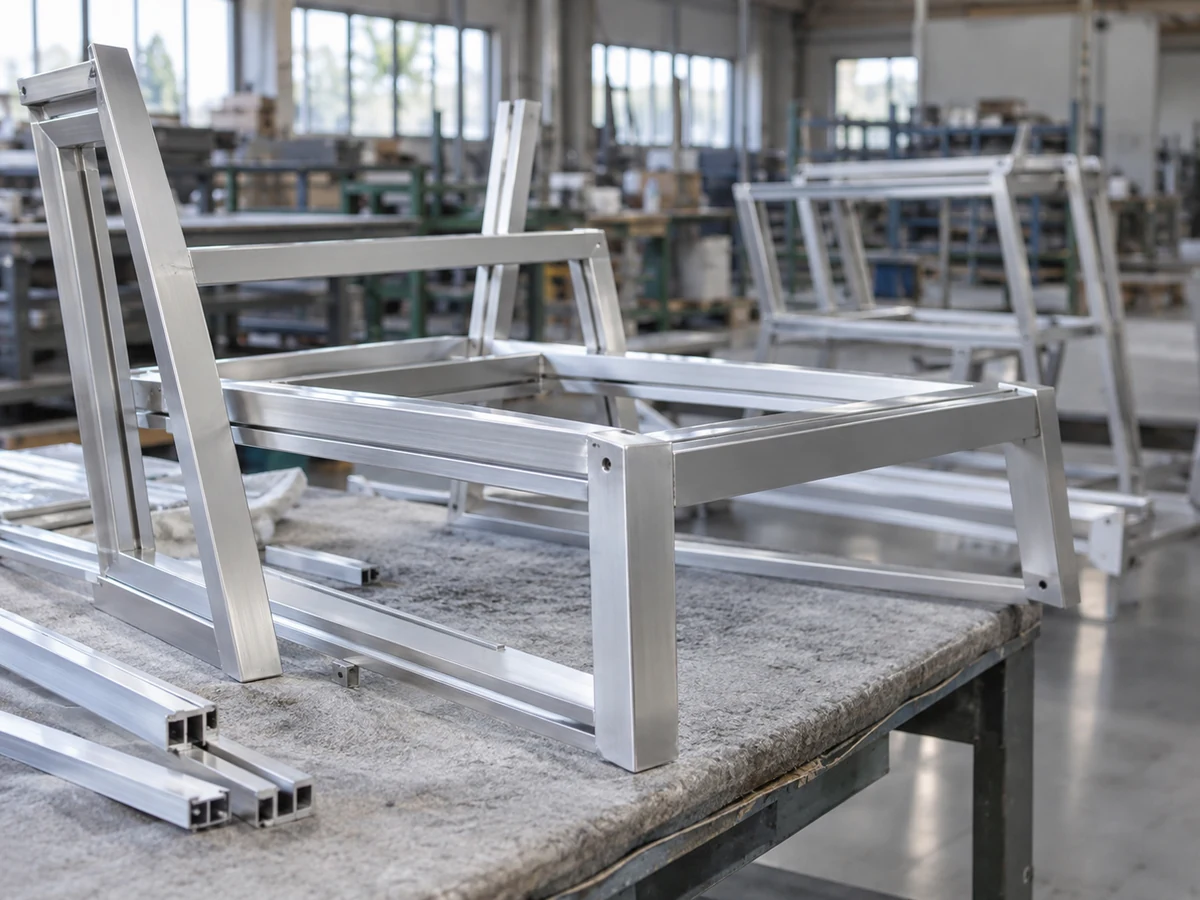
Map the length and end references by member role
For each member, record the cut length datum, the end form, the face used to orient the part and the final assembled dimension that matters to the frame. A rail between two legs may be controlled by a different length reference from an outer rail that overlaps a corner. A leg may need a protected foot end and a different upper joint. Do not copy one nominal length or tolerance across roles without approval from the drawing owner.
Separate what the saw is asked to make from what happens later. A square or angled cut may be followed by drilling, tapping, deburring, insert fitting, coating or a separate joining operation. Label the receiving stage honestly. A machine feed-position display is not a finished-part measurement, and a neat cut face does not prove that a specific connector fits. Define the measuring method and acceptance limit from the released part drawing rather than inventing a universal furniture-frame tolerance.
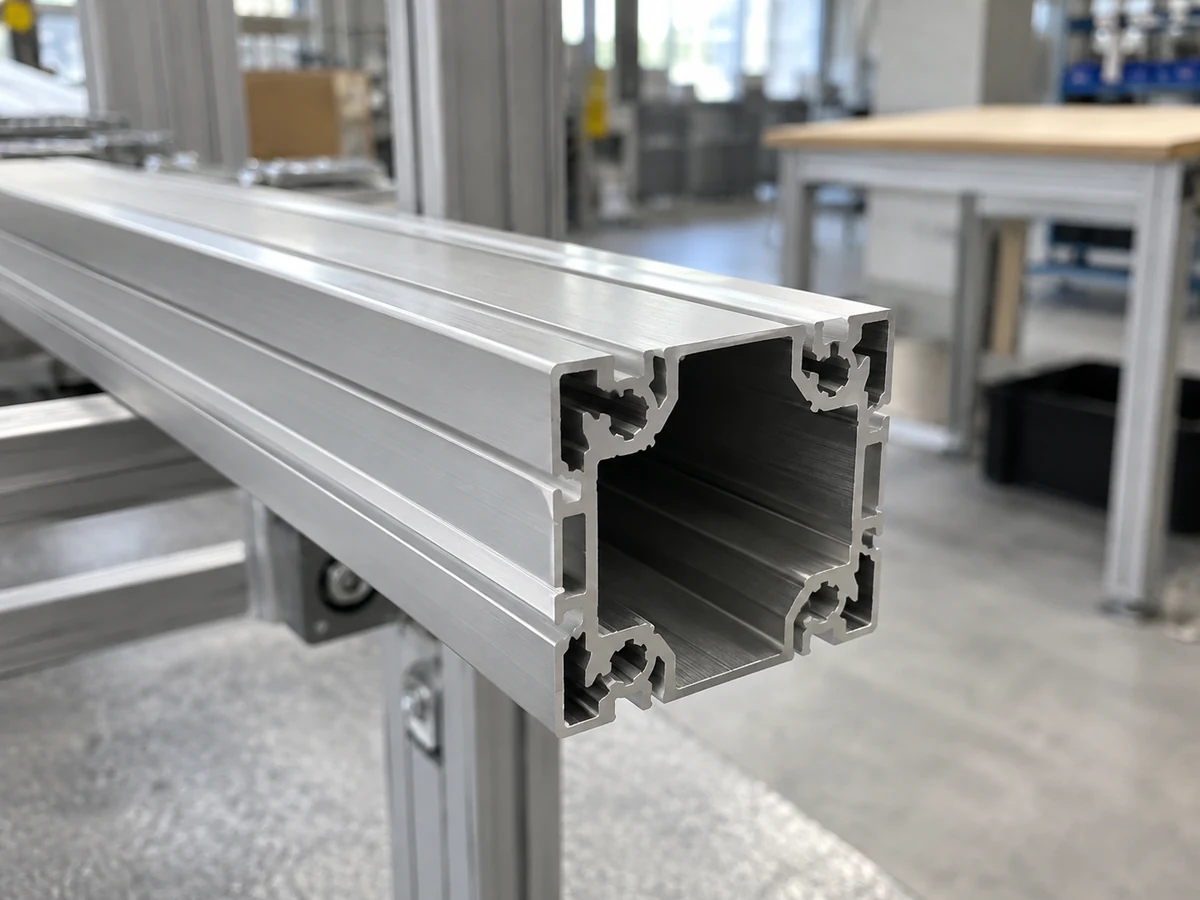
Approve support and clamp contact before a speed claim
The trial supplier should mark where the actual section rests, locates and clamps, and how long stock and short finished pieces are supported. Inspect thin lips, hollow walls, grooves and cosmetic faces for the contact risk particular to that profile. Decide with the product owner whether a witness mark is permitted on a hidden face and how a visible-face defect is judged. If protective film is used, specify whether the film is present before cutting and which surfaces it must protect; a trial on bare stock cannot automatically represent a finished-face job.
Photograph the incoming stock so existing scratches or bow are distinguishable from trial damage. During a guarded demonstration, observe whether the section changes orientation, rocks at a gap, leaves the cut plane unsupported or requires a hand operation that is absent from the quote. Inspect stopped samples after the machine is safe. This is a fixture and product-acceptance discussion, not a clamp-force recipe or permission to bypass guards. Request a support concept for each materially different profile family rather than assuming a single fixture suits every leg and rail.
Build a trial matrix that represents the selling mix
Use the released family and real order mix to select a small but meaningful set: a common rail, a leg, a short piece, a long piece and any thin or highly visible member that changes the contact or finishing risk. If the business sells several furniture families, include only variants that alter the saw, fixture, handling or acceptance method. A pile of almost identical cut samples adds little evidence.
- Identity: product family, section code, drawing revision, member role and finish state.
- Input: supplier stock length and condition, visible-face orientation, protective film and any pre-existing defect.
- Cut request: approved length reference, end geometry, part hand, quantity and receiving operation.
- Setup: proposed saw configuration, blade, supports, clamps, pads and changeover parts included in the offer.
- Acceptance: drawing-based dimensions, cut-end condition, protected surface, hardware interface and frame fit, each with its owner.
- Evidence: first-off and repeat samples identified by setup and sequence, including rejects and corrective actions.
Agree how many repeat pieces are enough for the buyer’s decision and whether a changeover between rail and leg sections is part of the same demonstration. Record time spent on setup, sample inspection and handling separately from blade cycle time. Keep accepted and failed parts labelled; do not quietly replace a failed member with a better-looking one and call the trial complete.
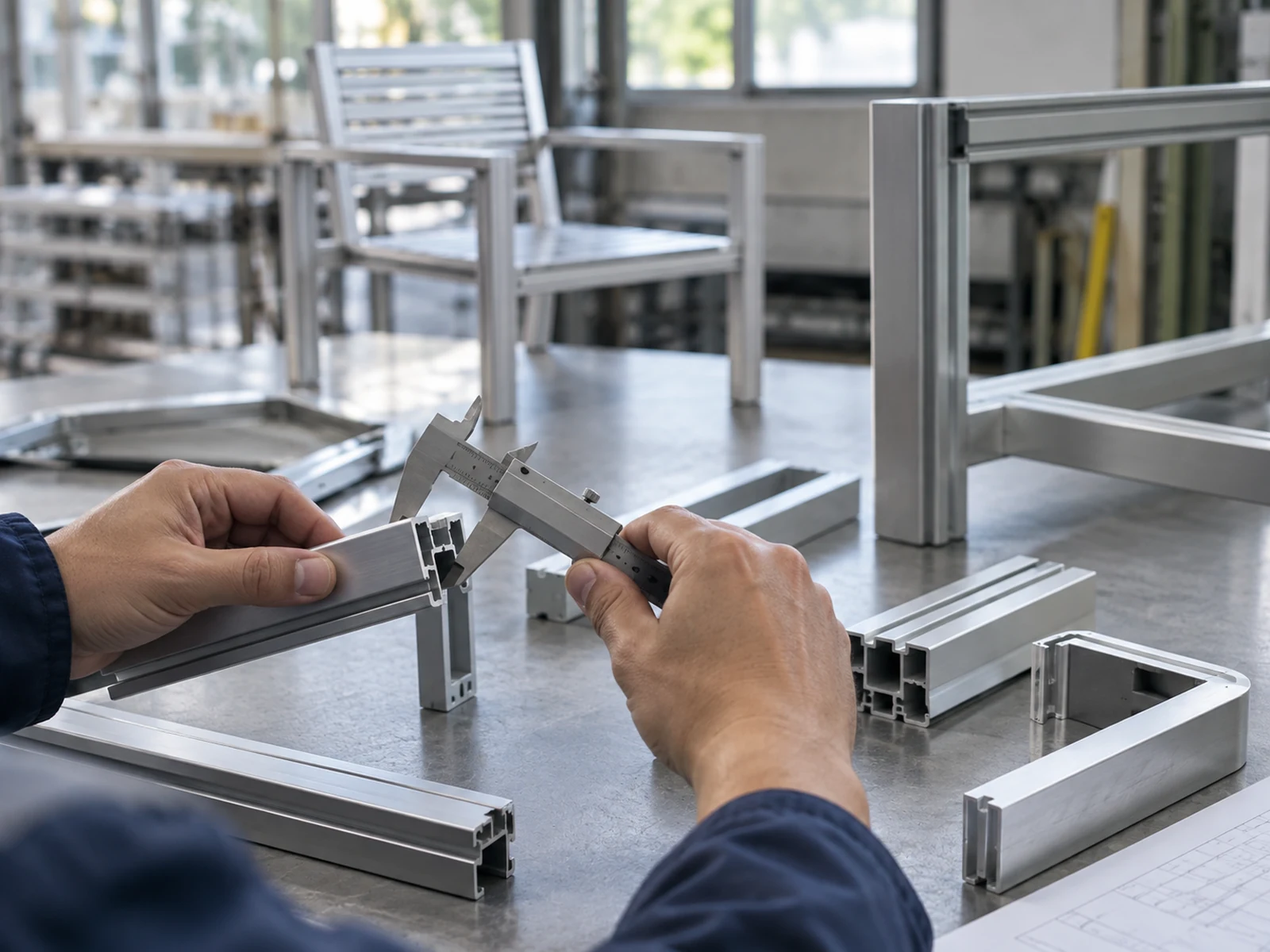
Check the corner with the approved connector and finish
Do not accept an unassembled offcut as proof of corner quality. Ask the assembly owner to take retained rail and leg samples, add the approved connector or joint method, and check the real corner: outer dimensions, visible gap, face alignment, end-cap clearance and any burr that obstructs seating. The fit test must use the approved part revision and finish. If the joint needs drilling, adhesive, welding or a special insert, say who supplies that operation; a saw-only trial does not certify it.
When a corner fails, record whether the cause is cut length, end orientation, section variation, connector preparation, surface damage or a downstream assembly step. Reworking a piece may be legitimate, but it belongs in the offered process route and cost. The supplier’s trial report should distinguish the cut-part result from the assembly owner’s later decision. Finished furniture stability, load capacity and product compliance remain outside the evidence of a cut sample.

Use the aluminum furniture frame saw trial to decide a purchase
Ask each supplier for the same output stage. Price the saw with its actual blade and configuration, long-stock support, cut-piece handling, protective contacts, fixture families, chip control, guarding, measurement access, training and service scope. List any joining, drilling, polishing, coating or packing left outside the saw offer. A lower machine price may shift labor and rejects to another station; a faster cut on a bare rail may be irrelevant if the business sells finished visible corners.
Compare this route with buying prepared member kits or complete frames at the same accepted receiving point. Include stock purchasing length, end trim, changeovers, sample rejection, secondary processing, inspections, packaging and replacement parts over a representative production period. Use the accepted parts and complete resource scope to decide whether in-house sawing is worth the investment. Do not infer a return from advertised cycle time alone.
The video below is a general equipment example from the owner’s Jiurun Machinery YouTube channel. It shows saw equipment, not this furniture frame, these rail or leg sections, this finish, the exact quoted model or configuration, a customer, a trial, a measured tolerance or a performance result. Request a separate demonstration on the approved product and configuration.
RFQ and acceptance sheet to send with the drawings
Give the saw supplier a controlled pack: product families, released member drawings, section and finish identities, rail/leg quantities, stock lengths, visible-face map, approved hardware, target end forms and length references, proposed trial rows, measurement method and assembly owner. Ask for a configuration-specific response showing included fixtures and supports, exclusions, first-off and repeat-sample plan, changeovers, retained sample labels and an evidence pack. If a finished corner is the actual receiving point, require a named owner for every operation between cut member and accepted corner.
Can a similar T-slot profile stand in for a furniture member?
It can show a general machine movement, but it cannot release the approved furniture member. Section walls, surface finish, connector geometry and the visible-face orientation may differ.
Does a good cut face prove the furniture frame will assemble?
No. Verify length reference, orientation, cut-end condition and the approved hardware on retained samples. The assembly owner decides whether the finished corner meets the product criteria.
Should every frame member use the same fixture?
Only if the supplier demonstrates adequate support and protected contact for each actual section. Record what must change with a different leg, rail, finish or stock length and include it in the quotation.
To discuss a saw trial, send your released rail and leg drawings, finish and visible-face map, hardware identity, sample plan and acceptance owner through the JiurunCut contact page. For neighboring decisions, review the furniture frame cut-list guide and the broader furniture-manufacturing saw purchase guide; this trial tests the approved parts after those scope choices are settled.