
An aluminum saw for furniture manufacturing should be purchased for the metal work your factory actually retains, with a clear handoff to the next production stage. A frame supplier, a factory shipping assembled tables and a business packing flat furniture kits can use similar aluminum sections while needing different cutting workflows. The useful purchasing question is therefore bigger than which saw cuts a profile: what must arrive at drilling, assembly or packing so that a furniture order can move forward?
Start with your current product families, released drawings and delivery format. Define the aluminum members made in-house, the components bought ready to assemble and the jobs sent to outside fabricators. Then ask a machine supplier to assess that bounded workload. Cutting equipment cannot establish the strength of a furniture design, qualify a connector or make an incomplete shipment into an accepted product.
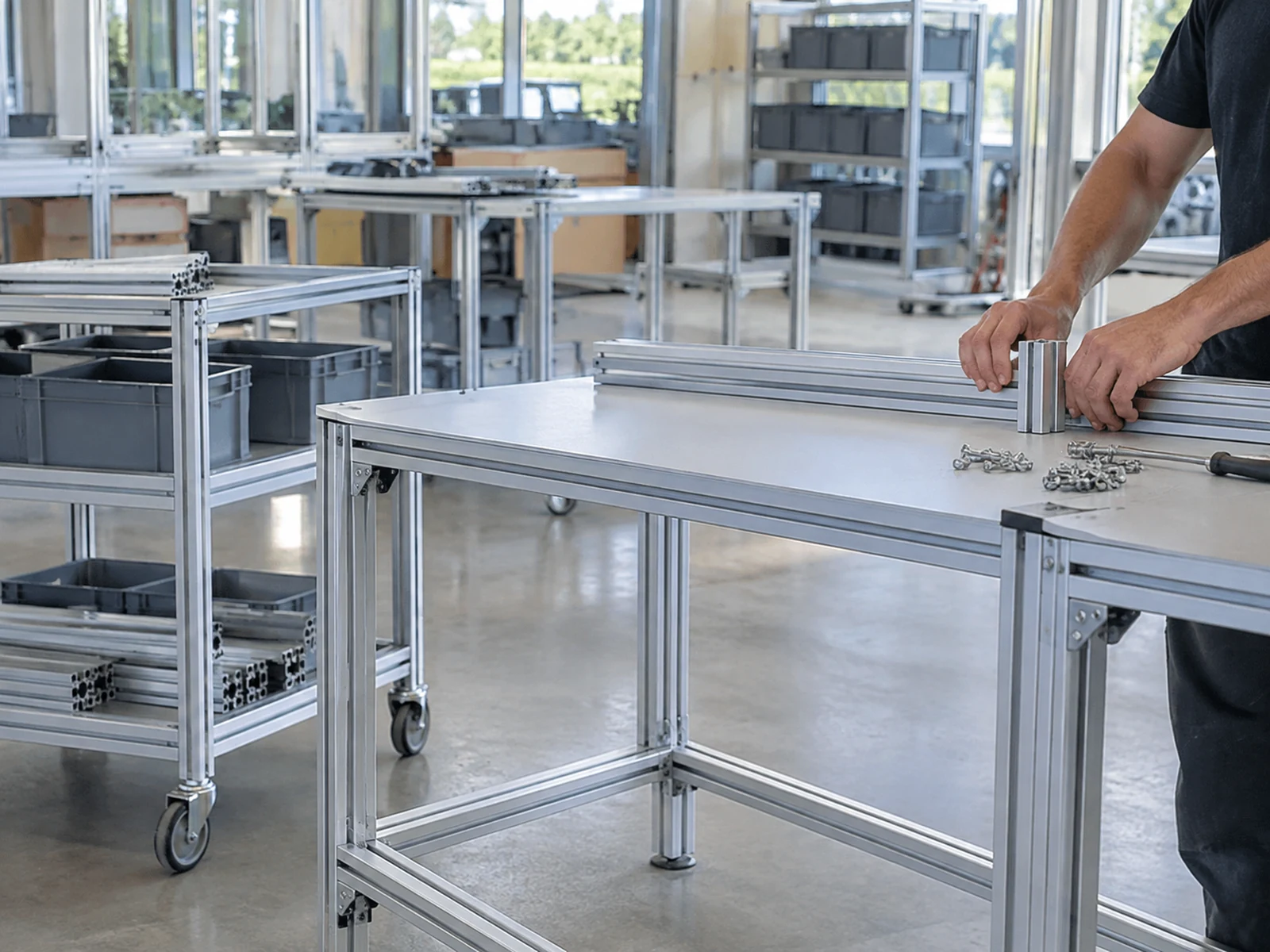
1. Decide what leaves the furniture factory
Three delivery formats create three different definitions of a successful metal production batch. An assembled product must reach assembly with compatible members, then pass the manufacturer’s finished-product requirements before dispatch. A knockdown kit must contain correctly identified parts and the necessary accompanying components. A frame-only order may stop before panels, upholstery or final furniture assembly, but still requires an agreed frame handoff. None of those outcomes is adequately described by a count of cut pieces.
Write the delivery format beside each main product family. A table range might include aluminum bases shipped assembled, shelf frames shipped as labeled kits and custom frames supplied to another furniture maker. Keep their routes separate in the inquiry even if the same section appears in all three. The saw may serve several routes; the purchasing team still needs to understand which route sets the operating and handling requirements.
For an assembled product, explain whether the next stage drills the members, installs connectors, welds a released design or sends the frame for finishing. For a knockdown kit, explain how parts retain their product identity until packing. A mixed pile of correct lengths can be unsuitable for the packing team if it cannot distinguish a left member from a right member or associate a finish batch with its order. For frame-only supply, describe the receiving customer’s agreed inspection and packaging requirements.
Confirm this boundary with production and sales before requesting a quotation. A sales plan for fully assembled furniture is not evidence that the saw needs to perform every furniture-making operation. Equally, an equipment quote that stops at loose cut members does not include drilling, assembly fixtures or packing unless those items are explicitly listed.
2. Build a retained-work map across the product families
Use a small number of representative products to explain the factory rather than sending a long, unstructured catalogue. Include a repeat seller, a product with a different aluminum section and an order that causes difficult changeovers. The purpose is to show how the factory’s work changes between jobs. It is not to claim that every future design is already covered.
| Product route | Metal work retained | Separate work to identify | Receiving stage |
|---|---|---|---|
| Assembled table base | Released frame members cut in-house | Panel supply, connector preparation and assembly | Frame assembly against the released design |
| Knockdown shelving kit | Identified uprights and connecting members | Shelves, fittings, instructions and packing materials | Complete kit preparation |
| Frame-only subcontract order | The customer’s agreed aluminum members | Any finishing or later fabrication excluded from the order | Agreed frame or component inspection |
These are illustrative routes, not descriptions of a particular Jiurun installation. Replace them with your own manufacturing scope. If your furniture range uses wood, sheet panels, steel legs or upholstery, show those supply routes independently. Do not ask an aluminum saw quotation to cover unrelated cutting operations without a separate documented suitability assessment.
Also distinguish a product family from a finish family. The same frame design in two finishes can require separate material identification and separate packing destinations. Different designs might share raw stock while using different end preparations. A useful workload map makes both relationships visible so the supplier can ask the right configuration questions.
3. Release the furniture design before releasing its members
The furniture design controls the production requirements. Supply the approved member drawings and assembly references, with revision identifiers that the production team actually uses. A dimension copied from a sales image is not a released fabrication requirement. If the customer is still deciding the tabletop size or connector arrangement, keep that job outside the confirmed machine workload until engineering has defined it.
End geometry needs the same discipline. Identify square or angled ends from the released design, name the reference face and explain whether later drilling or machining locates from a cut end. A connector that hides an end in the finished product does not automatically remove the need for a defined end requirement. The receiving operation may still depend on that surface to establish its own position.
Do not turn this article into a universal furniture tolerance table. The appropriate acceptance criteria depend on the design, the joints and the downstream work. Your engineering team should specify them, and a supplier should respond against those requirements for the quoted machine and configuration. A feeding-position figure is not the same thing as a finished member’s accuracy, and neither alone proves that a completed table or shelving unit meets its requirements.
A useful release record also identifies what remains unresolved. Mark an undecided connector, unapproved finish or missing assembly drawing as open. This lets the supplier separate confirmed requirements from assumptions. It also prevents a machine purchase from appearing to solve a product-development decision that has not been made.
4. Explain how visible finishes survive the production route
Furniture buyers often see and touch the metal after assembly. Record which surfaces remain visible and what protection the incoming stock carries. Show photographs of actual material, its storage arrangement and any protective film. Those observations support a discussion about handling; they do not establish an agreed cosmetic acceptance standard on their own.
Ask how the proposed workflow supports, locates and transfers each representative section. Review where contact occurs, what happens to protective film near an operation and how cut members reach the next station. If the material has an uneven or delicate surface, give the supplier that information before choosing contact arrangements. A generic machine photograph cannot confirm that a particular furniture finish will be protected.
Agree the receiving inspection at the next stage. Separate a cut-end requirement from a visible-face requirement, and identify who accepts each one. A part may have the correct length but still require investigation because of handling damage. Conversely, a concern at final assembly should not automatically be attributed to the saw without checking where the part traveled and which operation first observed the condition.
Keep finish identity with the members. Use the factory’s actual batch and order references, especially when similar-looking finishes are packed separately. Changing a protective wrap or moving members into a common rack should not erase that identity. This is a workflow requirement to discuss with the supplier and production team, not a claim that an unquoted automatic tracking function exists.
5. Measure work in accepted product sets, not just members
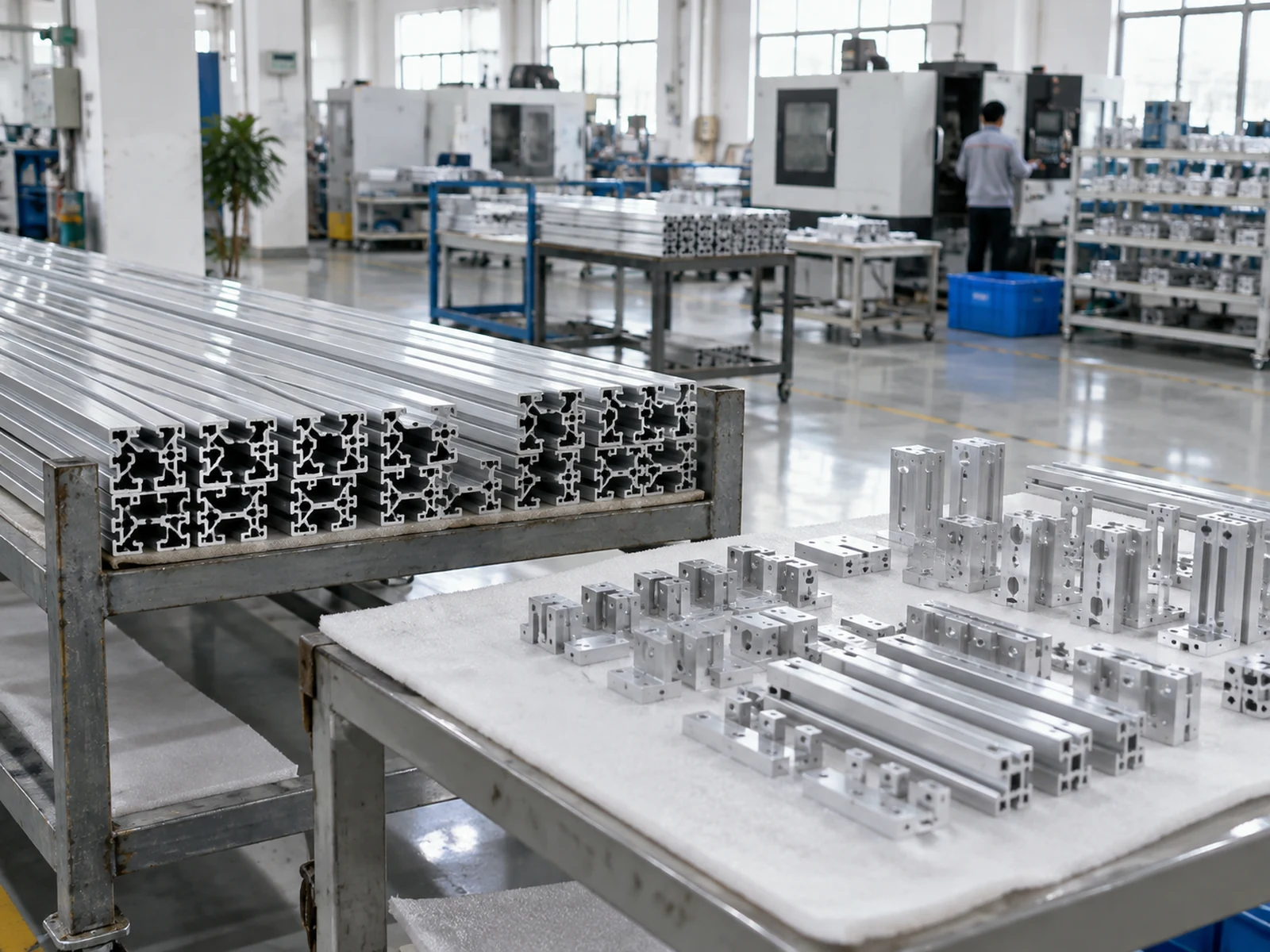
The following example is invented to illustrate a purchasing calculation. Suppose one table frame needs four members from family A and two members from family B. An order for twenty frames therefore requires eighty accepted A members and forty accepted B members. Those figures are only component demand; they do not yet mean twenty furniture products are ready to ship.
If receiving inspection accepts seventy-six A members and forty B members, the metal counts can support at most nineteen complete sets, assuming the accepted members are interchangeable within each specified family and finish. If only eighteen compatible hardware sets are available, only eighteen complete kits can proceed. A missing panel or an unresolved instruction pack could reduce the releasable quantity again.
Now change one assumption: some A members are left and right parts rather than interchangeable pieces. Dividing the combined count by four is no longer enough. Packing must verify the quantities of each required identity. The production report should preserve those identities, and the equipment inquiry should explain how the factory plans to maintain them after cutting.
This calculation helps expose the real constraint. Buying a faster saw will not supply missing hardware or resolve a panel shortage. But an unsuitable cutting and handling workflow can create its own constraint by making members difficult to identify, inspect or move. Compare equipment proposals against the work that reaches the receiving stage as accepted, usable parts.
Use your actual factory records for the purchasing decision. Record the product mix, rejected or held members, changeovers and the downstream release conditions over a stated period. Do not present this invented example as a production result, machine output promise or customer case study.
6. Test the proposed workflow across a changeover
A repeat batch can make a proposal look straightforward. A furniture factory with custom sizes, varied finishes or small orders also needs to understand the transition between jobs. Describe the changeover that currently consumes attention: a new profile, a different end geometry, a finish change, a revised drawing or a different packing destination.
Ask the supplier to describe the sequence for that specific transition. Identify which settings the operator changes, which material references must be checked, what tools or fixtures are involved and which first-piece checks the receiving stage requires. Any automatic recipe or identification function should appear in the quoted configuration and be assessed through evidence. Do not assume it from a screen photograph.
For an agreed trial, use representative material and a released requirement sheet. Establish in advance which pieces will be inspected, who will inspect them and what evidence will be retained. Include the transfer to the next operation where practical. A demonstration that shows only cutting motion cannot establish the complete furniture production route.
Record the setup context with the observations: material identity, drawing revision, quoted configuration, relevant tooling and the stated inspection method. Keep actual measured results separate from supplier descriptions and unresolved questions. A successful trial on one section does not qualify every other furniture section, finish or connector system.
Machine operation and changes must follow the supplier’s procedures and the site’s applicable safety arrangements. This purchasing guide does not provide instructions for bypassing guards, improvising clamping or testing unapproved materials. Configuration suitability should be resolved through the responsible supplier and the factory’s competent personnel.
7. Compare quotation scope with the next production stage
Normalize the scope before comparing prices. Identify the machine, tooling, supports, any offered fixtures, commissioning, training and stated exclusions. Then identify the equipment or services your factory must provide. An inexpensive quotation may cover the intended work well, or it may stop before a necessary handoff. The written scope is what allows you to tell the difference.
Pay particular attention to downstream preparation. A furniture frame may need holes, tapped features, connector access or another machining step after cutting. Confirm which operations are included, which are separate and how the cut member arrives at them. Do not infer drilling, milling or automatic assembly capability from the broad phrase furniture manufacturing.
Document the commercial responsibilities as well. Identify who supplies representative material, approves drawings, accepts a trial and provides site information. Request a written response to unresolved requirements rather than treating silence as acceptance. Service and spare-part arrangements should be described for the offered equipment without inventing response-time guarantees.
When evaluating production capacity, use the same product mix and stated work sequence for each proposal. Separate cutting motion from loading, checking, changeover and transfer. If a proposal quotes a throughput figure, ask for its conditions and whether it refers to cut pieces or accepted output at the agreed stage. Avoid substituting the fastest demonstration for a realistic mixed-order workload.
8. Prepare a furniture-specific machine inquiry
Send a concise factory summary followed by the supporting documents. State whether you ship assembled furniture, knockdown kits, frame-only orders or a combination. Name the representative product families and list the aluminum operations retained in-house. Include drawings, stock photographs, finish requirements and the receiving-stage definition. Keep unresolved engineering decisions visibly separate.
Provide your actual production mix with its observation period, rather than an unsupported daily target. Explain how custom orders are released and how changed drawings reach the operator. State how members are identified between cutting and packing, and describe the current problem you want the equipment purchase to address. A supplier can assess a concrete constraint more usefully than a request for the best furniture saw.
Ask Jiurun to assess the proposed cutting scope against that package and respond with the suggested machine configuration, its assumptions, exclusions and the evidence needed for open questions. A configuration review is an inquiry step, not a guarantee of furniture performance or an approval of the finished design. Keep product strength, connector suitability and finished-furniture acceptance with the responsible design and manufacturing process.
For an example of how a furniture project separates its frame, accompanying components and project documents, see the official 80/20 coffee and end table project. Its project information offers a plan and bill of materials alongside the component choices. This external example is not evidence of Jiurun compatibility with that system, and its DIY project scope is not an industrial capacity benchmark.
Frequently asked purchasing questions
Can one aluminum saw serve assembled furniture and knockdown kits?
Possibly, but the supplier must assess the actual sections, released member requirements and handling route. The two delivery formats also have different receiving conditions. Explain both in the inquiry, including the identification and packing requirements for loose kit members. Do not assume one common raw material makes the workflows identical.
Should the machine be chosen before the connector system?
The confirmed production requirements should come from a released design. If the connector system changes the member ends or later machining, keep those requirements open until resolved. A supplier can discuss provisional scope, but the purchasing record should identify the assumptions and any remaining qualification work.
Is a higher cut-piece count enough to justify an upgrade?
Compare the accepted output at the factory’s agreed receiving stage and its contribution to complete product sets. Also inspect changeovers, handling and the availability of other components. More cut pieces can help only where that output addresses a real constraint in the retained production route.
What should be ready before requesting an equipment assessment?
Prepare representative released drawings, actual stock and finish information, the product mix, delivery formats, downstream operations and acceptance responsibilities. Include the current production constraint and unresolved questions. That package gives Jiurun a concrete basis for assessing a configuration without pretending that the machine purchase alone qualifies the furniture product.
For the separate member-document discussion, use the furniture frame cut-list reference. Compare the aluminum cutting equipment options against your actual retained route, then contact Jiurun with the released furniture member drawings and production mix for a configuration assessment.
See the cutting stage in context
This Jiurun video shows general aluminum cutting context. It does not qualify a furniture design, prove the invented production example or establish connector compatibility. Assess the actual material and proposed machine configuration separately.