
An aluminum saw removal scope is a purchase decision, not merely a rigging appointment. When a replacement saw is planned for the same bay, the outgoing machine, its feed and outfeed equipment, connected services, retained tooling, and the condition of the empty space all affect the new installation. A quote that says “remove old saw” can conceal different assumptions about who makes the asset available, which attachments travel with it, who clears the floor, and when the bay is accepted for the replacement.
This guide helps a factory buyer define the commercial and evidence handoffs before awarding a replacement project. It is not a method for disconnecting, lifting, or moving machinery. The plant and its qualified contractors must plan and carry out those activities under the applicable site procedures, manufacturer information, and local requirements. Ask suppliers to describe their scope and deliverables without treating a sales photograph as proof of an approved removal plan.
Define the aluminum saw removal scope around a bay-ready result
Define the result that the incoming installation team needs: an identified bay, an agreed condition of the floor and service interfaces, a documented boundary for items that remain, and a date at which the site owner accepts that condition. “Old saw gone” is incomplete if the outfeed remains across the new machine footprint, a power or air connection is unidentified, a stock rack blocks the delivery route, or the floor has unresolved anchors and damage. The buyer should ask the new saw supplier what space, support points, access and utilities its actual proposed configuration requires, then compare that requirement with the removal contractor’s promised end state.
Draw the old and proposed cell on one measured site plan. Label the saw base, feed and outfeed, guarding, control cabinet, chip or mist equipment if present, stock staging, access paths and any shared services. Mark each item as remove, retain, relocate, or undecided. These are inventory decisions, not instructions to disconnect equipment. A machine on another buyer’s floor may have a different boundary even if the model name matches. Our site-survey guide explains which site facts a supplier can review remotely and which still require measured confirmation.
Separate asset ownership from physical work
First identify the outgoing asset by serial number, asset register entry, location and agreed photographs. Record the owner and the chosen disposition: retained elsewhere in the plant, stored, sold separately, traded in, or handled through an approved disposal route. The party that owns the asset may differ from the party that owns adjacent feeds, racks, tooling and site-installed services. If the new supplier offers a trade-in, state precisely which identified items the credit covers. Our trade-in offer guide treats the outgoing asset and new purchase as two linked but separate commercial scopes.
Next allocate the physical work line by line. A removal supplier might quote only the saw base; the plant may need a specialist for services, another contractor for rigging, and its own maintenance team for records and handover. Ask for named responsibility for surveys, access and work permits, making the cell available, protection of nearby equipment, packaging or transport if applicable, floor work, waste or salvage handling, and the final walk-through. Do not imply that a saw vendor automatically supplies rigging, utility work or site approvals because its quotation contains an installation price. Request written inclusions, exclusions and the evidence that closes each item.
The NIST MEP pre-purchase equipment guide places installation, maintenance and end-of-life questions within the buying decision. It asks buyers to consider disposal and possible sensitive data or hazardous material. That is general planning guidance, not a disposal classification or a statement about any JiurunCut machine. For this project, the buyer should ask qualified local owners whether the particular outgoing asset contains information, fluids, consumables or other items that need a documented disposition, and price the actual answer.
Control the handoff around services and access
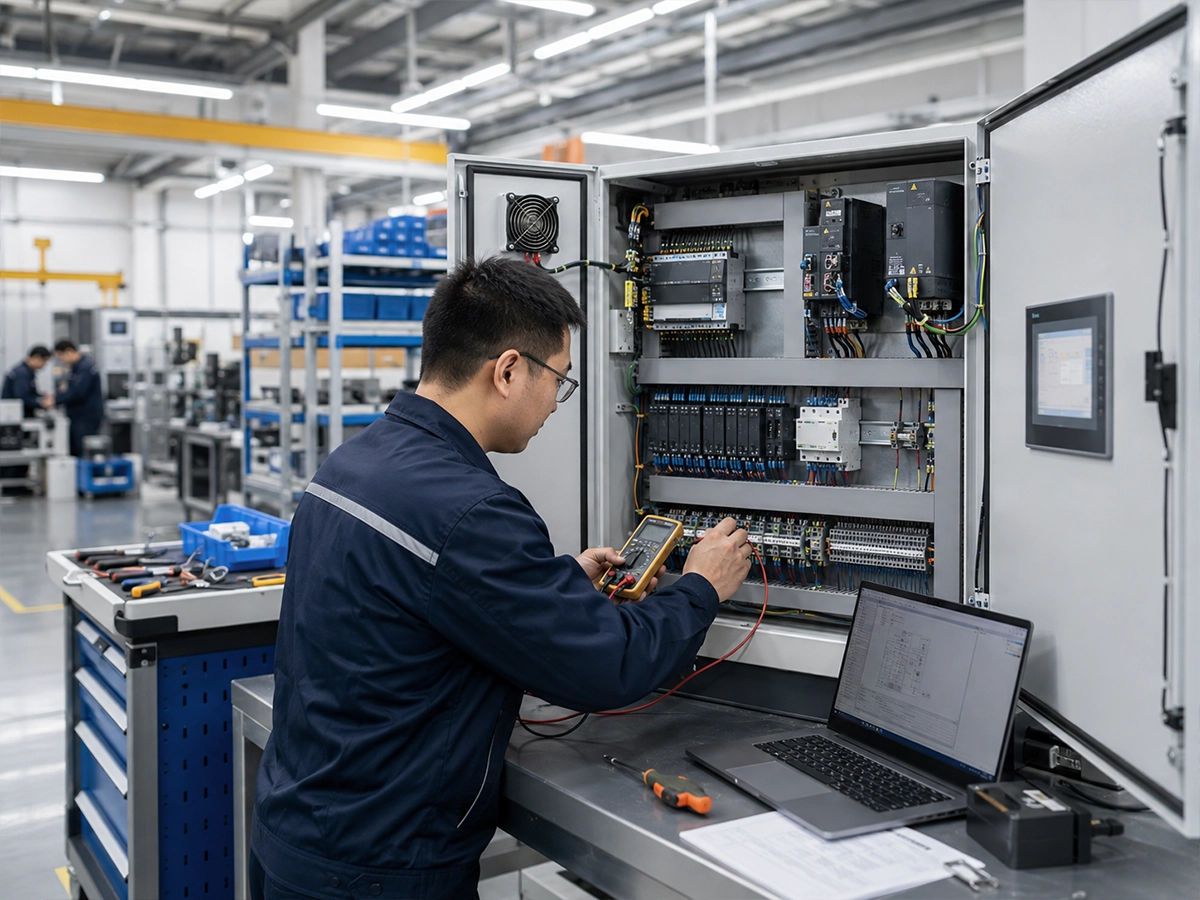
Do not turn an RFQ into an improvised electrical or mechanical procedure. Instead ask the site owner to identify the service interfaces and the authorized people who will plan and verify their condition before work begins. An asset register and current drawings may help, but the site team must verify the as-found installation. If the drawing says one control cabinet and the floor shows another, keep that discrepancy open. The removal quotation should say who records existing conditions, who resolves an unidentified interface, and what event permits the physical work to proceed.
As a US reference, OSHA’s hazardous-energy standard assigns servicing energy-control activities to authorized employees and requires established procedures. Its applicability and the site’s controls must be determined by qualified people in the relevant jurisdiction. A purchase guide cannot certify that a particular machine is isolated; an invoice, a photograph of an open cabinet, or a generic video cannot do so either. Ask for the site’s required signoffs rather than copying a supplier’s informal “power off” statement.
Access is another separate decision. The route for taking equipment out may differ from the route for bringing the replacement in. Ask the qualified site and movement team to inspect actual doorways, turns, floor and handling constraints, neighboring production, and temporary laydown space. Require a proposed movement plan from the responsible contractor for review under site rules. Do not assume a machine’s shipping dimensions equal its as-installed envelope with attached conveyors and guards. Do not infer a safe lifting point or equipment capacity from any editorial image.
Keep feed and outfeed boundaries visible
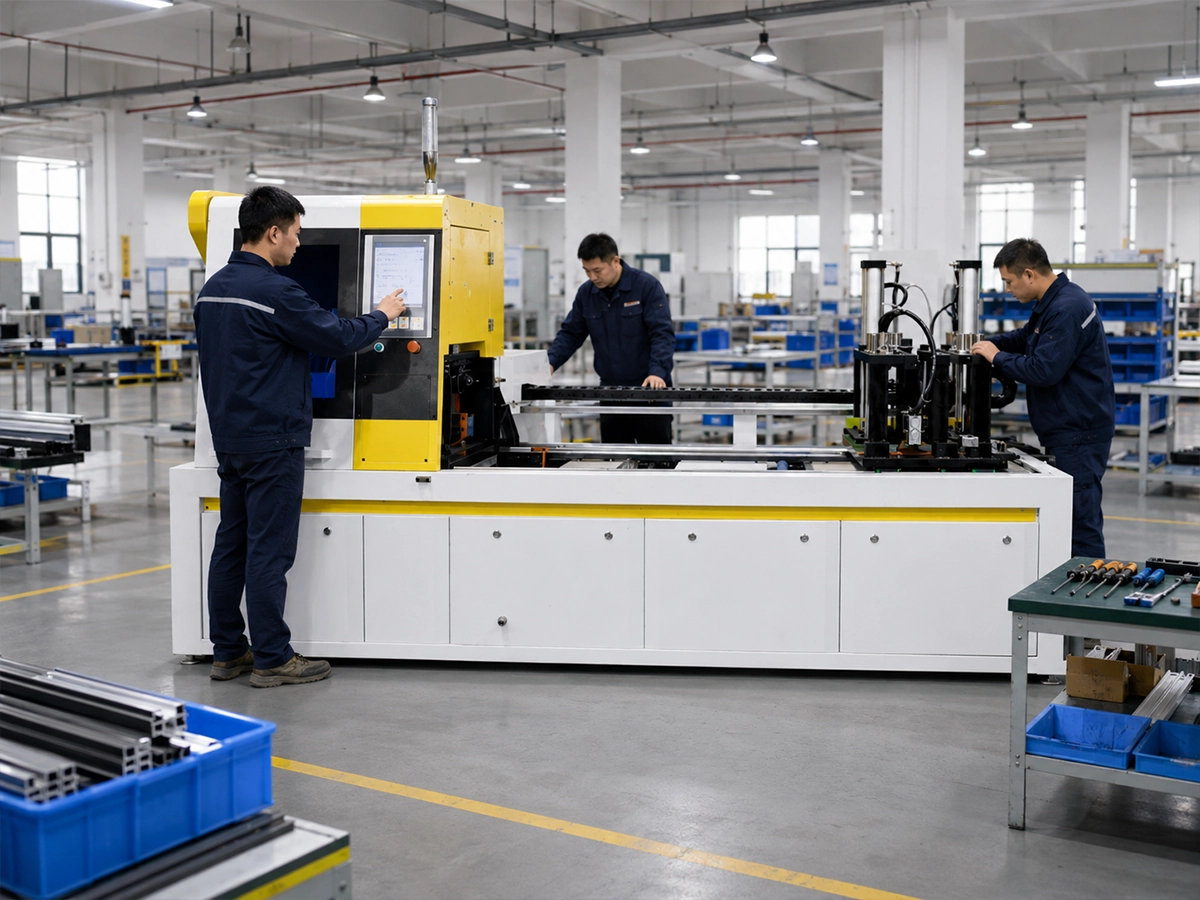
An aluminum cutting cell may include stock racks, roller supports, a loading rack, part collection, chip handling and protective panels. A supplier may label only the cutting enclosure as “the machine,” while the plant views the whole line as one asset. Reconcile those definitions before removal is priced. Identify what must stay usable for a parallel replacement, what can be reused only after manufacturer and site review, and what must leave the bay. If a feed or outfeed is retained, its compatibility with the replacement remains a separate proposal and trial question, not a conclusion drawn from similar-looking equipment.
Trace each interface to a responsible party. For example, if an outfeed is retained, who confirms its physical dimensions, controls, guarding boundary and part handoff with the offered saw? If it is removed, who protects stock still staged on it and clears its supports? If the old machine is sold, which accessories go with the sale and which remain on the site asset register? A line-by-line schedule of equipment and photographs can prevent a removal crew, buyer and incoming supplier from acting on three different assumptions.

Make the transition schedule conditional on evidence
Write dates as handoffs with entry conditions, not a single promise that the old machine will leave on Friday. The order-transfer plan identifies when the last accepted lot on the old saw is released, what unfinished stock remains, and how production is covered during the outage. The removal plan identifies when the cell is available, when qualified site controls permit work, and when the specified bay condition is presented for acceptance. The incoming installation plan identifies when its measured prerequisites have been accepted. Our replacement production-transfer guide addresses order continuity; the present question is the physical and documentary state of the bay between the two machines.
Use two hold points. At the first, the site owner releases the outgoing cell for the planned work under its own procedures after inventory and required controls are checked. At the second, the incoming installation owner accepts or rejects the bay against the agreed drawing and end-state checklist. Neither hold point is proof that the new saw can cut accepted parts. Installation, safeguards and a representative cutting trial still require their own approval. If the old asset must be transported to another site, requalification after transport is a separate receiving decision.
Quote the whole removal boundary
Send each bidder the same measured bay plan, machine and accessory inventory, required end state, available work window and known constraints. Ask them to return: the exact items included; who supplies qualified people and handling resources; assumptions about access and utilities; protection, packaging and transport scope; site work and waste disposition scope; records and signoffs; exclusions; change conditions; and a price schedule tied to deliverables. A provisional line for an unknown item is more honest than silently assuming it is free. Keep the owner of every open item named.
Compare offers at the same completed boundary. A low removal price that leaves feeders, unclear service interfaces or an unaccepted bay can delay the new machine and add separate contractor costs. Conversely, a broad turnkey line should be checked for named deliverables rather than treated as a guarantee that all site conditions are solved. Ask for a walkthrough before the final removal quotation when the physical state is uncertain. The buyer’s decision is strongest when an outgoing-asset record, a safe-work responsibility matrix and a bay-ready acceptance sheet can all be attached to the purchase file.
The video below is general Jiurun Machinery aluminum-saw and feeding footage from our own channel. It helps visualize the kind of machine and feed boundary that a buyer may need to inventory. It does not show the outgoing asset, a removal, site route, isolation, replacement configuration, customer, trial or performance result.
Planning a replacement aluminum saw? Send JiurunCut the actual profile drawings and cut list, the proposed installation location, the outgoing-cell inventory, and the interfaces you expect to retain. We can discuss the quoted saw configuration and which site facts should be confirmed before an installation or trial commitment. The plant and its qualified providers remain responsible for the removal plan and site approvals. Contact JiurunCut with the project scope.