
An aluminum saw replacement plan has two separate jobs: define the new cutting station you are buying, and explain how accepted customer orders will move from the old route to the new one. A delivery date answers neither question by itself. The new machine can arrive before its site is ready, and a successful sample can still leave part of your order mix without an approved production route.
The useful purchase question is not simply whether the replacement is faster. It is which orders the new configuration will take, when those orders can be released to it, and what supplies the next operation while that transfer is incomplete. Those decisions affect the equipment scope, site arrangement, training, assessment materials and temporary purchasing work you need to compare.
This guide develops a replacement decision through a clearly hypothetical factory example. Its quantities illustrate planning arithmetic; they are not Jiurun production rates, customer results or a promised installation duration. Actual equipment selection and site work need the supplier’s configuration-specific response and the responsible site’s assessment.
Start with the order portfolio that must survive the replacement
Separate the reason for replacing the saw from the work that must continue. The old station may have a capacity, reliability or suitability problem. Record that problem, but also list the released orders and the accepted output each receiving operation needs. The replacement must be assessed against those requirements, including work that is uncommon but already promised.
For each part family, identify the drawing revision, material and condition, incoming section and length, finished end requirements and receiving checks. Record the remaining order quantity and its required handover point. A record of parts cut on the old saw is useful context; it does not establish that the new configuration can produce those parts with the same supporting equipment.
Keep physically accepted inventory separate from unfinished work. Stock waiting for inspection, unallocated remnants, blanks requiring another operation and rejected pieces cannot all be counted as a delivery buffer. Connect the usable quantity to the specific order or part family it can actually satisfy. A surplus of one member does not cover a shortage of another.
Do not transfer work by familiar job names alone. The drawing and receiving requirements are the reference. A setting used on the old control may describe a different positioning method on the new station. Retained supports, tools and programmes require their own compatibility assessment; they are not automatically reusable because the two machines both cut aluminum.
Compare three transfer arrangements before committing to the layout
A same-bay replacement removes the old cutting route to make room for the new one. The interruption can include removal, site preparation, delivery positioning, installation, assessment and production release. Obtain a task sequence with dependencies and responsible parties. Do not reduce the whole sequence to the transporter’s unloading appointment.
A parallel arrangement keeps an existing suitable route available while an independently prepared new station is assessed. It can permit a gradual transfer of part families, but requires real space, utilities, material access, staffing and receiving capacity. A spare rectangle on the floor is not proof that the two routes can function independently.
A temporary bridge uses another assessed internal route or purchased prepared parts for defined orders. Confirm the scope, availability, lead time, receiving requirements and actual supplier commitment. A provider’s general advertisement cannot be entered as confirmed supply. The bridge is part of the buying case only to the extent that it covers the released work.
| Arrangement | What remains available | What the buyer must resolve |
|---|---|---|
| Same-bay replacement | Accepted buffer and any separately agreed bridge | When the old route ends; the full interval until new production release |
| Independently ready parallel station | The old route for its remaining approved tasks | Independent resources; part-family transfer sequence; eventual old-station exit |
| Assessed temporary supply | Specified prepared members or another approved route | Written coverage, order allocation, delivery timing and receiving acceptance |
These are purchasing alternatives, not permissions to keep defective equipment running. If the old station is not suitable for continued use, the responsible site must address that condition. A continuity plan should use accepted inventory or another assessed supply route rather than depend on unsafe operation.
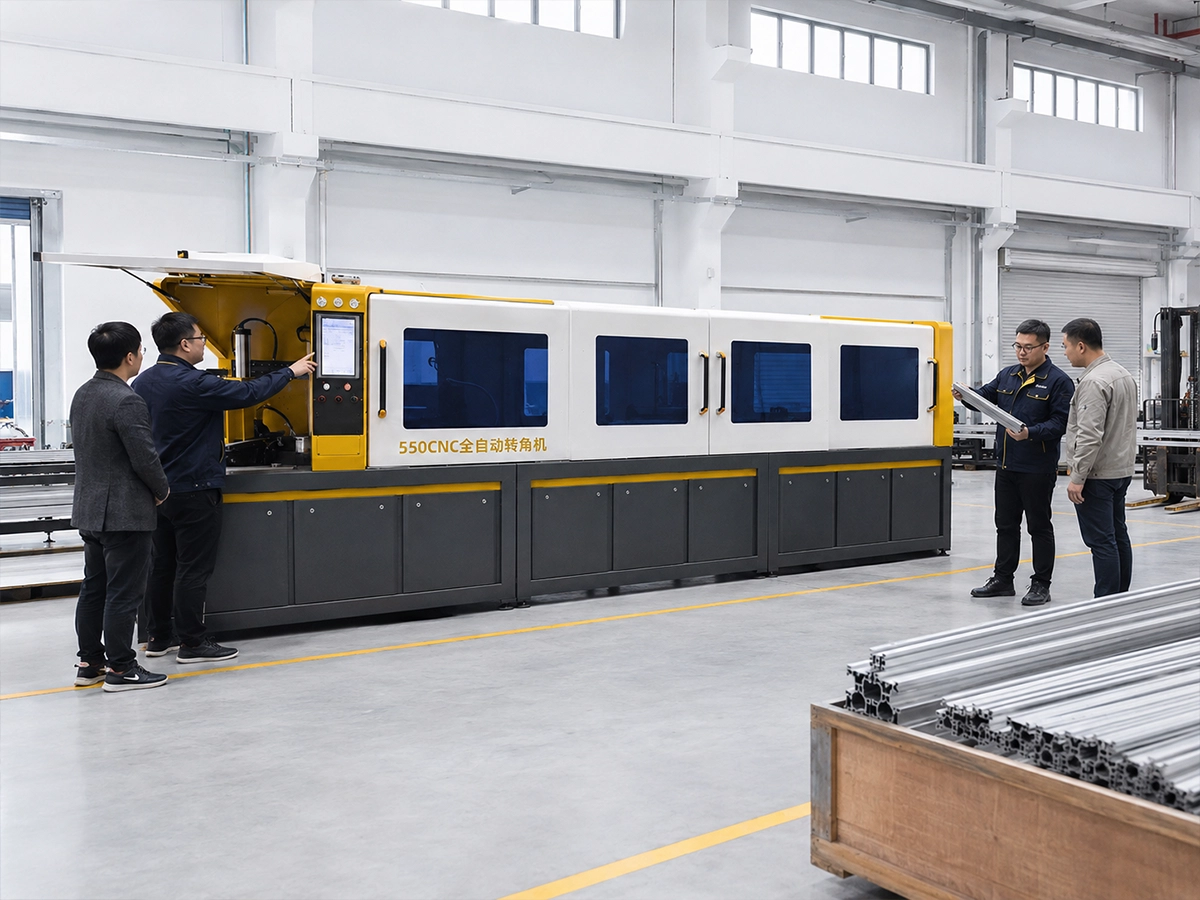
A hypothetical gap calculation: two families, two different answers
Suppose the next five working days require 80 accepted members per day from family A and 30 per day from family B. The factory already has 240 accepted A members and 60 accepted B members, allocated to those orders. Assume, solely for this example, that no additional internal members become available during those five days.
The five-day requirement is 400 A members and 150 B members. Subtracting the accepted starting inventory leaves a gap of 160 A and 90 B. This calculation describes the hypothetical order requirement. It does not estimate a saw’s cycle time, scrap rate or availability.
Now suppose a bridge provider confirms 160 A members to the agreed receiving requirement, but gives no confirmed B response. The A total may reconcile across the whole interval, subject to arrival and acceptance. Family B still has an unresolved gap of 90. Calling the bridge a complete solution because it supplies 250 members would be wrong: 250 undifferentiated pieces cannot replace the two required families.
Timing can invalidate even the A answer. Starting inventory covers only the first three days at 80 per day. If the provider’s 160 members become accepted only at the end of day five, the total five-day quantity looks sufficient while days four and five lack the required release. Plot available accepted supply against each handover, not just against the total at the end of the period.
The same caution applies to a tentative new-station date. If A is released to the replacement before B, calculate the transition separately for each family. Do not mark all work available on the first day a machine produces any acceptable sample. The result should show which requirement is covered, which is conditional and which has no confirmed route.
A worksheet the buyer can fill with actual order data
| Field | Family A | Family B |
|---|---|---|
| Released requirement in the illustrative interval | 400 accepted members | 150 accepted members |
| Accepted, allocated starting inventory | 240 | 60 |
| Confirmed bridge quantity in this example | 160; arrival and acceptance timing still matters | None confirmed |
| Quantity gap after that bridge | 0 across the full interval; daily coverage remains conditional | 90 unresolved |
| Actual new-station production release | Enter evidence and date for this family | Enter separate evidence and date for this family |
Replace every illustrative value before using the worksheet for a real purchase. Add the actual handover dates, receiving owner, remaining processing and evidence for each supply commitment. If an input is unknown, preserve it as unknown. A blank delivery promise cannot be converted into available inventory.
Buy the transition work as explicitly as the machine
A quotation may describe the new saw while leaving the replacement programme to the buyer. Ask what is included for delivery positioning, installation, site assessment, operator instruction and agreed cutting assessment. Identify the supporting provisions, information and materials the factory must supply. Record excluded removal and disposal work separately.
The supplier needs the proposed arrangement to answer accurately. A new station in a prepared independent area and a new station replacing equipment in the same occupied bay have different dependencies. Show the existing material route and the proposed new route, including the full input and output stock path. Ask which interfaces require review rather than assuming existing tables, extraction or utilities will transfer unchanged.
The Haas pre-installation checklist is a useful example of a machine manufacturer’s separate site-readiness record: it distinguishes layout and access, foundation, electrical supply, compressed air and coolant preparation. It applies to Haas equipment. Its values and model-specific requirements are not specifications for a Jiurun saw.
For your purchase, obtain the equivalent information for the actual quoted configuration. State who supplies each prerequisite, who confirms it and when the next activity can begin. If a service visit depends on completed site work, connect those dates. A provisional technician booking is not proof that every installation dependency has been met.
Compare offers on the same responsibility map. One price may include assessment and instruction while another excludes them; one arrangement may require new supports that another includes. List those differences before choosing. Record actual quoted costs and commitments without inventing a universal replacement saving or a guaranteed payback period.
Separate arrival, installed readiness and production release
Use different milestones for a machine that has arrived, an installation that has been completed, a configuration that has been assessed and a part family that is released for production. Each milestone answers a different question. Signing for delivered packages does not by itself authorize cutting customer work.
The UK’s HSE equipment and machinery FAQs discuss following manufacturer installation instructions and specifications, and training needs when equipment or the system of work changes. Those are useful planning considerations; this article does not use that UK guidance to certify a machine or determine the requirements of another jurisdiction.
Assign the responsible site and supplier parties to the agreed readiness checks. Keep safety and technical assessment with people competent for the actual equipment and installation. The replacement schedule should preserve time and materials for that work, not treat an order backlog as permission to bypass it.
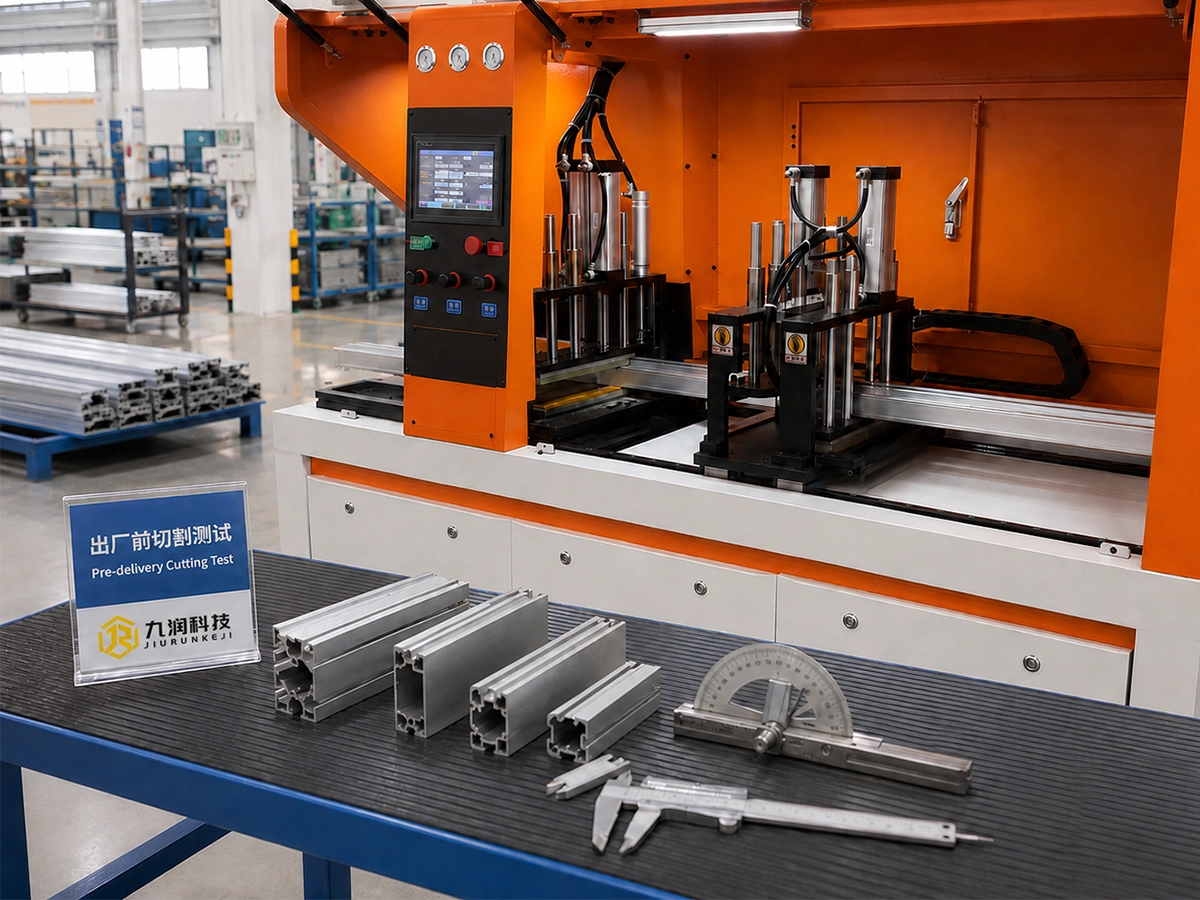
For production release, choose representative tasks from the released portfolio. Identify the material, drawing revision, proposed supports, configuration, output checks and receiving owner. Include the difficult or different tasks that affect the station choice. A pass on a simple straight member does not resolve an unassessed angle task or a different section.
Separate the component result from sustained order coverage. An accepted sample addresses its agreed assessment. The production planner also needs a supported view of how much accepted output the available route can supply and when. Until actual evidence supports that view, retain the uncertainty in the transition record.
Transfer orders without losing their remaining quantities
At the transfer point, record what has already been accepted on the old route, what remains unfinished, what is rejected and what must be supplied by the new route. Give the new station the remaining released requirement, not a second copy of the original full order. Otherwise two stations can appear busy while duplicating some members and leaving others missing.
Maintain the connection between order reference, drawing revision, material identity and finished-member allocation. If a family is split between old and new routes, make that split explicit in the receiving record. Mixing unidentified pieces can make a total look correct while obscuring which output has passed the relevant checks.
Programme migration is also a separate task. Record the information required to reproduce the intended job on the new system and the supplier’s supported transfer method, if any. A job file that can be copied is not necessarily a job that can be executed unchanged. Confirm units, orientation, end references and receiving requirements through the agreed process.
Use one current release decision for each order family. Planning, cutting and receiving personnel should know whether that family stays on the old assessed route, moves to the new released route or uses the confirmed bridge. Keep later changes visible so that an urgent order does not silently alter the assessed transition arrangement.
Make the old-station exit a decision with evidence
For a parallel plan, define what has to be true before the old station leaves the production route. That could include release of the required families, accepted output available for named handovers, completed instruction and no unresolved task that still depends on the old arrangement. Use the actual project requirements to choose those conditions.
A calendar milestone alone can conceal an incomplete transfer. If one required family has no released new route, decide whether it will be covered by an assessed bridge, whether its delivery commitment changes or whether the planned exit remains conditional. Do not promise uninterrupted production simply because the old equipment has a collection appointment.
Preserve the relevant job and receiving records before the old system exits, using the site’s authorized information process. Ask what documentation, programmes and supporting provisions remain available. Their transfer or retention should have a responsible owner. Keeping a record is different from assuming the old equipment can be restarted on demand.
If the plan includes a fallback, define its actual limits. Which tasks can it supply, what resources does it require and what decision activates it? A removed or unready station is not automatically available as fallback capacity. Count only a route whose suitability, availability and order coverage have been established.
What to send Jiurun for an aluminum saw replacement plan
Send the retained part portfolio and the current reason for replacement, together with the proposed transfer arrangement. Include the existing and proposed stock paths, available site information, released quantities, accepted buffer and target receiving dates. Keep unconfirmed forecasts and provisional supply arrangements clearly identified.
Ask Jiurun for a configuration response tied to the actual material, section, ends and receiving requirements. Then ask for the supporting equipment, site prerequisites, assessment and instruction scope needed to introduce that configuration. The Jiurun aluminum cutting equipment range is a starting point for that conversation, not evidence that every current job transfers unchanged.
Use the sample-cutting assessment checklist to organize the individual task evidence. Keep the replacement decision wider: the new route has to be ready for the required portfolio and connected to the actual order handovers.
Discuss your existing saw and replacement order portfolio with Jiurun. A useful inquiry explains what must keep arriving at the next operation while the new station is introduced. That allows the offer to address the purchase and its transition dependencies together.
Questions about replacing a production saw
Is machine replacement the same as batch changeover?
A batch changeover changes work on an available station. Replacement changes the production route itself, potentially including removal, installation, assessment and order transfer. Do not use a batch-changeover time as the full replacement interruption.
Does a parallel layout guarantee no interruption?
No. It needs independently available resources, an assessed existing route and a supported transfer sequence. Shared people or supporting equipment can still limit what each route supplies.
Can one accepted sample release every current job?
The result supports its agreed task and configuration. Other required families remain separate assessment and release decisions. Preserve unresolved work in the replacement plan.
Can an inventory buffer solve every transition problem?
Only accepted, allocated inventory covering the right parts and handover dates contributes to that requirement. It does not make the new installation ready or approve an unassessed production route.
Watch general aluminum cutting context
This Jiurun video shows an aluminum cutting example. It is not a replacement project, an installation-duration commitment or evidence that another factory’s orders can transfer without interruption.