
Aluminum saw lubrication belongs in the machine proposal as a defined system and approved fluid. Ask how the quoted arrangement applies the fluid, what the machine and tooling suppliers approve, and which collection, service and downstream requirements it must meet. The label “coolant” alone leaves those details unresolved.
This buying guide organizes the questions for a configuration review. Use the manufacturer’s instructions and your approved process for actual fluid selection, setup and operation.
Make the proposal easy to compare
- Identify the application system and approved fluid.
- Review the actual cutting and downstream job.
- Separate included equipment from ongoing consumables and care.
On this page
1. Identify the proposed aluminum saw lubrication system
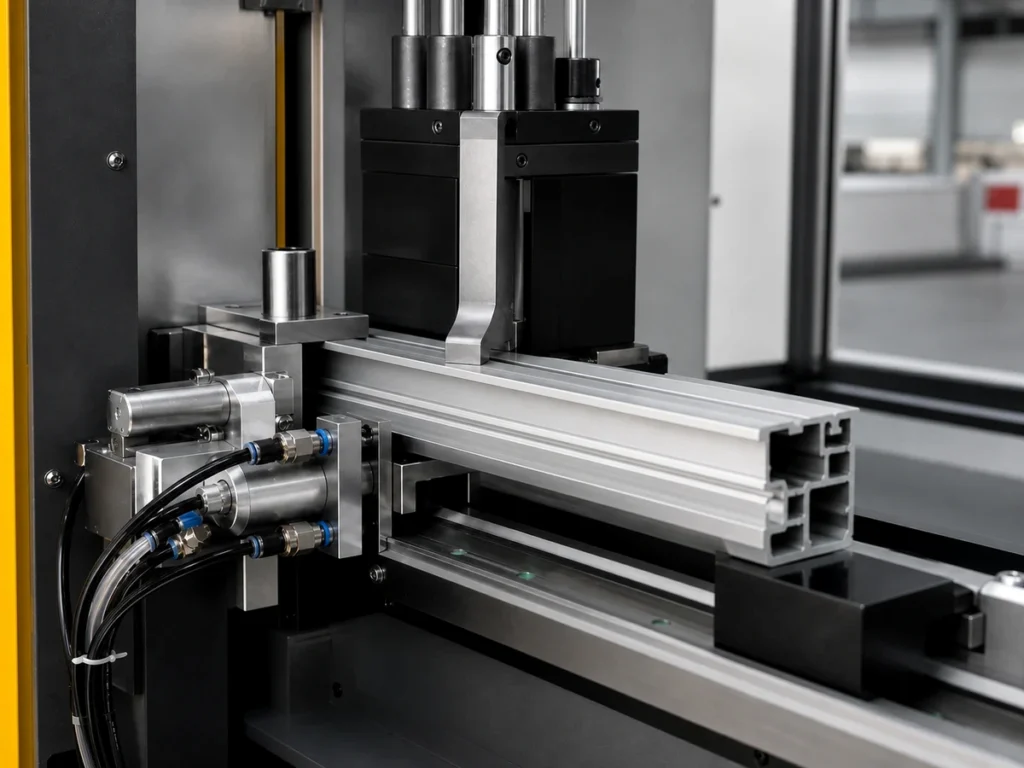
Ask the supplier to name the fluid-application arrangement in the configuration. Record the system identity and its scope rather than relying on a generic catalogue term or a hose visible in a photograph.
Some equipment proposals describe pulsed application, minimum quantity lubrication, or a circulating coolant arrangement. Those terms should lead to a documented explanation of the proposed system. Do not assume they all describe the same equipment or operating requirements.
Elumatec’s SA 73 page lists a pulsed coolant system and identifies high-performance cutting fluid among its options. That is a model-specific example of separating the machine feature from the fluid offering. It does not establish the equipment included with a JiurunCut proposal.
For a minimum quantity lubrication proposal, ask for the actual application system, tubing and nozzle information. Unist’s MQL overview describes those components and distinguishes different tubing arrangements. Its product information helps frame the review; it does not confirm a retrofit or fluid choice for an unidentified saw.
Keep integration and service responsibilities visible. Ask who provides the system documentation and confirms compatibility with the machine. A component available separately is not automatically included, connected or approved in the quoted configuration.
2. Identify the fluid and its approved use
Request the exact proposed fluid product, its technical information and the current safety data sheet. Keep the product name consistent across the quote, supplied container and handover records.
Confirm the permitted fluid with the relevant equipment and tooling suppliers. A product sold for metalworking is not automatically suitable for every delivery system, blade or downstream requirement. Unist’s overview specifically notes that not every lubricant is a suitable MQL candidate.
Ask the responsible site team to review the fluid documentation for the actual workplace and process. Keep that review distinct from the cutting supplier’s confirmation of machine compatibility. Both responsibilities should be clear in the handover.
OSHA’s safety-data-sheet appendix identifies sections for product identification, hazards, handling and storage, and exposure controls. Those headings help organize a documentation request. This article does not assess a particular chemical’s hazards or establish compliance for your location.
If the proposed product changes before delivery or during later service, retain the new approval and documentation. A similar trade name or substitute sold by a local distributor does not by itself confirm equivalence.
Use the approved supplier instructions for any preparation or mixing. A purchasing checklist should not supply an improvised concentration, nozzle setting or fluid substitution. Record who will provide the applicable operating information.
3. Review the actual section, tooling and cutting job
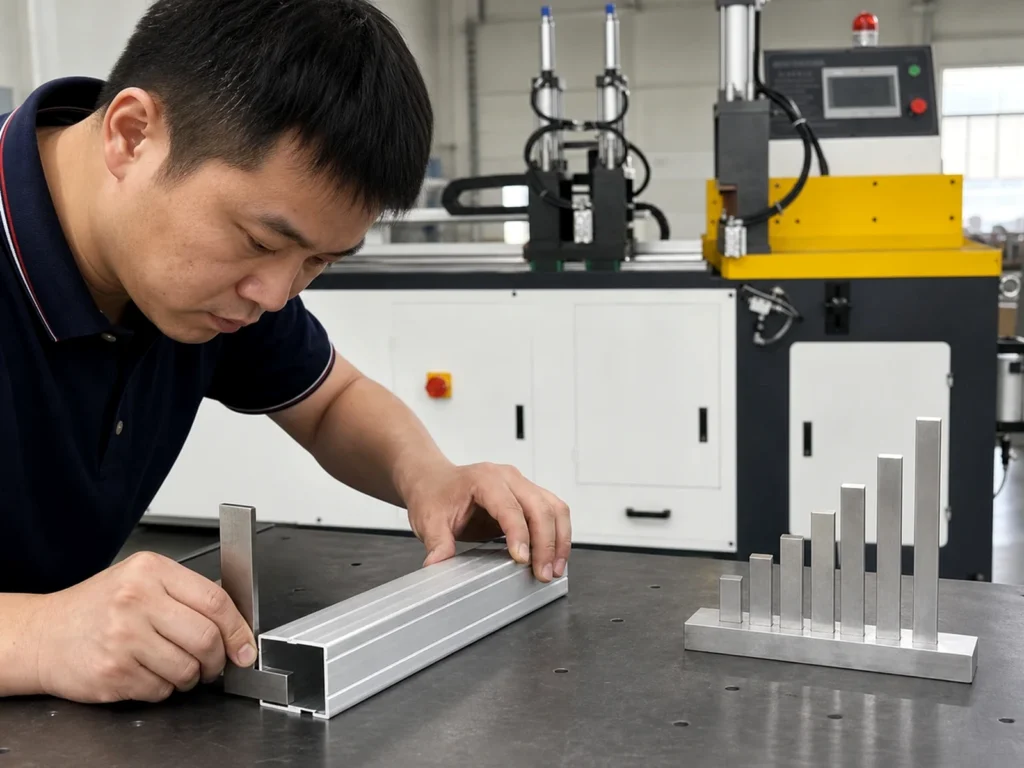
Provide the material identity, profile or bar section, incoming condition, required lengths and end requirements. Include the proposed blade information where available. The review should describe the actual job rather than a generic aluminum sample.
Make the accepted output stage clear. A blank for machining, a visible frame member and a piece that will receive another surface process can have different handoff requirements. Name the stage at which the proposed sample will be evaluated.
Ask for the review conditions to be recorded with the sample results. Fluid identity is one part of that record. Material, tooling, configuration and acceptance requirements also matter when comparing the evidence.
A cleaner-looking cut does not isolate the effect of lubrication. If several conditions changed, record them rather than assigning the result to one cause. Our blade-life record guide explains why job conditions need to accompany a performance comparison.
Also separate an observed result from a future guarantee. A sample review covers the agreed cases and checks. It should not become a blanket claim for every alloy, section or production quantity.
4. Review the handoff after cutting
Explain what happens to the cut pieces next. They may be handled, packed, bonded, coated, welded or machined. Have the responsible process team define the applicable surface and cleanliness requirements.
Ask how the proposed fluid and job arrangement will be reviewed against those requirements. Do not assume a supplier’s statement about a clean or nearly dry process replaces the acceptance criteria for your next operation.
If cleaning is required, identify who owns that stage and what is included in the proposal. A cutting-only quotation should not silently include a validated cleaning process or approval of a later coating or bonding operation.
Review chip and fluid collection as part of the complete arrangement. Ask what interfaces or collection equipment the proposal requires and which are included. Our chip-collection purchasing guide covers the equipment-scope questions separately.
Make handling protection explicit for visible surfaces. Our cut-part packaging guide explains how part identity and protection stay connected to the handoff. A tidy tray or photograph does not establish the actual packing requirement.
5. Separate equipment scope from consumables and care
Make the quote specific enough to distinguish the initial installation from ongoing use. Mark the equipment, starter fluid, documentation, service parts and training included with the proposed configuration.
| Quote item | What to make clear |
|---|---|
| Application system | System identity, integration and included components. |
| Initial fluid | Exact product and quantity supplied. |
| Later consumables | Approved replenishment product and supply responsibility. |
| Care and handover | Instructions, training and agreed service scope. |
Ask for the manufacturer’s care requirements and the agreed handover. Keep cleaning, inspection and service responsibilities tied to the actual system documentation. This guide does not provide a maintenance interval for an unidentified unit.
Confirm the spare-component identity before ordering replacements. Similar-looking tubing or a nozzle with a matching thread may still be a different component. Our spare-parts guide explains how equipment identity belongs in the request.
Retain the supply arrangement for the approved fluid. Local availability, pack sizes and ongoing costs should be confirmed for the destination rather than assumed from another supplier’s website.
6. Compare documented consumption and accepted output
For a consumption comparison, record the fluid amount and the output basis over a defined job period. Clarify how the amount was determined and whether the record includes filling, carryover or other changes in the system.
An invented accounting example
Assume a hypothetical record assigns 200 mL of fluid use to a job that produced 1,000 accepted pieces. Dividing 200 by 1,000 gives 0.2 mL per accepted piece for that record. These values explain the denominator; they are not measured JiurunCut consumption or a recommended delivery setting.
If the denominator instead counts cutting movements or all pieces produced before inspection, it describes a different metric. Retain the actual quantity and status rather than relabeling it as accepted output.
Fluid consumption alone does not establish a lower total cost. Compare the agreed work, tooling, handling and care requirements alongside the sample results. Our cost-per-accepted-part guide keeps those inputs connected to the output being purchased.
Keep claims such as longer blade life or improved surface finish tied to actual evidence. A lubrication supplier’s general product claims do not become a verified result for your saw, blade and part.
Common questions
Does “coolant included” identify the fluid and the system?
It may leave both unclear. Ask for the application-system identity, approved product, supplied quantity and ongoing responsibilities in the quote.
Can any metalworking fluid be used in an MQL system?
Do not assume that. Obtain the applicable system and tooling approvals and retain the product documentation for the actual process.
Does a low consumption figure establish better cutting quality?
No. It describes the defined consumption record. Assess the required features and accepted output with the agreed inspection evidence.
Define lubrication scope with your cutting proposal
Ask JiurunCut to review your material and process requirements. Include the section drawing, end requirements and next manufacturing stage. Request the proposed application arrangement, approved fluid information and included handover scope.