
Aluminum saw chip collection should be defined as a complete purchasing scope, from the machine’s collection point to the approved destination for the material. A collection drawer, an extraction connection and a complete extraction system describe different items. Ask which items the quotation includes and who is responsible for the remaining interfaces.
Use this guide to prepare a supplier and site review. Equipment selection and dust hazards require qualified assessment of the actual process. A clean demonstration video or a visible connection does not establish that a proposed system is suitable for your installation.
Put these distinctions in the quotation
- Collected offcuts, chips and airborne dust need clearly defined handling routes.
- A machine connection does not identify the complete equipment package.
- Site review, operating instructions and acceptance evidence belong in the project scope.
On this page
1. Name the aluminum saw chip collection items supplied
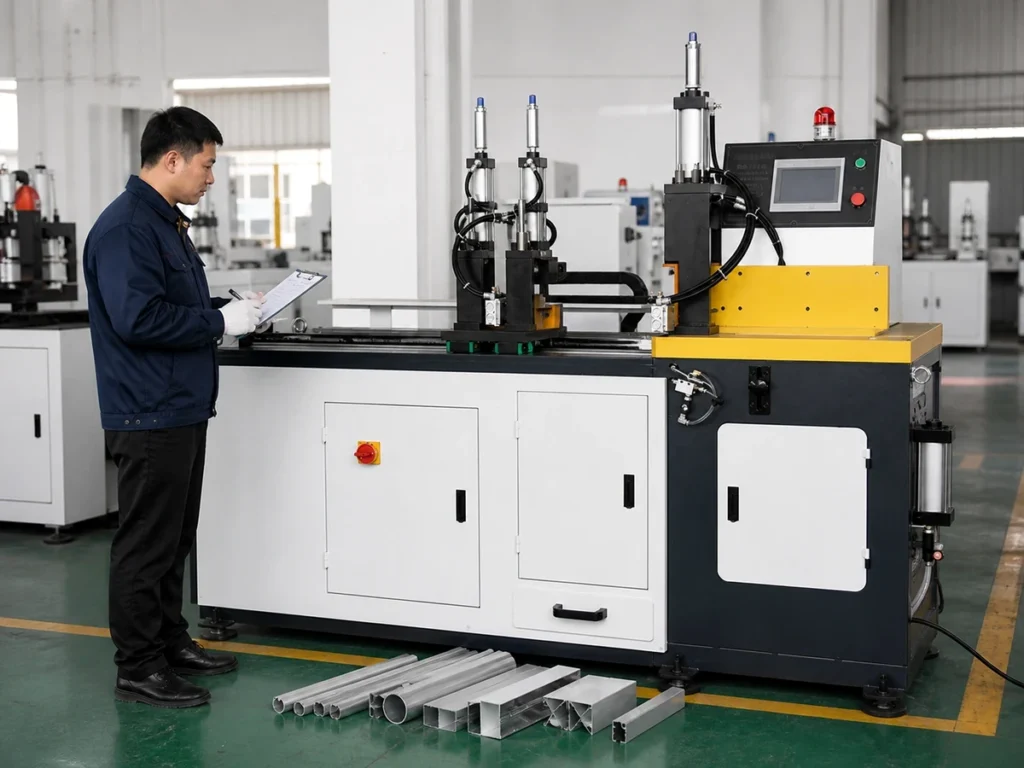
Ask the supplier to identify each included component. The reply should distinguish the machine’s internal collection arrangement, removable containers, connection points, connecting equipment and any separately supplied extraction package.
For example, elumatec lists exhaust connectors and an extraction system among DG 244 options. This model-specific manufacturer example illustrates why options must be checked. It does not describe the standard equipment of a JiurunCut machine.
A short quotation line such as chip collection included needs clarification. Ask for the component identity, intended function and scope boundary. Keep optional, excluded and undecided items separate from the included supply.
Retain the confirmed configuration with the quotation revision. If an accessory changes during negotiation, update the scope record. The supplier’s machine image may show equipment that is not included in the price being compared.
2. Describe what the process generates and collects
Provide the material and profile information for the intended jobs. Identify the cutting process and any connected downstream operations. Keep coarse offcuts, collected chips and fine airborne material distinguishable in the discussion.
Do not assume that every stream can use the same collection equipment or destination. Ask the machine supplier and the responsible site specialist to identify the process information they need to assess the proposed arrangement.
OSHA’s combustible-dust overview explains that aluminum can be explosible in dust form under appropriate conditions. This general hazard information supports reviewing the actual material and process; it does not classify your particular waste stream or approve a collector.
A photo of large chips cannot establish the absence of fine dust. Similarly, the word aluminum alone cannot settle the equipment selection. Retain the actual assessment and applicable supplier documentation rather than relying on the visual appearance of one sample.
3. Assign responsibility for the connections
Ask for an interface schedule between the saw and the collection equipment. It should identify the connection points and the technical requirements provided by the equipment suppliers. A port dimension alone leaves other design questions unanswered.
Name the party responsible for each connection, supporting service and installation task. Keep machine supply, separate equipment supply and site work visible. If one supplier expects another to provide an item, record that expectation explicitly.
Where the proposal connects to an existing system, arrange a review of that actual system with its responsible designer or supplier. Physical connection compatibility does not establish process suitability, capacity or hazard control.
Record unresolved interface questions before finalizing the purchase scope. The installation planning guide helps organize site responsibilities. It supplies no universal extraction flow, pressure or duct specification.
4. Review location and surrounding operations
Show the proposed saw position, material route and collection-equipment location in the site plan. Include space needed for the supplied system and its documented access requirements. Review interactions with nearby processes.
Explain whether the saw operates alone or alongside milling, grinding, polishing or other tasks. Those operations can generate different material streams. A collection proposal for one operation should not be silently extended to another.
Have qualified site and equipment specialists review the applicable requirements and hazards. Keep the assessment tied to the actual installation and jurisdiction. This purchasing checklist neither prescribes a dust-control design nor provides a compliance conclusion.
Record any site constraints that affect the configuration. A change in equipment location, connected process or material can alter the review needed. Update the project record before treating an earlier assessment as applicable.

5. Define access, service and material handoff
Request the manufacturer’s operating and maintenance instructions for the supplied configuration. Identify which routine tasks require trained personnel and how those tasks fit into the site’s approved procedures.
Review access for collection containers and service points using the actual layout. An equipment footprint can omit the additional space needed for the manufacturer’s documented maintenance arrangements. Keep those needs in the site review.
Ask who provides replacement consumables and how the exact parts are identified. Record supplier contacts, relevant part numbers and documentation. Avoid substituting a generic filter or accessory solely because it appears to fit.
Define the material handoff after collection with the site’s responsible personnel. The route, container arrangements and downstream recipient should be agreed for the actual stream. This guide supplies no cleanup method, disposal instruction or authorization to mix materials.
Include documented service and collection-related downtime in a workload review where relevant. The batch-output guide distinguishes the complete process from the visible cutting cycle.
6. Agree on the evidence needed before acceptance
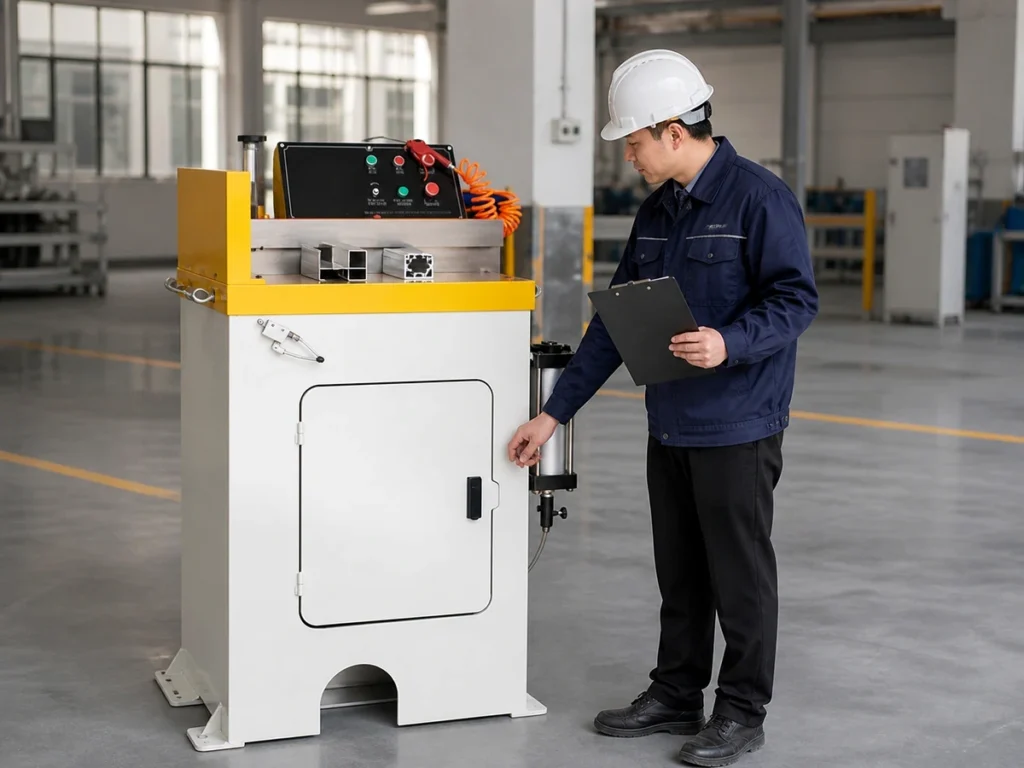
Set out the required documents and checks before the demonstration. Identify the final equipment configuration, representative process conditions and the people responsible for reviewing the collection scope.
Retain the supplier’s descriptions alongside the site review and installation records. Decide which observations, measurements or commissioning evidence the responsible specialists require. A brief video of a clean machine is only a visual observation.
When an item remains open, give it a clear status and owner. Use the factory acceptance checklist to separate completed checks from unresolved site items. Factory observations do not automatically establish the suitability of the destination installation.
Compare two incomplete proposals without guessing
Consider an invented purchasing example. Proposal A includes a machine collection container and a connection point. Proposal B includes those items plus a named extraction package. These descriptions show a scope difference, not proof that either proposal is suitable.
For Proposal A, identify who supplies the remaining equipment and evaluates the interfaces. For Proposal B, confirm the package identity, intended application and installation boundary. In both cases, retain the site assessment and required acceptance evidence.
The useful comparison is a completed scope record with open items visible. This example assigns no collector rating, flow rate, dust classification or actual project result. A larger package list alone does not resolve the technical review.
Common questions
Does an extraction connection mean the complete system is included?
No. Confirm the exact components supplied, the connection requirements and the remaining site scope in the quotation.
Can a normal workshop vacuum be assumed suitable for aluminum dust?
No. Equipment suitability needs qualified review of the actual material stream, process and hazards. Select and operate equipment according to the applicable assessment and manufacturer instructions.
Is a clean cutting demonstration enough evidence?
It shows the observed scene. It does not establish collection performance, dust exposure, system suitability or compliance at the destination site.
What should I send JiurunCut for a collection-scope discussion?
Send the intended profiles, process description and site constraints, together with your collection-scope questions. Identify any existing system and the responsible site reviewer so the machine and installation boundaries can be discussed clearly.