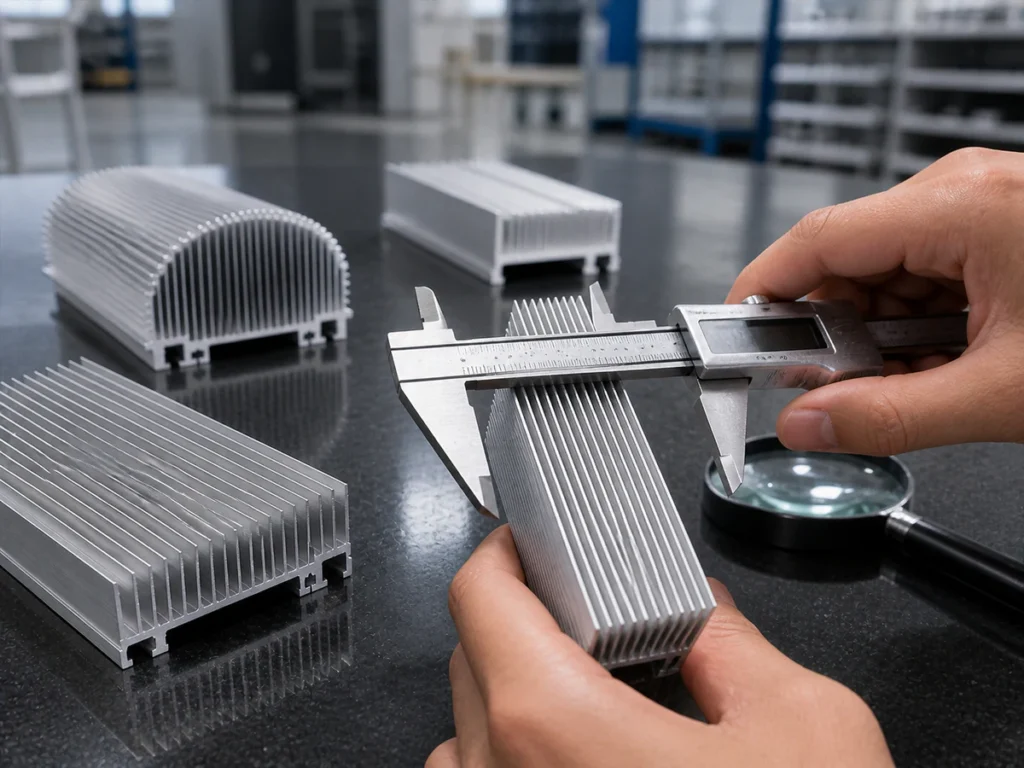
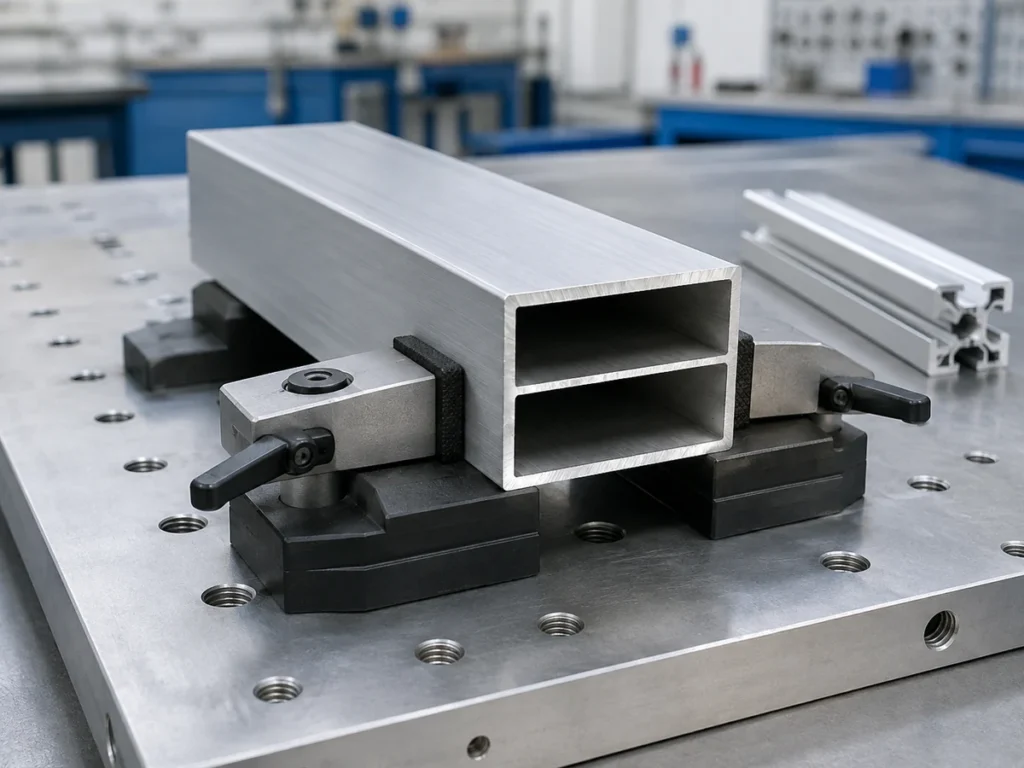
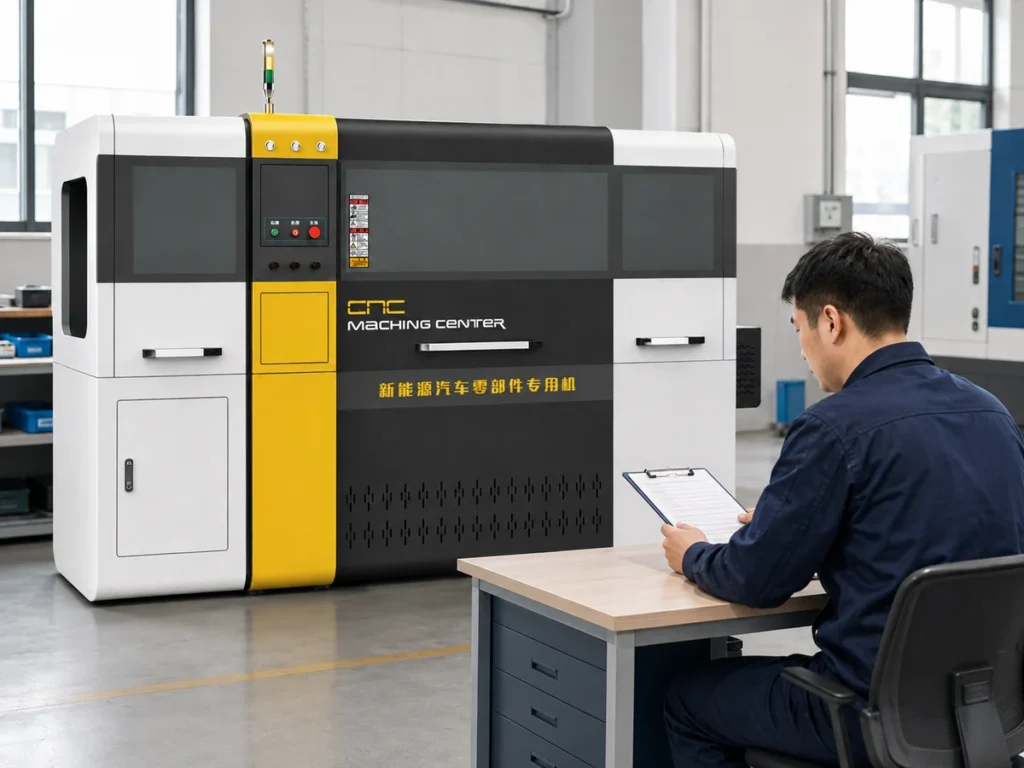
Before choosing a cutting setup, check the heat sink’s fins, stronger areas of the base, and where supports and clamps can touch. Also check how the finished part will be collected. Width and height alone are not enough. Agree how to inspect the parts after cutting and normal handling; do not assume that every profile will stay undeformed or have the same edge finish.
Three things to remember
- Mark the fins, base and the areas supports or clamps may touch.
- Choose the blade and holding arrangement for the actual profile shape.
- Check representative parts for fin condition, dimensions and damage after handling.
On this page
Look beyond the outside width and height
A heat sink’s fins and base may need different support from a plain solid profile. As well as its overall size, check the reference used to position it, where supports and clamps may touch, and how it will be collected.
The setup and sample checks need to suit the actual heat sink. A photo or machine category cannot prove that every profile will remain undeformed or meet the same requirement for the cut edge.
Show the fin and base shape on the drawing
On the dimensioned cross-section—the shape seen at the cut end—mark the fin height, spacing, base shape and any uneven features. Add the material specification and finished length, with a normal sample or clear photo if available.
Identify the face used in the next production step or when the part is assembled. A datum is the specified face or edge used as a reference for positioning or measuring. Do not choose an outside surface just because it is convenient.
Include representative profiles that are difficult to support or handle. Testing only the strongest or shortest sample may not answer the question about your normal production.
Separate positioning the part from holding it
Locating means putting the part in its reference position; clamping means holding it there. A fixture is the arrangement of supports and holding devices used for those tasks on the actual profile.
Mark where the fins must not take pressure or be scratched, and discuss the stronger areas of the base. Saying “clamp the base” starts the discussion but does not define a complete fixture.
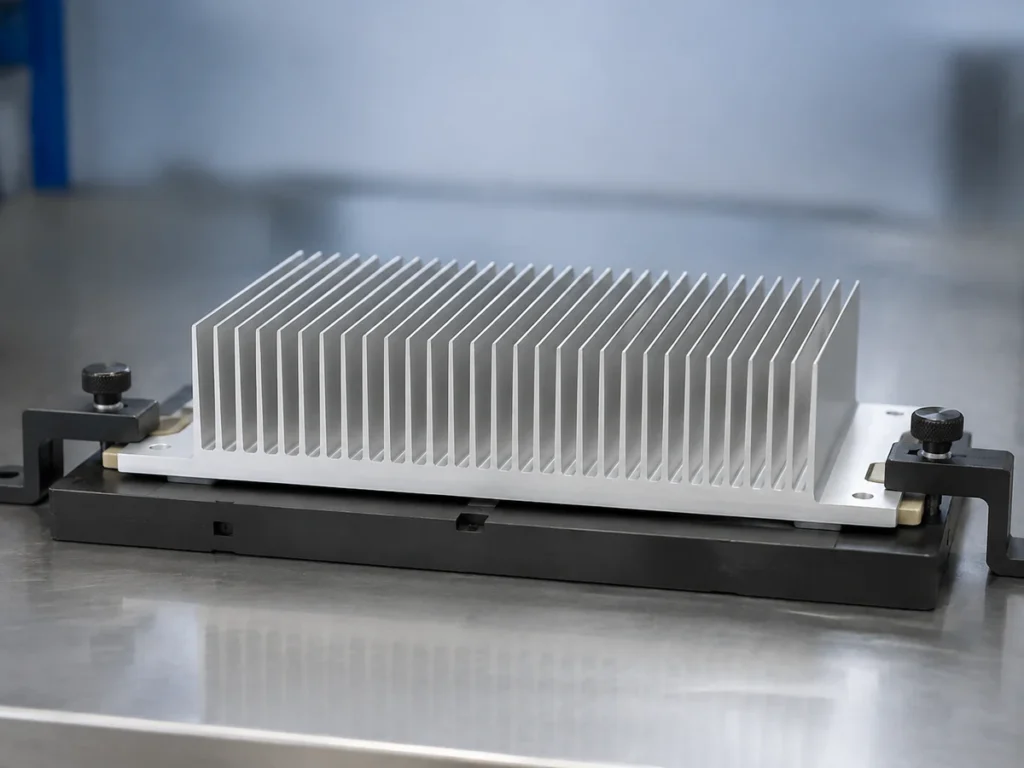
Do not copy a holding arrangement from another machine’s photo or invent a clamp-pressure value. Authorized personnel must set up and service the machine using its instructions. Do not enter the guarded cutting area to experiment.
Confirm the blade for the actual heat sink
A blade described as “suitable for aluminum” is not automatically approved for a thin-fin heat sink. Check the blade identity, exact machine, profile shape, material and required finished result together.
Do not copy a tooth count, spindle speed or feed setting from a photo or another product’s table. The blade, machine and setup must be an approved combination for this job.
Keep blade changes and service history with the setup record. These details help when comparing results from different sample sequences.
Check what happens to the fins after cutting
Follow how the heat sink leaves the machine, is collected, stacked and moved. A good result at the saw does not protect the fins from later contact damage.
Identify what first supports the part after it is cut free, and whether its fins can touch another part or a hard surface. Decide how to keep batches separate and clearly identified.
Record whether a mark first appears after collection. Keep this separate from the condition at the saw so the team knows which stage to investigate.
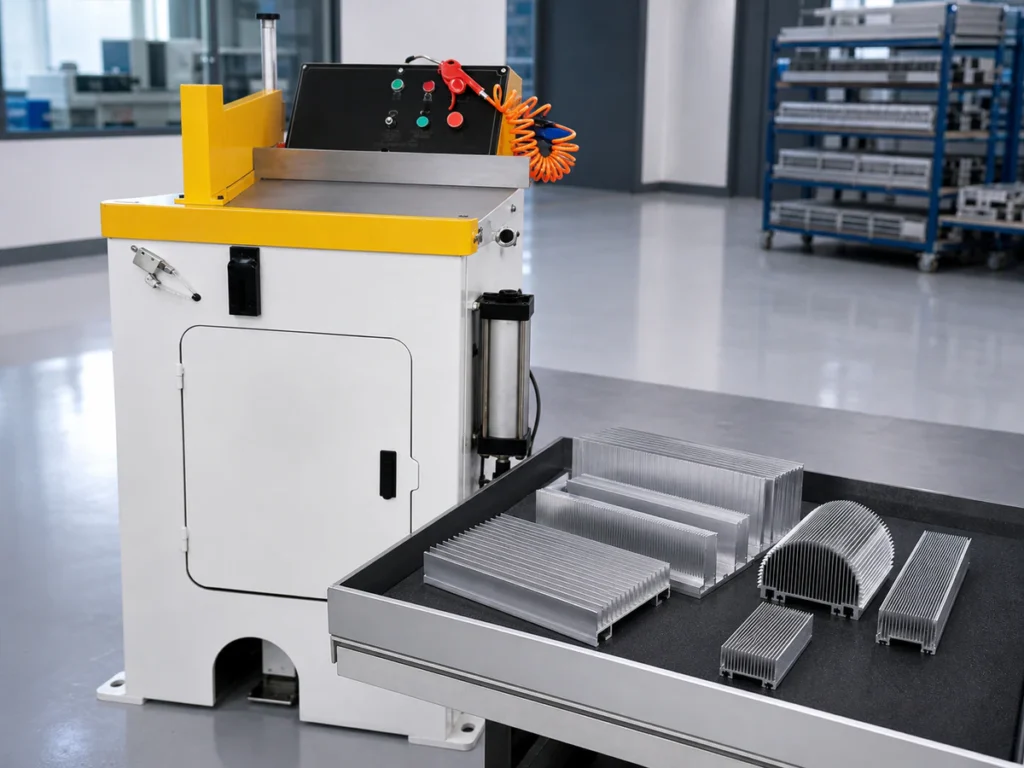
Agree how the sample parts will be checked
Agree the finished-part requirements for the actual project before checking samples. Tolerance means how far a dimension is allowed to vary. For each important limit, also agree how it will be measured.
| What to check | What to agree or record |
|---|---|
| Fin condition | How fin condition will be compared before and after cutting and collection |
| Base and positioning reference | The approved reference and where supports or clamps may touch |
| Finished length | The required dimension, measuring instrument and allowed limit |
| Cut face and edge | What burr and appearance conditions are acceptable |
| Parts cut in sequence | Results from the recorded sequence, not only one selected good sample |
| Fit in the next operation or assembly | A representative part or mounting arrangement to check against, where required |
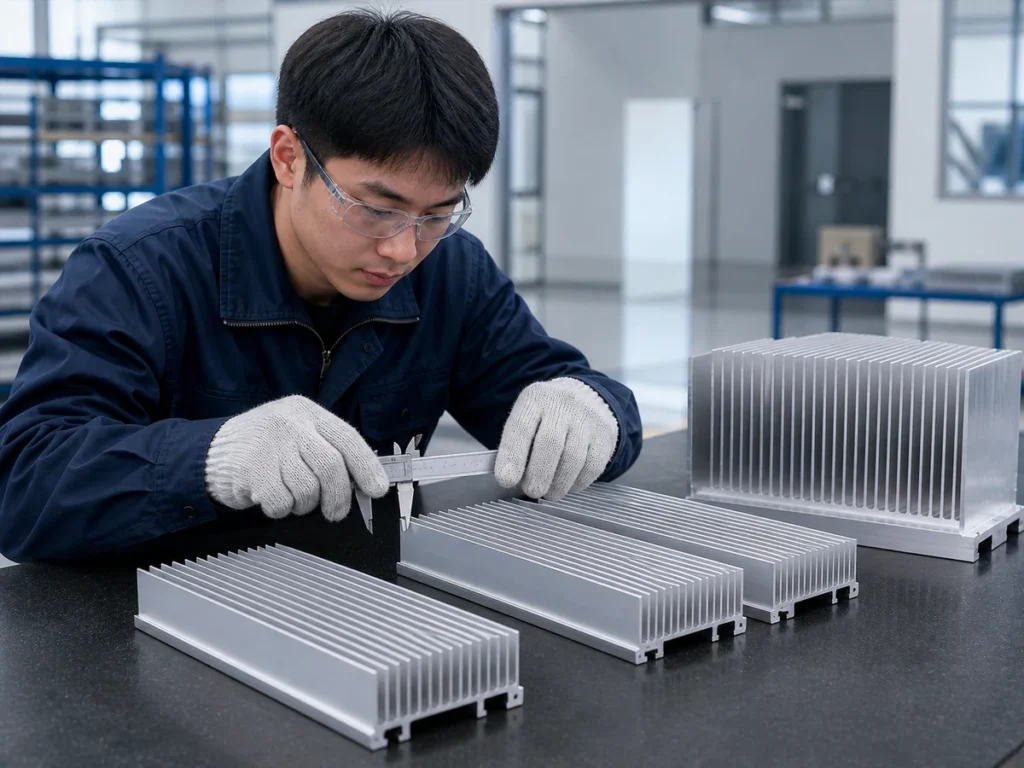
A photo of fins that look straight is not a record of their measured dimensions. A good sample from one profile does not automatically approve every profile in the family.
If flatness or another feature matters, agree how it will be checked. The number of decimal places on an instrument does not by itself show that the measurement is reliable.
Choose the equipment after defining the job
Compare equipment after you have defined the profile, permitted contact areas, finished cut, handling and production plan. A different profile or level of automation may need a separate assessment.
The supplied Jiurun brochure identifies JR-455Q and JR-455Y as semi-automatic machines. Cutting parts in batches does not make those machines fully automatic.
The heat-sink solution page explains the application. Use it alongside representative parts and your requirements; the actual setup still needs to be confirmed.
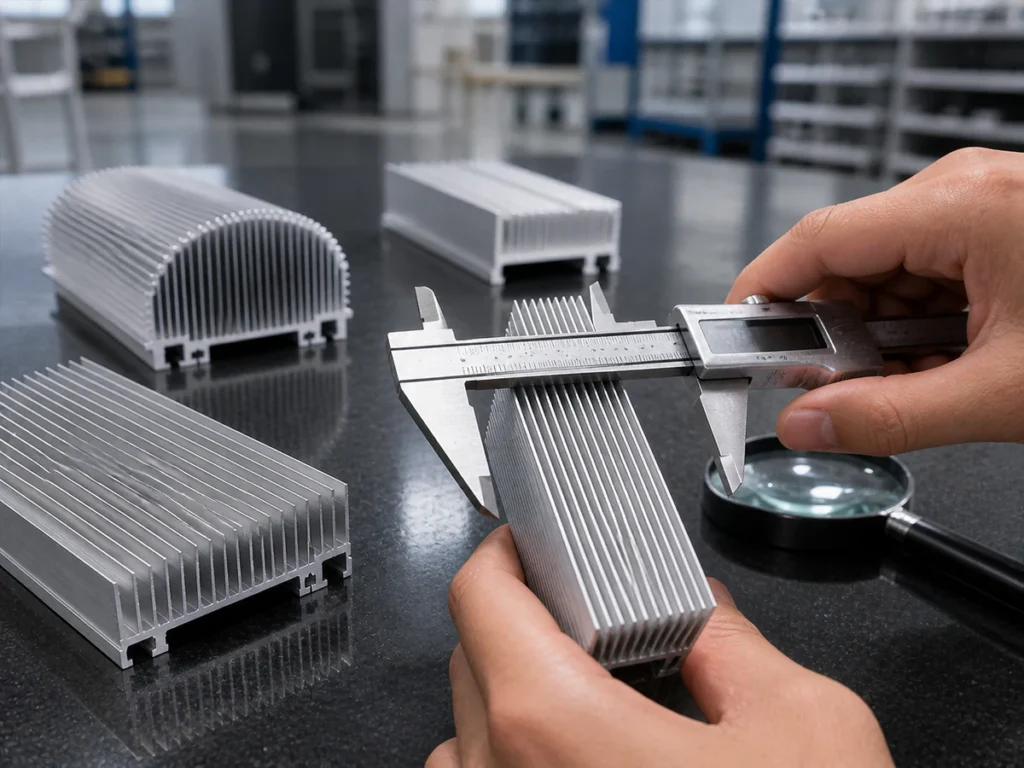
Show where and when the problem appears
Record the material, finished length, quantity, important surfaces and the problem you see. Include a photo of the whole part and a close-up of the affected area. Note whether the problem appears straight after sawing or after collection.
If the problem is at the cut edge, read the burr investigation guide. To compare the wider machine and equipment choices, use How to Choose an Aluminum Cutting Machine.
What else should you know?
Can one fixture cover all finned profiles?
Do not assume one fixture will suit them all. Compare the base, cutting position and permitted contact areas for the actual profiles.
Does a clean cut face prove the fins are undamaged?
No. Check the fins as well as the cut face, including their condition after normal handling.
Can Jiurun select a configuration from width and height alone?
Width and height help narrow the options, but the supplier still needs the section drawing and production requirements to recommend suitable equipment.
Sources & Scope
- Jiurun machinery brochure supplied by the owner. 九润画册 PDF physical pages 6–19. Machine categories and configuration identity only; not test results or an operating manual.
- LEUCO: aluminum-profile blade specifications and clamping requirements. A tooling reference; suitability for your heat sink and machine still needs confirmation.