
A room drawing can give you a floor-to-ceiling number and still leave the saw with no authorized cut length. For surgical light suspension tube cutting, a ceiling-mounted fixture also has a mounting structure, a suspension tube, moving arms and a lighthead. The manufacturer must decide how those parts fit the room and move through their intended range. Only then can a factory release a tube blank for cutting.
This guide addresses the purchase of a saw-cut bare tube blank for an approved OEM manufacturing route. It is not an installation instruction, a medical-device design approval or permission to shorten an installed suspension. Ask the light manufacturer and responsible engineering team for the current drawing and authorized process before cutting.
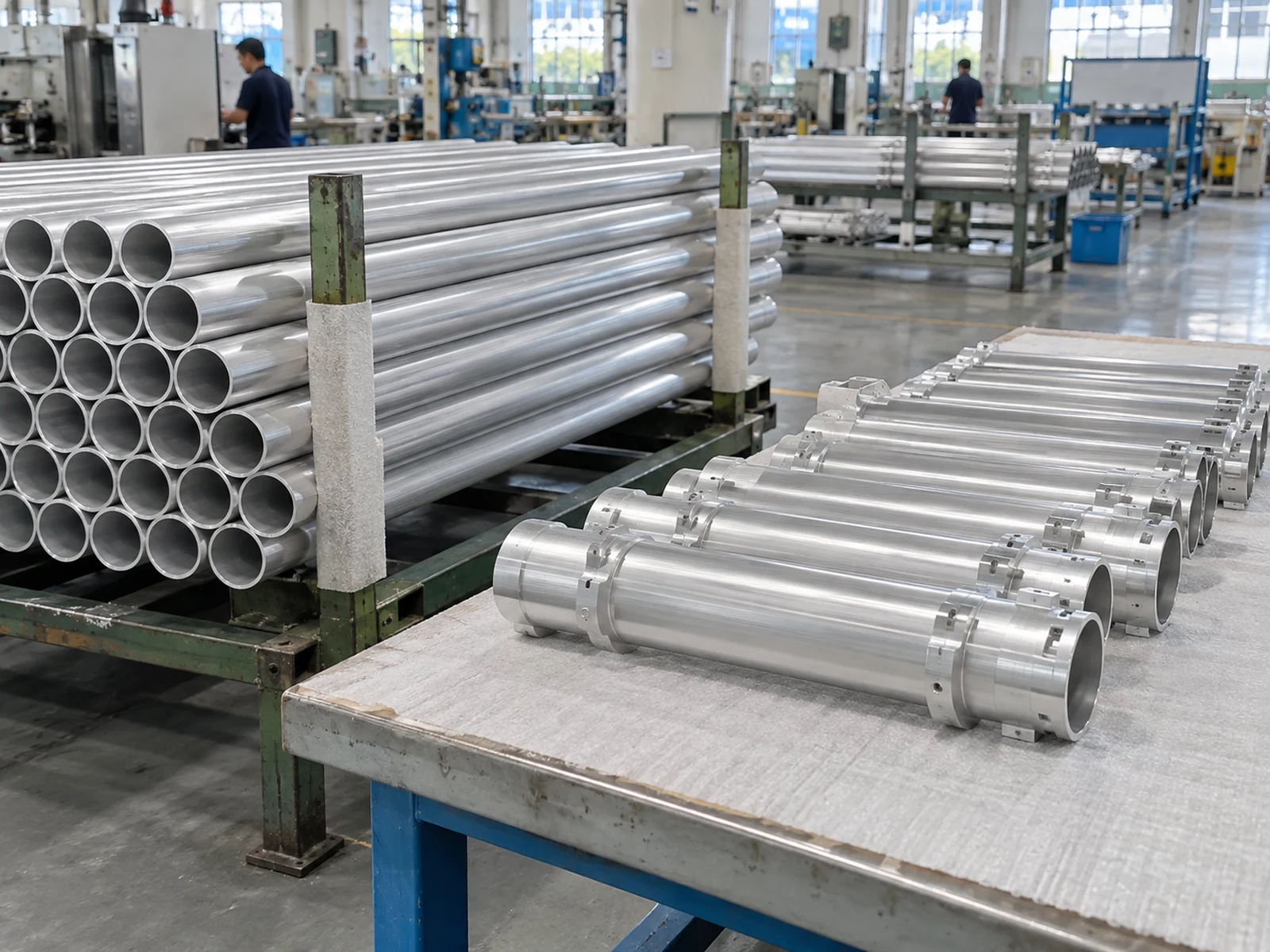
The room height is an input, not a saw setting
The U.S. Department of Veterans Affairs surgical-light specification says vertical suspension lengths must be coordinated with room ceiling height and the manufacturer’s recommended lighthead travel. It also treats structural attachment and horizontal-arm movement as separate design matters. Those requirements make a ceiling height useful to the OEM, but they do not yield a universal tube-cut formula for a saw operator.
A Getinge service manual lists suspension tubes as identified parts and refers readers to installation recommendations for available heights. That example illustrates why a buyer should request the approved part reference and revision for the actual system. It does not authorize using that manufacturer’s dimensions on another light.
Surgical light suspension tube cutting starts with the exact blank
Ask the OEM to separate the part that enters the saw from the finished suspension delivered to assembly. The released record should identify the tube material and temper, actual outside diameter and wall, incoming condition, drawing revision, cut length datum, end geometry, and which operations follow the saw. A nominal pipe size or a photo cannot replace the controlled section drawing; our pipe-versus-tube size guide explains that purchasing distinction.
- Incoming stock: Is it plain tube, a prefinished tube, or an already fitted suspension part?
- Cut blank: Which end is the measuring datum, and what length and end-condition limits are actually released?
- Downstream owner: Who performs any drilling, joining, finishing, wiring, cleaning and system inspection?
- Disposition: Who decides whether a nonconforming blank can be reworked or must be rejected?
These questions prevent a quote for a straight cut from being mistaken for a quote for a complete suspension. If the manufacturer supplies only approved finished tubes, the purchasing decision may be a spare-part order rather than a saw purchase.

Make the trial answer a blank-production question
A surgical light suspension tube cutting trial should use the released section and a representative stock length, and only a factory authorized for that bare-tube operation should run it. Observe how it rests on the infeed, how it is located and clamped without damage, and how the cut piece is supported after separation. Request the supplier’s proposed method for checking the length from the released datum and the condition of both cut ends. Agree the measurement method before comparing results; our saw acceptance measurement guide covers that handover.
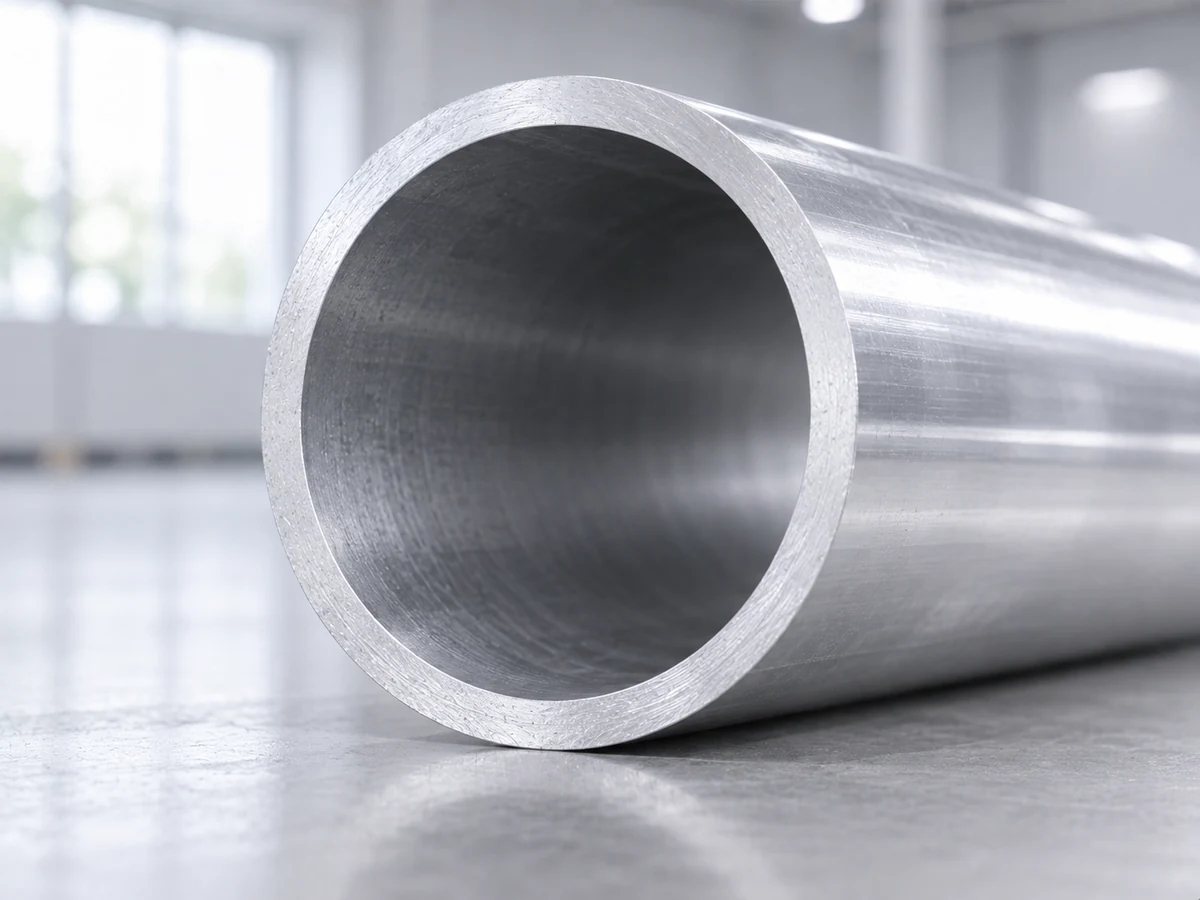
Inspect for visible deformation, burrs and loose chips at the end and inside the accessible tube. The OEM must define the actual limits and cleaning route. A smooth-looking sample alone does not establish structural adequacy, electrical safety, cleanability, installation clearance or medical-device compliance. Those remain with the responsible design and validation teams.
Assign the approval after the saw
A supplier can demonstrate a repeatable cut blank under an agreed trial. The OEM still has to confirm how the tube joins the ceiling mount and moving assembly, whether the approved wiring route and covers remain correct, and whether the complete system satisfies its installation and safety requirements. SIMEON’s surgical-light brochure describes an aluminum suspension system as part of a complete light; it is an example of the system boundary, not a specification for this factory’s tube.
Put that boundary in the purchase order: the saw supplier owns the agreed stock handling, cut blank and demonstration record; the light manufacturer owns the released part design, assembly process and system approval. If those responsibilities are unclear, hold the cutting trial until the OEM releases the part and the acceptance method.
Related equipment footage
The video below is from Jiurun Machinery’s own channel. It shows a different aluminum extrusion moving through a Jiurun cutting line. It does not show a surgical-light tube, a proposed machine configuration for this order, a witnessed trial or any medical-device performance evidence.
Send a released tube brief, then request a cut trial
For surgical light suspension tube cutting, send the tube drawing and revision, stock condition, cut datum, required blank quantities, approved inspection limits and downstream handover point. Ask the saw supplier to identify any assumption that the drawing does not settle. Contact JiurunCut with the released blank brief for a cutting-route discussion. Keep the OEM’s suspension design and final system approval with the parties authorized to make those decisions.