
A double head aluminum saw can prepare both ends of a profile in a defined cutting sequence. A single-head arrangement prepares cuts at one cutting unit. Compare how each proposed configuration completes your actual part, including positioning, handling and inspection.
Head count does not establish the best machine for every workshop. Start with the required end cuts, finished sizes and batch mix. Then review the control options and complete production route in the quotation.
Three questions before comparing price
- Does each part need one prepared end or two?
- Can the quoted setup handle the required sizes and angles?
- What work remains around the cutting cycle?
On this page
1. Define the end cuts for the double head aluminum saw
Mark the two ends on the finished drawing. Identify the cut angle at each end, profile orientation and length reference. A part with two opposing miters has a different end-cut pattern from a square-ended blank or a part with one angled end.
Emmegi describes its double-mitre range as using two cutting heads to work the profile ends together. The manufacturer also distinguishes manual, assisted and automatic adjustment by model. Check the corresponding operation and control scope in each offer.
A single cutting unit can belong to a route that prepares both ends in separate operations. Review how the part is located for each cut and how the finished length is established. Do not assume that every single-head configuration uses the same handling sequence.
Likewise, “double head” does not describe every available mode, fixture or cutting program. Ask the supplier to explain the proposed route for each representative part. Confirm what happens when only one end needs a new cut.
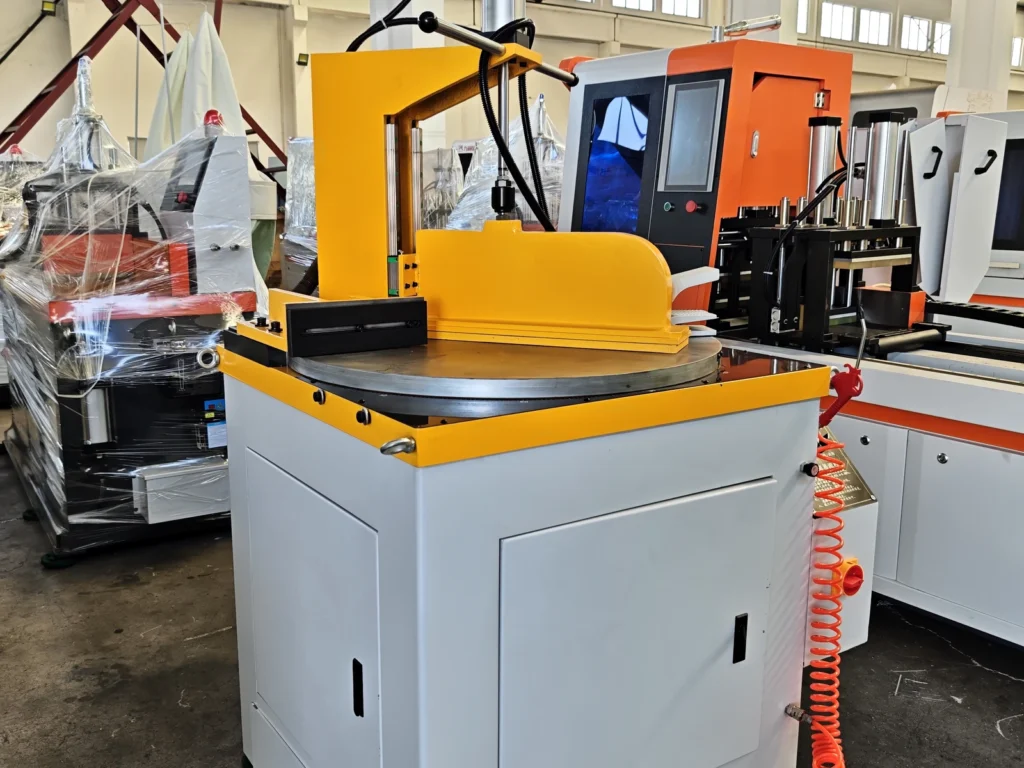
2. Review the whole part envelope
Provide the profile section, shortest and longest finished parts, required end angles and incoming stock lengths. Ask how these requirements fit the quoted configuration, including supports and clamps. A listed maximum length does not explain every part in your cut list.
For a two-head arrangement, review the applicable minimum and maximum finished sizes for the required operation. A short-part mode or an accessory can have a different scope from the main two-end cutting mode. Confirm the details for the actual offer.
Elumatec’s DG 142 XL page, for example, separates length variants, control variants, options and cutting diagrams. Those categories show why the full configuration matters. Its dimensions and accessory capabilities are not ratings for a JiurunCut machine.
Check profile access at the required angles as well as the nominal section size. Keep unusually short, long or asymmetric parts visible in the brief. Avoid demonstrating only the easiest piece while leaving a difficult production part unresolved.
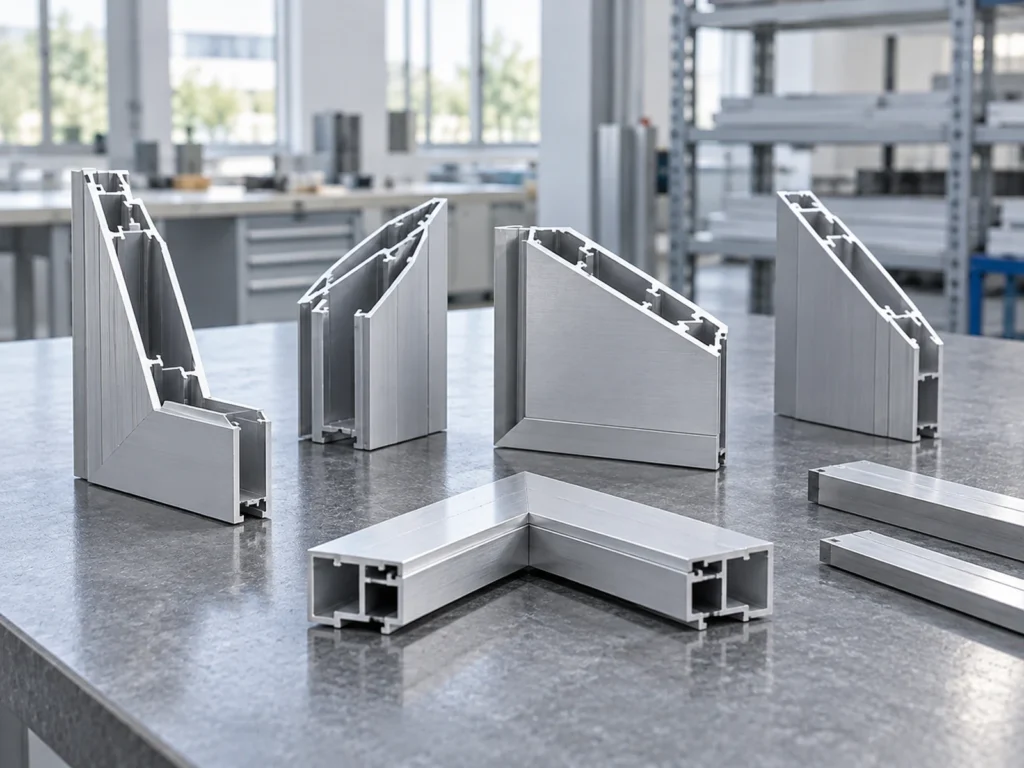
3. Trace handling before and after the cut
Identify how stock reaches the cutting position and how finished parts are removed. Include any repositioning, end preparation, marking, inspection and collection in the route. A head count cannot tell you which of these tasks an operator still performs.
For a single-head proposal, ask how the required second-end operation is handled when applicable. Review orientation and reference surfaces across the sequence. The supplier should describe the approved setup; operators should not improvise supports or clamping.
For a double-head proposal, ask how stock is positioned between the units and supported for the specified lengths. Then review unloading and mixed-part identification. Preparing two ends does not automatically provide loading, packing or a complete unattended process.
The batch cycle time guide explains how to compare the complete production period. Include the same tasks and start/end events for both routes. Do not assume that two heads halve the full batch time.
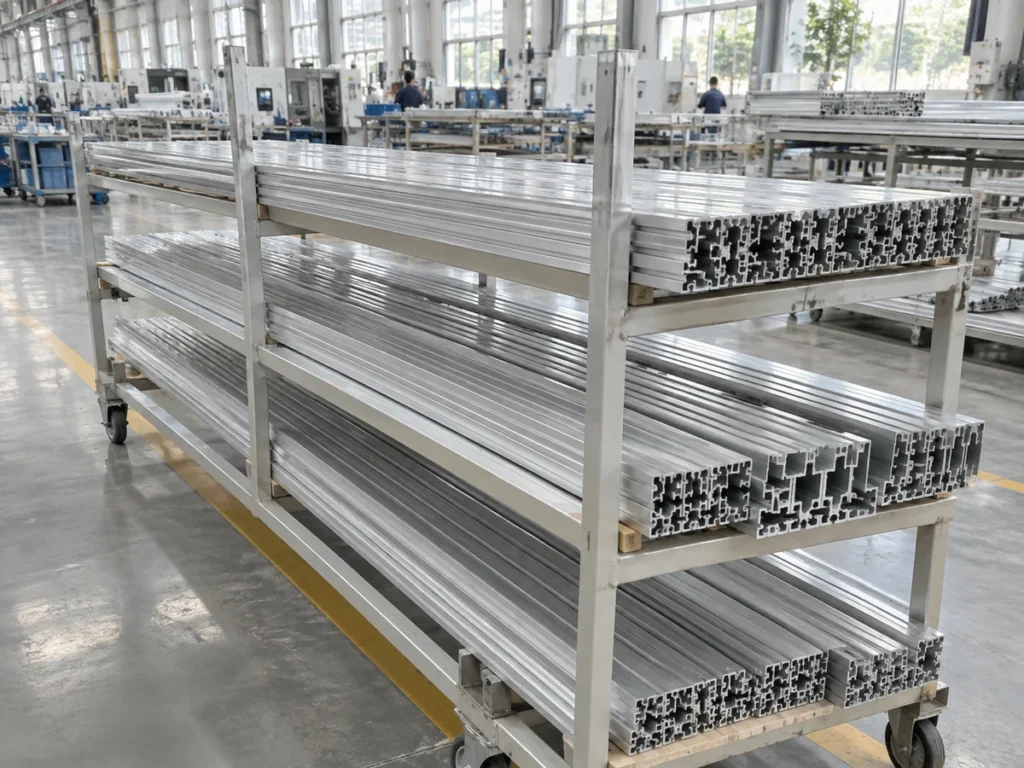
4. Compare controls and included equipment
Separate cutting-unit count from length positioning, angle adjustment, job storage and material handling. An offer can include two heads with manual adjustments, while another includes programmed positioning. Read each function separately rather than treating the name as a complete specification.
Elumatec’s MGS 142 single-mitre description lists length-stop and measuring systems among its options. A single cutting unit therefore still needs a review of the quoted length-control equipment. Confirm what is included and what is an extra.
Ask how the proposed configuration handles a change of length, angle or profile family. If a cut-list file is part of the plan, confirm the supported format and actual fields through a demonstration. A screen or printer in a photograph does not establish software compatibility.
Compare quotes with the same operation scope. Identify the measuring system, support arrangement, handling equipment, tooling, setup assistance and training included. Keep exclusions clear so a price comparison reflects the route you intend to use.
5. Check a representative finished part
Choose trial pieces that represent your real production range. Include the relevant end-cut combinations, an important profile family and a meaningful changeover. Agree which operations are demonstrated and which remain outside the trial.
Check both ends, finished length, orientation and the applicable surface requirements. For frame members, review how identified pieces meet the drawing and join in a representative assembly. A visually neat corner alone does not establish every dimensional requirement.
Use the drawing tolerance examples to distinguish specified limits from measurement results. Keep individual readings linked to the samples. Review unclear or nonconforming pieces through the agreed process.
Record elapsed time separately from the inspection outcome. A quick operation and a conforming finished piece are different observations. Both are useful, but neither should be replaced by an estimated rate from a short video.
A mixed-job example: compare routes, not labels
Illustrative planning example: a workshop needs 24 frame members with two specified mitered ends and 12 replacement rails requiring a different end-cut pattern. This example defines a comparison brief. It does not establish which machine can complete either job.
Route review for the 24 frame members
Ask each supplier to show how both ends and finished length are produced. Record positioning, cuts, handling and inspection as separate steps. For the two-head proposal, confirm the relevant two-end mode and adjustment process.
For the single-head proposal, record how the second end is located and cut. Identify any repositioning and additional preparation. Keep the finished drawing and acceptance checks identical across the two demonstrations.
Route review for the 12 replacement rails
Mark the required end condition rather than assuming it matches the frame job. Ask which mode, setup and references apply. Confirm how the transition between jobs is performed and how the two part families remain identified.
The required accepted quantity is 24 + 12 = 36 pieces. It is not automatically 36 cutting cycles or 72 cycles. The number of cutting events depends on the demonstrated routes, incoming stock condition and defined counting method.
Watch a double-head cutting example
This video comes from JiurunMachinery’s channel and shows a double-head cutting example. Use it to discuss the visible configuration with the supplier. Confirm the part requirements and quoted functions separately; video duration is not a documented cycle-time result.
Double-head cutting video
Open the original JiurunMachinery video on YouTube. This video is available through YouTube rather than the embedded player.
Send a comparison brief to JiurunCut
Share the drawing, profile section, finished size range, end angles, quantities and batch mix. Identify parts that require two prepared ends and those with a different sequence. Add your available stock and handling conditions.
Start with the JiurunCut product range, then send the comparison brief. Request an operation-by-operation review of the proposed configuration and a trial using representative parts. Confirm included controls and equipment before comparing the offer.
Common questions
Is a double head aluminum saw always fully automatic?
No. Head count and automation scope are separate. Confirm length and angle adjustment, loading, cutting, unloading and collection in the actual quotation. Some surrounding tasks can remain manual.
Is a single-head saw only suitable for one-ended parts?
Not necessarily. A proposed route can include separate operations for the two ends. Review how the part is positioned and measured across the complete sequence, and verify the configuration against the drawing.
Will two heads always double production?
No universal multiplier follows from head count. Compare the complete route, changeovers, handling and accepted output for representative jobs. An isolated cutting event does not establish the finished batch rate.
Which should I choose for short parts?
Confirm the required finished sizes, end angles, clamping and collection in each proposed setup. Review the specific operating mode and accessories. A general machine category does not establish the minimum part size for your job.