
For short mitered aluminum parts, check the minimum finished length at your required end angles. Show the profile, long and short points, and where the length is measured. The answer needs to match the machine and fixture being offered.
Three things to remember
- Keep each minimum-length answer tied to the profile, both end cuts and the machine configuration.
- The longest dimension can hide a much shorter inner edge on an opposed-miter part.
- Have the manufacturer confirm the approved holding and release cycle for the smallest relevant geometry.
On this page
Which minimum length applies at your required angle?
A proposal may list an angle range and a minimum length in different places. Ask the supplier to connect them: can the machine make your shortest finished member at both required end angles, with the offered fixture?
Include both ends. One square end and one mitered end create different geometry from two opposed miters. Show parallel angled ends and mirrored versions too. A cut list containing only a length and one angle leaves those differences unclear.
Do not assume a square-cut minimum applies throughout an angle range. A value accepted by the controller also needs to be checked against the physical cutting and handling arrangement.
For feeding, holding, collection and batch output, see our short aluminum part handling guide. Here, start with the geometry of your smallest angled members.

Where are the long and short points?
Look down at a rectangular frame member with two inward, opposed miter cuts. The outer edge runs between the long points; the inner edge runs between the short points. Each angled end creates a setback across the width, so the two edge lengths differ.
Mark the required endpoints on the drawing. If the specified length follows the long edge, show the short edge too. For an uneven extrusion, identify the actual face and features being measured; a projecting lip may not be the drawing’s reference.
Use the width across the actual cutting plane. A section view and an orientation mark help explain which way an asymmetric profile sits.
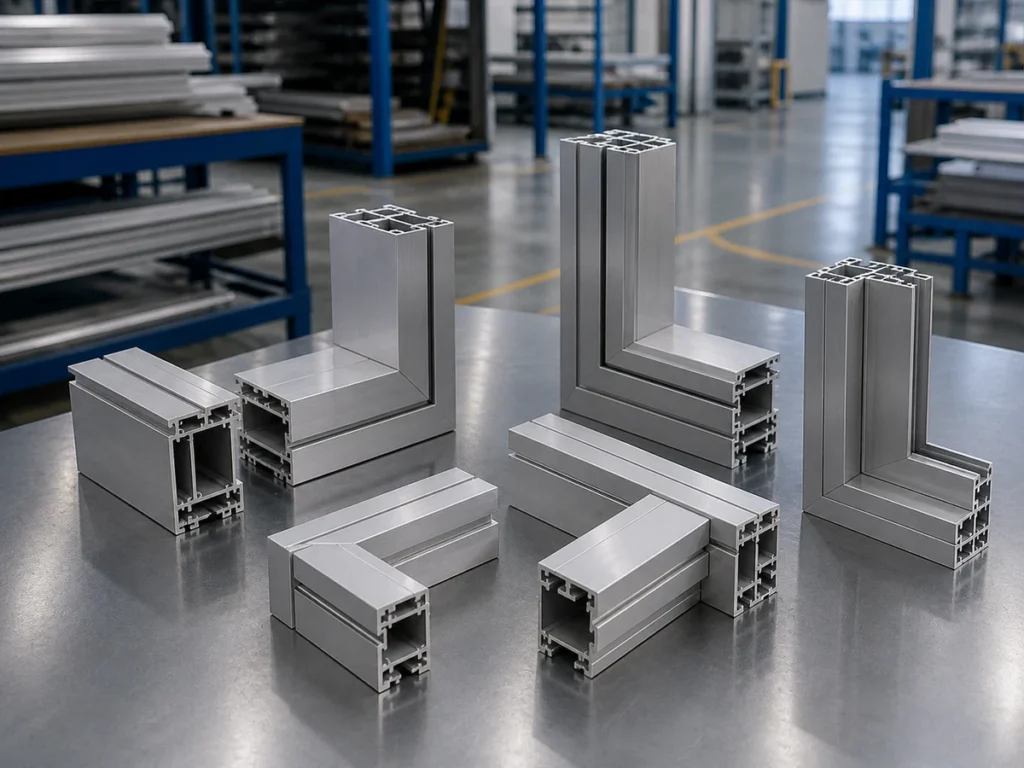
Our aluminum miter cut length guide gives a worked geometry example. That calculation describes the shape, rather than a machine’s usable minimum.
Can the same length describe different short parts?
For example, compare two rectangular frame pieces with the same long-edge length and width. Both have opposed inward miters. One has small end setbacks; the other has larger setbacks. The second piece has a shorter inner edge even though their longest dimensions match.
This illustrative comparison shows why overall length alone can miss a holding question. Show the end geometry so the supplier can check the material available at the actual clamp contacts.
A wider section can also change the edge difference in this opposed-miter arrangement. Other cut directions need their own geometry review. A smaller displayed angle does not always mean an easier short-part job; machine angle conventions differ.
Is your shortest member clearly defined?
Send a drawing or marked photo showing the length reference and both end cuts. Start a short-miter discussion with JiurunCut.
What must the manufacturer confirm?
When considering JR-550CNC-CORNER automatic multi-angle cutting, send the smallest relevant members from your part family. Keep these six details with the supplier’s minimum-length answer.
| Condition | What the written answer should identify |
|---|---|
| Finished geometry | Drawing revision, required length endpoints and both end angles and directions |
| Actual profile | Cross-section, orientation, wall features and locating faces |
| Holding arrangement | Approved fixture, clamp contacts and support through the relevant cuts |
| Cutting sequence | How the offered cycle creates both ends, including any approved turning or repositioning |
| Release and collection | How the separated piece leaves the cutting zone under the approved cycle |
| Quoted scope | Any required fixture, support, software function or handling equipment, with its applicable limits |
If a special fixture or alternative setup is needed, include it in the quotation and machine instructions. Do not remove clamps, alter guards or improvise retrieval to fit a smaller part.
Ask separately about the remaining stock needed for gripping. Short-piece capability does not establish a tail-free result.
Watch: Jiurun automatic angle-saw demonstration
General angle-saw demonstration from Jiurun machinery. It does not verify a minimum length or short-part cutting result.
Check the short-part setup before choosing a machine
Share the smallest relevant members and angle combinations. Ask JiurunCut to review the fixture and equipment needed for the job.
Which parts should a sample review include?
If a trial is agreed, start with the shortest long-edge member. Include another piece if its angles, shorter inner edge, width or orientation create a different holding or clearance question.
Use the proposed setup and normal cycle. Record the drawing, part identity, orientation and fixture. Check finished length and end angles separately, then review surface condition after normal release and collection.
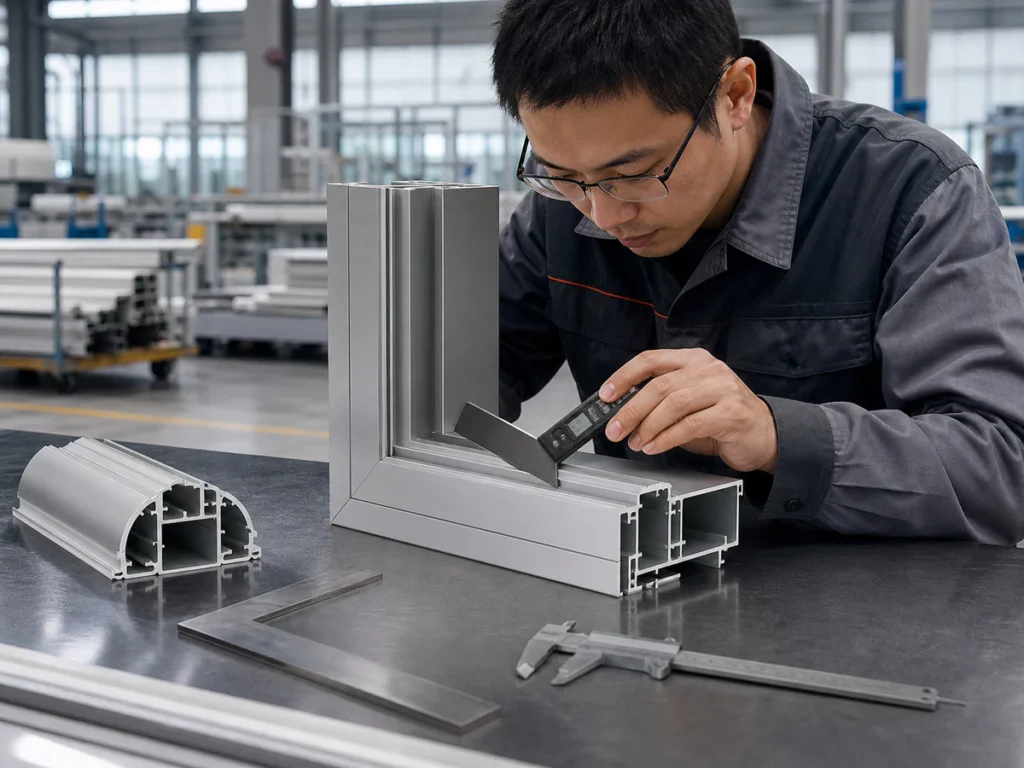
For a corner component, check the intended mating pieces alongside the dimensions. Our sample-cutting checklist covers the wider trial plan.
What should you send with an inquiry?
Send a finished-part drawing and section view if available. Mark the length reference, both end cuts and profile direction. Add the shortest required pieces, typical quantities and visible-face requirements. A photo can start the discussion if some dimensions are still pending.
Ask: “Can this machine make our shortest member at these end angles? Which fixture and minimum-length conditions apply?”
Start with your smallest angled part
A drawing or clear photo can start the discussion. Tell JiurunCut which short member you need to make and what remains unclear.
Short mitered aluminum parts: buyer questions
Can I use a square-cut minimum for an angled part?
Check it with the supplier using the actual end angles, profile and fixture. A square-cut figure may describe a different condition.
Is the shortest long-point length always the hardest part?
Different end angles can create a shorter inner edge or another holding question. Include those pieces in the application review too.
Does automatic multi-angle cutting mean any short length is possible?
The description alone does not establish a minimum. The actual part, end angles, fixture and cycle determine the application to review.
Sources and scope
Machine identity: JiurunCut JR-550CNC-CORNER and Jiurun machinery brochure, physical page 13. The Emmegi Compound Cut technical sheet illustrates minimum-cut specifications separated by angle and configuration. Its figures concern a different double-head machine and are not JiurunCut ratings. This guide and its illustrative geometry establish no numerical minimum for JR-550CNC-CORNER; confirm the actual part and setup with JiurunCut.