
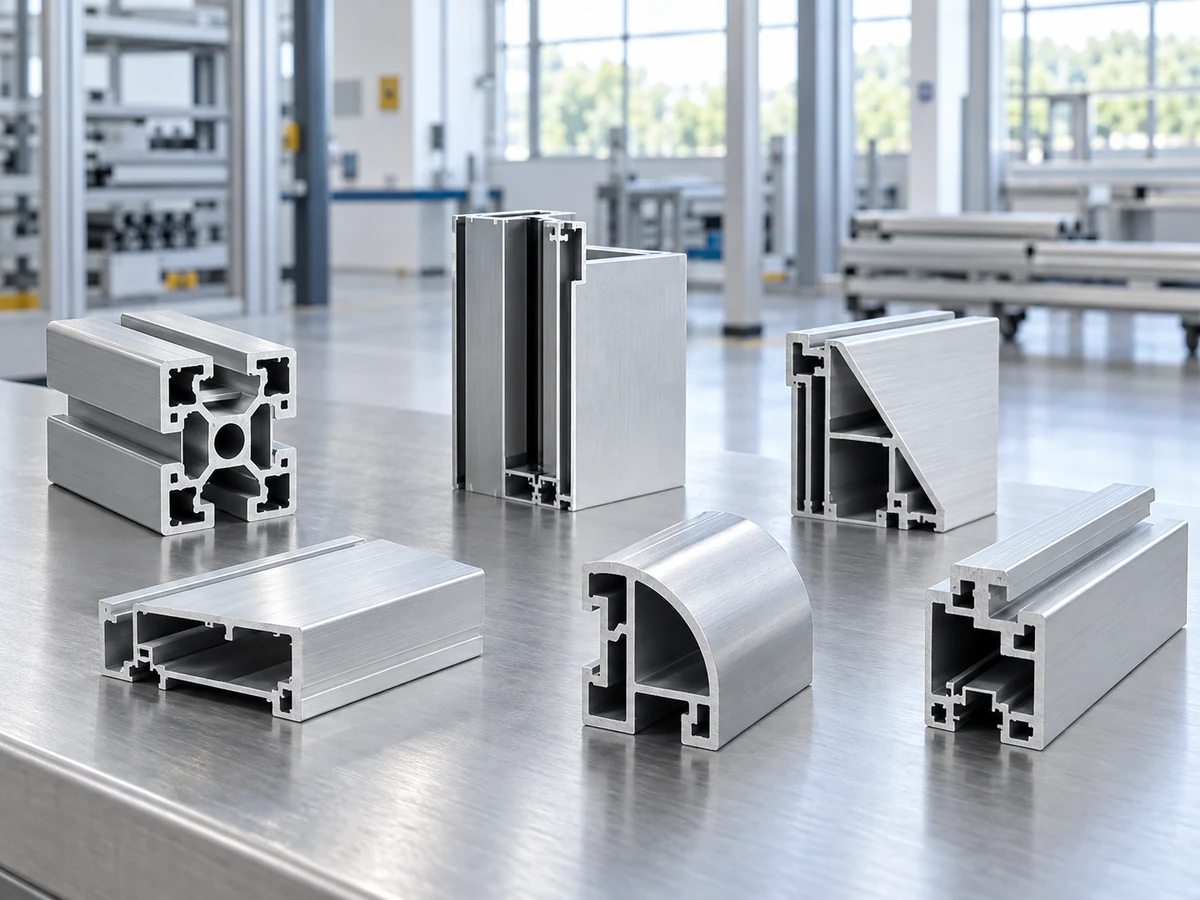
Roller shade aluminum hembar cutting starts with a deceptively simple question: what width is the saw actually producing? A bottom bar hidden in a fabric pocket, an exposed bar with end caps, and a fabric-wrapped bar have different finished-width calculations and end conditions. This guide helps shade OEM buyers define the cut blank before requesting a machine trial or production quote. The first photograph below shows related conveyor side-rail stock; it is an illustrative extrusion view, not a roller-shade hembar, assembly or performance test.
For a practical example of why the assembly choice matters, Ameritex distinguishes pocket, external and wrapped hembar options. Those are that supplier’s designs, not universal dimensions. Obtain the released drawing and compatible hardware for the exact shade system you intend to build.

1. Name the hembar type and the part delivered by the saw
Start the RFQ with a part number, drawing revision, finish and physical sample. Is the bar a concealed weight inside a sewn or welded fabric pocket, a visible extrusion with fitted caps, or a profile around which fabric is retained? Does the cutting supplier deliver a bare extrusion, a finished bar, or a kit with caps? A saw-cut blank is not a complete shade. Assign fabric attachment, cap installation, drilling, cleaning and final assembly to named operations.
Do not substitute a visually similar aluminum section. Its wall thickness, internal cavity, fabric-retention groove and cap interface can all differ. If several hembar profiles share one order, list each section and finish as a separate line item. Soleffect’s shade options illustrate how concealed and exposed bottom bars are distinct product choices; they do not establish a Jiurun machine setting.
2. Convert finished shade width into an approved cut length
The fabric width, visible bar width and bare metal cut length may not be equal. Ask the shade-system owner for the dimension chain. Show the desired finished width; any fabric pocket allowance; whether the metal is centered or offset; cap insertion depth and exposed cap width; and the permitted gap to side channels, sill or neighboring shade. Record which dimension is inspected at the saw and which is checked after assembly.
A short example of the question—not a production formula—is: if the drawing calls out a finished width including two caps, does the saw stop at the metal length before those caps are fitted? If the cap sits inside the extrusion, its visible contribution may differ from a cap that covers the end. The approved drawing must answer this. Do not subtract a guessed cap allowance from the window opening and release a batch.
3. Freeze the end-cap and fabric interfaces before the trial
Send the current cap, plug or insert and the actual hembar sample together. Mark the cap’s insertion direction, engagement length, any screw or retention feature, and the required end-face condition. For a wrapped hembar, show where the fabric enters and leaves the groove and whether an exposed sharp edge could contact it. For a pocketed weight, specify the blank dimensions and handling condition before it enters the fabric operation.
Hunter Douglas Architectural’s roller-shade drawing shows a sealed pocket hembar as one component within a larger shade assembly. It is a useful reminder to identify the exact component boundary, not a substitute for your own OEM drawing or acceptance criteria.
4. Specify the cut datum, orientation and visible finish
State the measurement datum and how the part is oriented in the fixture. If one end is referenced to a cap, wall or fabric edge, show that clearly on the drawing. For asymmetric or pre-finished profiles, label the visible face and any left/right variant. Mark acceptable cut-end squareness, burr condition and cosmetic limits using the OEM’s own acceptance method. Do not claim that a nominal saw angle alone proves cap fit or appearance.
Ask whether the extrusion arrives bare, anodized, painted or wrapped. A clamping face that works on raw aluminum can mark a finished visible surface. The trial plan should show protective contact, supported stock and a separate check of the exposed end after any required deburr or cleaning step. Specify whether the cut edge will be hidden inside the fabric pocket or visible beside a cap.
5. Review support and clamping on the actual section
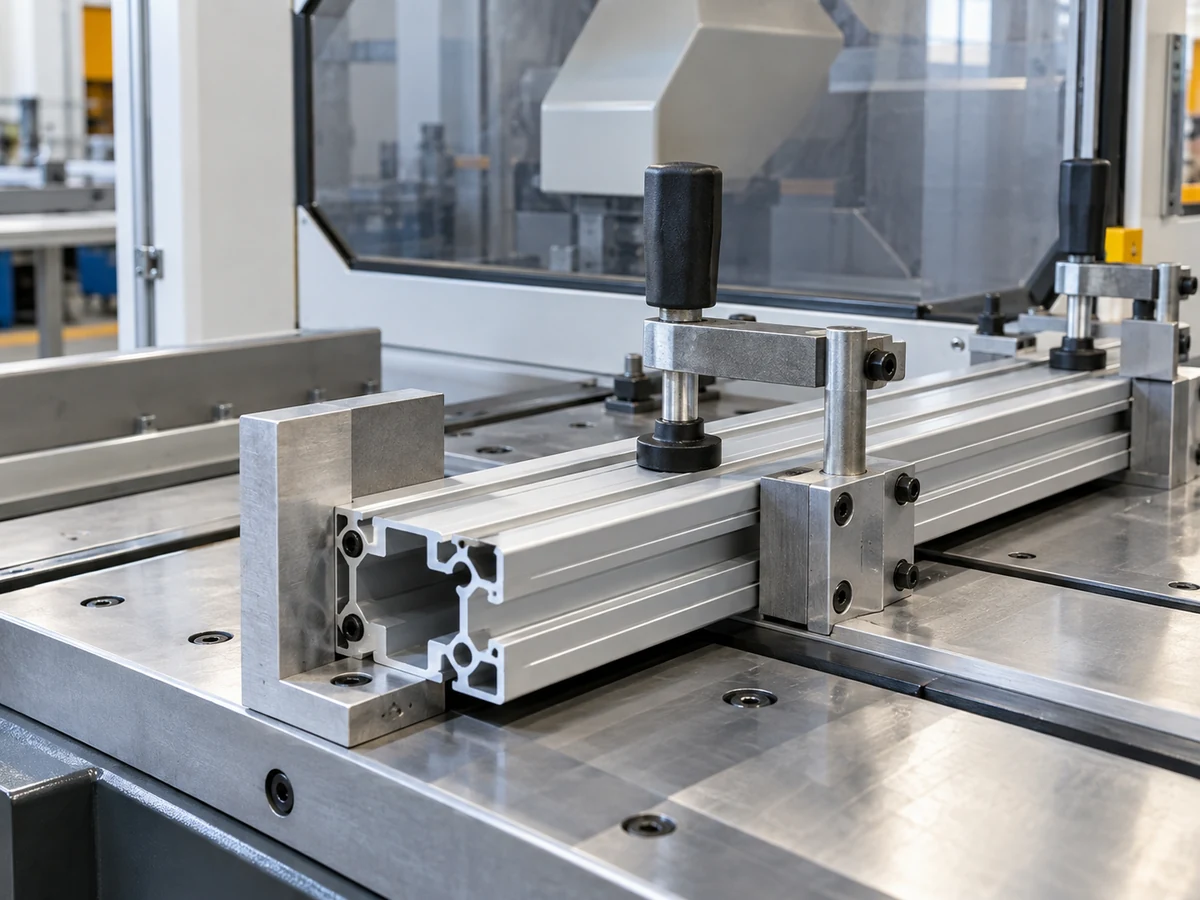
Long slender profiles can be difficult to support at infeed and outfeed, while a thin wall or open groove can be distorted by a poorly placed clamp. At a stopped setup review, identify stable support faces, the fence contact, clamp locations and the shortest offcut that must be retained safely. Check the most demanding released length and profile variant with the actual stock. Do not infer compatibility from a generic machine photograph.
Our related guide on aluminum saw infeed roller height explains the stock handoff question in more detail. For this RFQ, the specific hembar section, coating and end cap still control the trial. A cut sample must be reviewed for straightness and damage as well as length.
6. Define a first-off inspection that reaches the assembled part
Keep two acceptance steps separate. At the saw, inspect the first-off blank for identity, cut length from the named datum, end condition, visible finish and any profile deformation. At shade assembly, check cap seating, fabric retention or pocket insertion, finished width and travel clearance. The assembly team should return a clear pass/fail result to the cutting supplier before a larger batch is released.
A bar can meet the saw length while its cap stands proud or its finish is scratched. Conversely, an assembled shade problem may come from a wrong cap or fabric process rather than the saw. Photograph and label the rejected feature, preserve the part and drawing revision, and avoid rewriting the machine setting without evidence. The Venetian-blind headrail purchasing guide covers a different rail and assembly; do not borrow its dimensions for a roller-shade bottom bar.
7. Quote a repeatable blank, not an undefined complete shade
The buyer’s cut list should separate profile variant, finish, raw stock length, blank length, quantity and packaging unit. Include realistic shortest and longest lengths, batch mix, expected changeovers and first-off approval responsibility. If the part needs a post-cut hole, cap, fabric pocket or wrapped finish, state whether that work is included or handed to another supplier. Ask for a quotation on the accepted deliverable, including sample validation and packing, rather than a claimed cuts-per-hour number alone.
Protect visible surfaces and ends during counting and shipment. Label cut bundles by profile, finish, length and drawing revision so an assembly station cannot mix similar-looking variants. If a project changes width, issue a new cut-list revision and recheck the cap/fabric dimension chain before cutting the replacement batch.
What the Jiurun video does and does not show
The following public video from JR Aluminum Cutting Machine shows a Jiurun aluminum-cutting machine. It is general equipment footage. It does not show this article’s hembar profile, shade system, approved fixture, customer sample, finished width or verified cutting performance.
Roller shade aluminum hembar cutting RFQ checklist
- System identity: shade and hembar part number, approved drawing revision, physical extrusion and cap samples.
- Assembly route: pocketed, exposed or wrapped bar; exactly which operations the saw supplier delivers.
- Dimension chain: finished shade width, metal cut length, cap contribution, fabric allowances and named datum.
- Profile and finish: section geometry, visible face, coating and no-mark contact requirements.
- Cut acceptance: length tolerance, end squareness, burr and cosmetic criteria from the OEM drawing.
- Trial and approval: shortest/longest blanks, first-off metal check and downstream cap/fabric fit check.
- Production handoff: quantities, variant labels, packaging, revision control and owner of post-cut assembly.
Frequently asked questions
Can one cut length serve pocketed and exposed hembars?
Only if the released drawings make the metal blank length identical. The finished-width and end-cap allowances can differ, so treat each assembly route as a separate cut-list line until the system owner confirms equivalence.
Should the saw trial include an end cap?
Bring the actual cap and inspect a first-off blank with it, even if the cutting supplier does not install caps in production. The fit test reveals end damage or length errors that a tape measure alone may miss. Cap installation and full shade approval remain separate agreed steps.
Does a generic aluminum-profile cutting video prove hembar suitability?
No. It can show equipment and a broad process. A suitability decision requires the actual profile, finish, cap and a documented sample review against the buyer’s drawing.
Send a useful sample package
For a Jiurun cutting-equipment discussion, send the released hembar and cap drawings, representative physical samples, the shortest and longest cut-list lines, finish and packing requirements, plus the party who will approve the assembled first-off shade. That package lets the team assess the cut blank and its handoff without assuming a particular machine model, fabric process or finished-shade performance.