
Roll-up door brush seal retainer cutting is a narrower purchase than a request for a “truck door seal.” A buyer may need a straight aluminum retainer blank, a nylon brush assembly, or a complete installed seal. Those are different deliverables. Before asking an aluminum saw supplier for a trial, identify the approved retainer section and the exact boundary of the cutting work.
Tramec Sloan’s Door Systems catalog describes a brush side seal and retainer mounted outside the roll-up door against the frame post. It identifies the retainer as an aluminum extrusion and the brush as nylon. The same catalog also shows PVC side seals and a galvanized steel bottom seal retainer. A part that looks like a “door seal” on a purchase order is therefore not automatically an aluminum saw part. The catalog is a component example, not a drawing or acceptance specification for your door.
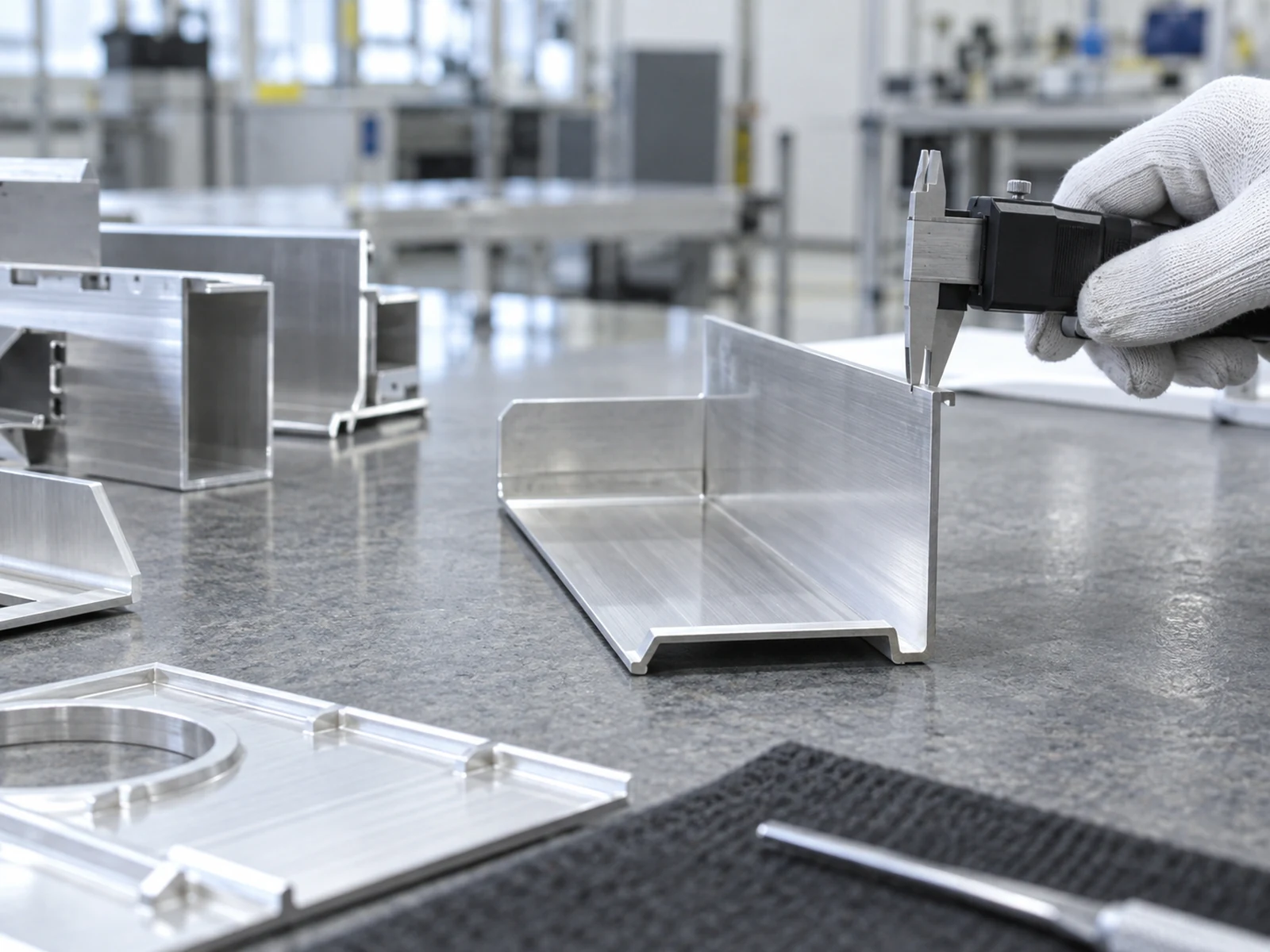
First separate the aluminum blank from the seal system
Ask the door or seal-system owner to mark the released bill of materials. If the supplier is delivering only cut aluminum, the saw trial should use the bare, approved extrusion. The brush, fasteners, drilling, mounting and installed sealing result remain separate unless they are expressly assigned in the order. Do not infer the retained profile from a photo of a complete brush assembly.
- Side brush retainer: quote a straight aluminum extrusion blank only after alloy, section and stock route are approved. The door or brush-system owner checks brush engagement and installed fit.
- Nylon brush insert: keep this outside the aluminum saw scope. The seal supplier or assembler specifies insertion and retention.
- Reefer PVC side seal: this is not an aluminum blank. The door-system owner identifies the PVC profile and installation method.
- Bottom seal retainer: confirm material first. The cited catalog includes a galvanized steel version, so the door-system owner must release the bottom design separately.
This distinction prevents a quoted “cut seal” from hiding a material substitution or an unpriced assembly operation. The Aluminum Extruders Council’s van-trailer overview also shows that extrusions appear in several trailer locations, including doors, so an application label by itself cannot identify the correct section.
Roll-up door brush seal retainer cutting starts with the section
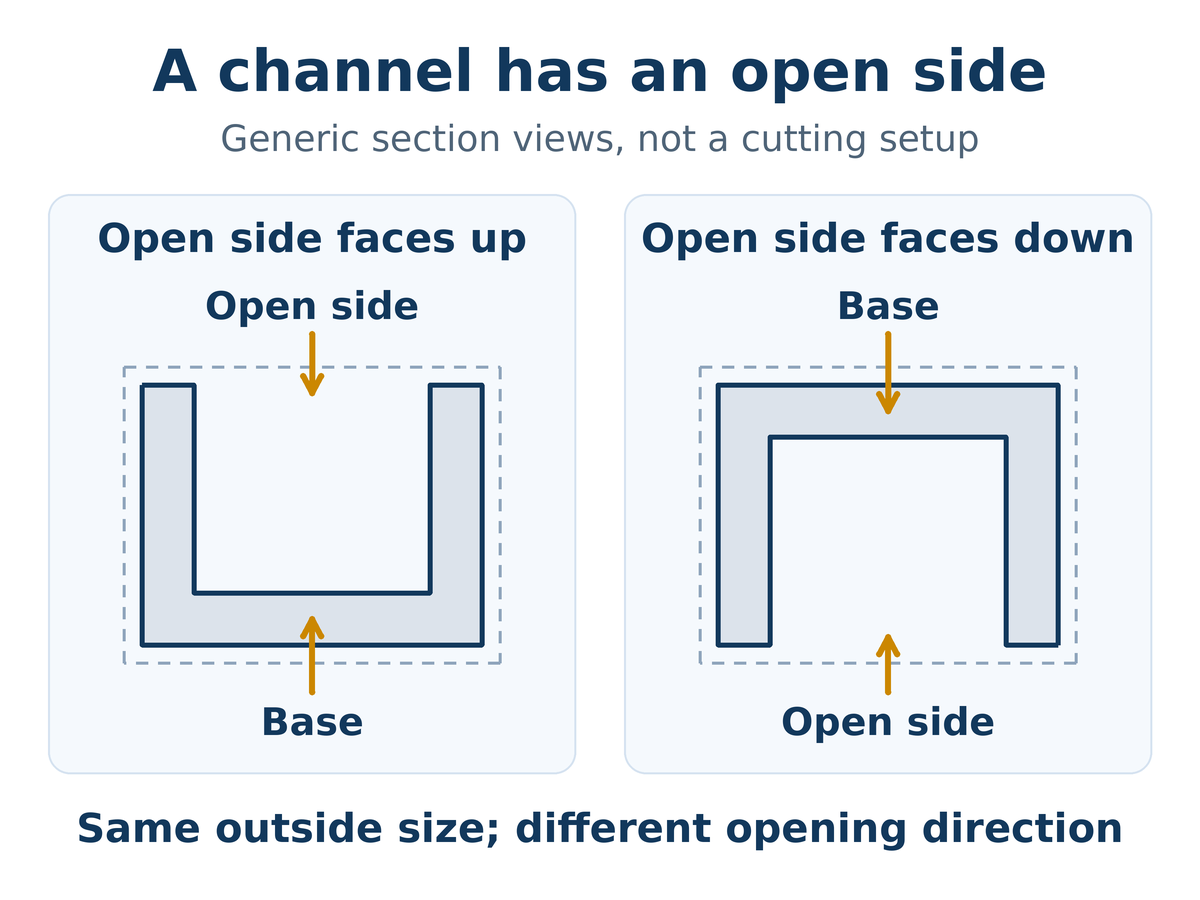
Provide a dimensioned end view or the approved extrusion part number, revision and finish. Identify which face mounts to the frame post, where the brush engages, and which surfaces may be touched by a clamp. If the retainer is an open channel, a drawing should state the opening direction. A sample can help explain the shape, but it does not replace the controlled section drawing.
Next, define finished cut length from the door’s released datum. State whether the dimension is measured on the bare extrusion, between installed end references, or after an end treatment. Include any left/right or top/bottom identification if the installation creates handed parts. The Tramec Sloan catalog lists a 116-inch brush side seal and retainer assembly as one product example; that catalog length is not a universal cut length or a tolerance for your project. A saw vendor needs your released blank schedule, not a copied catalog number.
Plan the clamp and cut-face trial around the actual profile
A slender open section can present narrow contact lands and a more exposed lip than a solid rectangular bar. For a meaningful trial, supply the real section and stock condition. Mark allowable clamp faces and support points, and ask the saw supplier to show how the extrusion remains located before and after separation. Check the opening and visible lip after the cut. If a brush slides in from an end, the system owner should verify that burr removal preserves its path.

Request a first-off sample from the exact profile family. Record finished length at the agreed reference faces, cut-face squareness if the drawing requires it, visible lip condition, burrs, and finish damage. The buyer should define numerical limits on the drawing or purchase specification. A generic saw tolerance should not be presented as proof of fit for this door.
Keep installation and sealing acceptance with the right owner
A clean aluminum cut does not prove a door will seal. The installer still has to check the retainer position against the frame post, fastener pattern, brush insertion and clearance throughout door movement. Any drilled holes, countersinks, end caps, corners or seal trimming should appear as separate operations with their own owner and acceptance criteria. If the order is for a preassembled brush-and-retainer length, ask who inserts and protects the brush after machining.
Mark each bundle by door opening, side, revision and cut length. Protect exposed ends and finished surfaces in transit so the receiving team can distinguish handling damage from machining issues. On receipt, compare the physical section and label with the drawing before feeding a batch to assembly.
A practical RFQ and first-off checklist
- Scope: bare aluminum blank, assembled brush retainer, or installed side-seal system?
- Material: approved aluminum extrusion part number, section revision, alloy/temper and finish; identify any non-aluminum components separately.
- Geometry: open-side direction, mounting face, brush engagement feature and permitted clamp lands.
- Schedule: quantity by finished length and door side, with datum and end condition for each part.
- Operations: sawing only, or also drilling, deburring, brush insertion and packing? Name the owner of each.
- First-off: agree which dimensions and visual conditions the saw supplier measures, then who checks brush and door fit.
- Handoff: label revision and opening, protect surfaces, and state how a rejected first-off is resolved before batch release.
For an adjacent but different purchasing boundary, see our aluminum door sweep retainer guide. A sweep at the bottom of a door should not be silently substituted for this side brush application. For a trailer door assembly boundary, see the refrigerated trailer door frame blank guide.
What a Jiurun saw discussion can establish
JiurunCut can review an approved aluminum section, target blank lengths, finish condition and first-off inspection plan to discuss an aluminum circular-saw cutting route. The choice of machine and fixture depends on the actual section, length and production mix. The video below shows a general Jiurun aluminum extrusion cutting-machine scene. It does not show this truck-door retainer, a customer trial, brush installation or a sealing test.
For roll-up door brush seal retainer cutting, send JiurunCut the released retainer drawing, material and finish callout, cut-length schedule, stock length, expected batch size and first-off criteria. Identify the door or seal-system owner who will approve brush engagement and installed fit. That gives the saw discussion a concrete aluminum blank instead of an ambiguous “door seal” request.