
Refrigerated trailer door aluminum frame blanks deserve their own cut list. A manufacturer can use aluminum extrusions in the rear swing-door leaves while making the fixed rear opening from another material. Hyundai Translead, for example, lists extruded-aluminum frame-type rear doors with dual-durometer seals and a stainless-steel rear frame on one refrigerated trailer. That example establishes a useful material boundary, not a specification for another trailer or a Jiurun customer project.
This guide is for a trailer OEM or approved door fabricator buying saw-cut straight extrusion blanks under a released design. It does not design the door, approve a vehicle, calculate insulation performance, or certify a seal. The purchase question is which identified parts arrive at the saw, what a satisfactory blank looks like, and where the saw supplier’s responsibility ends.
1. Separate the aluminum door leaf from the fixed rear frame
Start with the current rear-door assembly drawing and bill of materials. Mark the side, top, bottom and intermediate members of each door leaf separately from the fixed header, corner posts, sill, hinges, lock rods, skins, insulation and gasket system. The Hyundai ThermoTech specification illustrates why this step matters: its rear doors have extruded-aluminum frames, but its fixed rear frame is stainless steel. A different body may use another construction, so do not transfer Hyundai’s material schedule into your purchase order.
For each aluminum item, ask whether it is a loose straight extrusion, an already machined component, a formed member, or a purchased finished door assembly. A saw quote for straight blanks must not be mistaken for a price covering hinge reinforcement, seal installation, foaming, skin bonding or final assembly. Give the bidder only the approved members that genuinely pass through the proposed cutting station.
2. Release each refrigerated trailer door aluminum frame section and cut datum
A door-opening dimension is not the saw length of a door-leaf rail. Provide a part number and revision for every extruded member, plus its approved section drawing, alloy and temper where specified, finish condition, stock length and supply state. Define which face is visible, which groove or lip receives a seal or skin, and which surface can support clamping. Keep left and right members separate when their end preparation, orientation or later operations differ.
For every cut, identify the physical datum: square end, miter long point, shoulder, splice or a later-machined reference. State the required blank length, end form, squareness or angle acceptance and inspection method. The body opening, insulated door thickness and seal compression are system dimensions managed by the approved designer. The saw supplier should not infer a cut allowance from a brochure photograph or a finished-door outside dimension.
If a released part needs drilling, notching or a milled hinge recess after sawing, name the downstream owner and the intermediate blank condition that operation accepts. Otherwise a clean crosscut may be praised even though the item cannot reach the next workstation in the agreed state. Our broader truck-body saw guide discusses complete body-set planning; this door-leaf enquiry isolates a narrower part family and its own acceptance boundary.
3. Check support and clamping on the actual extrusion
An open or multi-cavity frame section may have thin lips, seal channels and finished visible faces. The buyer should send a representative stock piece and mark the faces that may contact locating stops and clamps. Ask the bidder to show how the specific section is supported through infeed, clamping, cutting and receiving. A nominal outside width alone cannot confirm whether a clamp will avoid a gasket groove or protect a coated face.

Review the longest incoming stock and shortest required blank together. Record who supplies handling supports, how offcuts are managed, and how cut parts are kept off surfaces that may be visible after assembly. Machine brochure dimensions do not establish safe clearance or support for a particular member. A configuration remains unconfirmed until the supplier has evaluated the actual drawing and stock sample.
4. Define the first-off and batch acceptance record
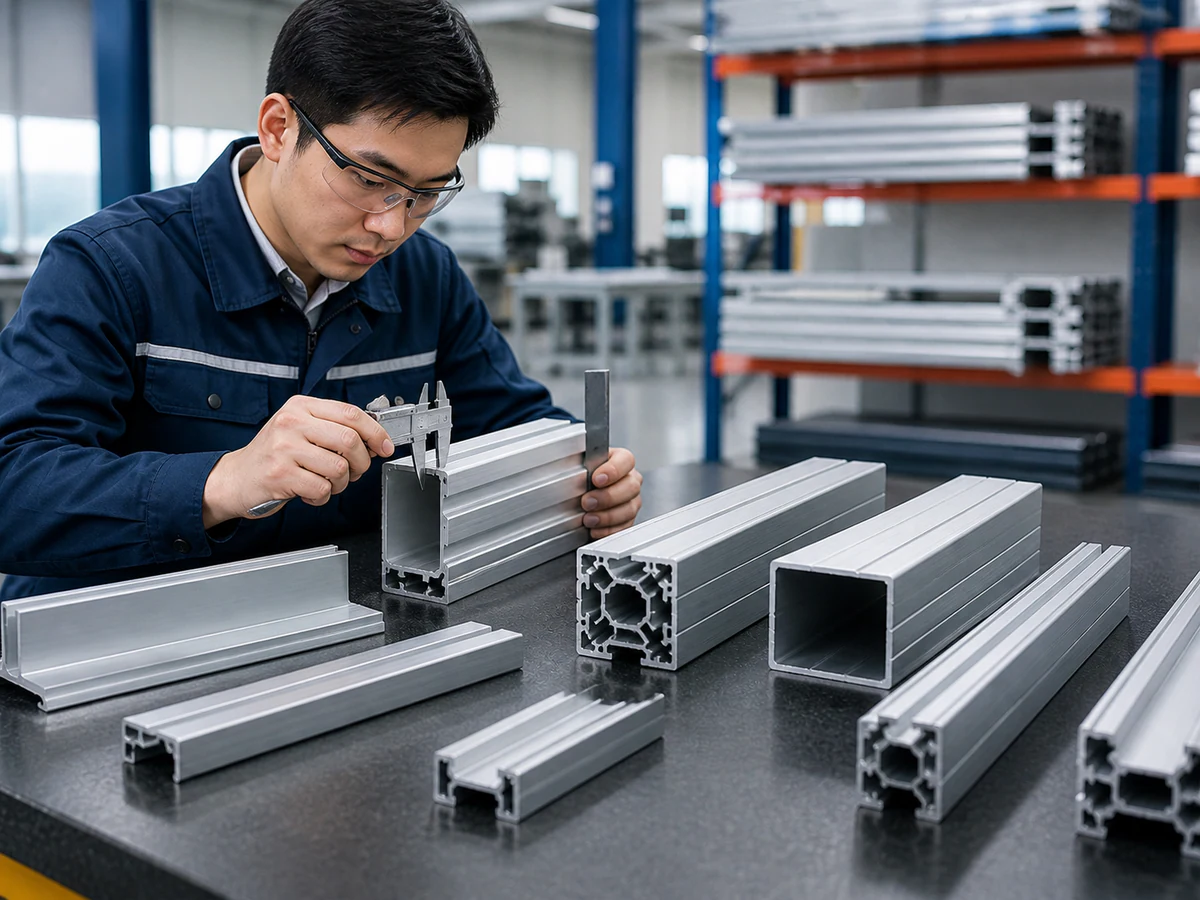
Before a production promise, agree a first-off check for each relevant part family. It can record part number, drawing revision, stock batch, machine configuration, cutting length datum, end geometry, visible-face condition and the person who accepts the blank for the next operation. A measured sample is useful only against an identified requirement. Avoid presenting an attractive cut face as evidence of door fit or temperature control.
A batch plan should also cover left and right parts, short and long rails, handling damage and held pieces. Count accepted blanks separately from pieces merely produced. If the next workstation requires matched sets, state which member combinations constitute one releasable door-leaf kit. A pile of cut rails does not prove that a complete insulated door is available for assembly.
5. Keep thermal, sealing and vehicle performance outside the saw claim
Refrigerated doors depend on more than saw accuracy. The design controls gasket geometry, seal compression, insulation continuity, hinge and lock positioning, drainage, water ingress and the relationship between the door leaf and fixed rear opening. The Hyundai operator manual lists seals, hinges, lock hardware and insulation alongside the aluminum-framed doors; those are separate scope items. Great Dane’s Everest page likewise describes door construction and sealing as a complete system, not a stand-alone saw result.
A saw trial can show that an agreed blank dimension and surface condition were met for an actual sample. It cannot by itself establish near-airtight closure, thermal performance, roadworthiness or long-term durability. Keep those checks with the trailer manufacturer and its qualified reviewers. If the released design changes a seal profile or hinge interface, reassess the affected blank drawing rather than assume the previous trial still applies.
6. Send a cut-member RFQ the supplier can answer
For refrigerated trailer door aluminum frame blanks, a useful enquiry includes the approved assembly drawing and bill of materials, one drawing per aluminum extrusion, stock sample or section file, finish and supplied length, annual and batch quantities, individual cut schedule, left-right identification, downstream operations and first-off criteria. Mark parts that are bought complete, non-aluminum, or outside the proposed saw’s work. Ask the supplier to respond separately on confirmed scope, sample trial requirements, infeed and receiving equipment, and unresolved details.
Compare competing proposals against the same released list. One quotation may include handling and identification; another may assume the factory provides them. A lower price is not a like-for-like alternative when it leaves a critical door-leaf member or the receiving route undefined. Preserve the drawing revisions and what the bidder actually assessed so a later design change does not rewrite the evidence.
Related equipment video: general saw operation
The following video is from Jiurun’s own channel and shows a CNC aluminum cutting machine with automatic feeding. It is a general equipment illustration for discussing long-stock feed and cut-part handling. It does not show a refrigerated trailer door frame, this article’s material, an approved machine configuration, a customer trial or verified performance for this application.
Frequently asked questions
Is the fixed rear frame also aluminum? Not necessarily. The cited Hyundai example uses a stainless-steel fixed rear frame and aluminum-framed door leaves. Verify the current product’s approved bill of materials before assigning either part to an aluminum saw.
Can a cut sample prove the insulated door seals? No. A sample can be checked against specified blank dimensions and surface condition. Seal compression, insulation, water ingress and whole-door acceptance require separate system-level review.
What should be sent before a machine recommendation? Send the actual extrusion drawing and sample, stock condition, cut list, finish protection needs, part quantities, downstream operation and first-off criteria. The machine supplier can then identify what still needs a trial or engineering assessment.
Request a defined door-frame blank review
If your released design includes straight refrigerated trailer door aluminum frame members, send Jiurun the drawings, stock samples and cut schedule. We can review the saw-cut blank scope and identify the information needed for an equipment discussion. The trailer OEM retains responsibility for the door assembly, rear structure, insulation, seals and vehicle acceptance.