
Retractable awning front profile cutting starts with the released extrusion drawing, not a generic awning width. The front profile is the moving edge of the assembly, but its section and interfaces vary by system. For example, markilux describes a front profile with an integrated rain gutter and drained end caps in one model, while weinor describes optional valances integrated into the front profile of selected models. Those are examples of why the buyer must identify the exact approved section; they are not specifications for every awning or evidence that a particular saw has cut either product.
This guide is for an OEM or fabricator requesting a quotation for cut aluminum front-profile blanks. It separates saw-cut work from end-cap fit, drainage details, coating, and final awning assembly. If you are deciding whether to buy a saw for an entire awning plant, see our awning manufacturing saw-selection guide. If the part is the rail that holds a fabric welt rather than the moving front bar, use the awning rail cutting checklist.
Retractable awning front profile cutting: the seven RFQ checks
1. Identify the front-profile section and revision
Send the released cross-section drawing, part number, alloy and temper if specified, finish state, and drawing revision. Mark the face that is visible after assembly, the internal webs, any fabric or valance channel, and the side that mates with an end cap. A photo of a complete awning can help orientation, but it cannot replace the section drawing. Even profiles with a similar outline may have different wall thicknesses or channel openings; the cutting setup must be reviewed against the actual approved part.
Ask the supplier to quote the exact section and revision, with substitutions excluded unless the design owner approves them. If the front profile is part of a configurable product family, provide the configuration matrix: gutter version, valance option, end-cap family, and any left/right distinction. The quotation should say which variants share one setup and which require a separate fixture or inspection plan.
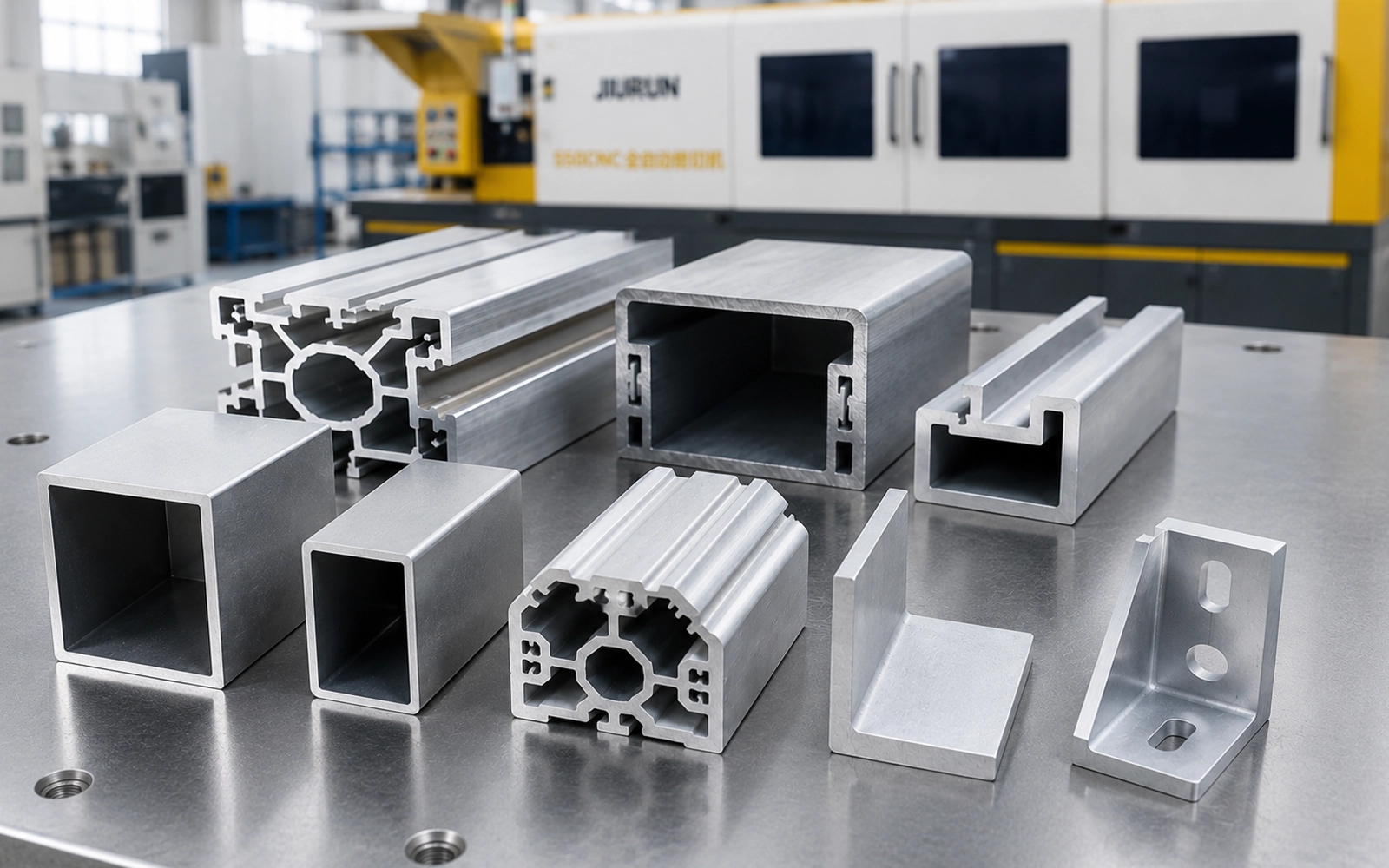
2. Convert system width into a cut-blank length
State the dimension to be delivered: the saw-cut blank length, not merely the nominal awning width. The assembled width can include end caps, arm hardware, side clearances, and other system-specific offsets. Specify the measurement datum, which end is the zero end, the length range and batch mix, and whether the drawing dimension is before or after finishing. The design owner should release the conversion from system width to blank length; the saw vendor should not invent an allowance from an unrelated awning model.
Put the length tolerance and measurement method on the RFQ. For long profiles, identify the temperature and support condition used for acceptance if those affect your inspection practice. A useful cut list has part number, revision, blank length, quantity, end condition, finish state, and the downstream assembly it serves. This makes a quotation comparable and avoids a dispute in which one supplier prices raw blanks while another prices fully prepared parts.
3. Show channel direction and safe contact surfaces
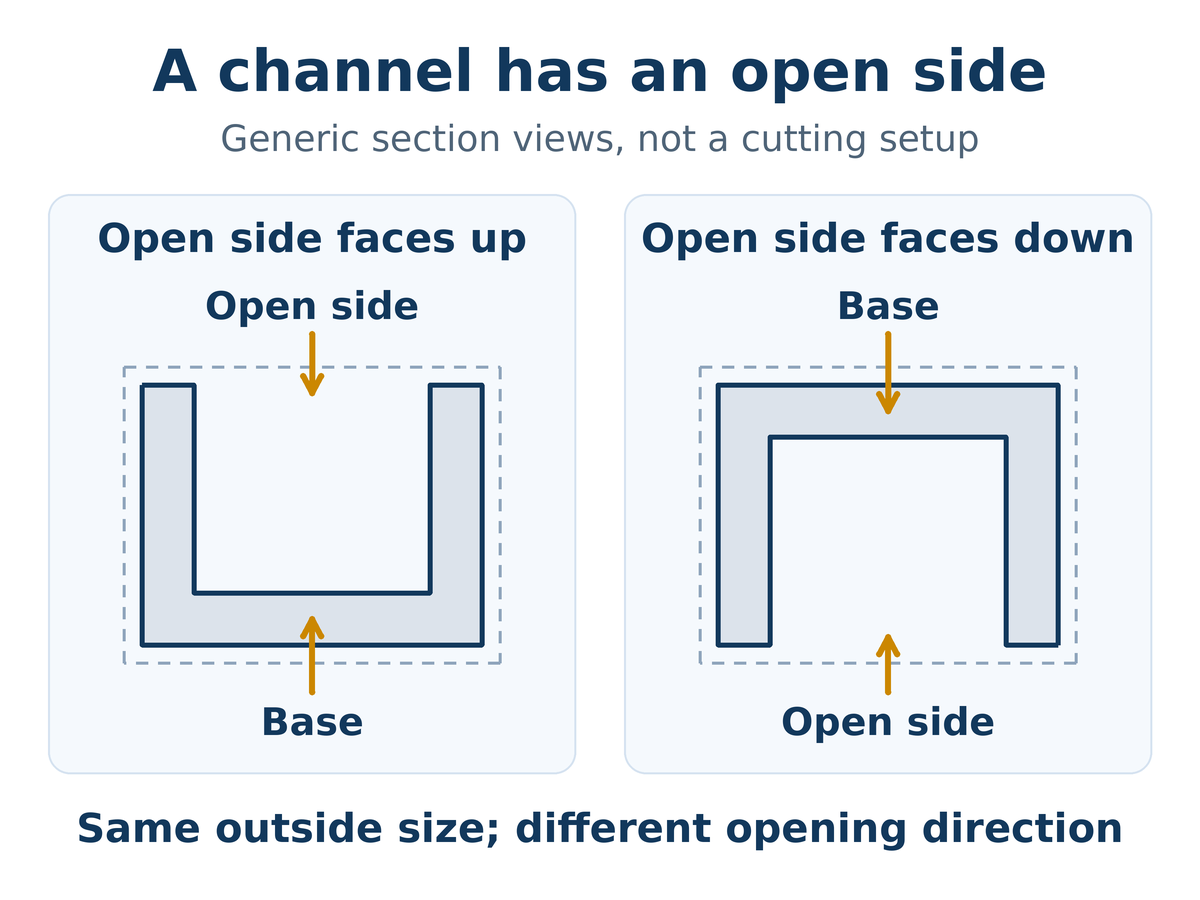
A gutter or open channel can make the front profile asymmetric. Show which side faces up during cutting, which face is the primary datum, and where support or clamping may touch the section. The fixture concept must avoid crushing thin lips, marking a finished visible face, or letting a hollow section rock. Ask for a setup sketch or a sample-based review when the section is difficult to locate. Do not assume that a generic channel diagram defines the actual awning geometry.
This is also where the buyer should distinguish a cosmetic requirement from a functional interface. A small mark on a concealed web may have a different acceptance rule from a mark on the front face; the drawing or quality agreement must say so. If the section changes with a valance or gutter option, the clamping plan should be checked for each relevant variant.
4. Define long-stock support and surface handling
Front-profile extrusions can be awkward to carry and feed even when the cut itself is straightforward. Tell the supplier the received stock length, typical cut lengths, stock bundle size, and whether the surface is bare, anodized, or coated at the cutting stage. Ask how infeed and outfeed support will keep the section level and how the operator will prevent a finished face from dragging across a hard surface. The answer should identify the contact points and handling sequence rather than promise a result from a catalog photo.
Separate feed capacity from repeatable placement. The RFQ should ask how the first cut is referenced, how stops are set for changing lengths, and how short offcuts are managed. For a high-mix order, give a sample production mix so the supplier can explain setup changes and material flow. Any cycle-time or scrap figure should be based on the proposed part and an agreed trial, not a generic saw specification.

5. Separate saw cuts from end-cap and drainage work
Define both end conditions: square or angled cut, cut-face exposure, permissible burr, edge break, and whether the end cap must slide over or into the profile. A markilux catalogue shows one front-profile design with an integrated gutter and end caps with drainage holes; that illustrates why end-cap and water-management interfaces need a separate drawing review. It does not mean all front profiles need the same features or that a saw operation creates drainage holes.
List every secondary feature separately: drilled or punched holes, milled pockets, slots, tapping, and any deburring after those operations. State whether the quote is for cut blanks only or for parts ready for end-cap assembly. If a drainage path crosses the cut end, request a fit and flow check from the system designer. Do not infer water performance from a clean-looking saw edge.
6. Specify finish stage, protection, and packing
The sequence matters. Cutting a bare extrusion before coating creates different handling and edge-finish questions from cutting a finished extrusion. Tell the supplier when coating or anodizing occurs, which faces are cosmetic, whether protective film is present, and how edges must be protected in transit. Define the accepted scratch, dent, stain, and coating-chip criteria with a drawing note or controlled sample. Avoid a vague instruction such as “no damage” when the inspection zone is not identified.
For repeat orders, include labeling and traceability: part number, revision, length, finish, batch, and left/right or valance option when applicable. Ask how mixed lengths will be separated in cartons or racks. Packaging should preserve the identified datum and finished face through the buyer’s next operation; it should not hide an uninspected cut end.
7. Agree on samples and acceptance evidence
Before awarding a production order, define the first-article sample and the checks that matter to your assembly: blank length, end squareness or specified angle, burr and edge condition, visible-face condition, end-cap fit, and any downstream hole or slot registration. Name the measuring method and who accepts the sample. Keep machine-selection evidence separate from system certification: a demonstration of a saw moving through aluminum does not certify awning wind resistance, drainage, valance operation, or the buyer’s finished product.
Request a quotation that names the included machine or service scope, tooling and support assumptions, changeover for section variants, inspection deliverables, and exclusions. If a supplier suggests a cycle-time, scrap, or tolerance claim, ask for the sample drawing, test conditions, measurement record, and acceptance criteria behind it. A quote is easier to compare when all bidders respond to the same released part and same output stage.
A concise RFQ package to send
- Released front-profile section drawing, revision, part numbers, and model-specific options.
- Cut-blank length table, quantities, stock lengths, and acceptance datums.
- End-cap, gutter, valance, and other interface drawings where they affect the cut or later work.
- Finish stage, protected faces, packing rules, and labeling requirements.
- First-article sample plan with measurable length, end, edge, appearance, and fit criteria.
- A clear scope line: cut blanks only, or secondary operations and ready-to-assemble parts.
A buyer can use that package to compare a cutting service or a saw purchase without assuming a universal awning profile. The two cited product examples show why the interface can differ: markilux 3300 product catalogue describes a front profile with an integrated gutter and drained end caps; weinor’s VarioShade Valance page describes optional valance integration in selected front profiles. Use your own approved design for dimensions and acceptance.
Related Jiurun cutting-machine demonstration
The video below is a general Jiurun Machinery saw demonstration. It is included to show a related equipment process only. It does not show the front profile in this article, an approved awning configuration, a customer trial, or measured performance for this RFQ.
Frequently asked questions
Is the front profile the same as the awning rail?
No. In this guide, the front profile is the moving outer-edge extrusion of the retractable awning. A fabric mounting rail or Keder rail is a different interface. Confirm the part name and section on the released drawing rather than relying on an informal label.
Can I quote from overall awning width alone?
Usually you need the released cut-blank length and its datum. End caps, side clearances, and model options can change the relationship between overall width and the saw-cut part. Ask the system designer for the conversion.
Does a clean cut prove the gutter or valance will work?
No. A cut-end inspection covers only the specified blank characteristics. Drainage, end-cap fit, valance operation, and the complete awning need their own assembly and product checks.
What should I send for a machine review?
Send the drawing and revision, sample extrusion, stock and finished lengths, material and finish state, quantity mix, cut-end requirements, and acceptance method. State whether secondary operations are included. A machine recommendation should follow that part review, not precede it.
Discuss your front-profile cutting requirement
Jiurun Machinery can review the released extrusion section, cut list, handling constraints, and required output stage with you. Share the drawing revision and a physical sample if available, plus the criteria your team will use to accept a first article. Contact Jiurun to discuss the cutting application; request a documented trial before relying on any proposed quality or productivity figure.