
Aluminum awning rail cutting starts with a length question that a saw quote alone cannot answer: are you buying pieces that fit a parcel, or sections ready to become specified installed runs? A shipping cut may make a long rail easier to move while leaving the installer to plan joints, identify locations, finish the ends and confirm that the matching Keder or welt can travel through the rail. Treat those as separate deliverables before comparing a precut supplier with an in-house saw.
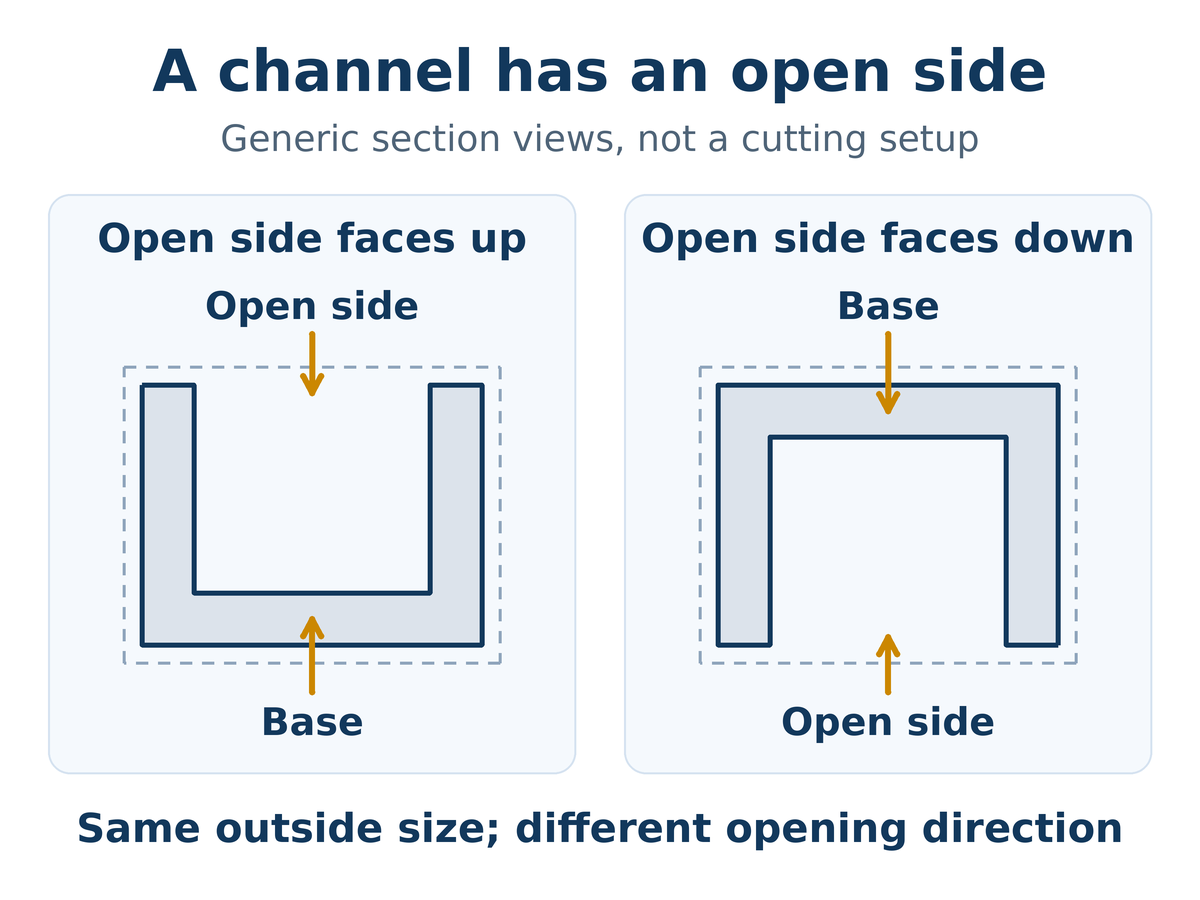
The following section sketch is a generic open-channel orientation illustration. It is not an awning or Keder rail, a recommended clamping arrangement, or evidence of a cut.
Aluminum awning rail cutting starts with the exact rail
Start with the approved rail drawing and the mating fabric edge, not a nominal product name. A rail can differ in groove and mouth geometry, mounting flange, finish, straightness and supplied stock length. Ask the rail supplier which bead or Keder size belongs to that particular product. For example, Sailrite’s 45-degree aluminum awning track listing describes the groove and the Keder range for its own track; that range should not be treated as a fit rule for every rail.
Record which face must stay visible and which side has the groove opening. The saw operator needs that orientation for repeatable locating and scratch control. If the project includes a curved route, identify the approved rail type and forming route separately: a straight cutting operation does not establish a bend radius or a field-bending method. Sailrite’s track-bending guidance distinguishes conventional and more flexible track types, which is a reminder to resolve the product and route before releasing lengths.
Keep stock, shipping and installed lengths separate
A stock length is what arrives from the mill or distributor. A shipping piece is a length chosen for a carrier, carton or handling limit. An installed run segment is the piece called for by the approved layout after allowances, joints and end details are defined. They can be equal, but an order should never assume they are.
One supplier example makes the distinction concrete: Rochford Supply’s aluminum awning rail listing describes long stock and shorter cuts for parcel shipping. Those parcel cuts are that supplier’s fulfillment approach, not a universal installation schedule. For your project, specify whether a quoted cut is merely a carrier-friendly division or a numbered segment that must be installed at a particular location.
Turn the layout into an accepted-piece schedule
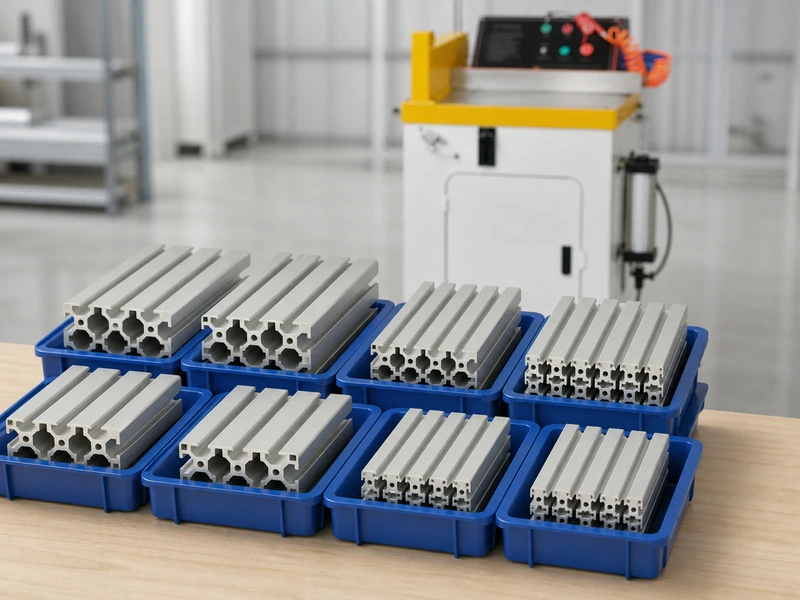
Give each run and each segment an identifier. The schedule should connect its installed location to the approved finished cut length, permitted tolerance, groove orientation, visible face, finish-protection requirement and any joint or end treatment. State who makes mounting holes, who deburrs the groove entrance, and who checks fit with the actual mating bead. If those operations are outside the cutting supplier’s scope, name the handoff clearly.
Ask how corners, splices and terminal ends are handled on the approved installation drawing. Do not simply divide an overall run by the carrier’s maximum length: the resulting seam locations may be inconvenient, or a piece may omit the allowance that a specified connector requires. Conversely, do not ship a full-length rail merely because the drawing depicts one continuous line when the approved design has a joint and shorter pieces are acceptable.
Compare precut purchasing with an in-house saw on the same output
The fairest comparison is the cost per accepted segment set, rather than the price per saw cut. For a precut order, include supplier setup, cutting, end treatment, labeling, packing, freight, replacement allowance and incoming inspection. For in-house cutting, include stock purchase, saw time, fixture/setup work, trial pieces, deburring, dimensional and fit checks, scrap, packaging and the labor that transfers pieces to installation.
A low-volume or variable program may favor a supplier able to label approved segments and ship them protected. A repeatable program with stable profiles, drawings and inspection capacity may justify in-house cutting. Neither answer is automatic. Compare lead time and change control too: if a layout revision changes a seam or curve, both the material plan and the cutting schedule must be revised before pieces are released.
What an exact-rail trial should prove
Request a first-off cut from the actual approved rail and finish, with the proposed blade, stop and workholding arrangement documented by the process owner. Inspect finished length, squareness where specified, burrs at the groove mouth, dents on the mounting flange, marks on the visible face and consistency across repeated pieces. A caliper reading on an unrelated profile cannot demonstrate awning-rail fit. The product owner should check the specified mating bead and end treatment using its own acceptance criteria.
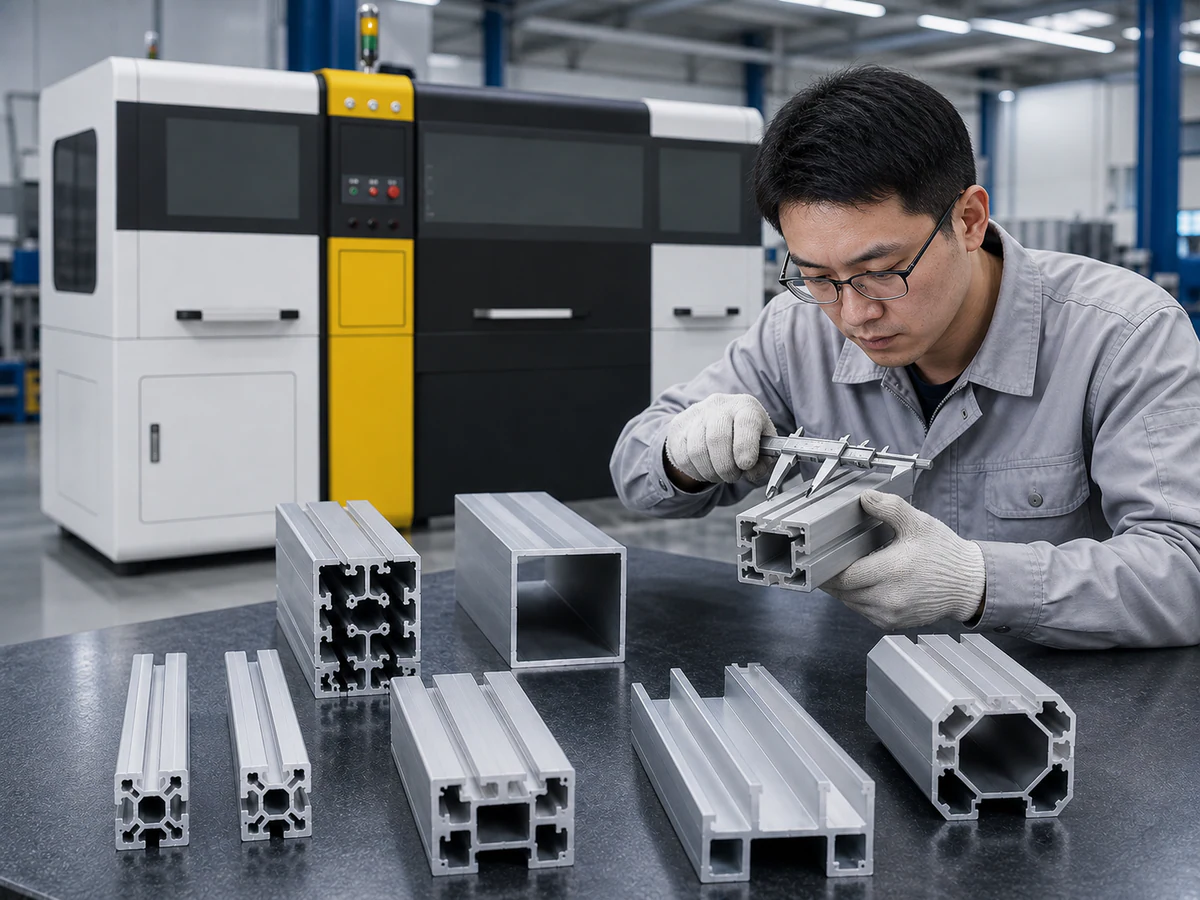
Pay particular attention to how the rail sits against the fence and stop. A slim flange or open groove may contact a fixture differently from a solid bar. The acceptance trial should use the actual section and show that locating and support do not distort it. For a broader explanation of this point, see our back-fence contact guide.
Five checks for an awning-rail cutting RFQ
- Provide the approved rail drawing, alloy/temper and finish, supplier part number, straight or curved route, and mating bead specification.
- Provide a run-by-run segment schedule with installed locations, cut lengths, tolerances and allowable joint positions.
- Ask the supplier to distinguish shipping cuts from installation-ready pieces and list included end, hole, label and packaging work.
- Define first-off approval, visual-face limits, groove-entry burr limits and who performs the real bead-fit check.
- Request separate prices and lead times for stock-only, shipping-cut and fully specified segment sets.
The video below shows a Jiurun industrial aluminum-cutting machine operating on general aluminum-profile work. It is an equipment illustration only: it does not show this awning rail, its mating Keder, an approved clamp setup or a verified result for your project.
If you are weighing aluminum awning rail cutting by a precut supplier against an in-house saw, send Jiurun your rail drawing, segment schedule and acceptance requirements. We can discuss the cutting-process questions that need a trial; final rail fit and installation approval remain with the product and project owners.