
A second cut-part supplier can reduce dependence on one contractor, but a second quotation is not yet a second qualified supply route. Two shops may price the same nominal length while assuming different stock, datum points, handling, inspection, and rejection rules. The buyer’s task is to define one accepted part and one release process, then check whether each supplier can repeat it.
This guide is for purchasing and production teams that already buy cut parts from an outside shop and want an alternate source. It addresses the cut-part supply decision, not the purchase of a second saw. Start with the part family that matters most to production continuity, rather than trying to qualify every profile at once.

Decide what the second cut-part supplier must cover
Write down the failure the alternate route is meant to absorb. Is the current supplier at capacity, geographically exposed, unable to cover a particular profile, or slow on urgent releases? The answer changes the trial. An emergency source needs an agreed response and stock plan. A planned volume split needs repeatable scheduling and comparable receiving results. A shop that can make one sample may still be unsuitable for your normal mix and release frequency.
Choose a pilot family by material, section shape, cut geometry, finish sensitivity, annual demand, and consequence of a missed delivery. Set the proposed role of the alternate supplier: backup only, a fixed share, or an approved route for selected part numbers. Keep the current source as a comparison route while the new one is evaluated. Do not promise a split until the trial and commercial terms are accepted.
Give both shops the same controlled part definition
A useful RFQ is a controlled package, not an email saying “cut to length.” Give each shop the same drawing revision and the same answer to every open question. The package should identify:
- Part number, drawing revision, profile section, alloy and temper, and any approved stock-source limits.
- The length datum and measurement method, cut-end geometry, angle or squareness requirement, burr/edge condition, and visible-surface orientation.
- The condition in which parts must arrive, including finish protection, contamination limits, labeling, pack quantity, and traceability to a lot or release.
- Which features the supplier must report, which the buyer will check at receipt, and how discrepant parts are segregated.
- Whether the supplier procures raw stock or cuts buyer-owned material, plus title, scrap/offcut ownership, and the rule for unused remnants.
Keep acceptance values in the approved drawing or purchase specification. An equipment brochure’s feed-positioning figure is not a substitute for a finished-part tolerance. If a drawing leaves an edge condition or length reference unclear, resolve it with engineering before either shop cuts a trial lot. The Aluminum Association’s extrusion-tolerance explainer is useful background on why measurement and profile geometry deserve explicit discussion; it does not set the acceptance limit for your part.
Compare the same receiving unit, not just two sample pieces
Ask each supplier to deliver a small but representative trial release under the same revision and packing instructions. Include the profile and length range that will actually be ordered. Where a finish or cut face is sensitive, agree who inspects it and when. At receipt, record the supplier, material identity, quantity, lot label, condition of the pack, and results against the drawing. Keep rejected units traceable to their source and release.
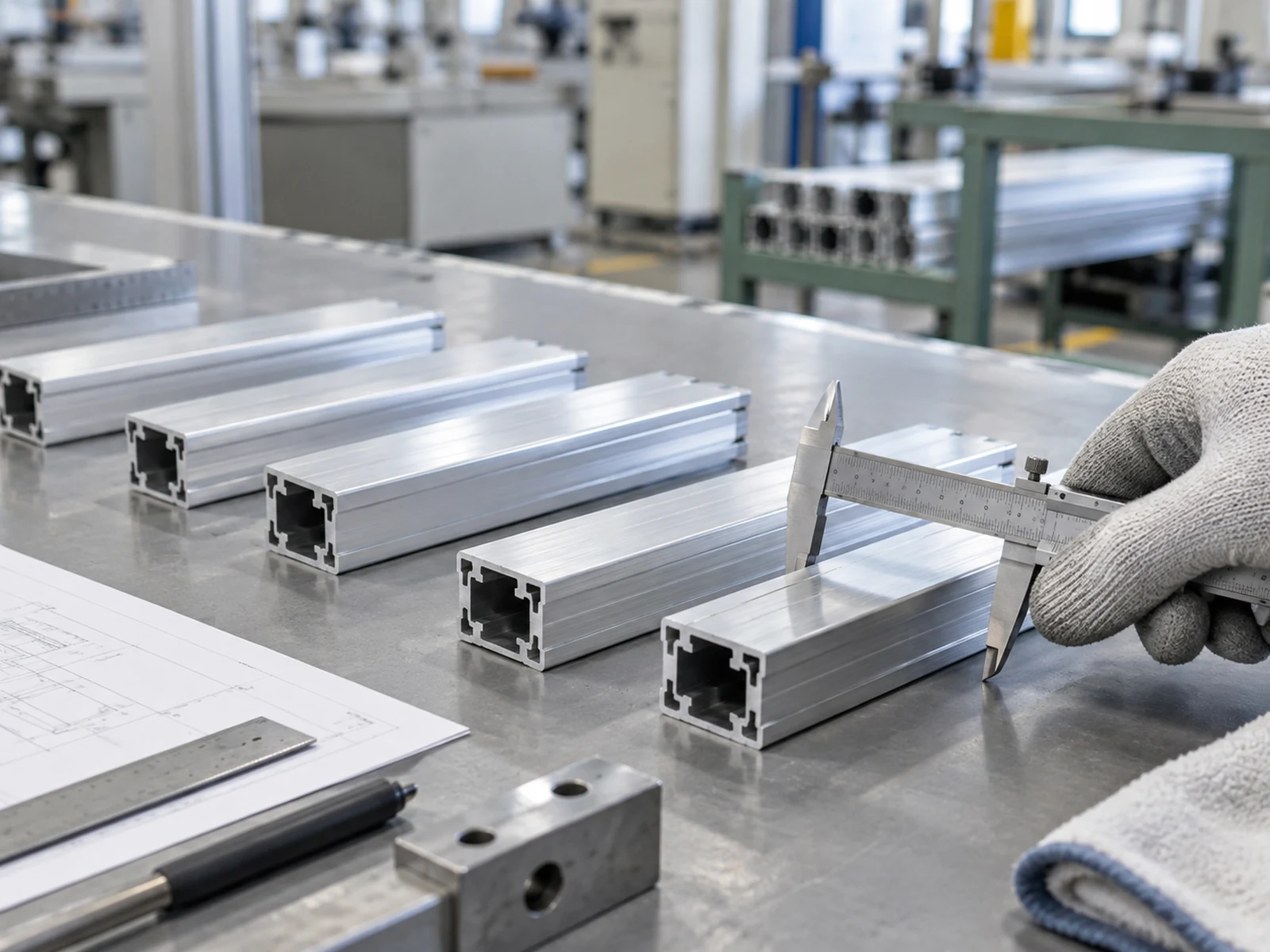
Agree the inspection method before looking at results. Specify the instrument and datum, the number of parts examined, and how borderline readings are resolved. The photo below shows a caliper across an extrusion section; it illustrates section-feature review, not a verified cut-length measurement or evidence that either supplier passed a trial.
Record both the observed results and the disposition: accepted, conditional with a documented correction, or rejected. Ask whether each shop can explain a defect and keep a corrected lot separate. A single favorable first article does not establish repeat capability; release at least one subsequent normal order through the same controls before treating the route as routine. The number and size of trials should follow the part’s risk and your quality system, not a generic rule in this article.
Test the handoff and change route
Many dual-source failures start after a successful sample. A buyer changes a stock source, a shop substitutes an extrusion, or a drawing revision reaches only one route. Name the person who can approve substitutions and the person who sends current revisions to both suppliers. Require written notice before changes to material, cutting method, outside processing, inspection location, or packaging that affect the agreed part. Set a hold-and-escalate route for nonconforming or unidentified material.
Make the release unit explicit: purchase order and line, part number and revision, quantity, ship date, destination, and pack or label requirement. Decide how urgent releases, partial shipments, and shortages are communicated. If a supplier retains raw bars or finished cut parts for call-off, reconcile what is buyer-owned, what has been accepted, and what remains uncut. Our related guide on cut-part call-off and stockholding covers those inventory boundaries in more depth.
The container photo below illustrates why receiving should specify segregation and labels. It shows cut aluminum members in a tote; it is not evidence that this packing is adequate for a particular finish or that a second supplier met a purchase specification.

Build a comparable commercial decision
Compare quotations only after the technical package is fixed. Put the same forecast, release size, material ownership, and delivery basis in front of both shops. Request a price break for the intended order quantities, one-time setup or tooling charges, minimum order, normal and expedited lead times, freight and packing charges, raw-stock assumptions, and the treatment of scrap and rejected parts. If a quote excludes material or finished-part inspection, mark that difference rather than treating a lower number as the same offer.
Offcuts can distort the comparison. If the buyer supplies bar, define whether remnants are returned, held against the next release, or credited; if the shop owns the stock, clarify whether the quoted price includes the yield assumption. Keep this separate from a promise that every remnant has resale value. Our offcut-credit buying guide addresses that term specifically.
One practical comparison sheet has a row for each supplier and columns for: controlled drawing accepted; material/source plan; sample and repeat-lot disposition; inspection report; pack/traceability result; normal lead time; surge response; price at the same release quantity; stock/offcut ownership; and approved exceptions. Mark unknowns as unknowns. The U.S. NIST MEP supplier-scouting program and its request form separate technical details such as process, dimensions, materials and tolerances from business details such as volume, delivery and packaging. That is a useful way to organize an inquiry; it is not a certification of any supplier mentioned here.
Release the alternate route in stages
Before placing repeat orders, the buyer should be able to answer four questions from records rather than memory: Did both shops receive the same current definition? Did the alternate deliver a representative lot that passed the agreed receiving check? Can a discrepancy be isolated to a supplier and release? Do the quoted terms cover the same material, inspection, packing, and delivery scope?
If yes, document the approved part numbers, revision, supplier site, maximum or target release share, and trigger for requalification. Keep an emergency supplier from quietly becoming a routine source for untried variants. Revisit the approval when profile, stock source, finish, tolerance, order size, or supplier process changes. If the trial exposes a capability gap, hold that part number and correct the gap rather than declaring the entire shop qualified or disqualified.
Where an in-house saw fits
Dual sourcing is one way to protect the cut-part flow. For some demand patterns, a buyer may also compare the cost and control of cutting in house. Jiurun supplies industrial circular saw equipment for aluminum and other nonferrous profiles; it is not the alternate cutting contractor in this article. If you are considering an in-house route, share your profile section, alloy, drawing, length range, expected release mix, and acceptance method so the machine discussion can be tied to the actual parts. Contact Jiurun for an equipment-fit discussion, and verify any proposed configuration against the quotation and trials for your application.
Video: general equipment context
The Jiurun Machinery video below shows general aluminum-cutting equipment footage. It does not identify or qualify the two cut-part suppliers in this guide and does not prove a material grade, model configuration, customer, trial result, tolerance, or production performance.