
Pontoon fence frame aluminum cutting is a narrow manufacturing decision inside a larger fence system. A profile saw may produce approved straight rails, posts and gate-frame blanks. It does not make the decorative skin, approve a gate latch, establish a deck attachment, or certify the finished boat. Before requesting a machine quote, decide whether you need a complete compatible fence package, replacement panel skin, a prepared frame section, or repeatable cut aluminum members.
This guide is for an OEM or authorized fence fabricator with released drawings. A boat owner replacing damaged fencing should first check the original system supplier’s parts and installation route. Do not infer that a generic extrusion or saw trial is an approved replacement part.
Separate panel skin from the members the saw would cut
Supplier catalogs show why the word “fence” is too broad for a saw RFQ. PontoonStuff lists replacement fence paneling, while Midwest Marine Supplies lists a framed fence piece and a complete fence package. These are examples of different purchasing units, not interchangeable specifications. A thin panel, a shaped rail, an assembled gate and a kit require different processes and acceptance checks.
Define the quoted output in one sentence: for example, “labeled straight aluminum frame blanks cut from the approved extrusion,” or “finished assembled fence modules supplied under the system owner’s drawings.” If panel sheet cutting, bending, forming, fastening and finish work belong to other suppliers, put them outside the saw quote. Compare purchase options at the same accepted output instead of comparing a saw price with an installed kit price.
Build a released rail and gate cut list
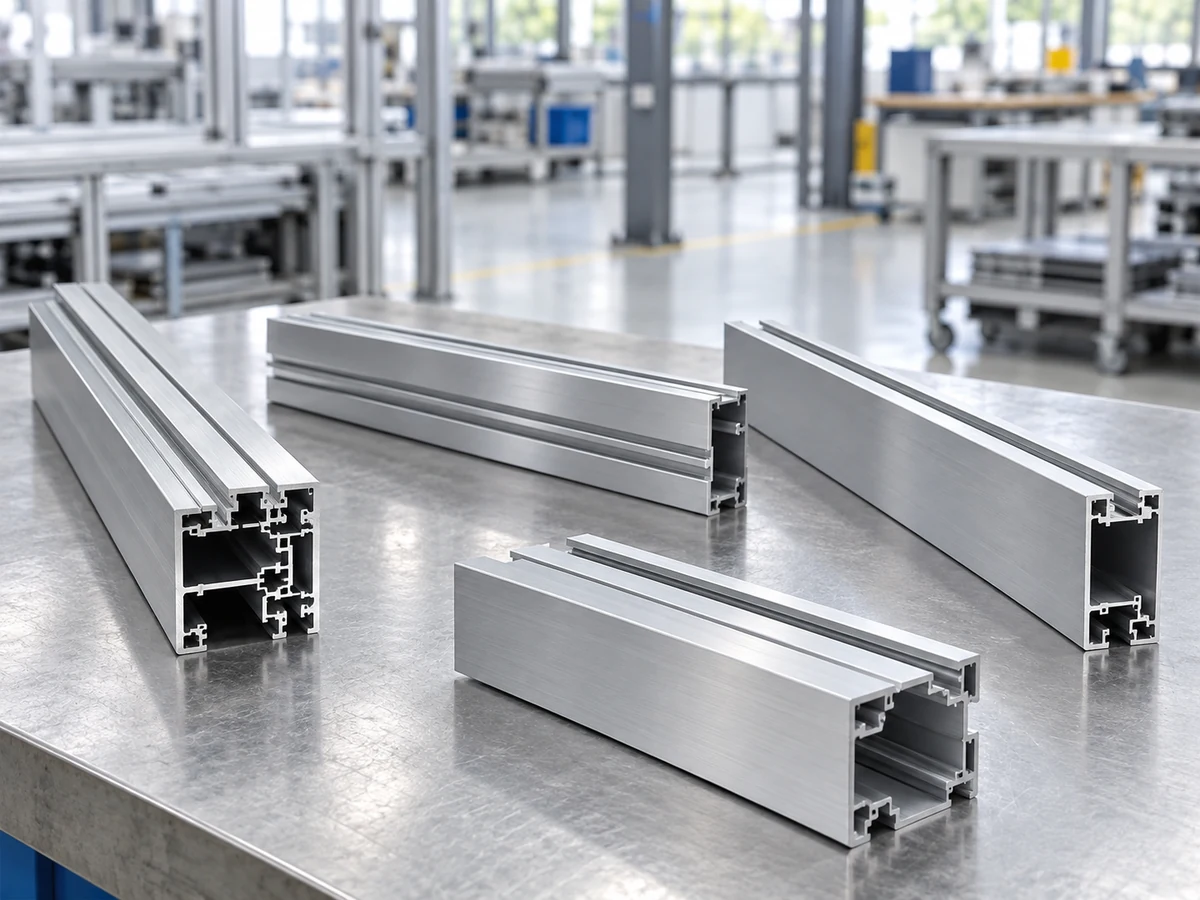
For each top rail, lower rail, vertical post, gate member and return that actually passes through the saw, give the bidder a part number, drawing revision and full cross-section. Record incoming stock length, straight or preformed state, finish condition, quantity per boat, handedness and the next process. A fence perimeter measurement is not a cut length: corners, gaps, gate openings, connectors, end caps and attachment hardware consume different space.
Mark the named length datum on the drawing. Is the accepted dimension measured from outer miter tips, inner tips, square-cut ends, or a later machined feature? Indicate angle direction and profile orientation for each hand. Use a table with columns for member, blank length, end A, end B, protected face, inspection datum and downstream operation. Our finished-length datum guide gives the general reason to agree the measuring faces before running a first-off.
A gate is a separate fit problem. Its frame may need a different gap, hinge-side preparation or latch-side machining from a fixed panel. Release the gate drawing rather than mirroring a fixed panel cut list. Confirm whether the supplier delivers only cut blanks, deburred members, assembled gate frames or a complete tested gate. The system owner must approve hinge, latch and installed clearance requirements.
Trial the actual section, finish and corner joint
Bring the real extrusion sample to the saw trial. A hollow rail with a narrow lip or panel-retaining channel may deflect where a solid test bar would not. Identify the visible face, skin-retaining edge and intended clamp-contact surfaces. Verify support on the longest member and the shortest practical offcut. Where a miter is specified, inspect the correct outer or inner reference and pair left- and right-hand members at the intended joint. Our profile-orientation RFQ guide offers a simple way to record support and contact faces.
Inspect after unclamping: length, angle or squareness, burr, cut-edge damage, channel crush, twist and marks on visible finish. Define which end treatment and cleaning operation the saw supplier must deliver. If stock is prefinished, the product owner decides whether a bare cut end is acceptable or requires a separate finish. A clean looking sample does not prove corrosion behavior, panel retention, gate strength or boat compliance.
Make a short witnessed first-off set
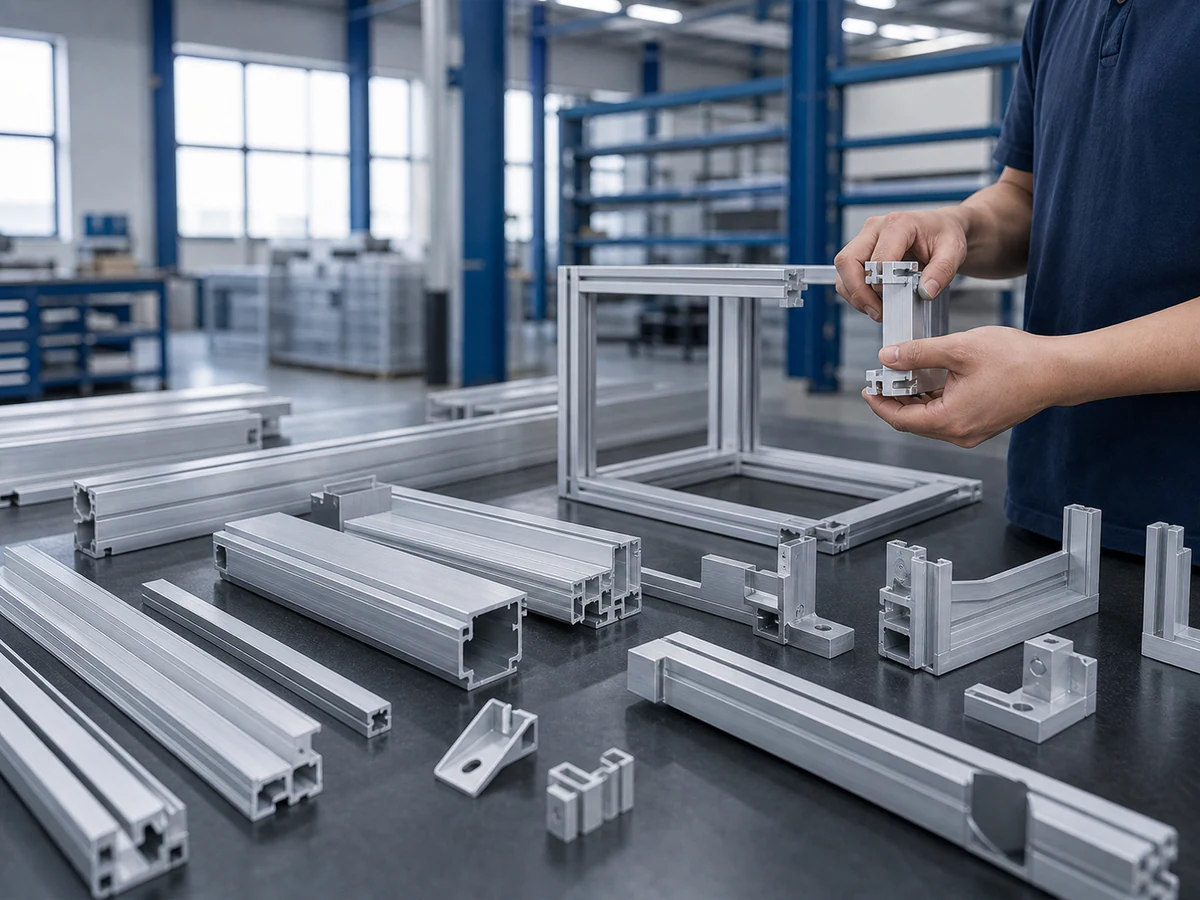
Ask each saw candidate to cut the same released stock and representative mix: a long straight rail, a short vertical, both miter hands if applicable, and a member with the most delicate visible or panel-contact feature. Label each piece with the drawing revision and saw orientation. Measure first-off and repeat pieces with the buyer’s datum and gauge method. Record blade, clamp pads, support length, setup change and the person who accepts the cut stage.
Do not judge throughput from one attractive part. Test the actual order mix, changeovers, remnants and routine rechecks. Track accepted parts per shift, scrap causes, rework and finish damage. A long narrow member that moves after unclamping may need a different support plan. If the approved part is bent before trimming, assess that as a separate operation with the actual bent stock; do not generalize from straight extrusion cuts.
Choose the supply route at the correct boundary
A complete fence kit or approved prepared section can reduce fit and compatibility risk for a replacement or short run, but the buyer still needs the supplier’s installation and acceptance information. In-house cut blanks make more sense when the OEM owns released member drawings, sufficient recurring volume, an approved assembly route and inspection capacity. A saw supplier’s responsibility can end at the measured blank; the fence-system owner still controls panel attachment, corners, gates, deck fastening and final product validation.
Request comparable quotes for the same member mix, incoming stock, required end quality, traceability and first-off procedure. Include fixtures, handling, support, blades, maintenance, operator time and scrap in the cutting option. For a kit option, include the purchased scope and any remaining installation or adaptation work. State who resolves a misfit before either order is placed.
Send a usable pontoon fence frame RFQ
- Released frame and gate drawings with revisions, actual cross-section samples and the system owner’s approval boundary.
- Per-member cut list with datum, end condition, handedness, finish state, quantity and downstream assembly step.
- Protected visible and panel-contact surfaces, permitted clamp faces and long-stock support needs.
- Witnessed first-off mix, measurement sheet, acceptable burr and finish criteria, and repeat-piece checks.
- Explicit exclusions for panel skin, connectors, gate hardware, deck mounting, installation and final-system testing.
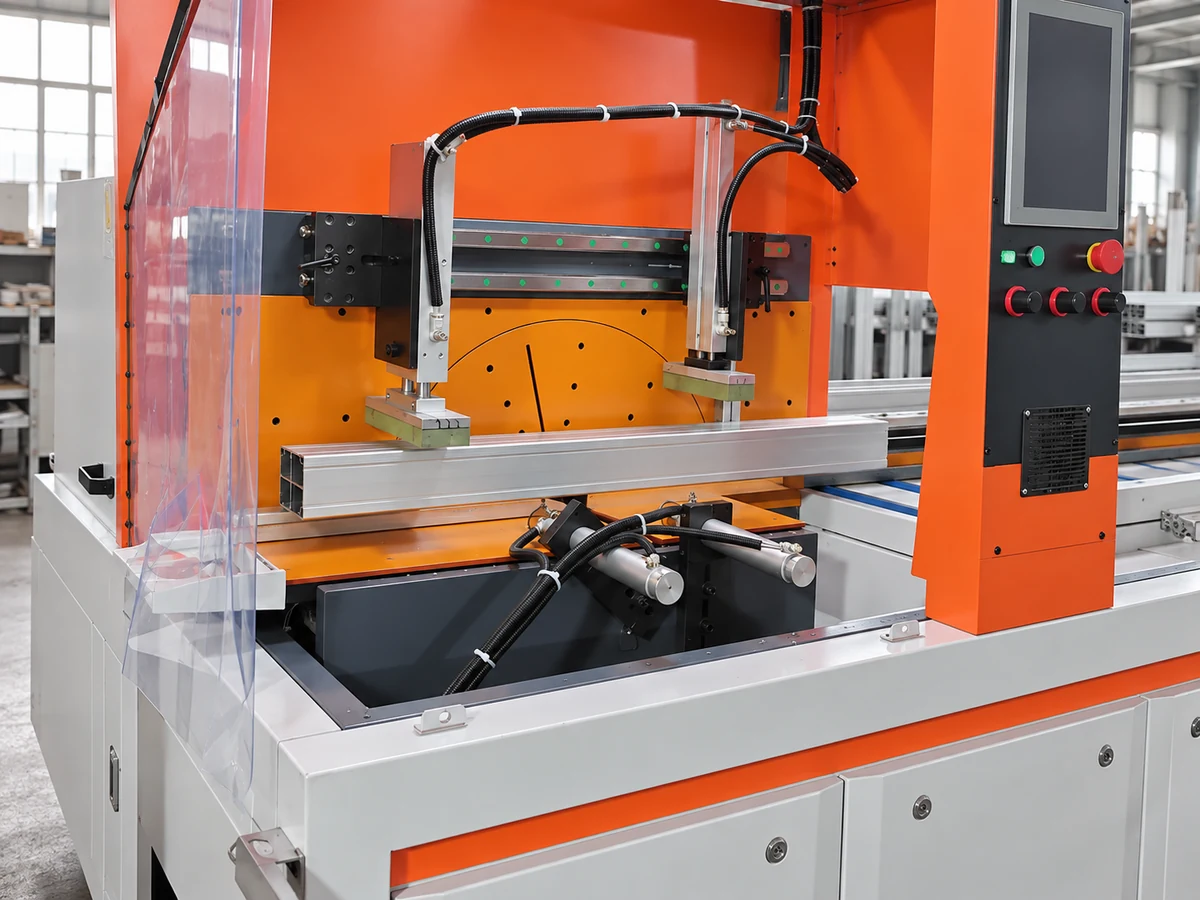
Video context: The Jiurun Machinery video below shows a separate automatic aluminum-profile cutting machine scene. It is a related equipment demonstration, not a pontoon fence member, customer order, selected fixture, quoted model configuration, trial, or performance claim.
If you have an approved frame-member drawing and cut list, send them to Jiurun with the finish and inspection requirements. We can discuss a representative aluminum-profile saw trial while your fence-system team retains responsibility for the complete assembly.