
Parking barrier arm aluminum profile cutting begins with a permission question: whose arm is being made, and which cutting route does that system owner approve? A boom is a moving part of a vehicle-access barrier. Its section, finished length, mounting end, attachments and mass belong to a specific operator and safety design. An aluminum saw can make a controlled blank, but it cannot turn a generic extrusion into an approved replacement arm. The seven checks below help an OEM or authorized fabricator send a useful cutting-machine RFQ without assigning system decisions to the saw supplier.
Product literature shows why the boundary matters. Nice lists painted aluminum barrier bars by part number and compatible operator families. Its M/L-Bar installation manual describes particular whole and cut bar arrangements. Magnetic’s catalog offers standard VarioBoom lengths and customer-specific shortening as a product route. These are manufacturer-specific examples, not general permission to shorten any arm or use any saw on it. Obtain the current instructions for the exact barrier system.
Parking barrier arm aluminum profile cutting: seven RFQ checks
1. Choose the authorized supply route before discussing the blade
There are three different purchases. A complete approved replacement arm arrives through the operator maker or its authorized channel with the required end pieces and instructions. An authorized cut-to-length route may start with a named OEM bar and a released trimming instruction. A raw extrusion blank is only a component; it may still need finishing, inserts, protection, hardware and system approval. Do not treat these routes as price substitutes until the responsible operator maker confirms that each is allowed.
Identify the operator model and revision, approved arm part number, mount side, arm style, and any articulated, breakaway or supported arrangement. Ask whether field shortening is permitted, whether the OEM supplies a made-to-length bar, and which party retains warranty and safety responsibility. If the answer is not documented, quote an investigation or sample review rather than assuming a replacement extrusion will fit. The machine RFQ should cover only the aluminum cut work the buyer will actually retain.
2. Translate lane opening into a released blank length
The nominal vehicle opening is not necessarily the saw setting. The arm can pass into a mounting flange, carry an end cap, overlap a support, or extend past the clear lane. A cut might be permitted at only one end. Ask the system engineer for the approved drawing that defines blank length, datum, allowable trimming end, cut plane and end A/end B orientation. Record the relation between clear opening, installed arm projection and the loose-part measurement; do not derive the blank by subtracting a guessed cabinet width.
For a family with several arm lengths, put every authorized part in a controlled matrix: operator and arm part numbers, revision, stock length, finished length, quantity, finish state, trim end, and next operation. A machine comparison based on one short sample can miss the longest actual stock. Mark any joined, telescoping or articulated arm as a different assembly route, not a straight saw blank. The Nice manual’s specific cut-bar examples illustrate the need for model-level instructions; they are not a universal length formula.
3. Describe the real section, finish and accessory interfaces
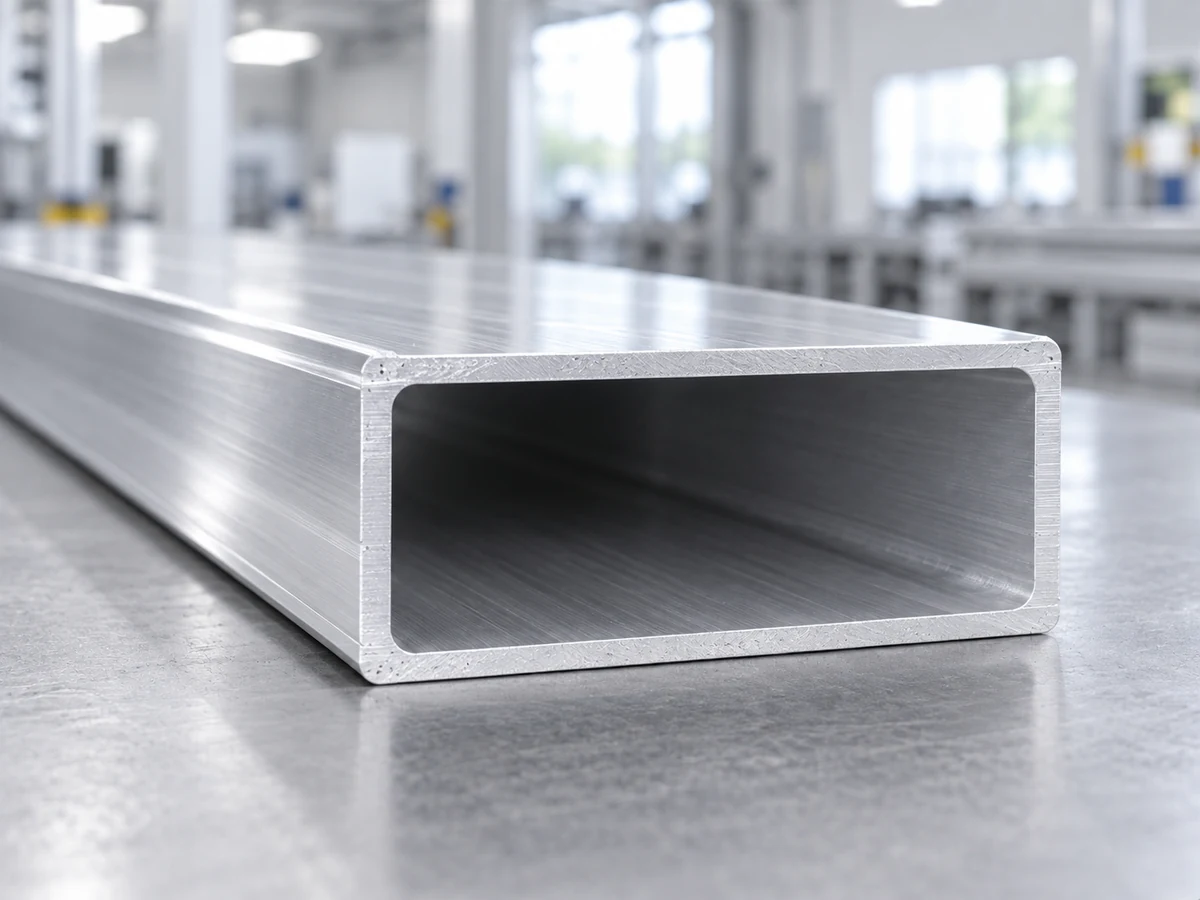
Send a current cross-section and a physical sample when possible. The RFQ needs the section envelope, wall details, alloy and temper if specified, finish, visible faces, allowable clamp zones and stock straightness condition. A painted or anodized bar may need different contact protection from mill-finish stock. Tell the saw vendor whether reflective tape, rubber edge protection, light strips, wiring, end caps or mounting inserts are fitted before or after cutting. Do not ask the saw shop to remove or disturb an installed accessory unless the system owner has released that operation.
Nice’s accessory catalog, for example, lists bar-specific protection and lighting items alongside its aluminum bars. That shows why a cut profile is not the whole arm package. Capture any slot or channel that must remain usable after cutting, and specify which edges may be deburred. A different aluminum tube that happens to fit a measured outside envelope may change the arm mass, stiffness or interface. Its suitability is an operator-design decision outside the saw acceptance test.
4. Prove feed, support and clamp contact on the actual stock
A long, light hollow profile can move or mark under the wrong support and vise arrangement. Check the machine’s guarded opening against the real cross-section, then check the entire incoming stock length on the infeed. Specify support spacing, roller or bed contact, fence datum, clamp pad material, feed grip and outfeed collection. Keep the operator away from an unsupported free end and follow the machine manufacturer’s guarding and handling instructions. None of these points can be settled from blade diameter alone.
Use a trial matrix that includes the longest authorized bar, the shortest permitted trim and any finish or section variant that changes contact. Record whether the profile twists, shifts, dents or scratches when clamped, and whether the datum stays repeatable through loading and discharge. Note the actual setup, guard clearance, first-off measurement and rejected pieces. A demonstration on another aluminum profile only shows the general cutting process; it does not prove that the proposed configuration accepts the buyer’s barrier stock.
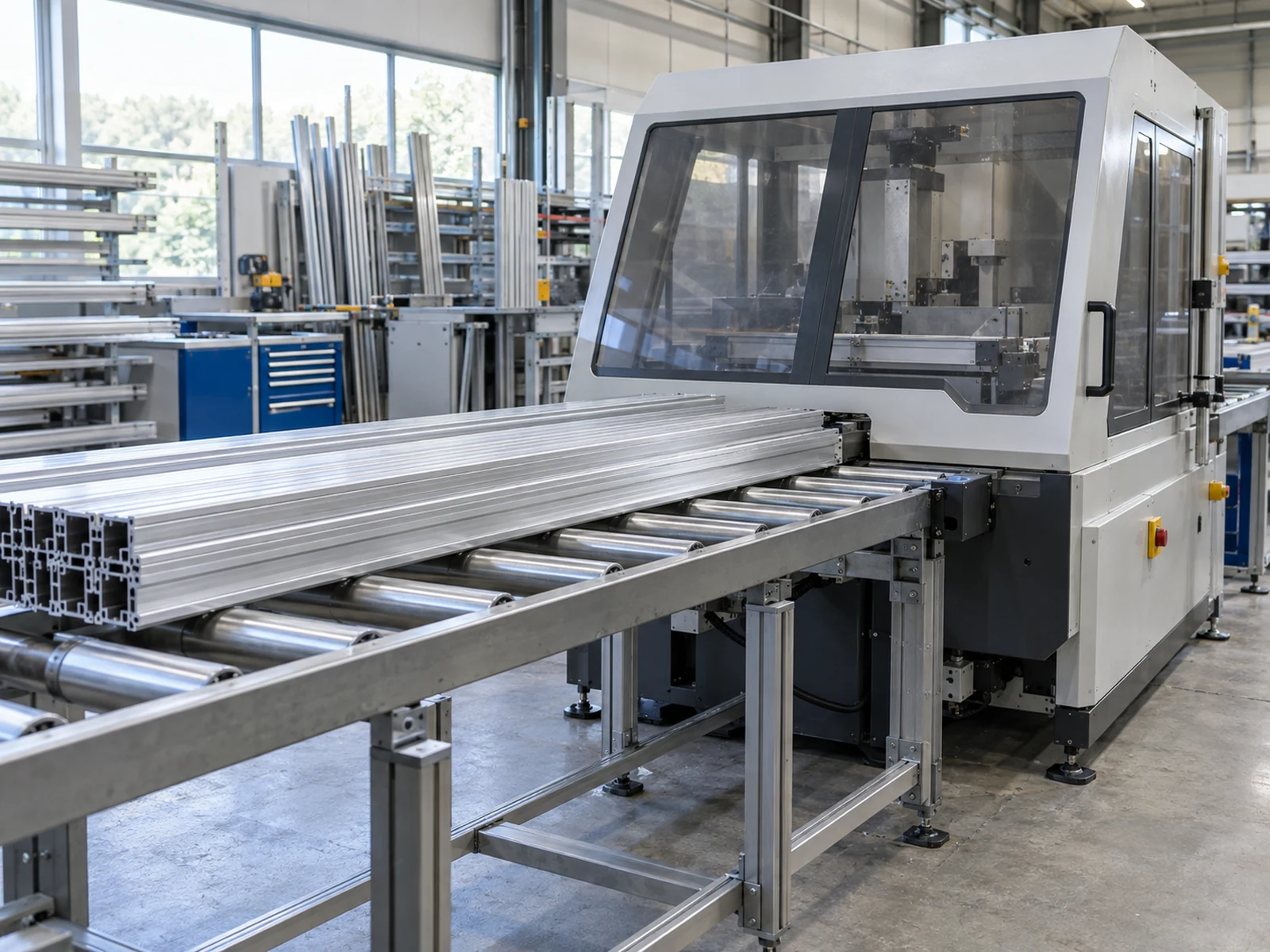
The Jiurun video below is an actual Jiurun Machinery channel equipment demonstration. It shows a related industrial aluminum angle saw in operation. It does not show this article’s barrier arm, approved trim instruction, customer order, selected machine configuration, sample test or traffic-safety result.
5. Accept the cut end as a component, not an installed system
Define the cut-end acceptance plan before requesting a trial. State the finished length limits from the released drawing, measurement datum and method, squareness or specified angle, burr and edge condition, surface protection and permitted witness marks. Include how the end cap, rubber edge or approved insert will be fitted afterward. A clean visible end is useful, but it is not evidence of mounting fit unless the authorized assembly team checks that interface with the intended hardware.
Label the first-off with arm part number, drawing revision, material/finish lot and cut setup. Segregate any trim made from uncertain stock rather than letting it become a spare. Do not drill the mounting end, change an OEM hole pattern, add a joint, or substitute a cap under a cutting-only approval. The receiving record can say “cut blank passed the agreed length and surface checks”; the responsible barrier maker must decide whether the installed assembly is acceptable.
6. Return balance and traffic safety to the system owner
Arm length, material, accessories and support affect moving mass and the operator arrangement. HySecurity’s StrongArm specifications vary arm design with model and length and identify counterweights or stabilizing equipment for certain longer arms. This is an example of system dependence, not a design rule for another product. A saw supplier should not promise motor loading, opening speed, breakaway behavior, pedestrian protection or traffic approval from a cut sample.
Before commissioning or replacing an arm, the operator maker or qualified integrator should apply the current installation instructions and verify the approved arm, mounting, support, balance, sensing and protective devices for the site. Keep the cutting trial record available to that team, but separate it from the installed-barrier acceptance record. If the approved bar route is unavailable, sourcing the complete replacement assembly may be safer and more economical than building an unapproved component from a similar extrusion.
7. Quote the full retained cut work and receiving route
Ask each saw supplier to price the same released member mix and production period. Include the approved input stock, maximum length, short-trim frequency, changeovers, protective contact pads, infeed/outfeed, chips, first-off checks, labeling and rejects. Compare a complete OEM replacement arm route separately, including lead time and authorized shortening service where offered. An inexpensive raw blank can become an expensive purchase if the buyer still needs finish, accessories, assembly, transport protection and design approval.
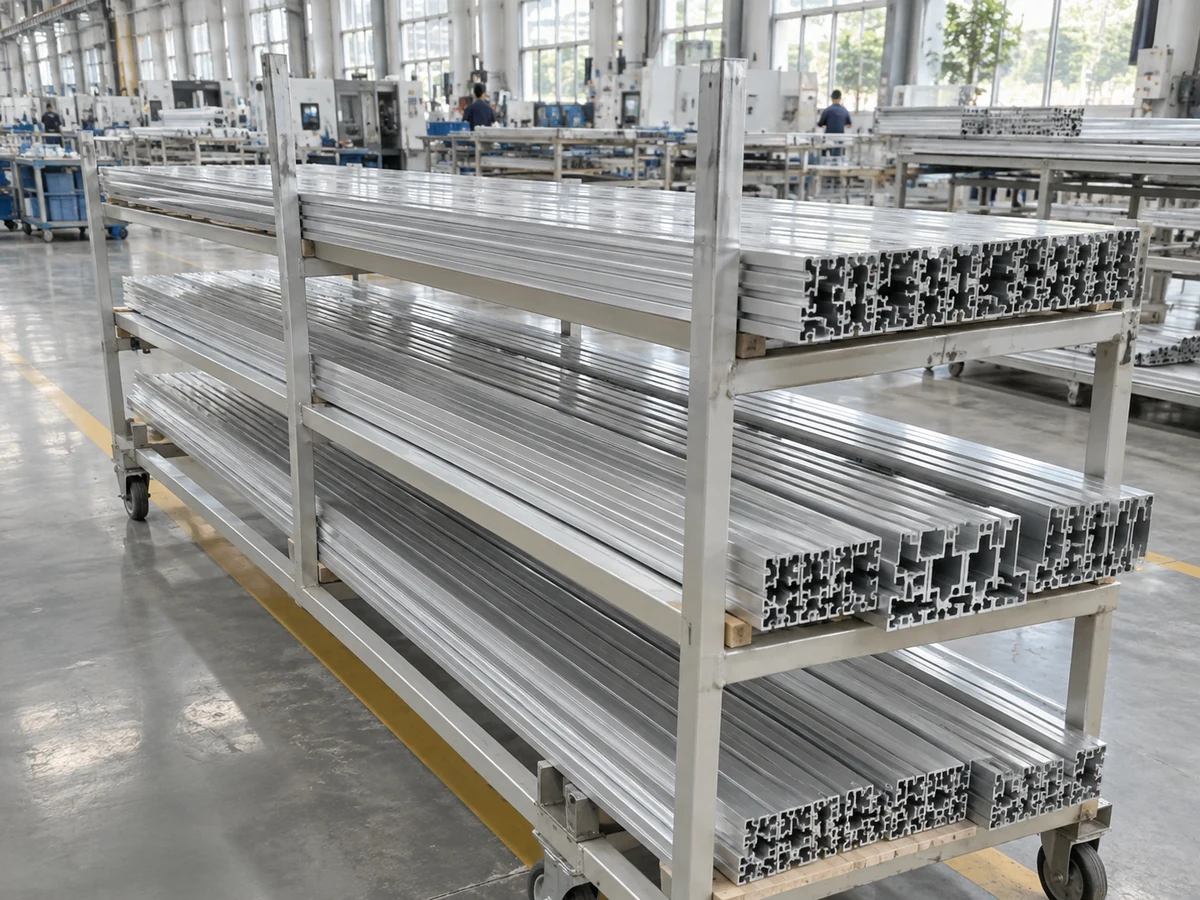
For shipping, record whether an arm is a bare cut profile or a completed protected component. Long parts need an agreed support and packaging method so accepted ends and visible finishes survive movement. Group parts by operator/arm revision and avoid mixing bar families that look alike. The delivery document should say exactly which cut work and inspection were performed, which accessories remain to be installed and who accepts the final barrier.
Copy this parking barrier arm cutting RFQ checklist
- Operator maker, exact model/revision, authorized arm part number and written trimming route.
- Released profile drawing and physical stock sample; section, alloy/temper if controlled, finish and protected faces.
- Clear opening, installed projection and approved blank length as separate fields; datum, trim end and end A/end B orientation.
- Accessories already fitted, accessories installed later, permitted deburr work and mounting-end restrictions.
- Longest input stock, shortest permitted trim, clamp zones, support method, guard clearance and changeover mix.
- First-off acceptance: length, end geometry, edge/finish condition, traceability, rejects and receiving owner.
- Quoted machine, tooling, pads, feed/outfeed, training, sample trial and exclusions; separate complete-arm alternative.
Questions buyers should settle first
Can any aluminum barrier boom be shortened? No general rule follows from a product category. Some manufacturer documents describe specific shortening routes, while other arms or configurations may require a complete approved replacement. Follow the exact operator and arm instructions.
Does the measured lane width equal the saw cut length? Not automatically. The installed projection, mounting engagement, end piece and support arrangement can change the relationship. Use the released drawing and datum.
Does a passed cut trial make the barrier safe? No. It checks the defined blank and saw setup. The operator maker or integrator retains the system-level installation and safety assessment.
If you have an authorized parking barrier arm aluminum profile cutting route, send Jiurun the released profile, arm matrix and trial requirements. We can review the aluminum cutting operation and what a useful sample check should record. For related setup questions, see our long-profile feed-support trial guide and guard-opening checklist. The barrier-system owner remains responsible for arm compatibility and installed traffic safety.