
A JR-550CNC-CORNER feed support decision starts with the stock and the accepted part, not a photograph of the saw bed. A buyer may have long, flexible profiles, short mitered outputs, visible faces, and a small team that must load and clear the machine. The quotation needs to show what supports the profile before it reaches the cutting zone, what happens during the cut, and where every accepted piece goes afterward. A saw that can make the requested angle is only one part of that route.
This guide focuses on physical stock support and handoff for a proposed JR-550CNC-CORNER installation. It does not assume that a particular roller table, automatic loader, discharge system or fixture is included in every version. Ask Jiurun to mark the exact quoted equipment on a layout and confirm it against your drawings. The separate JR-550CNC-CORNER program-recall trial addresses mixed-angle program changes; the support test below asks whether the material remains correctly located and handled throughout the physical route.
JR-550CNC-CORNER feed support begins with the real stock envelope
Before requesting a price, separate the lengths and sections actually bought from the finished lengths on the cut list. A long bar can be easy to describe by its nominal dimensions but difficult to guide when its exposed side has a lip, an open cavity or a protected finish. A short output creates a different risk at discharge. Supply a small, controlled sample set rather than one convenient piece selected for a demonstration.
- Record the incoming profile drawing and revision, stock length range, section orientation, visible face and any protective film. Mark the face that may contact guides or rollers.
- Identify straightness or twist conditions that actually occur in received material. Agree how incoming variation will be measured and distinguished from a machine setup issue.
- List the longest input, the shortest retained output, the heaviest or least stable section and any left/right-hand miter pair. These do not have to be the same part number.
- State whether a worker loads from a rack, a cart or another process, and whether a separate device must hold the unsupported end while the saw is fed.
- Define the finished-part datum and acceptance method. Feed movement or a controller setting cannot stand in for measurements on the accepted cut piece.
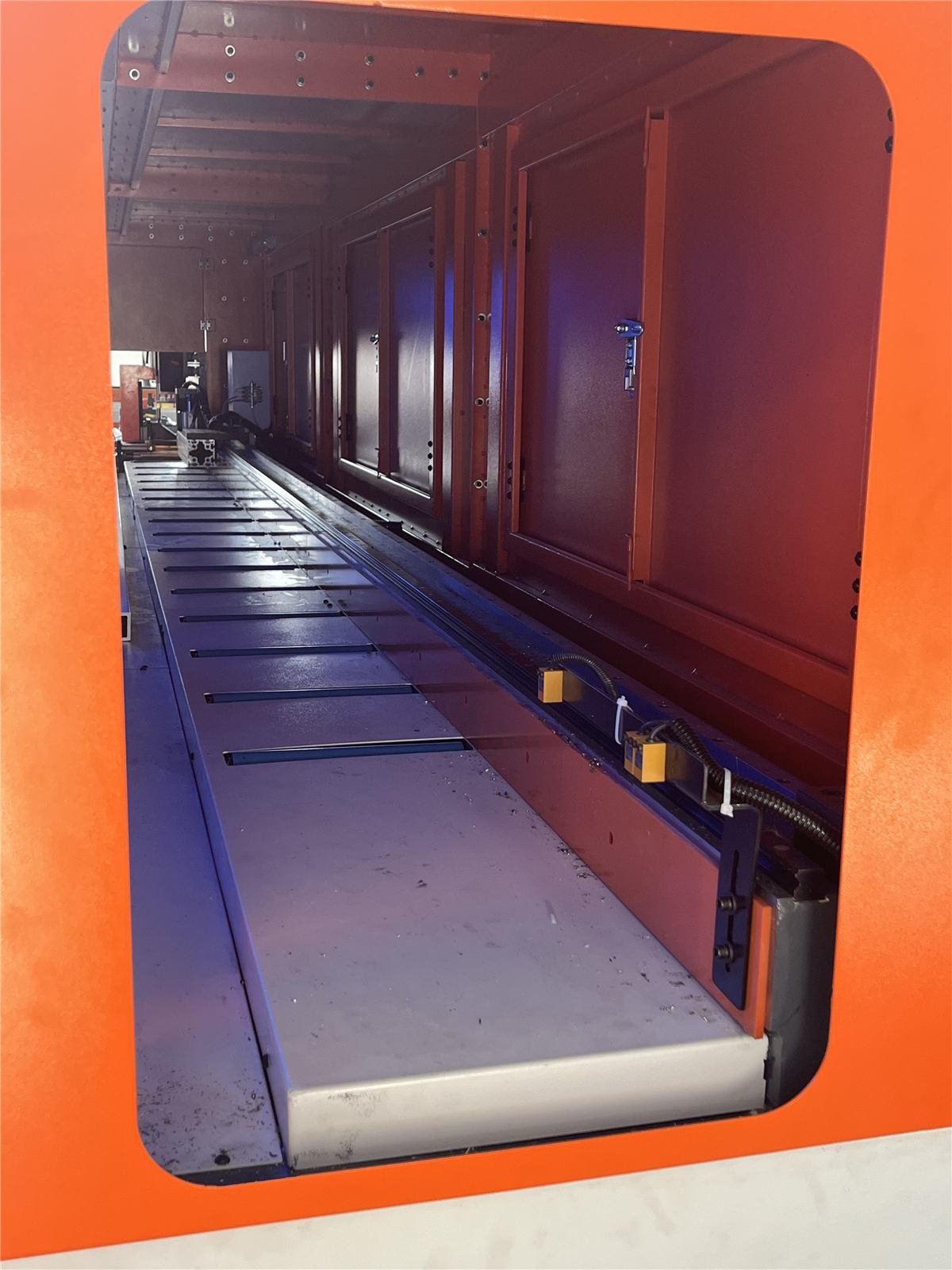
Draw the route from stock rack to cut zone
Ask the supplier to draw the installation at the same scale as the buyer’s floor plan. Put the stock rack or cart, loading position, feed table, saw enclosure, operator position and outfeed destination on one drawing. Mark the maximum stock length used for the quote and the walkways and guarding access that must remain clear. A narrow top-view sketch can conceal a high profile, a swinging door, or the space needed to lift a long bar safely.
For each contact zone, ask what locates the profile: a fixed fence, adjustable side guide, roller, clamp or temporary hand support. Record where the datum is established and whether it can change as the bar passes between supports. If the open side or visible face could touch a roller edge, request a contact sketch using the actual section drawing. A photo of an empty machine cannot establish safe contact for a different extrusion.
The quote should identify what is part of the machine, what is optional, and what the buyer must supply. A separate infeed support may look inexpensive until its alignment, floor anchors, guarding clearance and responsibility for maintenance are left undefined. Conversely, a longer accessory is not automatically useful if the buyer’s mix is dominated by short pieces and frequent profile changes. Decide from the actual production mix and the trial observations.
Trial the long bar, the changeover and the short piece
A useful factory trial should not consist of a single favorable cut on a straight sample. Bring the agreed stock lengths, sections and drawing revisions. Mark the locating face on each bar. Observe first-off setup, a steady run, a switch to a second profile and the return to the first if changeover is part of the order mix. Record every manual lift, repositioning step and adjustment at the supports. If a worker steadies the overhanging stock during the demonstration, write that action into the proposed staffing and safety method instead of calling the process fully automatic.
At a minimum, inspect three moments. First, observe the longest stock before the first cut: does it remain seated against the agreed locating surfaces as it enters the saw? Second, observe the part while it is clamped and cut: do contacts avoid the protected face and does the free end remain controlled? Third, observe the shortest accepted piece as it leaves: can the team identify, collect and inspect it without confusing it with a remnant? A trial record should capture the observed setup and accepted outputs, not just the controller values.
Measure a retained first-off, middle-run and final piece from each important setup using the drawing’s datum and agreed gage. Record cut-end condition and visible-face marks separately from length or miter angle. If the downstream process is frame assembly, let that team test the relevant joint on retained samples. The number of good pieces in a favorable short run is not a guaranteed production rate; compare candidate support arrangements with the same material, inspection rule, staffing assumption and changeover pattern.
Make outfeed and rejected-part handling visible
The outfeed is part of the acceptance route. For every quoted part family, state whether the piece is caught by a support, lands on a table, is removed by an operator, or moves to another station. Mark where a good part, remnant and rejected part are placed. Long profiles need a stable destination; short mitered pieces need clear identification so left and right hands are not mixed. If the quotation includes a conveyor or sorting device, identify it by drawing and test it with the buyer’s real parts. Do not infer such equipment from a cropped machine photo.
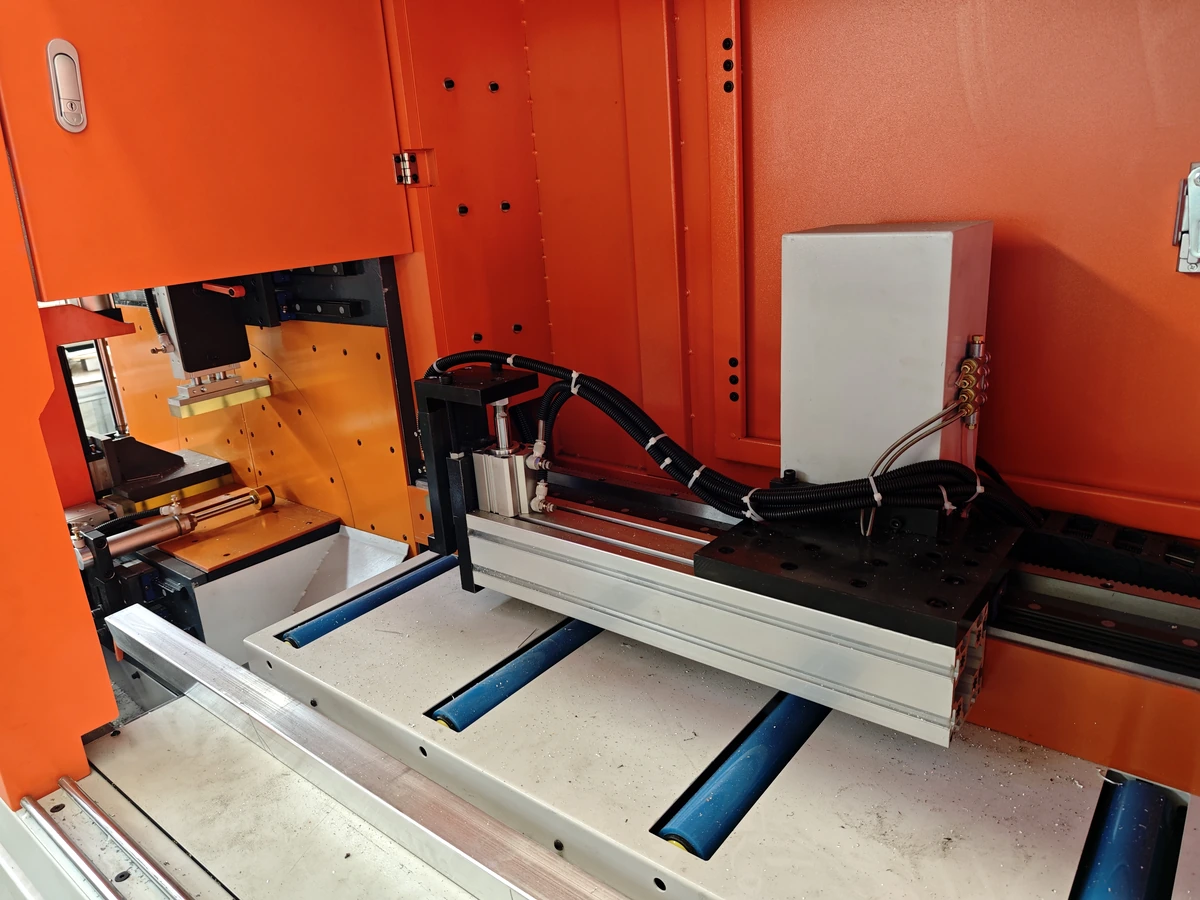
Ask the operator and receiving team to sign off the route together. A nominally clean saw cycle can still leave an awkward manual catch or an unlabelled pile at the end. Keep a photograph or sketch of the approved support positions with the acceptance record, alongside the sample IDs and measurements. If the support position or handling method changes after the trial, decide which parts must be rerun before release.
What to put in the RFQ and acceptance sheet
- Identify the exact JR-550CNC-CORNER version, layout revision, included infeed and outfeed equipment, and any optional accessories.
- Attach released profile and part drawings, stock lengths, contact restrictions, handedness, cut list and downstream fit requirements.
- Show the longest input and shortest output on a scaled route drawing, with operator positions, guarding movement and service access.
- Specify the representative trial sequence: first-off, steady run, relevant profile changeover, return setup, accepted-part count and handling actions.
- Define the measurement datum, gages, sample retention, surface and cut-end criteria, and how rejected parts and remnants will be logged.
- Name who supplies and maintains the support tables, rollers, guides, contact pads, fixtures and part containers.
Ask for a quote response that marks each line as included, optional or buyer-supplied. Leave an unresolved item open rather than silently assuming the sales photograph answers it. That makes quotations from different configurations comparable and gives both teams a concrete factory acceptance boundary.
Video: general Jiurun angle-saw equipment context
The following Jiurun-channel video shows general automatic angle-saw equipment and the cutting area. It is not proof of the exact JR-550CNC-CORNER version quoted here, the buyer’s long stock, support accessories, a customer job, a witnessed trial, or any claimed accuracy or output. Use the layout and a project-specific run to establish those facts.
The buying decision
Request the final price only when the proposed support and handoff route works for the buyer’s representative longest bar, vulnerable section and shortest accepted piece. Send Jiurun the controlled stock and part drawings, production mix, floor plan and trial acceptance sheet. Ask for a marked layout and a configuration-specific test before comparing the cost of the saw, handling equipment and labor as one purchase.