
Mill finish aluminum describes a supply surface condition, but it does not by itself define a cosmetic appearance standard. For an extrusion, the term refers to the finish produced by the extrusion operation. If the part needs a controlled appearance or a later treatment, the order must say so.
The phrase is useful when buying stock and planning cutting. Problems arise when one team reads it as “ready for display,” another reads it as “ready for coating,” and a third assumes it identifies the alloy. Five questions help turn that short label into a clearer supply discussion.
What the buyer needs to decide
- Specify the stock surface separately from alloy and temper.
- Define any required appearance checks on the relevant faces.
- Identify the delivered stage and the owner of later finishing.
On this page
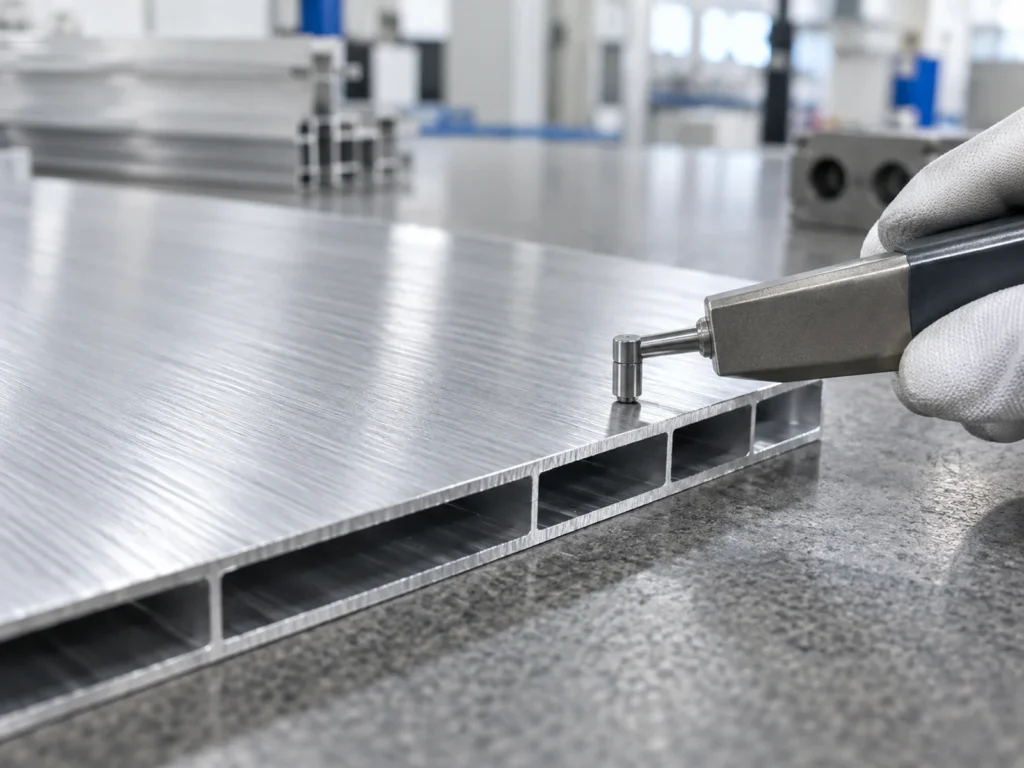
1. What does mill finish aluminum mean for an extrusion?
The Aluminum Extruders Council glossary defines mill-finish extrusion by the surface generated in extrusion, without an additional customer or standard finish specification. It also notes that the finish may differ between parts.
The practical point is to read “mill finish” as a surface-supply description. If your order needs a particular visible-face condition, record that requirement separately. A short finish label should not substitute for an approved appearance requirement.
This guide focuses on extruded stock for cutting. When a supplier offers plate, sheet or another product form, ask for that product’s applicable supply description rather than transferring an extrusion definition to every aluminum product.
Bayer Aluminum’s mill-finish description also distinguishes the as-extruded surface from additional surface treatment. Confirm whether the supplied profile has received a separately specified treatment. If the offer includes anodizing, painting or a mechanical surface treatment, identify it clearly in the order. Do not combine incompatible descriptions into a line that receiving cannot interpret.
2. Does mill finish guarantee one color, gloss or texture?
No single photograph defines every mill finish aluminum surface. The AEC definition allows variation between parts. A sample can help the discussion, but the buyer still needs to decide what condition is acceptable for the intended use.
Identify the faces that customers will see and the features that matter there. If appearance acceptance is required, ask the drawing or quality owner to define the reference and review conditions. Keep approved samples identifiable by part, revision and purpose.
Do not reject or accept a mark solely because somebody calls it “normal mill finish.” Record where it is, which requirement applies and who is authorized to decide. Our extrusion surface marks guide explains how to separate description from an unsupported cause or acceptance conclusion.
Also distinguish appearance from a numerical roughness requirement. “Silver,” “smooth” and “mill finish” are not measurement values. If the drawing specifies roughness, the measurement and acceptance method must come from the controlling requirement.
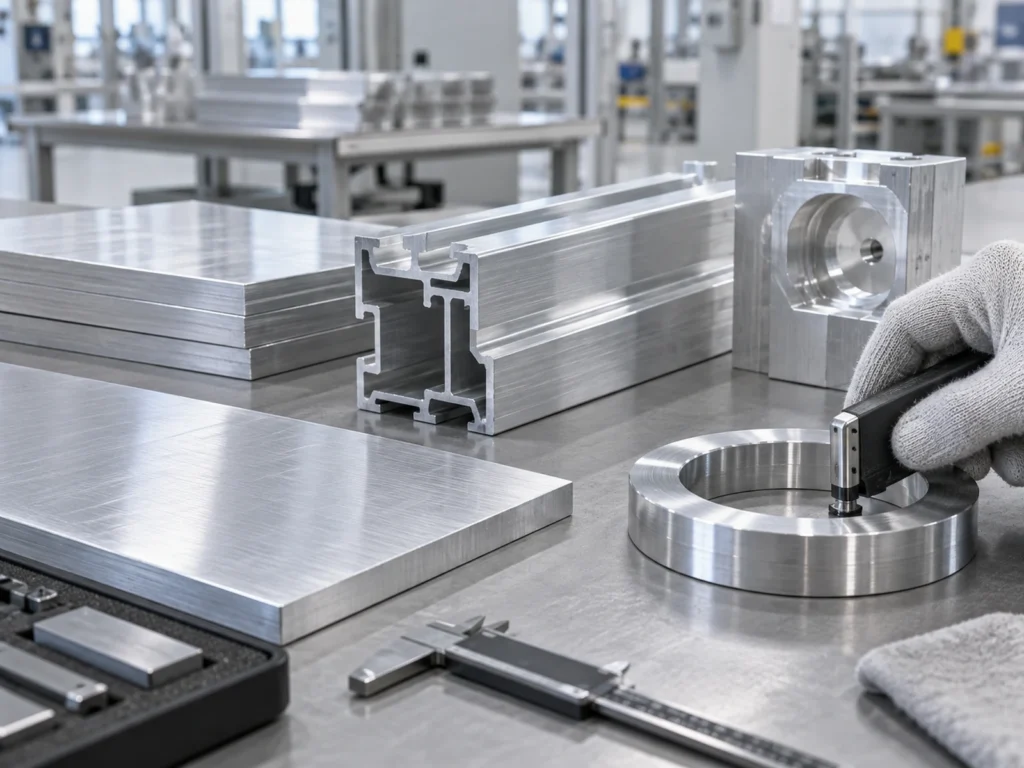
3. Does the finish identify alloy, temper or service suitability?
Mill finish aluminum does not replace the alloy and temper fields in a purchase order. Keep the complete material reference, stock section and required evidence alongside the surface description. A similar-looking replacement is still a material substitution if its specification differs.
For example, an offer that says only “mill-finish extrusion” leaves the material identity incomplete. Ask for the controlled material specification rather than guessing a grade from the application or a picture. Our material certificate guide helps connect the required evidence to the supplied batch.
Suitability for the intended environment is another decision. AEC’s finishing overview explains that finish selection depends on appearance and the in-use environment, and identifies painting, anodizing and mechanical treatments as options.
Have the responsible product designer define the required surface system for the application. The label “mill finish” does not establish a service-life promise, a weathering test or a coating qualification. Avoid turning an unverified stock description into a performance claim.
4. At what stage should the surface be reviewed?
Define whether the surface requirement applies to received stock, cut blanks or a later finished component. Cutting creates new end faces. Later machining or finishing can create another acceptance stage. Give each stage the requirement that actually applies there.
For a visible member cut from long stock, mark the show face and the cut ends separately. The broad face’s stock condition and the end’s cutting condition may need different checks. Use our visible-surface cutting guide to explain which faces must be protected during handling.
If a later coating operation is planned, the finisher should define the incoming condition and preparation requirements. Do not assume that uncoated stock is ready to coat without further review. Keep cutting, cleaning or preparation, finishing and release responsibilities visible in the routing.
A clear handoff identifies what the cutting supplier must deliver now and what the next operation will complete. It helps the receiving team avoid accepting a cut blank against a finished-component appearance reference.
| Order field | What it identifies |
|---|---|
| Material | Approved alloy, temper and stock specification. |
| Stock surface | Surface condition supplied before cutting. |
| Delivered stage | Cut blank or the specifically included later work. |
| Appearance reference | Agreed faces, review stage and acceptance basis. |
5. What should handling and packing protect?
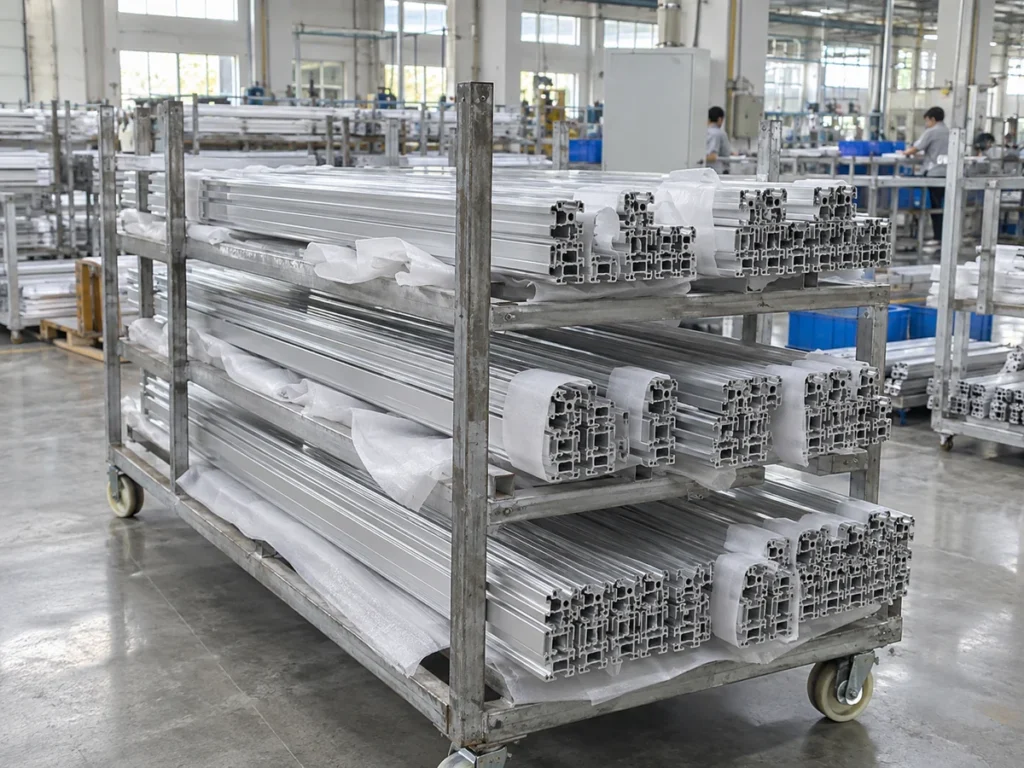
Identify the faces and edges that need protection, then agree the packing method. Include any restrictions on labels, contact materials or stacking in the order. A general note to “pack carefully” leaves the warehouse to invent the requirement.
Keep batches and surface states identifiable. If similar profiles are supplied in different finishes, use the packing list and permitted labels to distinguish them. Do not expect receiving to sort them reliably from a distant photograph.
If protective film or wrapping is included, state its scope and the handoff responsibility. A protective layer is a handling provision; it does not tell the buyer what underlying finish or material was supplied. Ask the owner of any later finishing operation to review the incoming protection requirements.
A fictional mix-up: the sample and order describe different stages
Imagine part F10 is ordered as mill-finish stock cut to length. The buyer sends a polished display sample as a color and appearance reference, but the quote does not include polishing or an approved comparison requirement.
The two documents describe different surface stages. The supplier may understand the order as cut stock, while the buyer expects the sample’s final appearance. Resolve the difference before ordering instead of using the photograph as an unstated finishing instruction.
The revised record can keep mill-finish stock as the starting material and name polishing as a separate required operation, if the design owner approves that scope. This is a fictional documentation example, not a treatment recommendation or an actual supplier result.
A clearer order record for mill finish aluminum
Write the part and revision, material specification, stock surface, cutting dimensions, delivered stage and surface acceptance requirement as separate fields. Add the relevant protected faces and packing instruction. Link the evidence to the batch that will be delivered.
That record gives purchasing, cutting and receiving the same description. If one field is unknown, leave it visibly pending for the responsible owner. A guess hidden inside “standard finish” is harder to resolve after the shipment arrives.
Buyer questions
Can mill finish aluminum still need later finishing?
Yes. The supplied surface and the required final surface are different fields. The order must identify any later treatment and its responsible supplier.
Does mill finish mean polished aluminum?
It does not specify a polishing operation. If polishing or an appearance match is required, define that scope and its acceptance basis separately.
What should I send for a cutting review?
Send JiurunCut the material and stock-section reference, cut-part drawing, quantities and marked surface requirements. State whether the delivery is a cut blank or includes specifically agreed later work.