
Moving a conveyor or widening a work cell can leave the existing machine-guard boundary short of the new layout. An aluminum frame extension may look like a simple set of longer members, but a cut list alone does not establish that the resulting enclosure controls access to the changed hazard area. The buyer first needs to decide who owns the revised guard design and validation. Only then does it make sense to compare an approved extension module with a kit of cut members.
This guide is for procurement teams buying aluminum members for a machine guard frame extension. It separates the machine builder’s or integrator’s protection decision from a saw supplier’s narrower cutting trial. The right purchase unit depends on the approval path, the existing guard’s revision, and the interfaces that changed.
Machine guard frame extension: define the changed boundary
Ask the equipment owner and the responsible machine builder or integrator for a marked-up layout showing the old and proposed positions of the machine, conveyor, access doors, fixed panels, and maintenance routes. Record the equipment identifiers and the current guard drawing revision. Note whether the project adds an opening, moves a gate, changes a panel span, or only relocates an already approved module. Each case creates a different approval and purchasing scope.
Keep the engineering decision with the party responsible for the machine. The ISO 14120:2015 overview addresses general requirements for fixed and movable guards, while the OSHA machine-guarding overview explains the purpose of preventing access to mechanical hazards. Neither page approves a particular retrofit. Door interlocks, clearances, anchoring, and access arrangements require project-specific assessment by the responsible qualified parties.
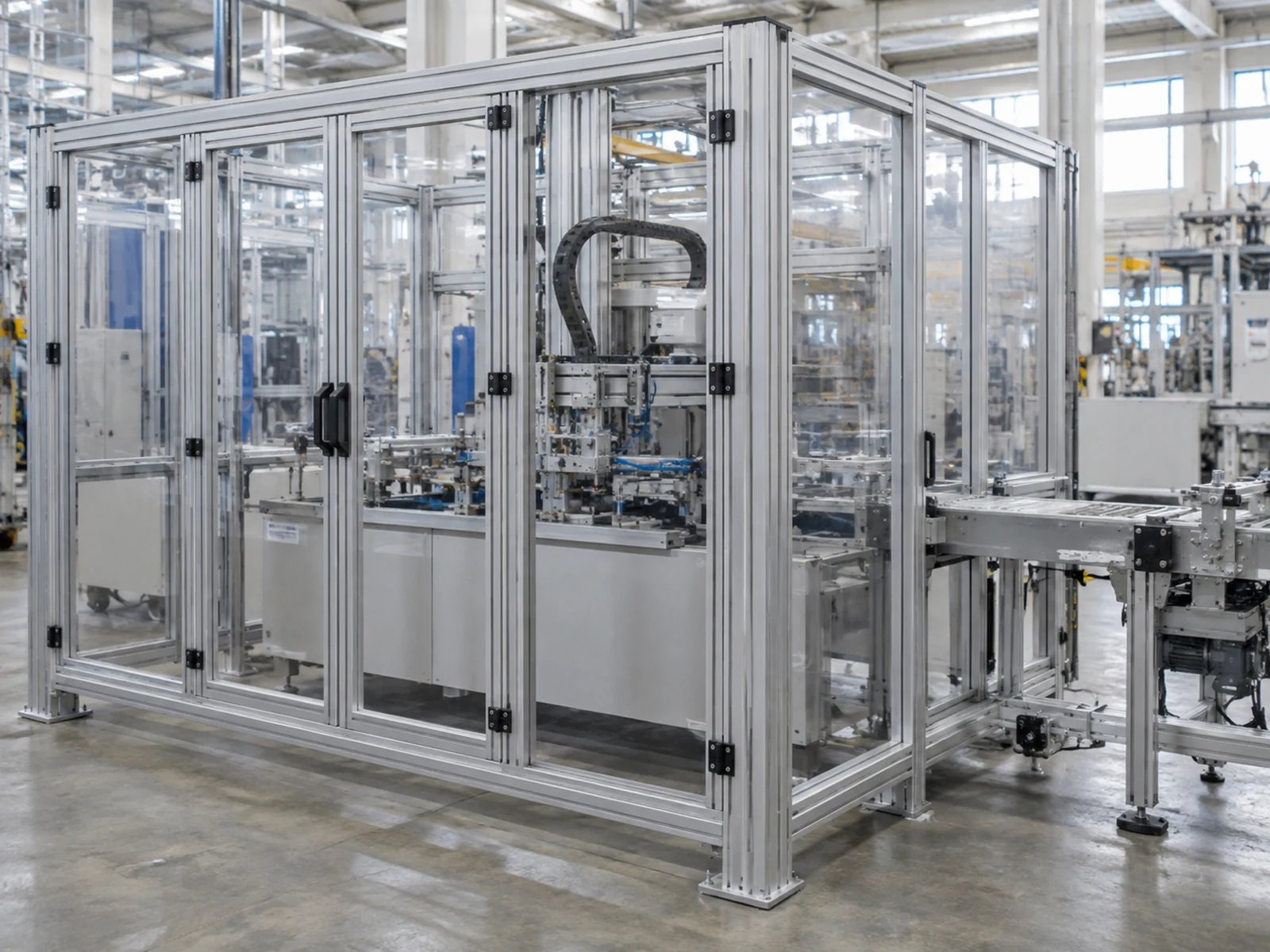
Which purchasing route has an accountable approval owner?
Approved extension module
The buyer receives a released module or assembly identified by drawing and revision, with defined interfaces and installation documentation. The responsible machine builder or integrator must confirm its applicability to the changed layout and own commissioning.
Replacement guard section
This is a revised complete section for a case in which old posts, panels, openings, or supports cannot be carried forward as approved. The responsible designer must release the new section and acceptance plan.
Cut-member kit
The buyer receives individual aluminum members cut to an approved list, identified and packed for a separate qualified assembler. This route requires a released design and clear ownership of the other components, assembly, and validation.
A cut-member kit is a supply format, not an engineering shortcut. If the revised layout has no released guard design, the kit price should not be compared with a complete module price as though both deliver the same outcome. A module quote may include panels, hardware, documentation, and integration work; a member quote normally does not. Ask suppliers to state inclusions, exclusions, and the exact revision used.
Build a controlled cut-member package
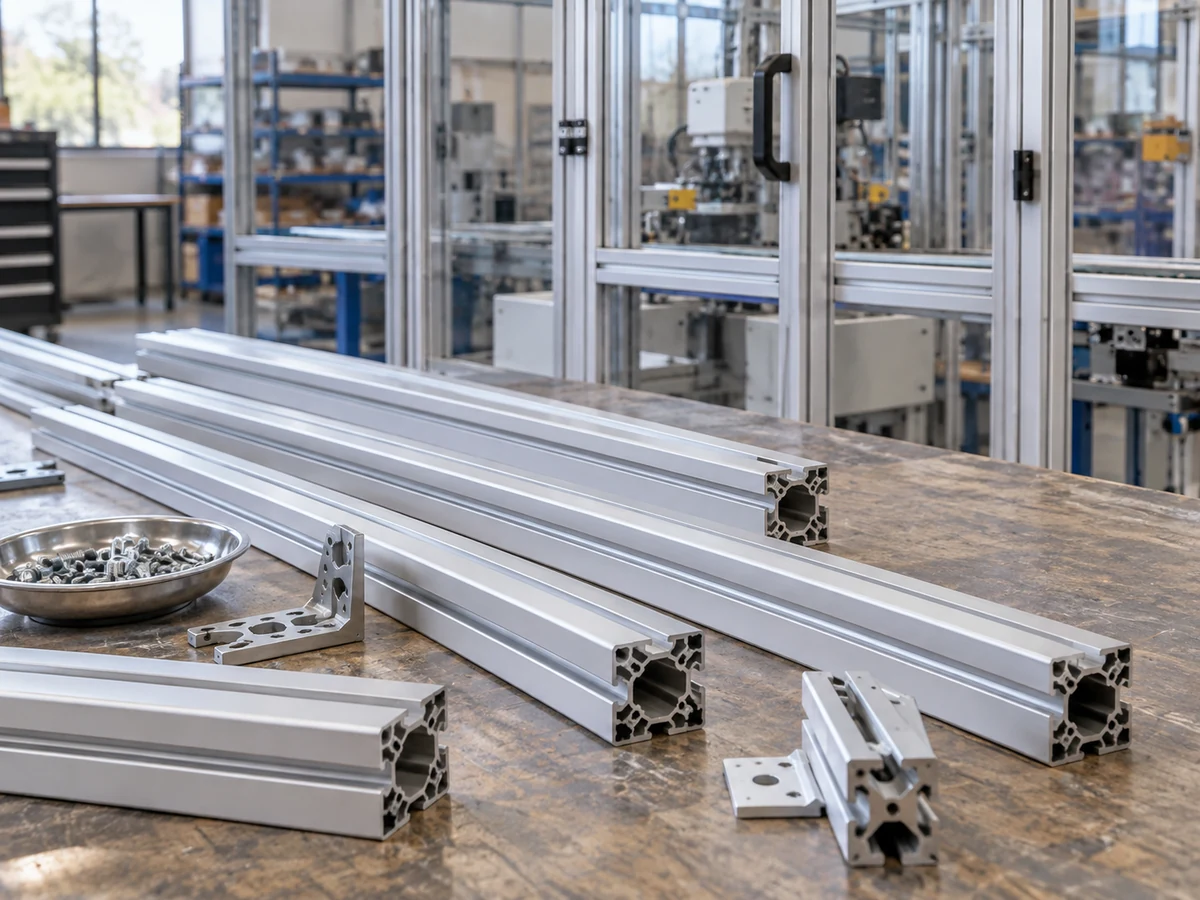
When a qualified designer has released the extension, the cutting package should tie every member to a drawing item and revision. Request the profile section and finish, quantity, nominal cut length and allowable cut tolerance, end condition, hole or slot operations if supplied, orientation marks, and an item label. Record whether the order includes loose connectors, fasteners, panel retainers, mesh or transparent infill, and spare members. A quote for saw-cut profiles should identify which of these are outside scope.
For each joint, distinguish a saw-cut end from the final assembly interface. An extrusion may be cut to the requested length yet still fail to fit the released connector or neighboring panel. Ask for an approved first article or sample when the section, finish, or end preparation is unfamiliar. The responsible designer should specify the acceptance method; the cutting supplier can then show that the delivered members match that specification.
Check the retrofit interfaces before releasing volume
Use the current and proposed guard drawings to identify the physical interfaces that changed: existing post locations, support surfaces, panel edges, door swings, conveyor penetrations, and maintenance access. Confirm that the issued revision names the interface hardware and indicates what remains from the old installation. Field measurements should be reconciled with the drawing by the design owner before a cutting order is frozen. Do not infer a safe opening or connection from a photograph of a similar frame.
Separate three acceptance events in the purchase order. Receiving acceptance checks item identity, count, finish, visible damage, and the specified member dimensions. Assembly fit checks the released interfaces with the actual mating parts. Machine acceptance is the responsible party’s safety assessment and authorization for operation after installation. Passing the first two does not imply the third. The OSHA guard-types guide distinguishes common guard arrangements; which arrangement applies here remains a project decision.

What can a cutting trial prove?
A representative saw trial can support a decision about cutting the specified profile: whether the machine can hold the member, produce the requested end condition, and identify variation against the buyer’s drawing and inspection method. Ask for the actual profile sample, cut-list revision, sample quantity, measuring points, and a written result. If drilling, milling, or deburring is included, verify those operations separately. Feeding accuracy is not the same as finished-part accuracy, and a trial result for one section should not be generalized to every section in the kit.
The video below shows general Jiurun machinery and profile-feeding/cutting footage. It does not show this guard extension, its approved configuration, a customer’s line, a trial of the specified members, or evidence of guard performance. Use the drawing and a project-specific trial for those decisions.
Send suppliers one comparable RFQ
- State the machine and project identifiers, existing guard revision, proposed layout revision, and named design/approval owner.
- Define whether the bid is for an approved module, a replacement section, or cut members only.
- Attach the released bill of materials and cut list, including profile section, finish, end preparation, identification, quantity, and acceptance criteria.
- Identify panels, doors, connectors, anchors, interlocks, installation, and validation as included by a named supplier or excluded for a named responsible party.
- Request a first-article or saw-trial plan where a member or operation has not been proven against this revision.
- Ask for lead time, packing and labeling, replacement policy for rejected members, and a change-control rule if the layout changes again.
Evaluate total cost at the same handoff point. A lower member price can be appropriate when the buyer already has a released design, qualified assembly capacity, and a clear commissioning owner. Where these are missing, the apparently cheaper kit can move engineering, integration, and rework cost out of the quote rather than remove it.
Next step for an aluminum-frame cutting enquiry
If you already have a released cut list, send Jiurun the profile drawings, sample lengths, end conditions, quantity, and inspection plan for a cutting-process discussion. We can help define a representative saw trial for the aluminum members. The machine builder or qualified integrator remains responsible for guard design, installation, and authorization of the modified machine. For related procurement decisions, compare the machine guard panel-frame saw trial and the machine guard door replacement guides. Each addresses a different scope; identify the exact material and process you need to verify.