
Machine enclosure frame supply is a delivery and acceptance decision, not merely a choice of extrusion length. A buyer can receive a completed enclosure, preassembled frame modules, or labeled cut members for assembly at the destination. Each route moves different work, risk, packing volume and inspection responsibility between supplier and site. This guide compares the routes for an approved aluminum-framed industrial enclosure, then shows when a cutting cell is relevant. The enclosure designer and site owner must still approve the guarding function; a frame photo or a saw video cannot establish that approval.
Define the finished enclosure before comparing supply formats
Start with a released layout and a bill of materials. Identify the machine or line, the hazards the enclosure must address, the panel material, door and access positions, connectors, fixing points, installation envelope and any required interlock interfaces. Record the drawing revision and the authority that can change it. A frame-only quote omits panels, doors, anchorage and controls unless they are explicitly included. Conversely, a completed enclosure may contain components that the site is already purchasing elsewhere.
For a US installation, OSHA’s general machine-guarding rule describes the need to protect workers from specified machine hazards and addresses how guards are secured. That rule is a jurisdiction-specific reference, not a certificate for any enclosure shown here. Have the responsible safety professional evaluate the actual machine, access, stopping behavior and local requirements. The purchasing decision below begins only after that design boundary is clear.
Route 1: Buy a completed enclosure or verified preassembled modules
A complete enclosure transfers most fabrication and fitting work to a specialist. Preassembled wall or door modules retain some site assembly but can reduce the number of loose joints the installation crew must make. This route is attractive when site shutdown time is short, door alignment is sensitive, approved panels and hardware are integral to the order, or a qualified supplier can perform documented fit checks before shipping. It may require larger packing dimensions, lifting arrangements and careful protection of glazing or mesh. A module that cannot pass through the plant entrance has no practical lead-time advantage.
Bosch Rexroth’s EcoSafe range illustrates the existence of preassembled protective frames and compatible modular parts within its own system. It does not establish that a different frame or a Jiurun saw has the same tested properties. Ask each bidder to define exactly which modules arrive assembled, whether panels and doors are fitted, what inspection records accompany them, and what the site must install or validate.
Route 2: Buy a labeled cut-member kit
A cut-member kit can travel in smaller packages and allow assembly inside a constrained plant area. It may also allow multiple approved enclosure variants to share profiles. The tradeoff is that more work and more opportunities for mismatch move to the installation team. A bag of anonymous bars is not a kit. Each member should be labeled against the assembly drawing, revision, position and orientation. The pack must identify connectors, brackets, panels, door components and fasteners by installation step. Keep similar lengths and profile sections distinguishable; a small section change can alter a panel groove or connector fit.
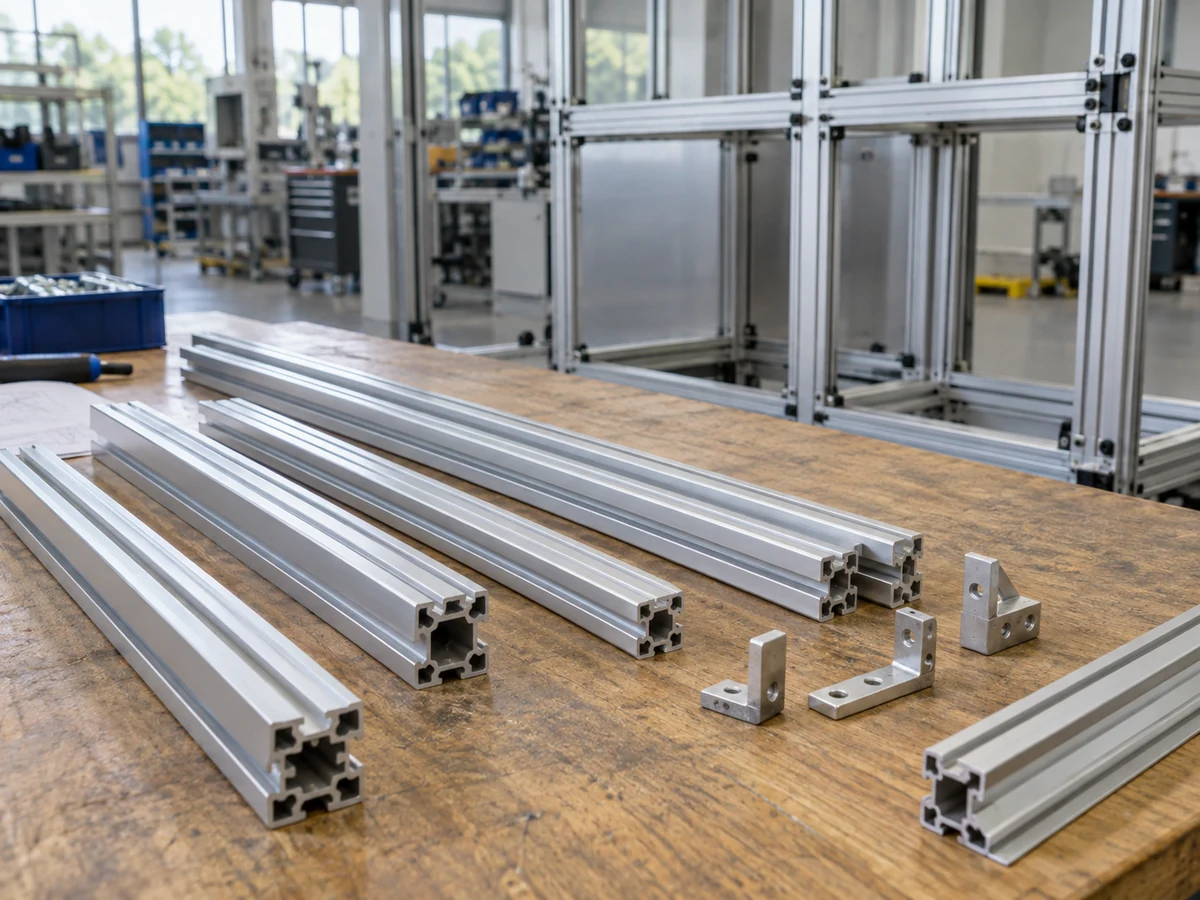
Specify whether the supplier merely cuts the profiles or also machines ends, drills holes, deburrs, protects visible faces and groups components by module. Put the supplied drawing datum on the cut list rather than relying on an overall dimension taken from an assembled photograph. Decide where panels are cut and fitted, who checks door clearance, and how wrong or damaged members are replaced without delaying the whole installation. A controlled first article can expose those questions before a full batch is packed.
Route 3: Supply standard profiles for controlled site cutting
Long stock and site cutting can be useful if the installation geometry is genuinely uncertain and an approved design allows measured final lengths. It is a poor default when the site lacks a suitable saw, trained operators, dust or chip control, material identification and a defined acceptance method. Field cutting must not become an informal redesign of guard openings, anchors or interlocks. The enclosure owner should state which lengths may be adjusted, what end work follows the cut, who measures them, and how the final revision is recorded. If those controls cannot be provided, use a surveyed cut kit or completed modules instead.
Compare machine enclosure frame supply at one acceptance point
Obtain prices for a complete installed and accepted scope, not just a rate per meter of profile. For each route, include design release, profile and panel supply, cutting, secondary machining, assembly labor, testing, packing, freight, handling equipment, site access, installation time, rework allowance and warranty boundary. Identify which tasks fall outside every quote. A preassembled frame may cost more to ship but reduce site labor; a flat pack may save freight yet require specialized fitting. Neither conclusion is universal without project-specific quantities and constraints.
Make a route comparison with three columns: delivered condition, work remaining at site, and evidence needed before operation. For example, a fully assembled module still needs anchorage and an installed-system check. A cut kit needs part-count and cut-end checks plus complete assembly verification. Site-cut stock needs material and process control before it becomes an accepted member. This comparison prevents a low material quote from being mistaken for a lower total installed cost.
What a saw supplier can and cannot prove
If cut kits will be produced repeatedly, evaluate the saw against the actual approved extrusion family. Give the supplier cross-sections, longest and shortest members, batch mix, finish requirements, cut datum and any miter geometry. In a witnessed trial, record stock support, clamp contact on visible faces, end condition, burrs, length from the drawing datum, handling of short pieces and the disposition of offcuts. Then complete the downstream operations and sample-assemble a representative joint. Feeding or positioning repeatability on a machine specification is not finished-member accuracy, and a clean cut is not proof that a guard is safe.
Our related guides cover the different decisions of whether an enclosure retrofit needs an in-house saw at all and how to plan a guard-panel frame saw trial. This article concentrates on the supply format and where assembly responsibility sits. A saw supplier can discuss cutting capability and trial conditions; the enclosure designer and site owner must approve the complete protection system.
Write the RFQ as a delivered-scope matrix
Send the same released information to each bidder: enclosure plan and revision, machine footprint, panel and door schedule, approved profile system, dimensions and cut list, required finishes, access route and package-size limits, lifting and installation constraints, site working window, expected changes, inspection plan and the acceptance authority. Mark unknowns openly rather than inserting an assumed dimension. Ask the bidder to mark every line as included, excluded, provisional or supplied by others.
For preassembled modules, request packing dimensions, lifting points, panel protection, factory fit-check evidence and a list of site joints. For cut kits, request a numbered member map, part labels, cut and secondary-operation tolerances from the approved drawing, joint hardware by bag, a missing-part process and a first-article check. For site-cut stock, request the approved adjustment range, material traceability and the site process needed to turn stock into accepted members. Compare the price and schedule only after those scopes align.
Receive and release the enclosure deliberately
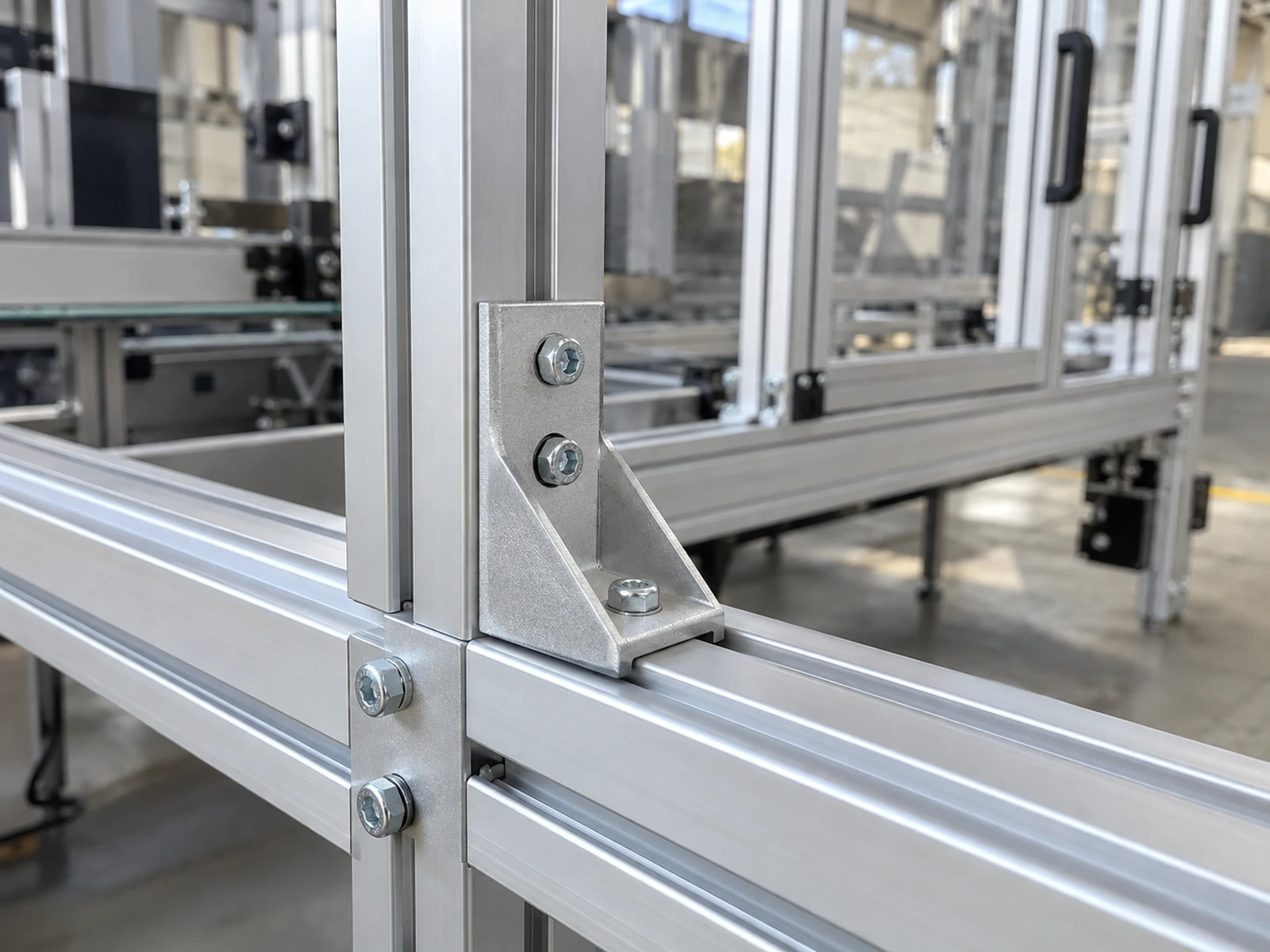
At receiving, count labeled modules or kit members against the approved bill of materials. Inspect damage, finish, cut ends and packaged hardware before assembly. Build against the released revision and record any substitutions. The responsible team should check the installed geometry, anchors, panel retention, access points and door operation, then perform the required controls and safety validation for the actual machine. OSHA’s guard overview distinguishes fixed and interlocked guards and notes that replacing a guard should not itself restart a machine. Apply the rules and engineering review relevant to your jurisdiction and machine; do not infer compliance from the commercial delivery format.
If the assembly cannot meet the approved design, stop release and resolve the discrepancy with the enclosure owner. Do not trim an unidentified member or move a panel just to make the kit appear complete. Keep the as-installed drawing, acceptance record and replacement-part identification so later maintenance teams can order the right components.
A practical buyer choice
- Choose completed modules when the approved design is stable, site time is scarce and shipment and access can accommodate them.
- Choose labeled cut kits when installation space is limited, the site can assemble and inspect them, and the supplier can control every member and hardware bag.
- Choose controlled site cutting only where the design explicitly permits adjustment and the site can qualify the cutting and acceptance process.
Share your enclosure drawing, profile list, expected kit volume and acceptance boundary when asking Jiurun Machinery about the cutting stage. We can discuss a saw trial for the defined aluminum members while the enclosure designer and site owner retain responsibility for the complete guard. The video below shows general Jiurun cutting-equipment footage only. It does not show this enclosure material, a specific model configuration, customer installation, kit trial or achieved performance.