
An aluminum saw for machine enclosure retrofits is worth considering only when the approved replacement-member workload is real. An existing machine enclosure can generate a very different cutting workload from a new enclosure program. A retrofit may call for three replacement uprights, a revised door opening and one matching panel frame, while most of the original structure stays in place. Before buying an aluminum saw for this work, decide whether the retrofit team will actually receive raw extrusion, cut members, prepared kits, or complete framed panels. Compare those routes at the same accepted handover. The cheapest line on a saw quotation is not necessarily the cheapest way to deliver an approved enclosure change.
This guide addresses procurement of an industrial aluminum-profile cutting station for retained frame-member work. It does not specify a guarding design or approve a change to a machine. The owner and qualified engineering team must separately validate the modified enclosure, interfaces, access and applicable safety requirements.
Start with the approved retrofit, not a generic frame drawing
A replacement member makes sense only in the context of the installed frame system. Record the enclosure identifier, equipment location, approved revision, profile family and connection type for each change. Separate a like-for-like replacement from a layout modification. A new panel opening, door position or added bay changes the member schedule and may change the engineering approval route even if the profile looks familiar.
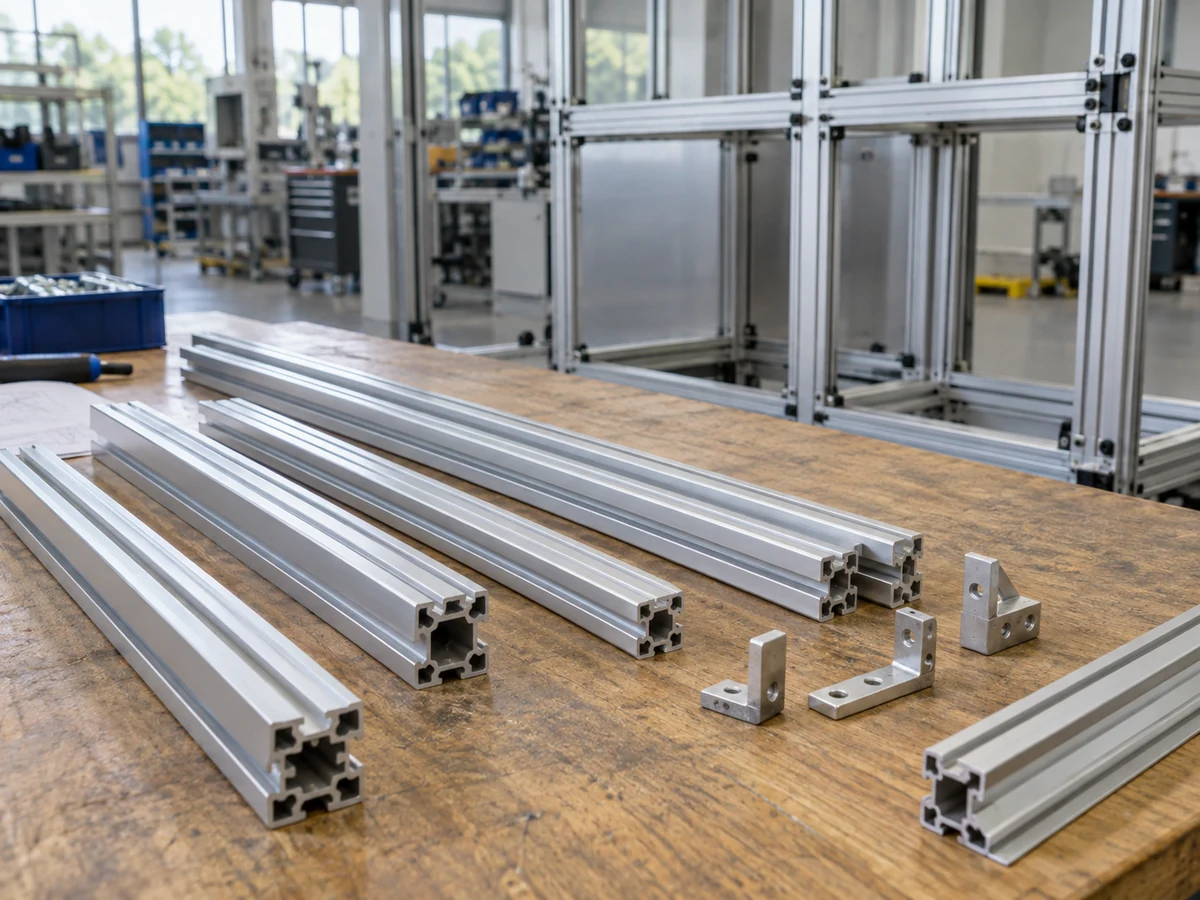
Build a release list that names every member and the assembly that receives it. Include the section drawing and input stock condition, cut length and end condition, any specified cut angle, finish and protected faces, and the next process after sawing. Mark panels, hinges, handles, fasteners, connectors and electrical items as bought or separately prepared. They should not be counted as saw output. A parts list can make the distinction visible: Bosch Rexroth describes frame order lists that identify profiles and the necessary sawing and drilling, with doors and panel elements treated as additional components. That example shows a planning method, not a Jiurun configuration or compatibility claim.
Compare four supply routes at the same receiving point
Complete enclosure or panel package. A supplier delivers a reviewed framed panel, door or complete modification package ready for the agreed receiving check. This can be sensible for an occasional retrofit, a proprietary frame system or a site that cannot retain the component work. The package price includes tasks a bare saw cannot perform.
Prepared member kit. The buyer receives identified profiles cut and perhaps drilled by a specialist. The internal team assembles them with separately sourced panels and hardware. The order must identify the kit, revision and responsible party for missing or nonconforming members.
Long extrusion plus retained cutting. The buyer holds released profiles and cuts members in-house. This route creates a real saw workload only where the approved member schedule, volume and staffing justify it. Any subsequent drilling, machining, joining, panel fitting or verification remains a separate operation with its own resources.
Mixed route. Standard repeat members may be cut in-house while unusual panels, proprietary sections and complete door modules remain bought. Do not force all retrofit demand into one route merely to increase apparent machine utilization. For each route, compare the same accepted set of components at the same location and stage.
Count the jobs the saw can truly perform
Use a recent period of released retrofit orders, not a forecast of all installed enclosures. Group demand by actual profile section, member length band, end condition, quantity per release, revision and delivery cadence. Separate emergency replacement pieces from planned multi-panel changes. A saw that handles repeated batches efficiently may still be a poor investment for sporadic single members requiring long setup and stock management.
Count only eligible aluminum or other approved nonferrous stock for the proposed configuration. Exclude bought framed panels, glass or polymer infills, hinges, steel components and complete modules. A project may be large while the retained saw work is small. Conversely, a modest retrofit program with many repeat members across compatible frame families may justify more attention than its contract value suggests.
For each family, note whether the approved input arrives as a usable straight extrusion or a prepared part. A finished frame dimension, clear opening or outer enclosure size is not a cut length. Do not derive a cutting program by subtracting guessed connector allowances from a photograph. Use released component drawings and the assembly owner’s accepted dimensions.
Specify the member handover before comparing saws
The receiving stage should state exactly what comes off the saw. Typical buyer questions include: Which physical faces define the length? Is squareness or a non-square end required by the released drawing? Which visible surfaces need protection during loading, clamping and removal? How will burrs, chips and cut-end appearance be judged at this stage? Who labels the member and associates it with the retrofit kit?
A saw trial should use representative approved stock and member drawings. Include the longest and shortest retained pieces, thin or easily marked faces if present, and the actual mix of repeated and one-off cuts. Ask for the tested machine configuration and record the finished-piece observations. A feeding repeatability figure is not a finished-part accuracy guarantee; the accepted cut piece must be measured against its own criteria. Do not infer performance from a general machine video or a catalogue image.
Where finish damage or stock marks matter, agree on inspection lighting, contact faces and packaging stage before a trial. If a later process removes a temporary surface, say so explicitly. If the cut end remains visible, that is a different receiving condition. The buyer should avoid comparing two quotations when one includes protected, identified members and the other only raw cut lengths.
Check the entire production route and changeover burden
Short retrofit releases make setup time important. Ask how the proposed saw handles the required section sizes and lengths, safe support of stock and cutoffs, clamping of the real profile, removal of chips, and transitions among profile families. Angle capability matters only when a released member schedule calls for it. Automation matters only when the approved order pattern and staffing support it. Verify the exact offered model and options against the sample program; do not combine features from unrelated catalogue models.
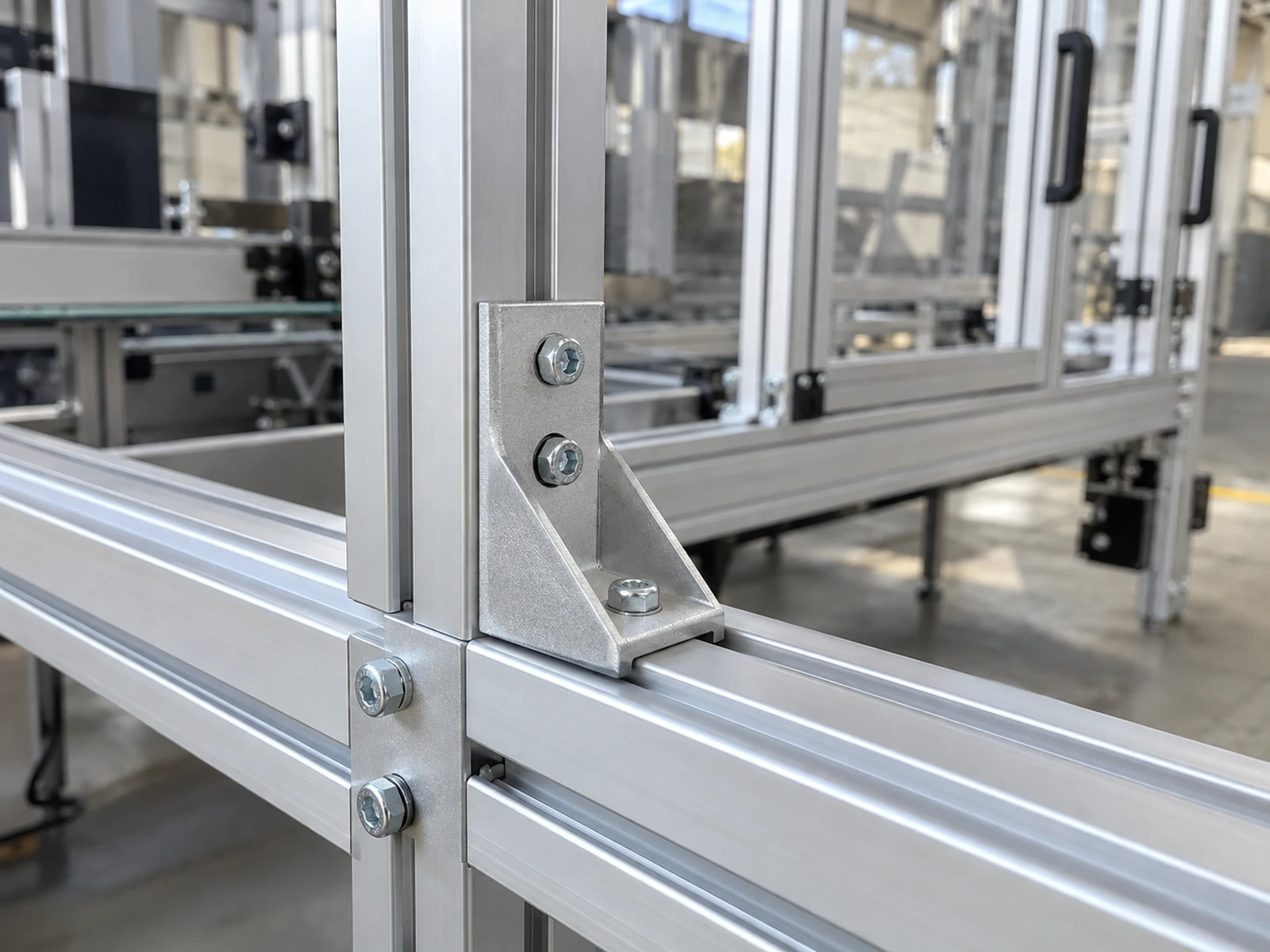
List every downstream step between a cut member and an accepted retrofit kit: drilling or end machining, joining, panel preparation, hardware fitting, identification, packing and final checking. Assign an owner and cost to each step. If a vendor offers a prepared kit, confirm what is included. If the buyer retains cutting, confirm the internal resources that make the output usable. Bosch Rexroth’s description of prefabricated enclosure panels and modular components illustrates why a panel package and loose members are different purchasing units. It is an external system example, not an endorsement of any saw.
When does an aluminum saw for machine enclosure retrofits pay?
For bought panels and kits, include supplier engineering, prepared members, hardware, panel material, freight, lead-time risk and receiving work. For retained cutting, include the configured saw, tooling, handling, floor space, operator time, changeovers, stock holding, cut loss, downstream fabrication, identification, inspection and rejected-part replacement. Use the same order period and the same accepted receiving stage. An apparent saving disappears if outsourced machining, assembly or inspection has been left off one side.
Keep rare emergency repairs separate from recurring planned work. A spare-part purchase may be the right answer for a rare installed system even when the factory owns a capable saw. A dedicated cutting route becomes more credible when multiple approved retrofit families share material and process needs, their released volumes are stable enough, and the organization can control revisions and trace members back to each enclosure.
Questions to send with the RFQ
- Which approved enclosure revisions and member drawings are in scope, and which are excluded?
- What is the input stock, profile system, finish condition and actual member mix?
- Which cut ends, visible faces and identification marks are accepted at saw handover?
- Which representative stock and drawings will be used for a witnessed trial?
- What exact saw model, clamping, support, feed and chip-handling configuration is quoted?
- Which drilling, joining, panel, hardware and verification tasks remain outside the saw?
- Who owns the final machine-enclosure modification and safety validation?
For a broader first-purchase frame RFQ, see our machine guarding frame checklist. For this retrofit-specific decision, the key is the approved replacement-member workload and the accepted handover, not the total value of the enclosure project.
Video: general equipment footage
Jiurun video: The footage below is from Jiurun Machinery’s YouTube channel and shows general cutting equipment only.
General equipment example only. This video does not document the enclosure material, retrofit, model configuration, customer, trial or performance discussed here.
Make the purchase decision from a released member package
If your team is weighing in-house cutting against bought retrofit members or panels, send the approved section drawings, representative stock, member list, finish requirements, release quantities and receiving criteria through our contact page. Jiurun can then discuss the applicable nonferrous saw configuration and a sample-based evaluation. Keep enclosure engineering, modification approval and final safety acceptance with the responsible qualified team.