
Glovebox aluminum frame cutting is a useful sourcing question only after the enclosure designer has released the actual member list. A glovebox may include transparent panels, gloves, ports, doors, valves and seals; the aluminum pieces are one defined part of that system. A saw supplier can assess supported feeding and cut blanks, but a cut length alone cannot establish enclosure fit or atmosphere control. This guide helps an OEM or approved fabricator turn a frame drawing into a testable saw inquiry and a clear handoff.
Aluminum-frame systems are real, but their construction varies. Sanplatec describes an aluminum-frame glovebox with acrylic board panels, while Framing Tech shows a modular T-slot gloveport frame whose panels and accessories are specified separately. These are examples of different supply boundaries, not Jiurun customer projects or proof that one section, joint or seal design fits another.
Glovebox aluminum frame cutting starts with the delivered stage
Ask what the buyer actually wants to receive. A bare saw-cut profile is different from a drilled and prepared frame member. Both are different from an assembled, sealed enclosure. Writing “one glovebox frame” on an RFQ hides the work between those stages. Decide whether the supplier is quoting only the cuts, a labeled cut-member kit, or additional secondary preparation. The enclosure owner should retain responsibility for approved section geometry, panels, joint design, sealing method and final system verification.
| Supply stage | What the saw inquiry can define | Who must close the remaining work |
|---|---|---|
| Cut blanks | Released extrusion, member identity, cut angle and blank-length acceptance | Buyer or appointed fabricator prepares joints and panels |
| Prepared member kit | Cut blanks plus separately agreed holes, end treatment, labels and packing | Frame assembler confirms actual joints and panel fit |
| Complete glovebox | Finished enclosure specification and system acceptance belong in a separate purchase route | Enclosure OEM owns sealing, ports, atmosphere and functional tests |
If a complete certified or validated enclosure is required, compare that finished-system route first. The apparent saving from cutting stock in-house has no meaning until downstream preparation, assembly, inspection, rejects and ownership are included. Conversely, a repeatable approved member portfolio can justify a saw trial when the fabricator already controls the later operations.
Make the member list impossible to misread
Start with an approved drawing or controlled BOM. For each member record its position, section drawing and revision, stock length, cut length reference, quantity per enclosure, end treatment, finished orientation and the next operation. Distinguish left from right and front from rear where a port, panel lip, corner insert or access opening makes them non-interchangeable. Note whether the dimension is an outside enclosure size, a panel opening, a member blank, or a prepared assembly dimension. These are not substitutes for one another.
A useful cut list gives the measuring datum explicitly: which physical face is presented to the stop, whether length is taken on the long or short side of an angled end, and whether a corner allowance belongs to the cut or later assembly. If the design contains two profile families, send both actual section samples. A rectangular tube, a T-slot extrusion and a panel-retaining channel behave differently at the clamp and present different contact faces. The machine trial should use the released stock that represents production, not the most convenient leftover bar.

Protect panel and seal interfaces without assigning them to the saw
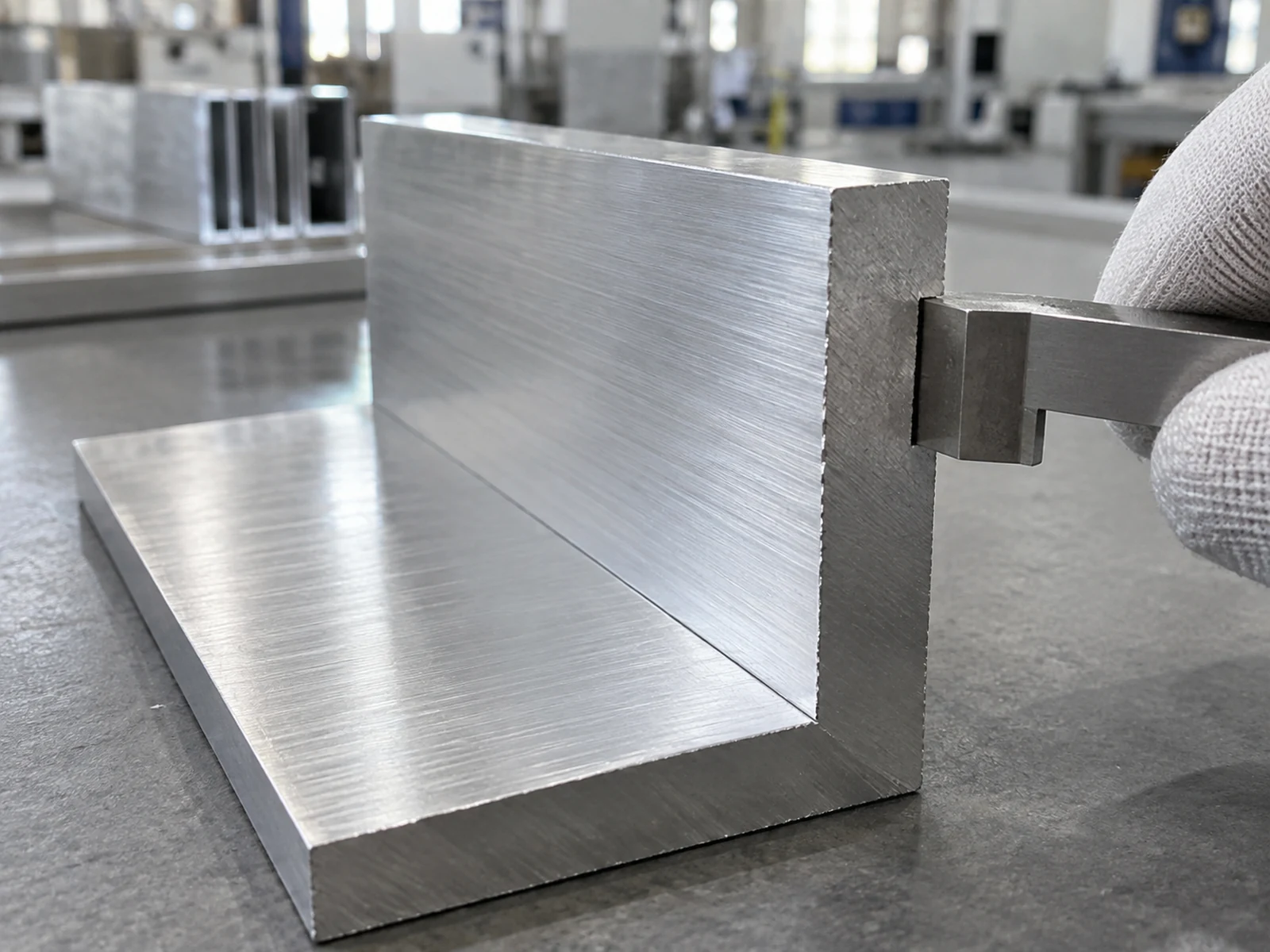
The most important cut face is not always the visible face. An end can meet a corner connector, locate a glazing or acrylic panel, border a gasket path, or sit next to a removable access panel. The enclosure designer must identify which contacts are controlled and which are only cosmetic. Then the buyer can set appropriate drawing-led criteria for end squareness, angle, burrs, dents, chips and surface marks. Avoid a blanket tolerance copied from a different saw or section: the relevant limit is the approved assembly requirement, supported by a sample and a measurement method.
For example, a cut end that disappears inside a mechanical connector may still need a clean seating surface. An exposed panel-retaining lip may need protection from clamp marks. A miter may require paired parts whose orientation and joint gap are assessed together. If the system relies on a seal, the responsible OEM must specify and verify the seal interface and its leakage or atmosphere acceptance independently. A photograph of a clean saw cut cannot demonstrate that a completed glovebox is sealed.
Separate immediate saw inspection from later dry fit. The saw operator can record the blank datum, angle, cut-face condition and batch identity. The frame assembler can then check a representative corner, panel seating and port clearance against the approved design. Any airtightness, purge, pressure or environmental test belongs to the enclosure’s system validation plan, not an inference from saw dimensions.
Design a trial around the difficult member
Send the saw supplier a small, controlled trial set rather than a general statement that “aluminum profiles are easy to cut.” Include the widest or thinnest relevant section, the shortest supported part, any angled member and a finish-sensitive face if these are in the approved portfolio. Identify the accepted raw-stock condition and surface finish. Where prefinished stock carries film, ask how the film is handled through clamping and cutting; see our protective-film profile trial checklist for the separate surface-protection question.
Agree on a sequence before the run: verify the stock revision, define the datum and orientation, choose support for long bars, set the clamp contact on sacrificial or acceptable faces, make a first-off part, measure it, then cut the remaining sample members. Record the setup used for each section family. If a thin profile distorts under the chosen clamp, the answer is a revised support or process discussion, not an unsupported promise that the eventual assembly will compensate.
Ask for a trial record that shows actual section identity, cut program or angle, first-off dimensions, any visible damage and who accepted the samples. One accepted sample should be retained by both parties where practical. The buyer then conducts a separate dry-fit check with the approved connectors and panel parts. This closes the loop from raw cut to usable kit without treating the saw trial as a completed glovebox test.
Compare sourcing routes at the same accepted stage
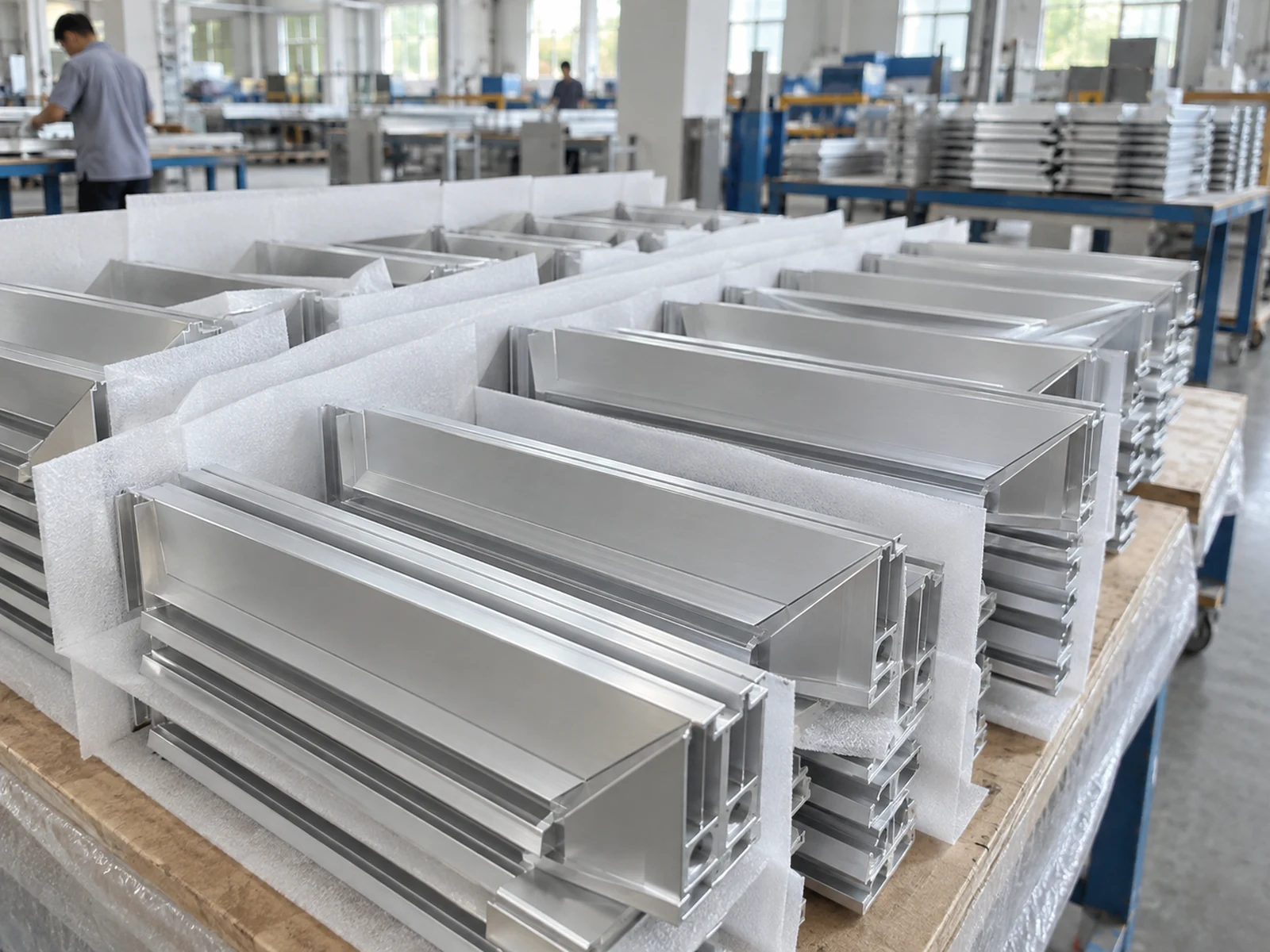
Compare three routes: buy an assembled frame or enclosure; buy prepared, labeled cut-member kits; or cut released stock in-house. Bring every route to the same accepted output before comparing cost or lead time. For in-house sawing, include stock procurement and yield, setup across section families, fixtures, inspection, handling and the remaining secondary work. For outsourced kits, include drawing revision control, packaging, missing-part handling and receiving inspection. A complete-enclosure quotation includes much more than a cut list and should not be priced as though it were one.
For short projects or changing designs, a kit supplier may reduce the equipment burden. For stable repeat families and sufficient volume, a saw may be worth a trial, provided the difficult sections pass and the fabricator owns the downstream operations. For glovebox aluminum frame cutting, the purchase decision is about accepted kits, not cuts per minute alone. Our broader aluminum extrusion cutting guide covers general section and saw questions; the glovebox inquiry adds panel, port and sealing ownership.
What should the glovebox aluminum frame cutting RFQ contain?
- Drawing authority: approved system owner, profile and member revisions, and who may resolve discrepancies.
- Scope: bare cuts, prepared members, labeled kit or complete enclosure, with exclusions written out.
- Actual stock: section drawing, physical samples, alloy and temper if approved, finish and stock lengths.
- Cut instructions: member ID, quantity, datum, angle, length reference, orientation and acceptable offcut policy.
- Inspection: first-off method, critical interfaces, burr and surface criteria, retained sample and receiver.
- Downstream work: drilling, connector insertion, panel fitting, gasket installation and final system tests, each with an owner.
- Delivery: revision and batch labels, paired-part identification, surface protection, packing and missing-part remedy.
Attach a representative assembled-corner sketch if the dimensions are otherwise ambiguous. Do not send a proprietary finished-product claim in place of a controlled part drawing. When the profile is still being redesigned, freeze the trial revision and make the quotation conditional on that version; do not count unreleased future variants as accepted capacity.
Frequently asked questions
Can a saw supplier guarantee a sealed glovebox?
No. A saw trial can support claims about the tested stock and agreed cut criteria. The enclosure OEM or appointed integrator must validate the assembled seals, ports and operating environment under its own plan.
Is every frame member a 90-degree cut?
No. The approved corner detail determines whether a member uses a straight end, miter or another prepared joint. An RFQ should state each end treatment and how the angle is measured; neither a system outside dimension nor an image is enough.
What is the most useful first sample?
Choose a representative member at a difficult interface, such as a section with a panel lip or a short connector-adjacent end. Measure the cut, then dry-fit it with the actual approved mating parts. Record the separate result of each check.
Related saw-process video
The Jiurun Machinery video below shows a related saw and feeding process. It is an equipment illustration only: it does not show the glovebox frame, a specified alloy or section, a customer trial, sealing performance or an approved finished enclosure.
Send a drawing-led inquiry
Jiurun supplies industrial circular saw cutting equipment for aluminum and other nonferrous metals. If your team owns an approved aluminum-frame glovebox member list, send the section drawings, physical stock, cut map and first-off criteria through our contact form. We can discuss a machine and trial scope for the cut members; the enclosure integrator remains responsible for the complete system.