
A generator can carry a saw’s running load and still struggle at the moment a motor starts. If the operator panel resets, a contactor drops out or the spindle fails to accelerate, the steady kilowatt figure on a quotation will not explain why. A generator for an aluminum saw must be evaluated against the complete ordered machine, its starting method and the other loads connected to the same source.
This guide is for a buyer considering a standby, temporary or remote-site generator supply. It does not size a generator, approve an electrical installation or claim that any Jiurun model has passed a generator test. The machine builder supplies configuration-specific input and operating information; a qualified site designer and generator supplier evaluate the source and installation under the applicable rules. Keep those roles visible before either purchase order is released.
Choosing a generator for an aluminum saw starts with every load
Ask for the electrical documents of the exact saw configuration offered. Record the supply voltage, phase and frequency, complete-machine input or rated current information, starting arrangement and any documented supply limitations. Add the options that will actually be energized: feeder drives, controls, cooling or lubrication equipment and extraction equipment if they are part of the same source. A buyer-provided dust collector or air compressor may have its own motor and start demand; do not silently treat it as part of the saw’s published motor figure.
Put each load on one drawing with its owner and connection point. Mark which items arrive with the saw and which the facility will install separately. The aluminum saw power-supply quotation guide helps establish that general machine-side record. Here the extra decision is whether a particular generator set can support the agreed operating sequence. The site circuit-breaker handoff remains a separate protective-device decision; a suitable generator rating does not select the installation breaker.
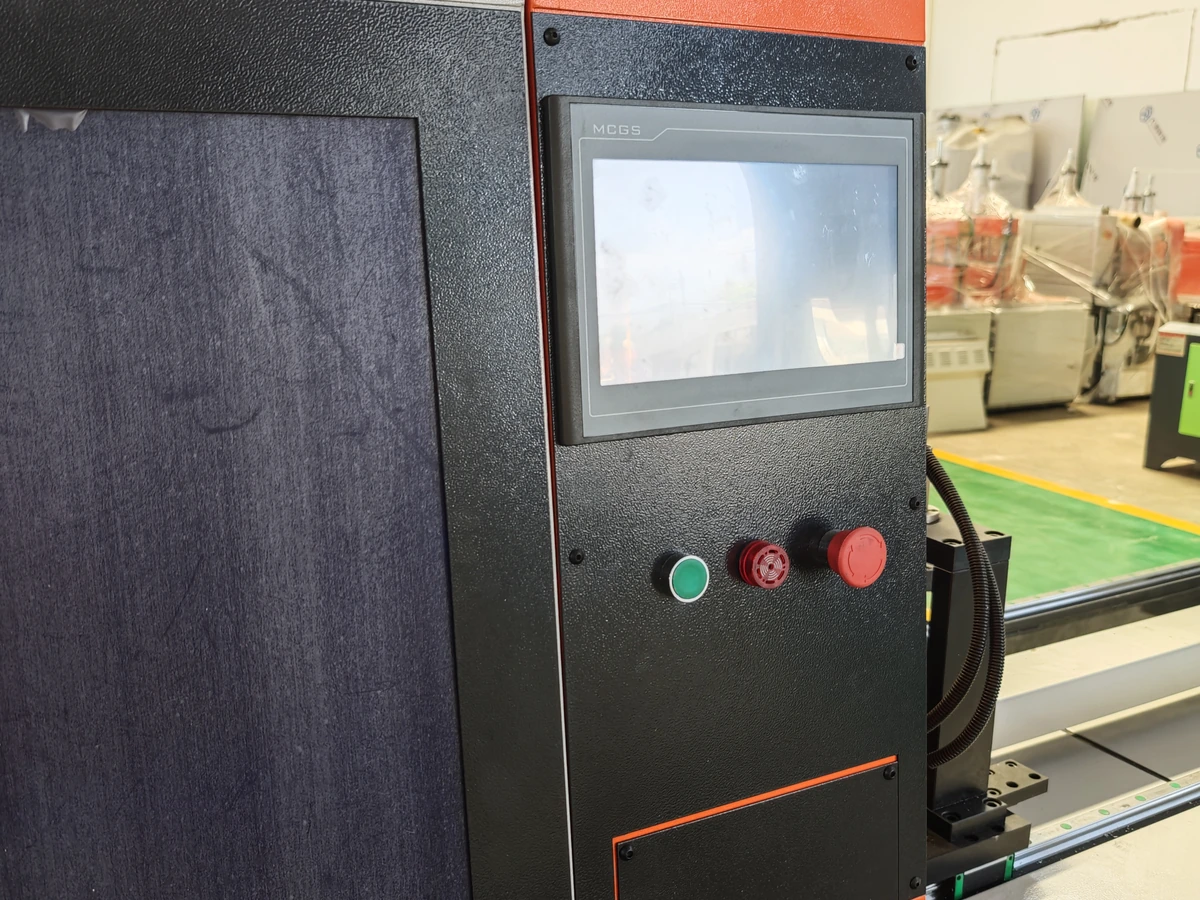
Write the start sequence that the generator must survive
Do not compare only two steady-state ratings. Ask the machine builder and facility team to write the intended sequence from source availability to an accepted first cut. Which auxiliary loads are already running when the saw is enabled? Does the spindle start while the feed or extraction motor is operating? Can a control system or drive be sensitive to a short voltage or frequency disturbance? Which loads remain on the generator after the cut? The answers depend on the offered control and drive arrangement, so a generic brochure cannot settle them.
The generator supplier needs that sequence and the characteristics of each relevant load, including its starting method. Direct starting, a soft starter and a variable-frequency drive are different cases. Do not assume a model has one of them because a similar-looking machine does. Ask the saw supplier for the exact electrical drawing and a written answer; ask the generator supplier to state which starting assumptions were used in its calculation. If a staged start is proposed, the machine builder and site designer must review whether it is compatible with the actual controls and safe operating sequence.
Check the transient, then the recovery
Cummins’ motor-starting capability paper explains three distinct checks for a generator set: voltage during initial inrush, voltage recovery while the motor accelerates, and the engine and alternator package’s ability to carry the applied load. Its guidance is general generator engineering context, not a test result for a Jiurun saw. It shows why motor running kW alone cannot establish a suitable generator size.
Ask the generator supplier for the expected voltage and frequency response at the proposed connection point and for the assumptions behind it. Include other equipment already on the source. Caterpillar’s generator-design discussion likewise treats load starting as a separate calculation and describes sequencing loads rather than assuming a simultaneous block start. Neither source supplies a universal allowable dip for this saw. The actual tolerance and acceptance criteria must come from the machine documentation and site design.
Also ask what happens after a poor start or a source transfer. Will the control retain state, stop in a defined condition and require an authorized restart? That is a machine-specific question, not permission to retry repeatedly or bypass a trip. The voltage-dip article addresses diagnosis when site power sags during a cut. This purchase decision concerns the generator’s planned capacity and start sequence before the installation is accepted.
Give each party one approval line
- Saw builder: confirm the ordered electrical configuration, supply connection, documented current and starting information, permitted start and stop behavior, and included auxiliaries.
- Facility designer: define the site wiring, protection, earthing, transfer arrangement, other loads and applicable installation review. Resolve the connection interface with the builder.
- Generator supplier: size and document the proposed complete generator set for the stated load sequence, site conditions, voltage and frequency response, and operating duty.
- Buyer: keep the three responses on the same revision-controlled record and identify who signs off a witnessed trial and first-part release.
A proposed generator model is still provisional if one party lacks the load list or the machine’s starting arrangement. Record the unanswered item rather than filling it with a guessed multiplier. A generator supplier may propose a different set, sequencing change or operating restriction. Return any change that touches the saw’s controls or protection to the machine builder and qualified site reviewer before ordering.

Make acceptance observable without inventing a rating
Before procurement, agree what the generator supplier will demonstrate or document: the actual connected load list, the approved start order, the response through each start, and the operating condition during a representative cut. At site acceptance, qualified personnel should record the source conditions and machine indications under an approved test plan. If the saw trips or the control loses state, preserve the alarm and source record for joint diagnosis. Do not alter protective settings simply to obtain one successful cut.
Release the first cut parts by the buyer’s normal dimensional and surface criteria after any power-source event. A generator that starts the saw once has not proved every material, cycle, ambient condition or fault response. The installation team must still complete its required inspections and approvals. No numeric generator rating, allowable voltage dip or model-specific restart performance is claimed here because those values need the actual machine and site data.
The Jiurun channel video shows a saw and its operating context. It does not show a generator supply, the source response, the configuration in your quotation or an acceptance test. Use it to discuss which machine functions and auxiliaries must appear on your load list.
Send a source-ready inquiry
Send JiurunCut the proposed saw model and options, intended supply, destination and planned operating sequence. Ask for configuration-specific electrical information and identify the generator supplier and qualified facility reviewer who will use it. Request a written reply for any unknown starting or control behavior before selecting the source.
Contact JiurunCut with the profile, cut plan, machine quotation revision and generator-related questions. The useful outcome is an agreed load and start record that each party can assess, not a generator size inferred from the spindle motor label.