
Aluminum saw voltage dips can stop a cut even when a machine quote correctly lists the nominal supply voltage. A brief dip on a busy factory circuit needs its own evidence and recovery plan. If an aluminum saw stops during a cut, the buyer still needs to know what happens to the spindle, feed, clamps, program position and partly cut workpiece. The useful purchasing question is not “Will this saw never trip?” It is: what site evidence will the supplier review, and what safe stop and recovery behavior can both sides accept?
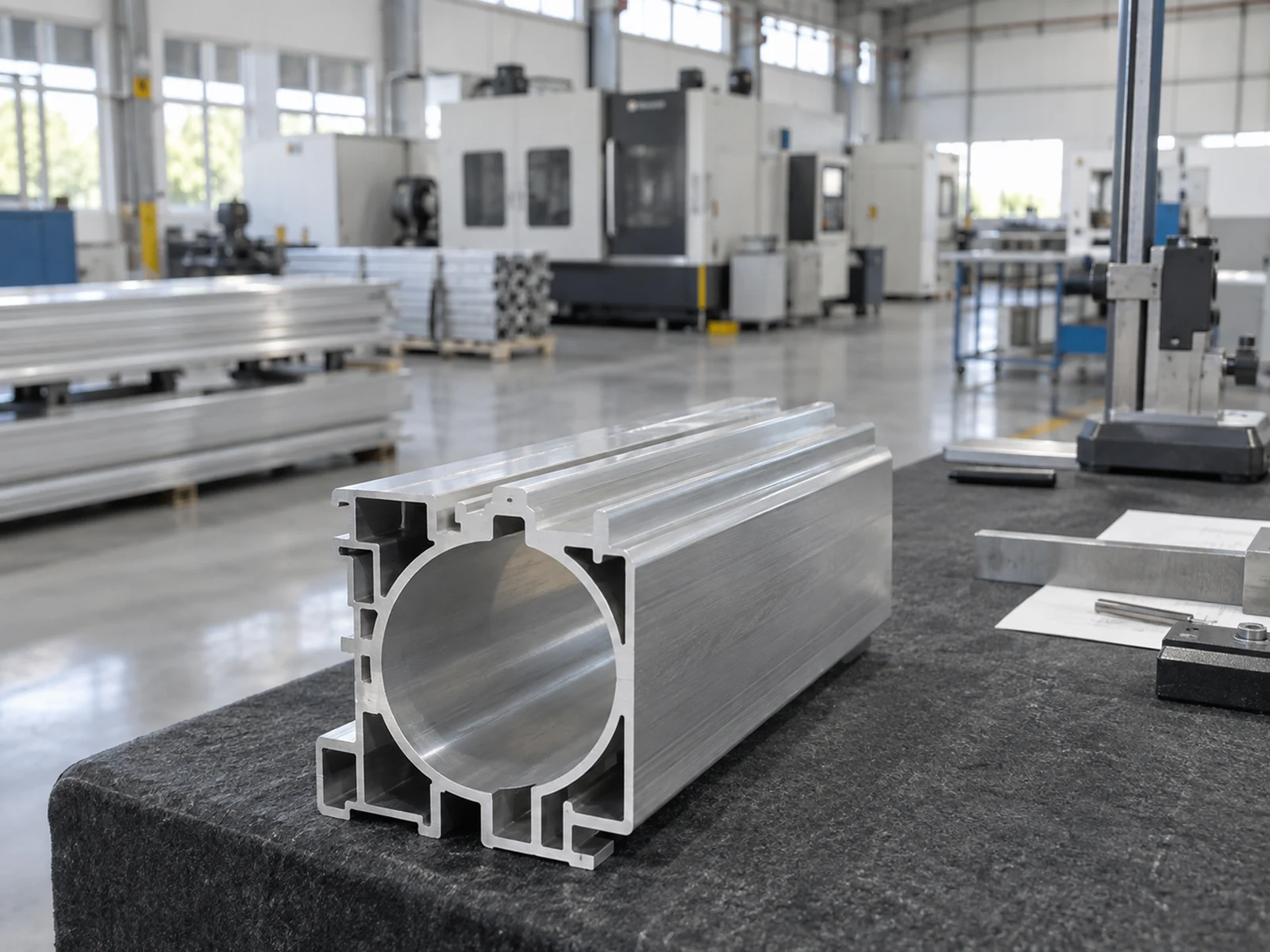
This guide concerns short voltage sags at the machine supply. It does not assign an electrical rating to any Jiurun model or claim a ride-through duration. The image below shows a general aluminum cutting line and operator panel; it illustrates the equipment areas to discuss, not a record of a voltage-dip test.

A voltage dip is a site event, not a machine specification by itself
A dip is a temporary reduction in supply voltage. Its duration, depth, affected phases and the load running at the time all matter. A utility interruption or a complete loss of power is a different event. Likewise, a steady but incorrectly specified supply is a different RFQ problem. Ask the plant electrical team to classify what has actually happened before asking a saw vendor for a remedy.
The IEC 61000-4-11:2020 publication describes immunity test methods for voltage dips, short interruptions and voltage variations for equipment within its stated current scope. It does not, by its mere existence, certify a complete cutting line or establish how your particular workpiece will be handled. If someone cites a standard in a quotation, request the exact equipment scope, test conditions, report and acceptance criterion. The IEC publication page is useful for checking what the method covers.
Build an evidence packet before comparing quotations
Have a qualified facility electrician or power-quality specialist record the supply at the saw’s intended connection point. A general complaint that “the lights blink” is too vague for a controls decision. The packet should show the source and measurement location, time-stamped events, affected phases, voltage trace and duration, protective-device observations, and the other loads switching nearby. Include the proposed machine nameplate supply requirements when the supplier provides them. Never infer them from a different model’s brochure.
- Site boundary: identify transformer, distribution panel, feeder and the planned saw connection point so a supplier knows where the measurement applies.
- Event record: preserve waveform or logged dip magnitude and duration, not just a recollection of a trip.
- Production state: say whether the saw was idle, clamping, feeding or cutting, and which other large load started at the same moment.
- Observed result: note alarms, contactor or drive status, stop position, retained program data and the condition of the interrupted part.
- Frequency: distinguish an isolated event from a recurring pattern without claiming the machine caused the site disturbance.
Schneider Electric explains that a contactor can drop out when its control voltage falls below the conditions needed to remain energized. That is one reason to discuss the control circuit’s response separately from the main motor supply. It is not a prediction for every Jiurun saw. See the Schneider Electric contactor guidance. Rockwell Automation also describes how sags and interruptions can disrupt industrial control equipment; its power-quality paper helps frame the plant-level conversation.
Ask for a sequence, not a vague “power protection” option
Request a written state-by-state sequence for the proposed configuration. What is the expected response of the spindle drive, feed axis, clamping and guard interlocks if control power is lost or falls outside the specified operating range? Is the machine designed to stop, alarm or retain a job reference? Which parts of the sequence depend on optional equipment or the facility supply? The vendor should identify what has been tested and what remains an engineering review, rather than promise that every dip is harmless.
A safe stop matters more than finishing a cut through an uncertain supply event. The discussion should cover motion stopping, prevention of an unexpected restart, the position of the blade and material, and how the operator regains a known state. Do not assume that a clamp will retain or release a workpiece in a particular way without the exact machine design and validation. Any deliberate power-quality test belongs in a supplier-approved, electrically controlled acceptance procedure run by qualified people; operators should not create an uncontrolled mains fault to “see what happens.”

Separate a short sag from a full power-loss handover
A phase-monitor setting, a short dip and a complete shutdown are related but not interchangeable. The phase-monitor scope guide concerns what a monitor observes and how its window is specified. The power-loss recovery guide covers a restart handover after supply is lost. For a brief dip, the purchasing gap is the measured event at your plant and the agreed behavior of this exact configuration during and after it. A quote that mentions only nominal voltage or an optional UPS does not close that gap.
Ask whether any backup supply is intended for controls, a computer interface, program retention or another named load. Confirm its capacity, installation boundary, maintenance and failure indication with the supplier and facility electrician. Do not describe a control UPS as keeping the cutting motor running unless the approved design explicitly supports that claim. Site-side measures and machine-side measures must be priced and owned separately.
Define the first-piece release after an event
The interrupted piece is a quality decision, not merely a restart button. Before releasing production, an operator may need to confirm material seating, the reference position, blade and fixture condition, program selection and the measured first acceptable part. The exact checks depend on the drawing, machine and interrupted state. Record who may release the line, what evidence they retain and when a suspect part is segregated. A first-piece result can show that the current setup meets a drawing; it does not prove universal voltage-dip immunity or finished-part accuracy for all stock.
Turn the issue into an acceptance test and an RFQ answer
Send the event packet, intended material and cutting duty to the shortlisted suppliers. Ask each to return a configuration-specific response with assumptions, exclusions and an agreed acceptance method. If a reproducible dip test is appropriate, the supplier and qualified site team should define the test source, safe conditions and pass/fail observations in advance. If the site event cannot be reproduced responsibly, agree on witnessed stop and restart demonstrations plus a monitored commissioning plan instead. Do not substitute a generic catalog video for either test.
- Input: which measured event and electrical boundary were reviewed?
- Configuration: which saw, controls and optional devices are included in the response?
- Safe state: what stops, what remains energized if anything, and what prevents unintended motion?
- Recovery: which operator actions, alarm records, re-referencing and first-piece checks are required?
- Ownership: who supplies and validates any site power-quality work, protective equipment or control backup?
- Evidence: what witnessed result, report and unresolved exception will accompany acceptance?
Compare offers on those answers, not on the word “stable.” The lowest-priced control option may be unsuitable if it leaves the site event, safe stop or part disposition undefined. Equally, a costly add-on is hard to justify without measurements and a stated failure mode. For aluminum saw voltage dips, a measured problem and a bounded acceptance case make the supplier’s recommendation reviewable.
General equipment footage
The Jiurun Machinery video below shows general JR-650CNC-3A-1S equipment and a long infeed/roller arrangement. It is an equipment-layout example only. It does not show this article’s voltage-dip event, the quoted electrical configuration, a customer site, a restart acceptance test or cutting performance.
A practical request to send with your drawings
Share the intended profile drawings, batch pattern, site supply diagram and time-stamped dip record with JiurunCut. Ask for a configuration-specific discussion of normal supply requirements, the expected safe stop and recovery sequence, and a first-piece acceptance plan. If no event trace exists yet, arrange the facility measurement first. That keeps the machinery quotation, the electrician’s site work and the production-quality release tied to evidence rather than to an unqualified promise.