
A purchase order can stall after the saw has been chosen. The buyer has a machine quotation; the facility electrician asks which site breaker to install; the quotation lists a spindle motor power but no approved protective-device arrangement. An aluminum saw circuit breaker cannot be selected from that motor figure alone. The unresolved issue is a handoff between the supplied machine and the plant electrical installation.
Before delivery, ask the machine builder for the electrical information that belongs to the exact ordered configuration. Ask the facility team for the conditions at the intended connection point. A qualified person responsible for the site design then selects and documents the installation protection, while the builder confirms that the proposed supply arrangement meets its machine-side requirements. This article is a purchasing workflow, not a breaker-sizing formula, wiring instruction or approval to energize equipment.
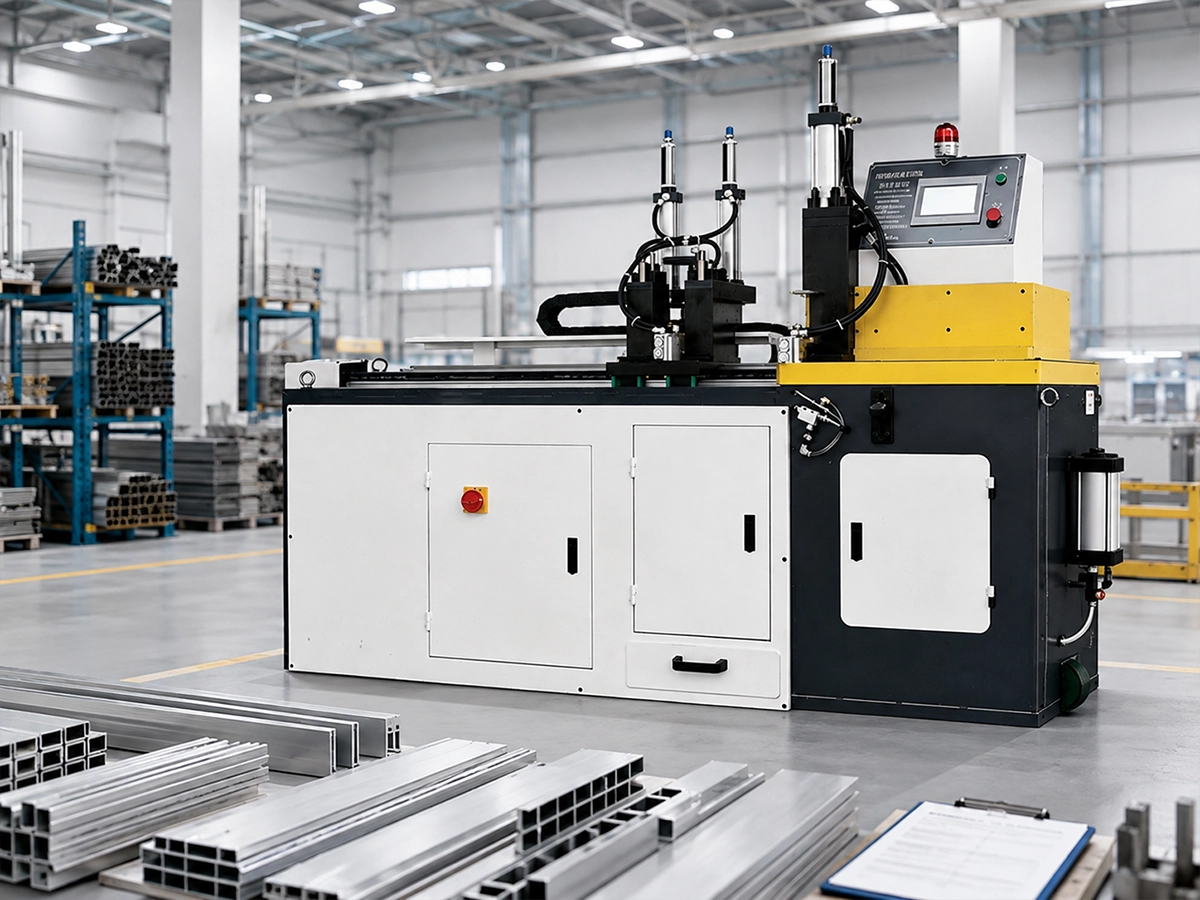
Aluminum saw circuit breaker: draw the boundary at the supply connection
First mark what the supplier will deliver: the saw, its electrical cabinet, any supplied main switch or protective devices, and quoted accessories. Then mark what the buyer will supply: the facility distribution circuit, feeder, upstream protective device and connection work. “A main switch is included” does not answer which protective device belongs in the site distribution board. Conversely, a breaker in that board does not describe every protective function inside the machine.
The IEC 60204-1 publication description places the scope of a machine’s electrical equipment at its supply connection and identifies overcurrent protection, short-circuit current rating and technical documentation among the edition’s topics. That public description helps frame the interface; it is not the full standard, an installation design or proof that any particular Jiurun machine has been assessed to a stated rating. The applicable edition and local rules must be checked for the actual project.
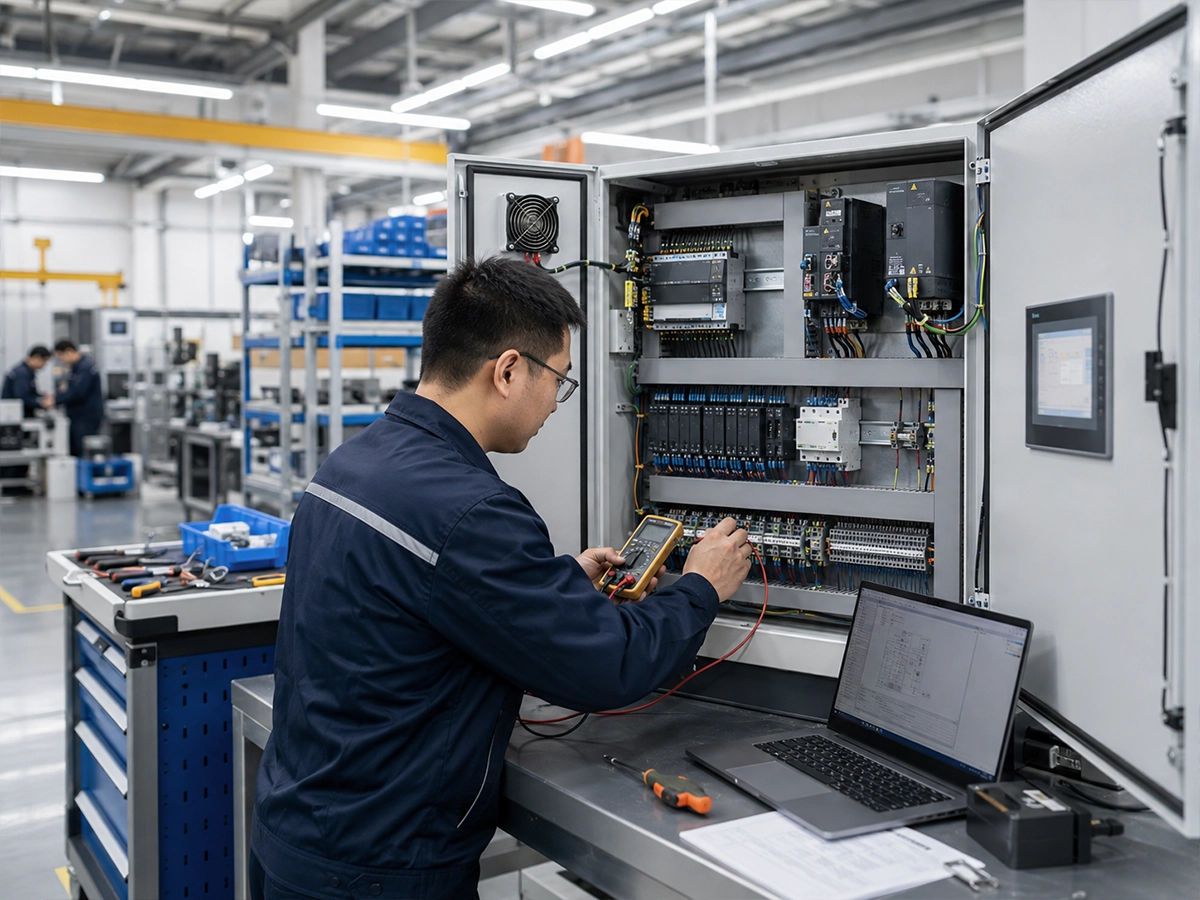
Request the machine-side facts by configuration, not by model family
A site designer cannot evaluate an unspecified machine. Put the exact saw quotation revision, selected electrical version, feed system, extraction interface and any other connected option on one record. Ask the builder which items are included in its electrical documentation and which require a separate supply. If the offered line includes buyer-provided auxiliaries, make that boundary explicit rather than adding their estimated power to a brochure motor rating.
For that ordered configuration, request the supply voltage, phase and frequency; the complete-machine input or rated current information the builder uses; relevant starting or operating conditions; connection-point and protective-device instructions; the electrical drawings and document revision; and the scope of any declared short-circuit rating. These are questions to resolve with the builder, not a claim that every item is already available for every Jiurun model. The power-supply quotation guide covers the broader compatibility record; this page concentrates on who completes the site protective-device decision.
Keep three values separate in the correspondence: motor power, complete-machine supply requirement and a protective device rating. None can be copied into the other field without the applicable documentation and design review. A saw with the same model name but a different drive or accessory package may need a different electrical record. Record the exact document page and revision so an old brochure cannot silently become the installation instruction.
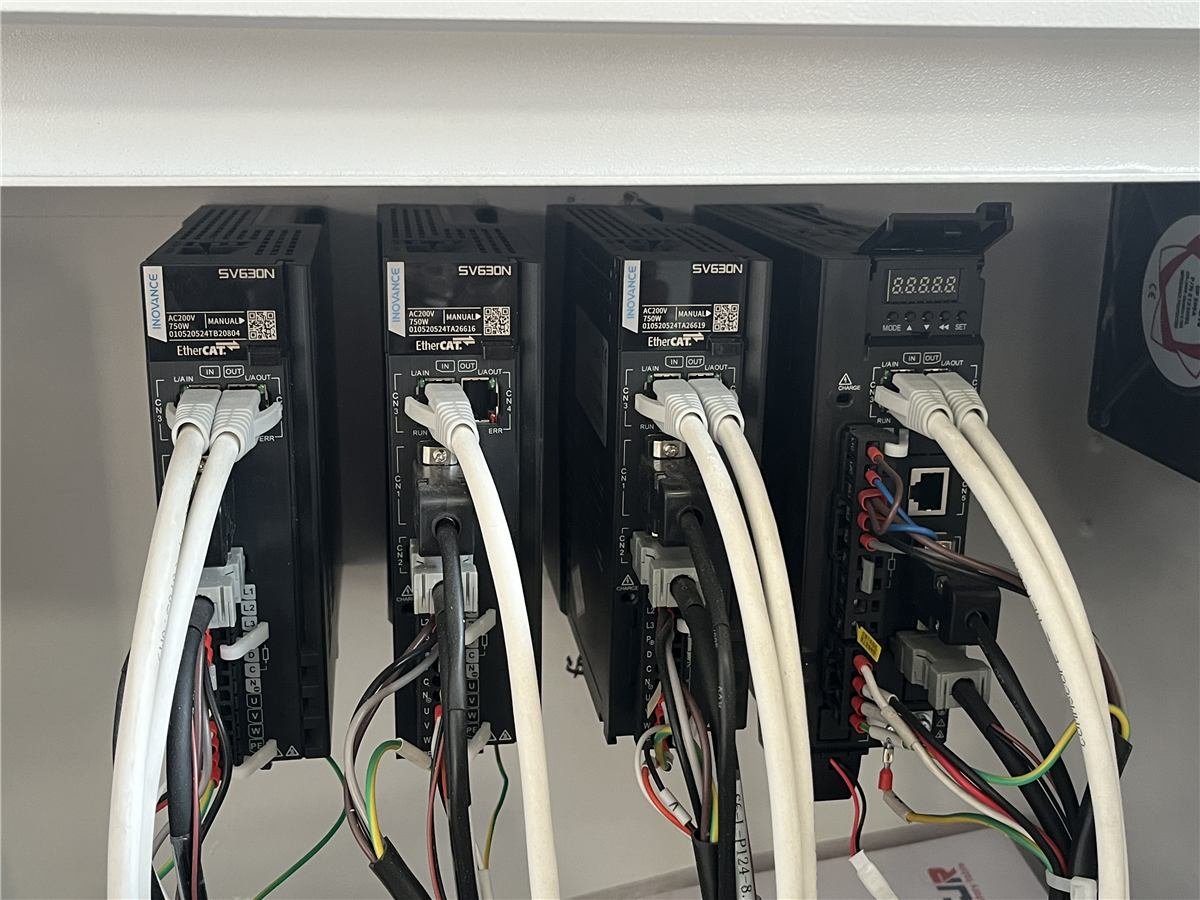
Give the site designer the facts that the supplier cannot know
The supplier cannot infer the available short-circuit current, feeder route, upstream distribution arrangement or jurisdiction at an unknown factory connection point. Have the responsible facility professional identify the actual connection location and record its supply characteristics, prospective fault-current information, upstream protection, earthing arrangement and cable or conductor design constraints as required by local rules. A country name or nominal voltage is not a substitute for these site facts.
The site designer then evaluates the complete proposed arrangement against the manufacturer’s instructions and the applicable code. Schneider Electric’s circuit-breaker catalog guidance discusses interrupting rating in relation to available short-circuit current at the installation point and notes a defined series-rating exception. That manufacturer guidance is context for a qualified review, not a device recommendation for this saw or permission to assume a series-rated combination.
Also ask how the proposed device is intended to behave with the machine’s normal starting and operating conditions, and how it coordinates with equipment-side protection. A breaker that trips during an approved cycle creates a commissioning problem; choosing an arbitrarily larger device to suppress trips may remove the intended protection. Resolve the cause against measured site conditions and approved documentation. Keep motor overload, branch short-circuit protection, an isolating switch and the assembly’s declared rating as different questions.
A separate SCCR evidence guide explains why a breaker datasheet is not an assembly-level rating record. This article does not re-evaluate that assembly claim. It asks who selects the site-side protective device after the builder has identified the machine’s actual electrical interface and the facility has supplied its installation data.
Make the purchase-order handoff auditable
Use one open-items record rather than a guessed amperage in the purchase order. The buyer can ask the supplier and facility reviewer to complete these fields before release for shipment or site wiring:
- Ordered equipment: quotation revision, exact electrical version, included auxiliaries and the machine-side connection point.
- Builder response: applicable electrical drawing and manual revision, supply requirements, protective-device guidance and any declared rating with its scope and conditions.
- Facility response: intended connection point, supply and prospective fault-current data, proposed feeder and upstream arrangement, and the applicable local review basis.
- Decision owner: name the qualified site person who selects and approves the protective device, and the builder contact who confirms machine-side compatibility.
- Open conditions: document any missing data or change in configuration; do not turn a provisional number into an approved installation specification.
A complete response need not be a promise that every site will use the same breaker. It should make the supplier’s scope and the facility’s design responsibility visible enough that neither side is asked to certify information it does not control. If the facility reviewer identifies a mismatch, return the exact issue to the builder before ordering electrical parts or altering the saw. This is more useful than asking sales for “the normal breaker size” without the project conditions.
Verify the handoff on the delivered machine
At delivery, compare the nameplate and supplied electrical documents with the ordered configuration and the site design record. Check that the actual connection arrangement and any supplied options match the information used in the review. Have the qualified personnel complete their normal inspection and commissioning procedure under the applicable rules. Record discrepancies and obtain a revised decision before energization; this article does not prescribe live tests or fault simulation.
During an approved start and normal cycle, record any protective-device operation, machine alarm and operating state for technical review. Do not bypass protection or change a rating merely to make the saw run. A successful normal cycle does not establish fault performance, short-circuit rating or universal compatibility. It only provides one limited observation under the documented installation conditions.
This Jiurun channel video shows general saw equipment footage for visual context. It does not show this article’s site breaker, electrical version, installation review, customer project or protective-device performance.
Send the two-sided question with the saw inquiry
When requesting a quotation, send the exact saw configuration and the facility connection information already known. Ask Jiurun for the machine-side electrical documents and for any limits the site designer must observe. Ask your qualified facility reviewer to state what additional site data is needed and who will approve the final protective device. Keep the replies, revisions and unresolved items attached to the same purchase record.
For a configuration-specific response, contact JiurunCut with the quoted model, selected options, destination country, planned supply and the site reviewer’s questions. The manufacturer can clarify the machine-side requirements; the site’s qualified professional remains responsible for the installation design and approval.